Visitor Insights
Visiting Prambanan Temple
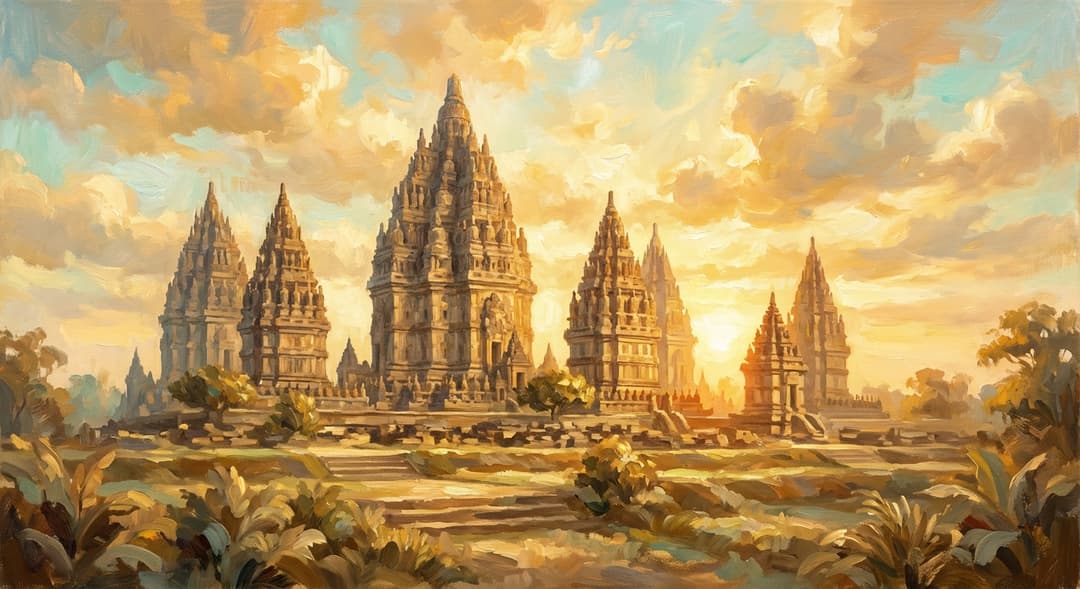
Visiting Prambanan Temple is an awe-inspiring experience, offering a glimpse into the rich cultural and religious history of Indonesia. The temple complex is easily accessible from Yogyakarta and provides a captivating journey through ancient Hindu architecture and mythology. Visitors can explore the towering temples, admire the intricate carvings, and learn about the fascinating stories behind this UNESCO World Heritage Site.
Highlights
- Explore the towering temples dedicated to Shiva, Vishnu, and Brahma.
- Admire the intricate carvings depicting scenes from the Ramayana and Bhagavata Purana.
- Learn about the history and significance of Prambanan Temple at the on-site museum.
Things to Know
- The main temple of Prambanan (Candi Shiva Mahadeva) is closed for maintenance on Mondays.
- Wear comfortable shoes as you will be doing a lot of walking.
- Bring sunscreen and a hat, as the temple complex can get very hot during the day.
Location
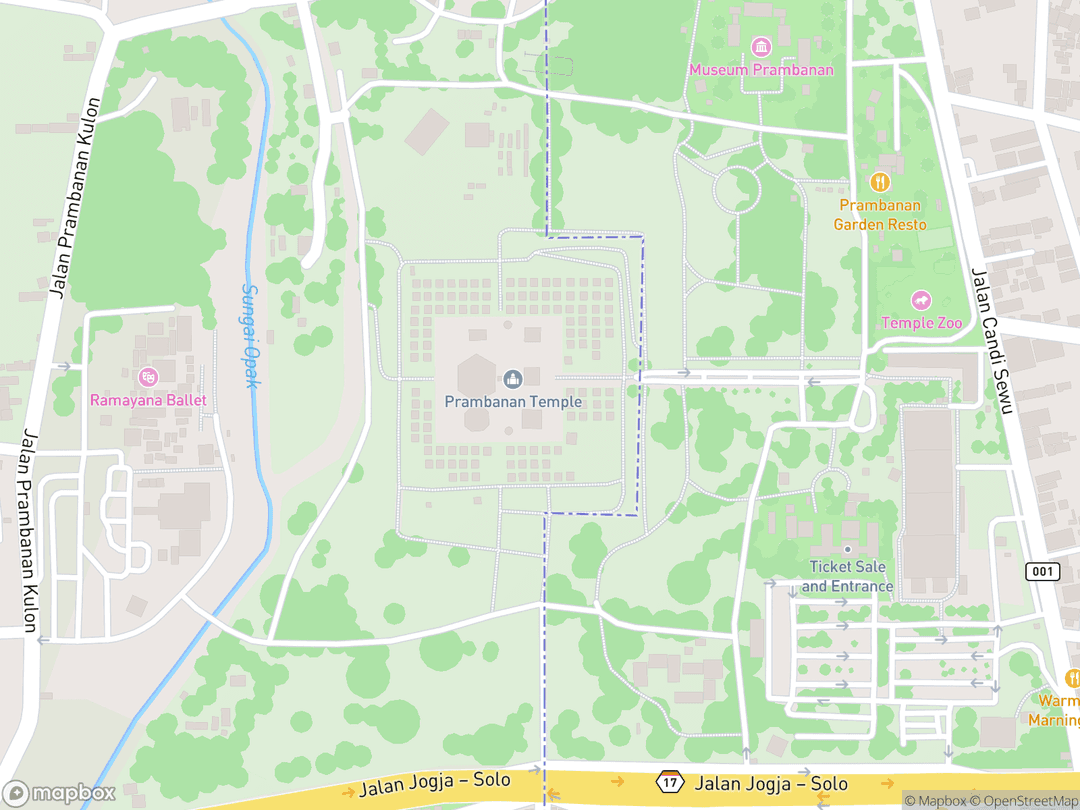
Jl. Raya Solo – Yogyakarta No.16, Kranggan, Bokoharjo, Kec. Prambanan, Kabupaten Sleman, Daerah Istimewa Yogyakarta 55571, Indonesia
Hours: 6:30 AM to 5:00 PM daily, except Monday (Candi Shiva Mahadeva closed).
Getting There: Located about 17 kilometers east of Yogyakarta. It takes around 30-40 minutes by car. Public buses run regularly from Yogyakarta to Prambanan.
Get DirectionsTips for Your Visit
Best Time to Visit
The best time to visit is in the morning or evening when the temperature is cooler. Weekdays are usually less crowded.
Explore Surrounding Temples
Consider visiting nearby temples such as Sewu and Plaosan to further enrich your cultural experience.
About
According to UNESCO, Prambanan Temple, also known as Candi Prambanan, is a stunning 9th-century Hindu temple complex located approximately 17 kilometers northeast of Yogyakarta, Indonesia. This World Heritage Site stands as a testament to the grandeur of ancient Javanese architecture and the enduring influence of Hinduism in the region. Dedicated to the Trimurti – Brahma, Vishnu, and Shiva – Prambanan is the largest Hindu temple in Indonesia and one of the largest in Southeast Asia.
The temple's construction began in the mid-9th century under King Rakai Pikatan of the Sanjaya Dynasty and was further expanded by his successors. The Shivagrha inscription indicates that the temple was inaugurated in 856 CE. Prambanan was designed to mimic Meru, the holy mountain, the abode of Hindu gods, and the home of Shiva. The whole temple complex is a model of the Hindu universe according to Hindu cosmology and the layers of Loka.
The Prambanan complex originally consisted of 240 temple structures, though only a few have been fully restored. The three main temples are dedicated to Shiva, Vishnu, and Brahma, with smaller temples dedicated to their respective vahana (vehicles). The temple complex was abandoned in the 10th century when the Javanese court shifted to East Java, and a massive earthquake in the 16th century caused further collapse. Rediscovered in 1733, restoration efforts began in the early 20th century and continue to this day, preserving this remarkable cultural treasure.
Gallery
Symbolic Elements
The temple's exterior features intricate carvings, each rich with spiritual meaning:

Shiva Mahadeva Statue
The three-meter-high statue of Shiva Mahadeva resides within the central Shiva temple. This statue represents Shiva in his form as the Great God, embodying destruction and transformation, essential aspects of the Hindu Trimurti. The presence of this statue underscores the temple's dedication to Shiva and his cosmic role.

Mount Meru Symbolism
The towering spires of Prambanan are designed to resemble Mount Meru, the sacred mountain in Hindu cosmology. Mount Meru is considered the center of the universe and the abode of the gods. By emulating this sacred mountain, Prambanan Temple seeks to create a connection between the earthly and divine realms, symbolizing spiritual ascension.

Ramayana Reliefs
The walls of Prambanan Temple are adorned with intricate reliefs depicting scenes from the Ramayana epic. These reliefs tell the story of Rama's journey, his battle against Ravana, and the rescue of Sita. The inclusion of the Ramayana narrative highlights the importance of dharma, devotion, and the triumph of good over evil in Hindu tradition.

Lingga and Yoni
Within one of the smaller temples, a Lingga and Yoni are housed, representing the divine union of Shiva and Shakti. The Lingga symbolizes the masculine principle, while the Yoni represents the feminine principle. Together, they signify creation, fertility, and the cyclical nature of life, embodying the cosmic dance of energy and consciousness.

Trimurti Representation
Prambanan is dedicated to the Trimurti, the Hindu trinity of Brahma, Vishnu, and Shiva. Each god represents a fundamental aspect of the universe: Brahma the creator, Vishnu the preserver, and Shiva the destroyer. The temple's dedication to the Trimurti underscores the interconnectedness of these divine functions and the cyclical nature of existence.

Vahana Temples
In front of the main temples dedicated to the Trimurti are smaller temples dedicated to their respective vahana, or vehicles. Nandi the bull for Shiva, Garuda for Vishnu, and Hamsa the goose for Brahma. These vahana are not merely modes of transport but also represent the energies and attributes of their respective deities, symbolizing their divine power and presence.

Outer, Middle, and Inner Zones
The temple compound is designed with three distinct zones: outer, middle, and inner. The inner zone is the holiest, containing the main shrines dedicated to the Trimurti. This layout reflects the hierarchical structure of the Hindu universe, with the inner zone representing the most sacred and divine space, accessible only to priests and those of pure intent.

Volcanic Rock Construction
Prambanan Temple is constructed from volcanic rock, using a dry-stone masonry technique. This choice of material reflects the geological landscape of the region and the ingenuity of the ancient Javanese builders. The volcanic rock provides durability and resilience, allowing the temple to withstand the test of time and natural elements.
Interesting Facts
Prambanan is the largest Hindu temple in Indonesia and the second-largest in Southeast Asia after Angkor Wat.
The temple was built in the 9th century during the reign of the Sanjaya Dynasty, with construction starting around 850 CE.
Prambanan was originally named Siwagrha (Shiva-grha), meaning 'House of Shiva'.
The temple is designed to resemble Mount Meru, the holy mountain and abode of the gods.
The Prambanan complex is also known as the Rara Jonggrang complex, named after a popular legend.
The temple complex originally consisted of 240 temple structures, but only a few have been fully restored.
Prambanan was built as a counterpoint to the Buddhist temples of Borobudur and Sewu, possibly to mark the return of the Hindu Sanjaya dynasty to power.
The main Shiva temple houses a three-meter-high statue of Shiva Mahadeva.
Prambanan was abandoned in the 10th century when the Javanese court moved to East Java.
The temple was rediscovered in 1733 by a Dutchman and proper restoration commenced in 1930.
Common Questions
What is Prambanan Temple?
Prambanan Temple, also known as Candi Prambanan, is a 9th-century Hindu temple complex located near Yogyakarta, Indonesia. It is dedicated to the Trimurti, the Hindu trinity of Brahma, Vishnu, and Shiva, and is renowned for its stunning architecture and intricate carvings.
When was Prambanan Temple built?
The construction of Prambanan Temple began in the mid-9th century under King Rakai Pikatan of the Sanjaya Dynasty. The Shivagrha inscription indicates that the temple was inaugurated in 856 CE.
Why is Prambanan Temple significant?
Prambanan Temple is significant as the largest Hindu temple in Indonesia and one of the largest in Southeast Asia. It showcases the rich cultural and religious history of the region and is a testament to the grandeur of ancient Javanese architecture.
What are the main temples in the Prambanan complex?
The three main temples in the Prambanan complex are dedicated to Shiva, Vishnu, and Brahma. In front of these are three temples dedicated to the vahana (vehicles) of each god: Nandi (bull) for Shiva, Garuda for Vishnu, and Hamsa (goose) for Brahma.
What can visitors see and do at Prambanan Temple?
Visitors can explore the towering temples, admire the intricate carvings depicting scenes from the Ramayana and Bhagavata Purana, learn about the history and significance of the temple at the on-site museum, and enjoy cultural performances such as the Ramayana ballet.
Related Stories
Explore the rich history, traditions, and people connected to this sacred site.
Featured Stories
The Legend of Rara Jonggrang
9th Century
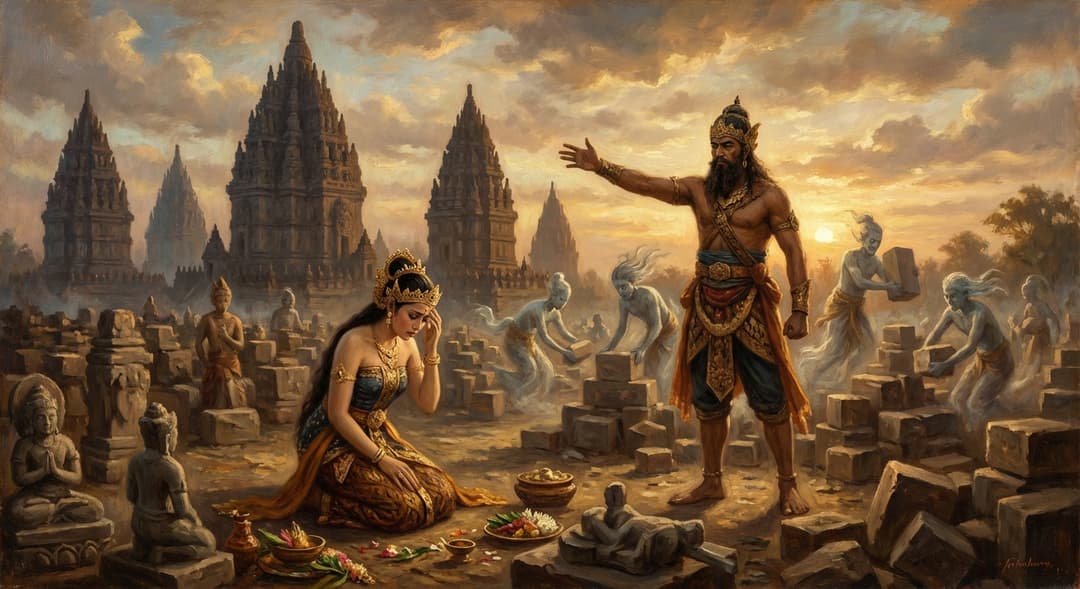
Prambanan Temple is also known as the Rara Jonggrang complex, named after a popular legend. The story tells of a beautiful princess, Rara Jonggrang, who was forced to marry a powerful prince, Bandung Bondowoso, against her will. To avoid the marriage, she challenged him to build a thousand temples in a single night.
Bandung Bondowoso, with the help of supernatural beings, almost completed the task. In a desperate attempt to sabotage his efforts, Rara Jonggrang and her maids created the illusion of dawn, fooling the supernatural beings into stopping their work. Enraged by her deception, Bandung Bondowoso cursed Rara Jonggrang, turning her into a stone statue, which is said to be the image of Durga in the northern cell of the Shiva temple.
This legend adds a layer of mystique and romance to the Prambanan Temple, captivating visitors with its tale of love, betrayal, and supernatural power. The story of Rara Jonggrang serves as a reminder of the cultural richness and folklore that surrounds this magnificent temple complex.
Source: Local folklore and oral traditions
The Shivagrha Inscription
856 CE
The Shivagrha inscription, dated 856 CE, provides valuable insights into the construction and dedication of Prambanan Temple. This inscription, written in Old Javanese, describes the inauguration of the Shivagrha temple (another name for Prambanan) by King Lokapala. It details the rituals, ceremonies, and offerings that were performed during the dedication, shedding light on the religious practices of the time.
The inscription also mentions the expansion of the temple complex by King Lokapala and his successors, highlighting the ongoing efforts to enhance and beautify the sacred site. It provides a glimpse into the political and social context of the era, revealing the importance of Prambanan Temple as a symbol of royal power and religious devotion.
The Shivagrha inscription stands as a primary source of information about Prambanan Temple, offering a direct connection to the ancient Javanese civilization and their reverence for the Hindu deities. It serves as a testament to the enduring legacy of Prambanan Temple as a cultural and historical landmark.
Source: Archaeological findings and historical records
Restoration and Rediscovery
20th Century
After centuries of abandonment and natural disasters, Prambanan Temple lay in ruins, its grandeur obscured by overgrown vegetation and debris. It was rediscovered in 1733 by a Dutchman, but proper restoration efforts did not commence until the early 20th century. The Dutch colonial government initiated the painstaking process of reconstructing the temple complex, piecing together the scattered stones and restoring the intricate carvings.
The restoration work was interrupted by World War II and the Indonesian National Revolution, but it resumed in 1949. The reconstruction of the main Shiva temple was completed in 1953 and inaugurated by Indonesia’s first president, Sukarno. The Brahma and Vishnu temples were subsequently restored, culminating in the UNESCO World Heritage Site status in 1991.
The story of Prambanan's restoration is a testament to the dedication and perseverance of archaeologists, historians, and local communities. Their efforts have revived this magnificent temple complex, allowing visitors from around the world to appreciate its beauty and significance. The rediscovery and restoration of Prambanan Temple symbolize the resilience of cultural heritage and the importance of preserving it for future generations.
Source: Historical accounts and archaeological reports
Timeline
Construction of Temple Compounds
Construction of temple compounds in the Prambanan Plain, including Sewu, Lumbung, and Bubrah.
EventPrambanan Temple Construction Begins
Prambanan temple construction begins under King Rakai Pikatan of the Sanjaya Dynasty.
MilestoneShivagrha Temple Inauguration
Shivagrha temple (another name for Prambanan) is inaugurated by King Lokapala.
DedicationTemple Complex Expansion
Successors of Rakai Pikatan, including Dyah Lokapala and Dyah Balitung, continue to expand the temple complex.
EventJavanese Court Shifts
The Javanese court shifts to East Java in the 930s by Mpu Sindok, leading to the abandonment of the Prambanan temple.
EventEarthquake Causes Collapse
A massive earthquake causes the temple to collapse.
EventRediscovery by CA Lons
Rediscovered by CA Lons, a Dutchman.
EventTemple Remains in Ruins
Temple remains in ruins during British Java period.
EventRediscovery by Surveyor
Rediscovered by a surveyor working for Sir Thomas Stamford Raffles during brief British rule.
EventReconstruction Efforts Begin
Dutch colonial government begins reconstruction efforts.
RenovationProper Restoration Commences
Proper restoration commences.
RenovationReconstruction Resumes
Temple reconstruction resumes after World War II.
RenovationReconstruction of Shiva Temple Completed
Reconstruction of the main Shiva temple is completed and inaugurated by Indonesia’s first president, Sukarno.
DedicationReconstruction of Brahma Temple
Reconstruction of the Brahma temple.
RenovationReconstruction of Vishnu Temple
Reconstruction of the Vishnu temple.
RenovationUNESCO World Heritage Site Status
Prambanan Temple Compounds gain UNESCO World Heritage Site status.
MilestoneCompletion of Vahana Temples
Vahana temples and some smaller shrines are completed.
RenovationYogyakarta Earthquake Damage
Yogyakarta earthquake causes damage.
EventBubrah Restoration Completed
Bubrah restoration was completed.
RenovationHistory by Decade
8th–9th Centuries — Temple Foundation
The Prambanan Plain witnessed the construction of numerous temple compounds, including Sewu (completed in 792 CE), Lumbung, and Bubrah. These early constructions laid the groundwork for the grander Prambanan Temple, showcasing the architectural and religious fervor of the era. The construction of these temples reflects the flourishing of both Hindu and Buddhist cultures in Java during this period.
Mid-9th Century — Construction Begins
Around 850 CE, King Rakai Pikatan of the Sanjaya Dynasty initiated the construction of Prambanan Temple. This marked a significant shift towards Hindu influence in the region, with Prambanan designed as a magnificent expression of Hindu cosmology and devotion. The temple's design was influenced by both indigenous Javanese traditions and elements borrowed from South India, particularly the Pallava style.
856 CE — Inauguration of Shivagrha
The Shivagrha inscription indicates that Prambanan Temple, then known as Shivagrha, was inaugurated in 856 CE by King Lokapala. This event marked the formal dedication of the temple to Shiva and the Trimurti, solidifying its role as a central religious site. The inauguration was accompanied by elaborate rituals and ceremonies, reflecting the importance of the temple to the kingdom.
Late 9th Century — Expansion and Development
Successors of Rakai Pikatan, including Dyah Lokapala and Dyah Balitung, continued to expand the temple complex. This period saw the addition of numerous smaller shrines and structures, enhancing the overall grandeur and complexity of Prambanan. The ongoing construction and development of the temple reflected the continued prosperity and religious zeal of the Sanjaya Dynasty.
10th Century — Abandonment
In the 10th century, the Javanese court shifted to East Java under Mpu Sindok, leading to the abandonment of Prambanan Temple. This marked a decline in the temple's importance, as the center of power moved away from the Prambanan Plain. The temple gradually fell into disrepair, with vegetation overgrowing its structures and its significance fading from memory.
16th Century — Earthquake and Collapse
A massive earthquake in the 16th century caused significant damage to Prambanan Temple, leading to the collapse of many of its structures. This natural disaster further contributed to the temple's decline, leaving it in a state of ruin for centuries. The earthquake served as a reminder of the vulnerability of even the most magnificent structures to the forces of nature.
1733 — Rediscovery
Prambanan Temple was rediscovered in 1733 by CA Lons, a Dutchman, marking the beginning of its re-emergence into the historical record. This rediscovery sparked renewed interest in the temple, leading to further exploration and documentation of its ruins. The rediscovery of Prambanan served as a catalyst for future restoration efforts.
Early 20th Century — Restoration Efforts
The Dutch colonial government initiated restoration efforts in the early 20th century, beginning the painstaking process of reconstructing Prambanan Temple. This involved carefully cataloging and reassembling the scattered stones, as well as restoring the intricate carvings that adorned the temple's walls. The restoration efforts reflected a growing appreciation for the cultural and historical significance of Prambanan.
Architecture & Facilities
Hindu temple architecture following Vastu Shastra principles, blending indigenous Javanese traditions with Pallava-style influences from South India. The complex originally comprised 240 temple structures arranged in a mandala plan across three concentric zones — outer, middle, and inner — with the innermost zone housing eight main shrines. The central Shiva temple rises 47 meters as a towering shikhara spire symbolizing Mount Meru, the cosmic axis and abode of the gods. Flanking it are temples to Vishnu and Brahma, each fronted by vahana shrines for Nandi, Garuda, and Hamsa. Constructed from volcanic rock using dry-stone masonry without mortar, the walls are adorned with extensive relief panels illustrating the Ramayana and Bhagavata Purana epics. Each temple features elaborate carved finials, kala- makara doorway arches, and pilastered niches that reflect the rich ornamental vocabulary of 9th-century Javanese Hindu art.
Religious Significance
Prambanan Temple stands as one of the most sacred sites in Hinduism, embodying the divine presence on earth and serving as a bridge between the mortal and celestial realms. Hindu temples are conceived as the earthly dwelling places of the gods, where the divine descends to meet humanity. Every element of the temple — from its towering gopurams to its inner sanctum — is designed according to ancient Vedic principles to channel sacred energy and facilitate communion between devotees and the divine.
The temple serves as a sacred space where devotees can perform darshan (beholding the deity), offer puja (worship rituals), and seek blessings for spiritual growth, worldly well-being, and liberation from the cycle of rebirth (moksha). It functions as both a house of God and a community center where festivals, rites of passage, and cultural traditions are preserved and celebrated across generations.
Sacred Ordinances
Puja (Worship Ritual)
Daily worship ceremonies are performed by temple priests, involving the offering of flowers, fruit, incense, and sacred water to the presiding deities. These rituals, accompanied by the chanting of mantras and the ringing of bells, invite the divine presence and transmit blessings to all who participate.
Darshan (Divine Sight)
Devotees visit the temple to receive darshan — the auspicious sight of the deity's image in the inner sanctum. This visual communion with the divine is considered one of the most powerful forms of Hindu worship, believed to bestow grace, remove obstacles, and purify the soul.
Abhishekam (Sacred Bathing)
The deity's image is ceremonially bathed with sacred substances including milk, honey, yogurt, sandalwood paste, and holy water. This ritual purification symbolizes the devotee's desire to cleanse their own consciousness and honor the divine with the finest offerings of the earth.
Festival Celebrations
Major Hindu festivals are celebrated with elaborate processions, special pujas, music, dance, and community feasting. These festivals mark important events in Hindu mythology and the cosmic calendar, reinforcing the community's connection to their spiritual heritage and the rhythms of the sacred year.
Cosmic Architecture
The temple's architecture follows the ancient principles of Vastu Shastra and Agama texts, which prescribe the precise layout, proportions, and orientation of sacred structures. The temple is conceived as a microcosm of the universe — the base represents the earth, the walls represent the atmosphere, and the tower represents the heavens. The inner sanctum (garbhagriha) symbolizes the cave of the heart where the divine resides, and the entire structure is oriented along cardinal directions to align with cosmic energies.
Pilgrimage and Spiritual Merit
Visiting the temple is considered an act of great spiritual merit in Hinduism. Pilgrims travel from across the region and the world to worship at the temple, believing that prayers offered at such sacred sites carry special potency. The act of pilgrimage itself — leaving behind the comforts of daily life to seek the divine — is viewed as a form of tapas (spiritual discipline) that purifies the soul and accelerates one's progress toward moksha, the ultimate liberation from the cycle of rebirth.
Similar Temples
Sources & Research
Every fact on Temples.org is backed by verified Sources & Research. Each piece of information is rated by source tier and confidence level.
View All Sources (3)
| Field | Source | Tier | Retrieved |
|---|---|---|---|
| Prambanan Temple Architectural Details | Rethinking the Future (opens in a new tab) | B | 2026-02-13 |
| Prambanan Temple Travel Guide | Backindo (opens in a new tab) | C | 2026-02-13 |
| Prambanan Temple Architecture | Bali Magic Tour (opens in a new tab) | C | 2026-02-13 |