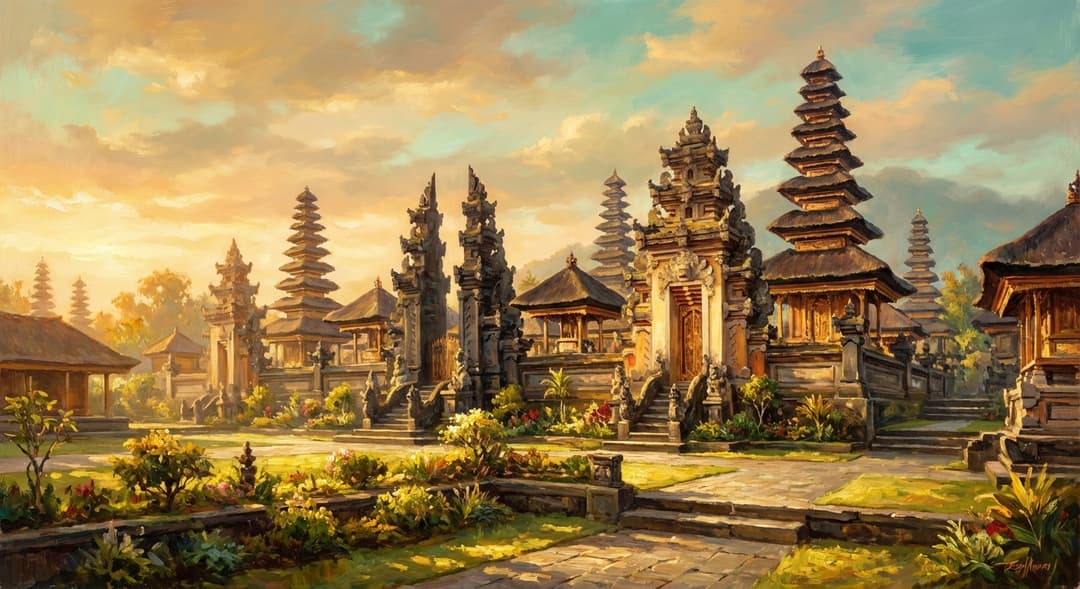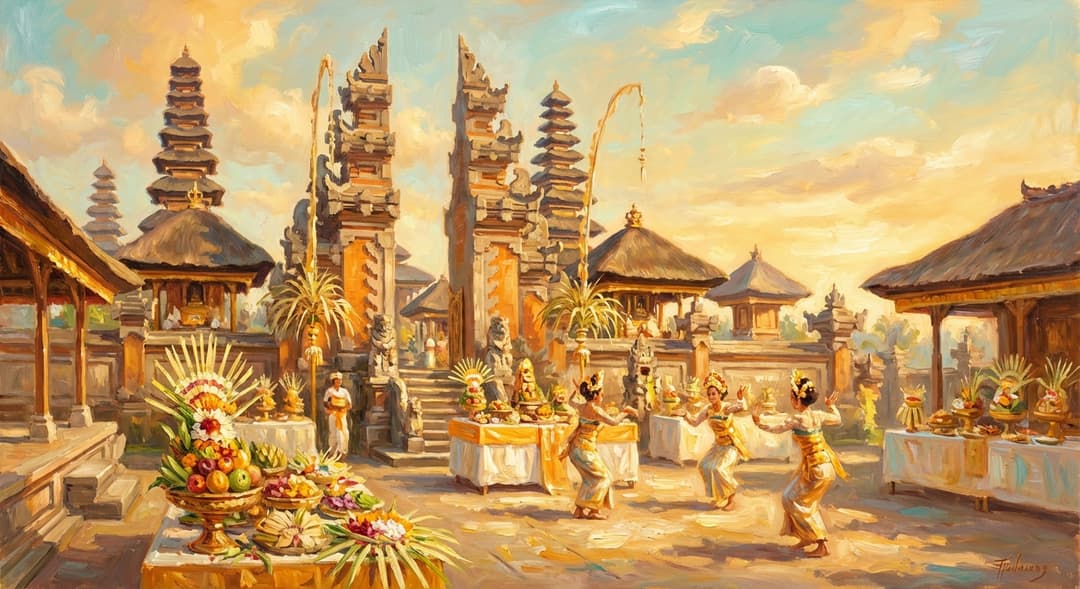
Balinese ceremonies are among the most visually spectacular and spiritually layered religious observances in the world. On any given day across Bali, hundreds of ceremonies large and small take place — from the daily canang sari offerings placed on doorsteps and shrines, to grand temple festivals (odalan) that can last for days and involve entire communities in preparation, prayer, music, and dance.
The Balinese ritual calendar is governed by two overlapping systems: the Saka calendar (a lunisolar calendar similar to the Hindu calendar) and the Pawukon calendar (a 210-day cycle unique to Bali and Java). The intersection of these two systems determines when festivals occur, creating a complex web of observances that varies from temple to temple. Major island-wide celebrations include Galungan and Kuningan (honoring ancestral spirits and the victory of dharma over adharma), Nyepi (the Day of Silence and Balinese New Year), and Saraswati (honoring the goddess of knowledge).
Ceremonies at major temples like Besakih are particularly elaborate. The Eka Dasa Rudra, held once every 100 years at Besakih, is the grandest ceremony in Balinese Hinduism — a massive purification ritual intended to restore cosmic balance. The most recent Eka Dasa Rudra was held in 1979, following the disruption caused by the 1963 Mount Agung eruption that prevented the ceremony from being completed that year.
Every ceremony involves elaborate offerings (banten) made from flowers, fruit, rice, and woven palm leaves, assembled with extraordinary artistry. Gamelan orchestras provide the musical accompaniment, while traditional dances such as the Barong, Legong, and Kecak dramatize mythological stories. These ceremonies are not mere performances for spectators — they are living expressions of faith, binding the Balinese community to their gods, ancestors, and the natural world.
Key Details
- Daily Offerings Canang sari — placed 3+ times daily at every home and business
- Temple Festivals Odalan — held every 210 days at each of Bali's 20,000+ temples
- Major Ceremony Eka Dasa Rudra — once every 100 years at Besakih
- Silent Day Nyepi — island-wide day of silence, fasting, and meditation
- Ancestral Celebration Galungan and Kuningan — 10-day festival twice per Pawukon year
- Cremation Ritual Ngaben — elaborate ceremony to release the soul for reincarnation
Timeline
Animistic Ritual Origins
Hindu-Buddhist Ritual Integration
Majapahit Cultural Infusion
Eka Dasa Rudra Disrupted
Eka Dasa Rudra Completed
Living Ceremonial Tradition
Sources & Research
Every fact on Temples.org is backed by verified Sources & Research. Each piece of information is rated by source tier and confidence level.
View All Sources (3)
| Field | Source | Tier | Retrieved |
|---|---|---|---|
| Eka Dasa Rudra History | Encyclopaedia Britannica (opens in a new tab) | B | 2026-02-13 |
| Ceremonial Calendar | Atlas Obscura (opens in a new tab) | C | 2026-02-13 |
| Nyepi and Galungan Festivals | Lonely Planet (opens in a new tab) | B | 2026-02-13 |