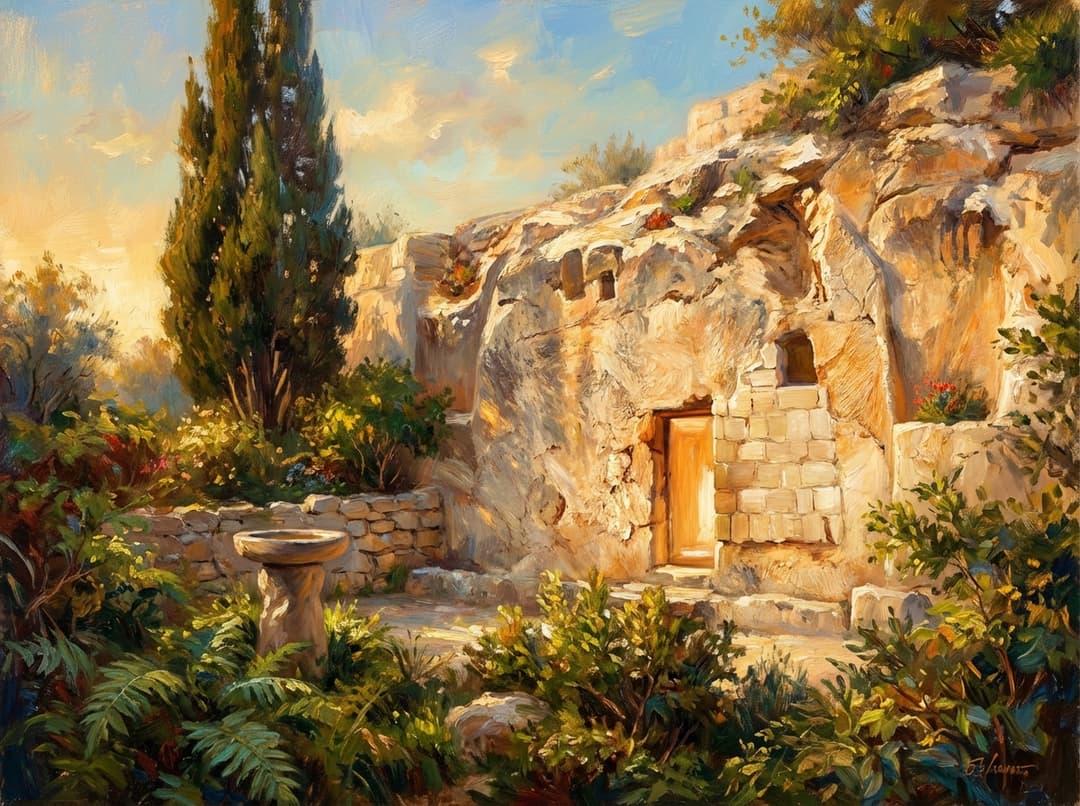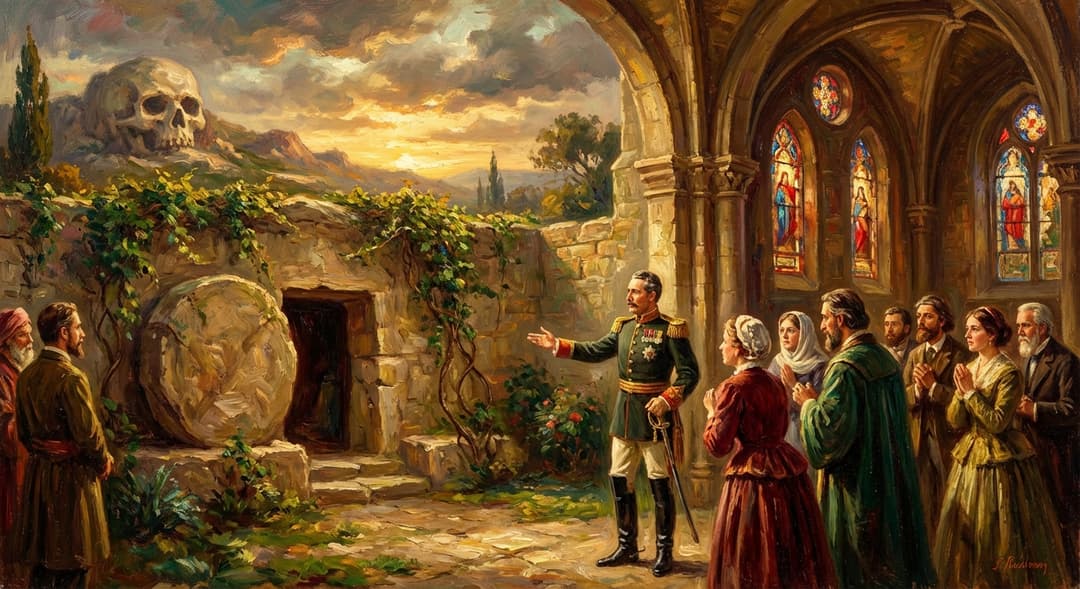
In the late 19th century, Charles George Gordon, a British Army officer and devout Christian, proposed an alternative location for Golgotha and the tomb of Jesus Christ: the Garden Tomb in Jerusalem. This proposition challenged the traditional site of the Church of the Holy Sepulchre, which had been venerated for centuries. Gordon's vision, rooted in his deep faith and interpretation of biblical prophecy, offered a compelling narrative that resonated with many, particularly within the Protestant community.
Gordon's identification centered on a hillock near the Damascus Gate, featuring a rock formation resembling a skull, which he believed to be the biblical Golgotha (the place of the skull). Nearby, he identified a rock-cut tomb within a garden-like setting as the burial place of Jesus. The Garden Tomb's location outside the city walls, its proximity to the skull-like hill, and its tranquil garden setting aligned with Gordon's romantic interpretation of the Gospel accounts.
While archaeological evidence suggests that the tomb dates to the Iron Age, potentially predating the time of Jesus, proponents of the Garden Tomb argue that it could have been reused in the first century. Regardless of its historical accuracy, the Garden Tomb quickly became a popular pilgrimage site, offering a more serene and less crowded alternative to the Church of the Holy Sepulchre. It provided a tangible connection to the biblical narrative and a place for quiet contemplation on the events of the crucifixion and resurrection.
The legacy of Charles Gordon's identification endures to this day. The Garden Tomb remains a significant site for Christian pilgrims, attracting visitors from around the world. It stands as a testament to the enduring power of faith and the ongoing search for the historical Jesus, offering an alternative perspective on one of the most pivotal events in Christian history. While scholarly consensus generally favors the Church of the Holy Sepulchre, the Garden Tomb continues to inspire and invite reflection.
Key Details
- Proposer Charles George Gordon
- Year of Identification 1883
- Alternative Site Challenges the Church of the Holy Sepulchre
- Location North of the Old City of Jerusalem, near the Damascus Gate
- Key Feature Proximity to "Skull Hill" (Gordon's Calvary)
- Current Status Popular pilgrimage site
Sources & Research
Every fact on Temples.org is backed by verified Sources & Research. Each piece of information is rated by source tier and confidence level.
View All Sources (4)
| Field | Source | Tier | Retrieved |
|---|---|---|---|
| Newspaper: the montgomery advertiser (montgomery, ala.) 1885-1982 (montgomery, alabama) | Library of Congress (opens in a new tab) | A | 2024-01-01 |
| Newspaper: south bend news-times (south bend, ind.) 1913-1938 (south bend, indiana) | Library of Congress (opens in a new tab) | A | 2024-01-01 |
| Garden Tomb Official Website | The Garden Tomb Association (opens in a new tab) | B | 2024-01-01 |
| The Garden Tomb: An Alternative to the Holy Sepulchre? | Biblical Archaeology Society (opens in a new tab) | C | 2024-01-01 |