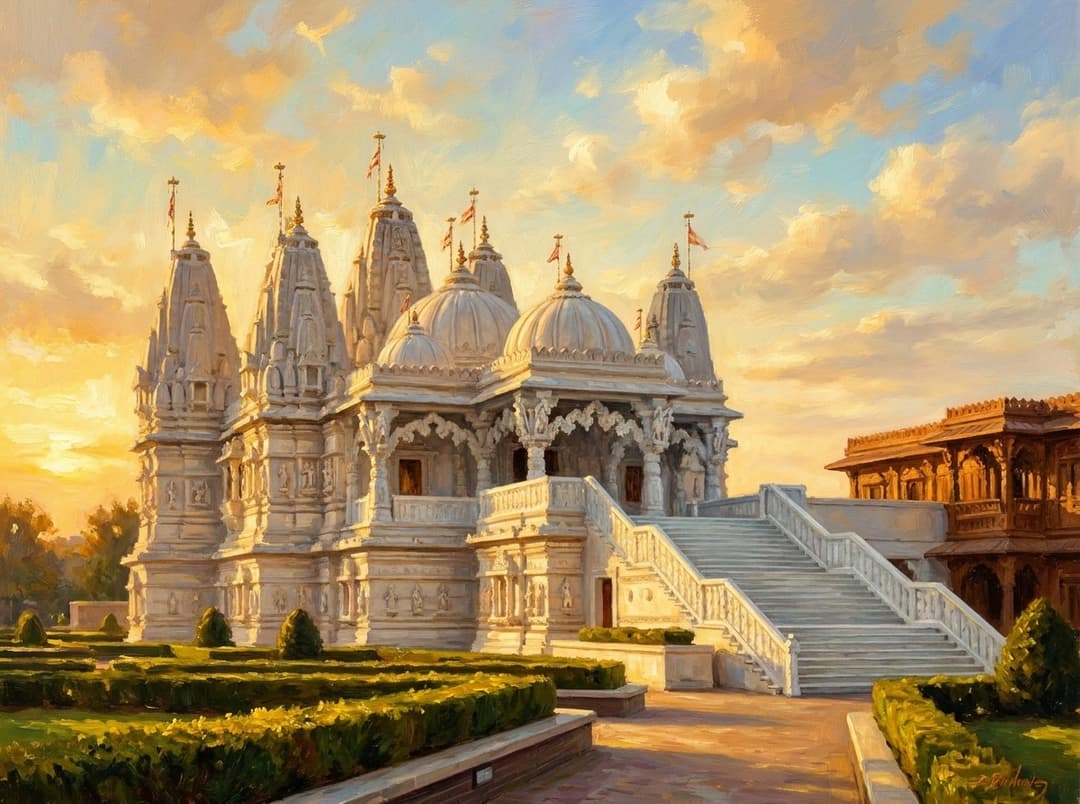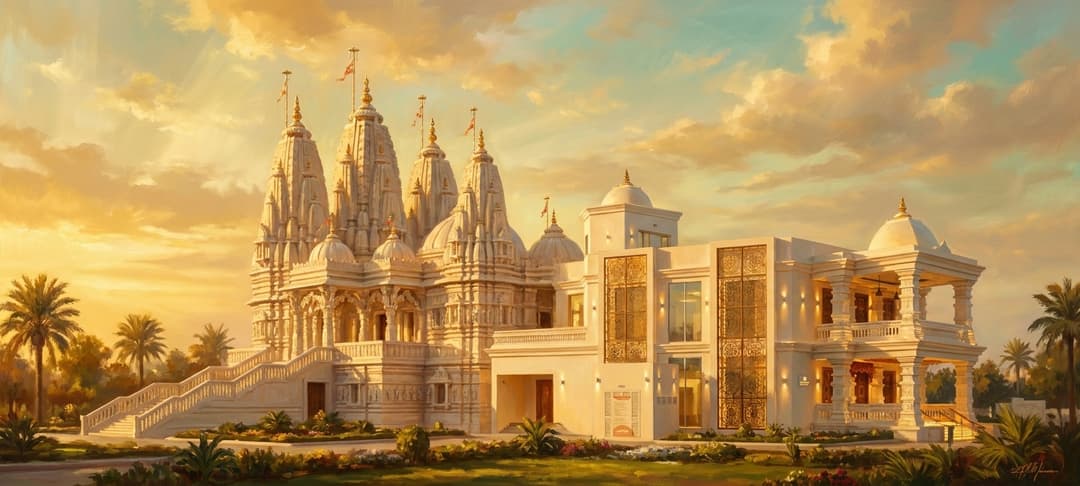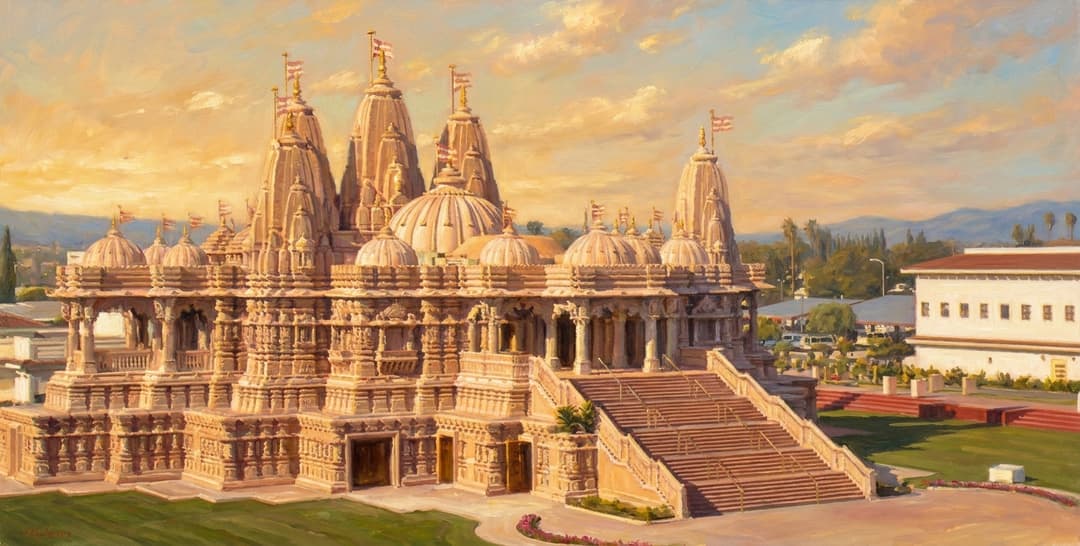
In the dusty workshops of Rajasthan and Gujarat, India, a thousand-year-old rhythm echoed across carving yards. Hammer met chisel, chipping away at blocks of Italian Carrara marble, Bulgarian Vartza limestone, and Indian pink sandstone. These artisans are the Sompuras—a hereditary guild of temple architects and stone carvers whose ancestors built the legendary medieval temples of Dilwara, Somnath, and Modhera. Today, they form the core of a sophisticated global network that keeps the ancient tradition of load-bearing stone masonry alive.
Modern Hindu temples, such as the BAPS mandirs in London, Abu Dhabi, and California, are designed using ancient algorithms but built using a globalized supply chain. The journey of a single column begins in a quarry in Tuscany, Italy, or the Vartza region of Bulgaria. Block by block, the raw stone is extracted and shipped to specialized workshop yards in India. Here, the Sompura craftsmen translate paper drawings into three-dimensional reliefs, working by hand to create intricate carvings of floral patterns, deities, and philosophical narratives.
Once carved, the stones undergo a meticulous cataloging process. Every single column, lintel, ceiling panel, and dome segment is assigned a unique number. They are packed in protective crates and shipped to sites across the globe—London, New York, Abu Dhabi, or Chino Hills. When the crates arrive, they represent a massive, three-dimensional jigsaw puzzle consisting of tens of thousands of interlocking parts.
On the construction site, these numbered pieces are assembled without structural steel or mortar in the main superstructure, relying instead on gravity, compression, and interlocking mortise-and-tenon joints. This combination of hereditary craftsmanship and complex modern logistics allows the ancient rules of the Shilpa Shastras to take root in foreign soils, creating monuments designed to endure for millennia.
Key Details
- Artisan Lineage Sompura and Rajasthani carver guilds
- Key Materials Carrara Marble (Italy), Vartza Limestone (Bulgaria), Pink Sandstone (India)
- Assembly Method Interlocking dry-stone jointing (No structural steel)
- Logistical Scale Tens of thousands of numbered pieces per temple
Timeline
Sompura Guild Prominence
The Sompura architectural community in Western India establishes its reputation for building complex white marble and sandstone shrines.
MilestoneLondon Jigsaw Shipped
Over 26,300 individually carved stone pieces are shipped from workshops in India to London for the Neasden Temple assembly.
MilestoneAbu Dhabi Logistics
Construction crews in Abu Dhabi begin assembling thousands of tons of Rajasthan pink sandstone pieces shipped across the Arabian Sea.
EventSources & Research
Every fact on Temples.org is backed by verified Sources & Research. Each piece of information is rated by source tier and confidence level.
View All Sources (3)
| Field | Source | Tier | Retrieved |
|---|---|---|---|
| Hereditary Masons of Rajasthan | Hinduism Today (opens in a new tab) | B | 2026-05-26 |
| Neasden Mandir: The Stone Story | BAPS Shri Swaminarayan Mandir, London (opens in a new tab) | A | 2026-05-26 |
| Abu Dhabi Mandir: Global Supply Chain | BAPS Swaminarayan Sanstha (opens in a new tab) | A | 2026-05-26 |