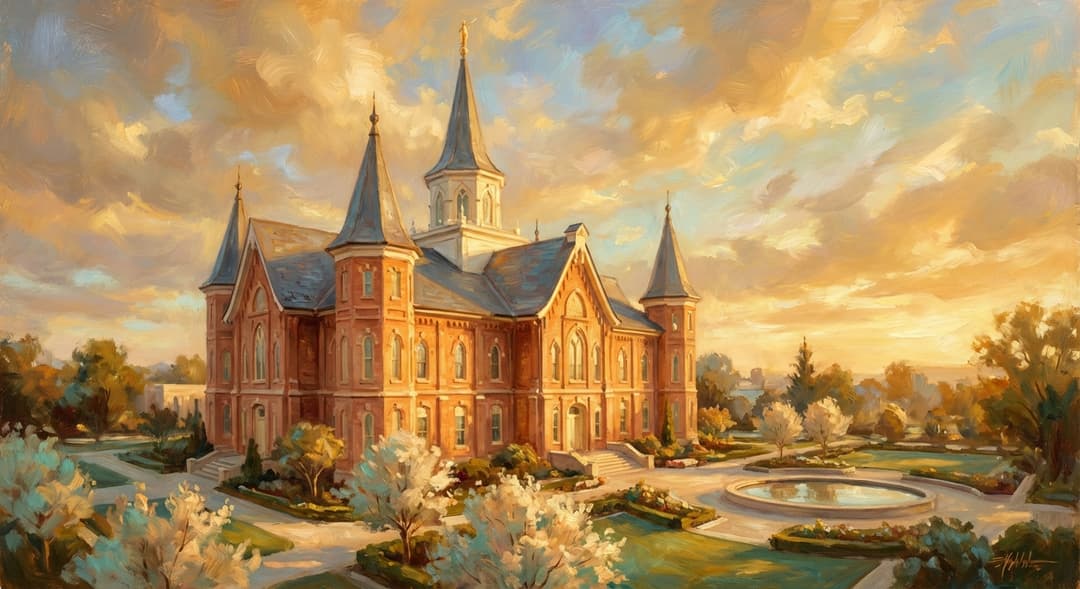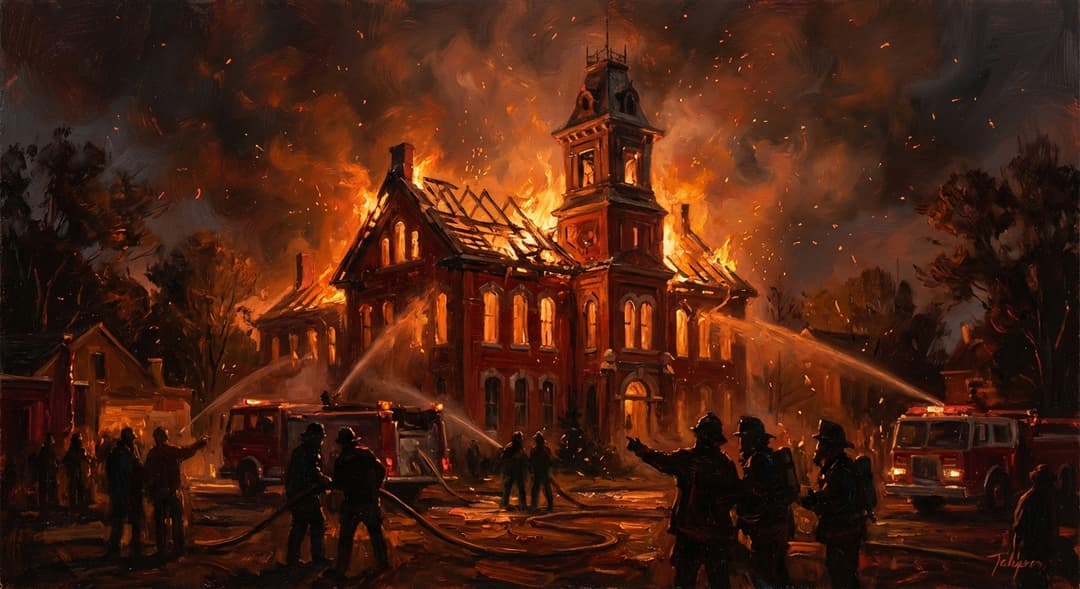
On the morning of December 17, 2010, a four-alarm fire broke out in the attic of the Provo Tabernacle, a cherished community landmark that had served the people of Utah Valley since 1898. Believed to have been caused by a hot lamp left by a technician, the fire raced through the wooden roof structure so rapidly that firefighters could not battle it from inside. Within hours, the roof collapsed and the interior was gutted. Only the sturdy brick shell — its walls bowed and cracked from the heat — remained standing.
The community mourned deeply. The Provo Tabernacle had hosted everything from Church conferences and musical performances to community gatherings and civic events for over a century. But in a crucial decision that would shape everything that followed, the fire chief chose not to demolish the exterior walls, which is standard procedure after a structural fire. The rounded towers and bowed imperfections in the walls were later credited with preventing the entire structure from caving in.
Less than a year later, in October 2011, President Thomas S. Monson stunned a worldwide audience by announcing that the burned tabernacle would be converted into the Provo City Center Temple. What followed was an engineering marvel: the entire 6.8-million-pound shell was suspended 40 feet in the air on steel stilts while crews excavated two new underground levels beneath it. Over half of the finished temple's 85,084 square feet are located below ground level.
During excavation, archaeologists discovered the remains of the original 1850s meetinghouse and an 1875 baptistry buried beneath the tabernacle. Amid the charred ruins, workers found a picture of Christ burned precisely up to the outline of His body, and a hidden wallpaper pattern — a green and pink ribbon design — was uncovered beneath layers of plaster, inspiring a motif used in the temple's bride's dressing room. The tabernacle pulpit, which had been removed to the basement before the fire for a Christmas concert, survived intact and now graces the temple's chapel. The phrase from Isaiah 61:3, "beauty for ashes," became the unofficial motto of the entire transformation.
Key Details
- Fire Date December 17, 2010
- Original Building Provo Tabernacle (built 1883–1898)
- Temple Announced October 1, 2011
- Weight Suspended 6.8 million pounds on steel stilts
- Floor Area 85,084 sq ft (over half underground)
- Dedicated March 20, 2016
Timeline
Tabernacle Construction Begins
Construction starts on the Provo Tabernacle, designed to serve as a gathering place for Latter-day Saints in Utah Valley.
EventTabernacle Completed
The Provo Tabernacle is finished after 15 years of construction and becomes a beloved community landmark.
MilestoneDevastating Fire
A four-alarm fire breaks out, gutting the interior and collapsing the roof. Only the brick shell survives.
EventTemple Announcement
President Thomas S. Monson announces that the burned tabernacle will be converted into the Provo City Center Temple.
MilestoneSuspended on Stilts
Engineers suspend the 6.8-million-pound shell on steel stilts, excavating two underground levels beneath the historic walls.
EventArchaeological Discoveries
Excavation reveals the original 1850s meetinghouse foundation and an 1875 baptistry beneath the tabernacle.
EventPublic Open House
The completed temple opens for public tours, drawing large crowds eager to see the transformation.
EventTemple Dedicated
The Provo City Center Temple is dedicated as the 150th operating temple of the Church.
DedicationSources & Research
Every fact on Temples.org is backed by verified Sources & Research. Each piece of information is rated by source tier and confidence level.
View All Sources (3)
| Field | Source | Tier | Retrieved |
|---|---|---|---|
| Temple Conversion Details | Church Newsroom (opens in a new tab) | A | 2026-02-16 |
| Engineering Story | FHE on the Road (opens in a new tab) | C | 2026-02-16 |
| Hidden Details | LDS Living (opens in a new tab) | C | 2026-02-16 |