Visitor Insights
Visiting Provo City Center Temple
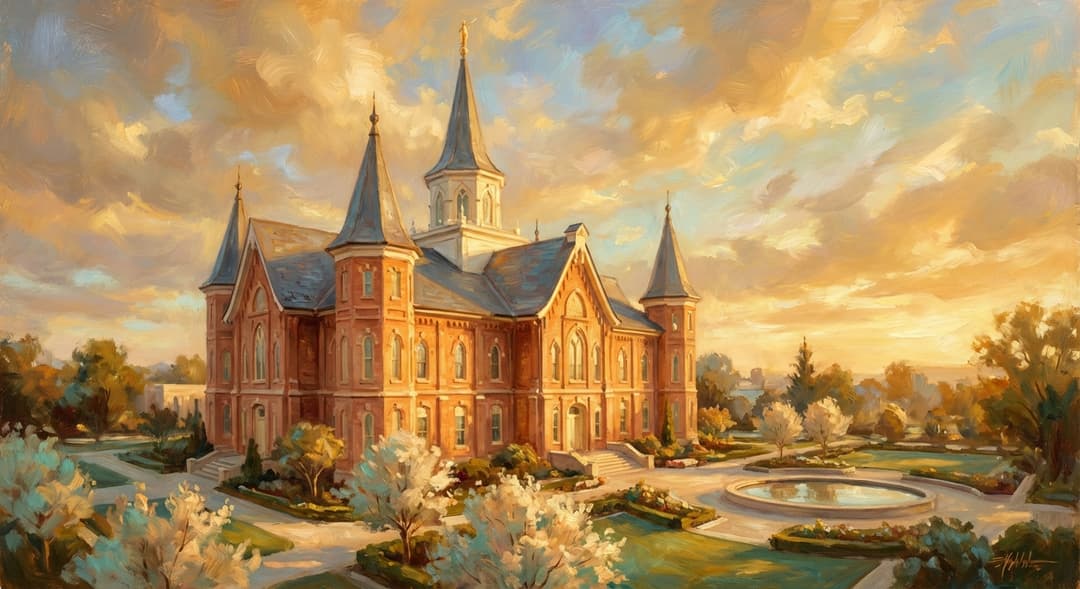
Located in the heart of downtown Provo, the temple grounds are a public sanctuary featuring a Victorian pavilion and lush gardens. While the interior is reserved for Church members, the grounds are a popular location for photography and quiet reflection.
Highlights
- The Victorian Pavilion with the Christus statue
- The restored central spire and corner towers
- Original pioneer brickwork
Things to Know
- Parking can be limited during downtown events
- The temple is closed on Sundays
Location
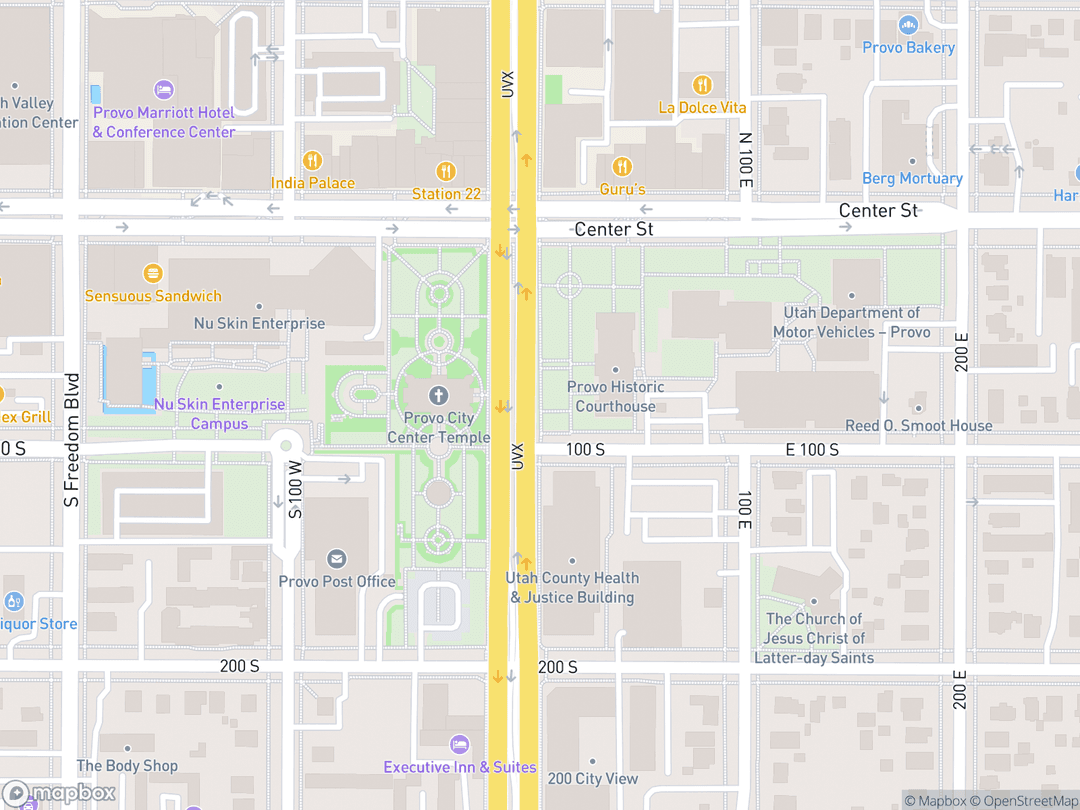
50 South University Avenue, Provo, Utah 84601
Hours: Tuesday through Saturday, varying hours; closed Sunday and Monday. Check churchofjesuschrist.org for current schedule.
Getting There: Located at University Avenue and Center Street. Public transit is available via UVX (Utah Valley Express).
Get DirectionsTips for Your Visit
Parking
The temple has underground parking accessed from Center Street, as well as surface parking. Be aware that parking fills up quickly during busy downtown events or conventions.
Victorian Pavilion
Make sure to visit the Victorian Pavilion on the grounds, which features a beautiful Christus statue and offers a peaceful place to sit.
Best Photography
The gardens provide beautiful foregrounds for temple photos. The fountains and pathways are incredibly picturesque, especially during the spring and summer months.
Historic Detail
When walking the exterior, look closely at the brickwork and the stained glass windows, which were painstakingly recreated to match the 1898 tabernacle's original Victorian Eastlake style.
About
According to The Church of Jesus Christ of Latter-day Saints, the Provo City Center Temple stands as a landmark case study in religious architectural preservation, having been built within the surviving exterior brick shell of the historic Provo Tabernacle following a catastrophic fire in 2010. Originally constructed in the late 19th century, the building served as a central community and religious hub for generations before its transformation into the 150th operating temple of the Church. Rather than razing the structure after the fire, the Church undertook a massive engineering feat to save the beloved edifice.
Engineers elevated the 6.8-million-pound brick shell on steel stilts to excavate two basement levels beneath it, effectively creating a new building within and below the historic skin. The restoration returned the interior to a distinct Victorian "Eastlake" style, featuring intricate woodwork, vibrant colors, and stained glass that honors the era of the original construction.
Dedicated in 2016 as the 150th operating temple of the Church, it is celebrated not only for its religious function but for its physical embodiment of the scriptural theme "beauty for ashes." It serves as a bridge between the pioneer past and the modern faith, standing as a testament to the doctrine of resurrection and renewal.
Gallery
Symbolic Elements
The temple's exterior features intricate carvings, each rich with spiritual meaning:

The Columbine Flower
A native Utah flower found throughout the woodwork and art glass. In Christian tradition, it represents the Holy Spirit and the seven gifts of the Spirit.
The Good Shepherd
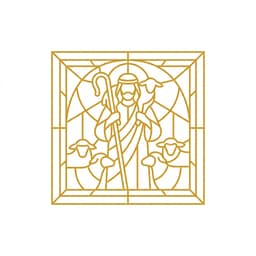
A reclaimed stained glass window in the lobby depicting Christ as the Good Shepherd, symbolizing His role as the guardian of the flock.

Circle and Square
Geometric motifs combining the circle (eternity/heaven) and the square (earth/four corners), representing the temple as the intersection of heaven and earth.

Scalloped Shingles
The roof features distinctive scalloped shingles that match the 1800s design, adding texture and historical authenticity to the silhouette.

The Finial
The decorative top of the central spire was modeled after a surviving interior newel post, visually connecting the exterior to the building's history.

Pioneer Brick
The exterior walls consist of the original pioneer-era brick. The outer three wythes were preserved while the inner layers were reinforced with concrete.
Interesting Facts
Provo is only the second city in the world, after South Jordan, Utah, to host two operating Latter-day Saint temples.
The temple's name omits 'Utah' to distinguish it from the existing Provo Utah Temple.
A 120-year-old stained glass window depicting the Good Shepherd was salvaged from a demolished Presbyterian church in New York for the lobby.
The exterior shell, weighing 6.8 million pounds, was suspended on steel stilts to allow for the excavation of two basement levels.
Groundwater pumps were required to keep the deep excavation dry, as the foundation sits 40 feet below the surface.
A small section of the original pulpit survived the fire because it had been removed for a musical performance just days prior.
The baptismal font is supported by 12 bronze oxen, a traditional element located in the newly excavated lower level.
Layers of original Victorian wallpaper found during cleanup were reproduced for the Bride's Room.
The central tower's finial was cast in the style of a newel post from the original tabernacle.
This is the second tabernacle in Church history to be converted into a temple, following the Vernal Utah Temple.
The Provo Tabernacle hosted two sessions of General Conference in 1886 and 1887—the only times in history that General Conference was held in Provo.
The tabernacle's famous holiday concert series drew thousands of attendees each December for decades before the 2010 fire; the fire itself broke out during preparations for that year's concert.
In 1964, community members staged a successful campaign to save the building from demolition, setting a precedent for its later preservation as a temple.
Common Questions
Why was the temple built from a burned building?
Following the 2010 fire that destroyed the Provo Tabernacle's interior, Church leaders decided to preserve the historic exterior shell. Rebuilding it as a temple honored the pioneer heritage of the structure while giving it a renewed, sacred purpose.
What does 'Beauty for Ashes' mean?
Taken from Isaiah 61:3, this phrase was the theme of the temple's cultural celebration. It symbolizes the physical transformation of the burned ruin into a beautiful holy edifice, as well as the spiritual doctrine of the Atonement bringing redemption and hope.
How did they build under the existing walls?
Engineers used a complex system of steel piles to support the 6.8-million-pound brick shell in the air. This allowed crews to excavate 40 feet of soil from beneath the floating walls to construct two new basement levels for the baptistry and support facilities.
Is the interior original?
The original interior was destroyed by the fire. The current interior is a faithful restoration in the Victorian 'Eastlake' style, using historical photos and surviving fragments to recreate woodwork, moldings, and layouts consistent with the 1800s design.
Can the public enter the temple?
Access to the temple interior is restricted to members of the Church with a valid temple recommend. However, the grounds and the Victorian pavilion south of the temple are open to the general public.
Featured Stories
From Tragedy to Triumph
2010–2016
On a cold December morning in 2010, the community of Provo watched in horror as their beloved Tabernacle was consumed by flames. The four-alarm fire gutted the interior, causing the roof to collapse and leaving only a fragile brick shell standing against the winter sky. For months, the fate of the historic structure hung in the balance.
The announcement that the ruins would be rebuilt as a temple turned a moment of loss into one of anticipation. The project adopted the scriptural theme 'Beauty for Ashes,' symbolizing not just the physical reconstruction of the edifice, but the spiritual promise that hope and glory can emerge from the deepest tragedies.
Source: Deseret News & Church History
The Temple on Stilts
Construction Phase
To transform a single-hall tabernacle into a functioning temple, architects needed significantly more space than the footprint allowed. The solution was an engineering marvel: excavating 40 feet down to add two basement levels directly beneath the standing walls.
Workers inserted steel piles to support the 6.8-million-pound brick exterior, effectively putting the entire building on stilts. For months, the historic shell appeared to float in mid-air while heavy machinery worked underneath to pour a new, seismic-proof foundation, merging 19th-century masonry with 21st-century engineering.
Source: Jacobsen Construction & FFKR Architects
The Survivor Pulpit
Preservation
Amidst the ashes of the 2010 fire, very little of the interior survived. However, a small section of the original hand-carved pulpit had been removed from the building just days before the fire to accommodate a musical performance stage setup.
This fortunate timing saved a piece of the building's heart. The pulpit was carefully restored and now stands in the temple's chapel, a tangible link to the thousands of sermons and testimonies shared in the Tabernacle over the previous century.
Source: Church History Department
Timeline
Provo Settlement Founded
A company of 33 families led by John S. Higbee establishes Fort Utah along the Provo River, beginning permanent settlement in Utah Valley.
MilestoneFirst Meetinghouse Plans
Community leaders begin discussing the need for a permanent meeting hall to replace open-air gatherings and the small log schoolhouse used for worship.
MilestoneSite Selection
Brigham Young advocates for the current block at University Avenue and Center Street, shifting plans from a location five blocks west.
MilestoneOld Tabernacle Completed
A modest adobe meetinghouse, known as the Old Tabernacle, is completed on the north end of the block. It seats approximately 1,100 people and serves as the community's primary gathering place.
MilestoneOld Tabernacle Dedicated
Apostle John Taylor formally dedicates the Old Tabernacle. Brigham Young notes the growing community will soon need a larger building.
DedicationNew Tabernacle Construction Begins
Work begins on the grand 'New Provo Tabernacle' under architect William H. Folsom, known for his work on the Salt Lake Tabernacle and Manti Temple. The project costs approximately $100,000.
component.timeline.groundbreakingBuilding Enclosed
The exterior walls and roof of the new tabernacle are completed after two years of construction using locally fired red brick in a Gothic Revival style.
component.timeline.constructionGeneral Conference Hosted
The still-unfinished tabernacle hosts two sessions of General Conference for The Church of Jesus Christ of Latter-day Saints, the only times General Conference has been held in Provo.
EventTabernacle Dedication
After fifteen years of intermittent construction and finishing work, the Provo Tabernacle is formally dedicated by First Presidency counselor George Q. Cannon. A pipe organ is installed the same year.
DedicationTower Removal & Renovation
The original central tower is removed due to the roof sagging under its weight. Stained glass windows replace the original frosted glass, and electric lighting replaces gas fixtures.
RenovationOld Tabernacle Razed
The original 1861 adobe structure is demolished, leaving the larger tabernacle as the sole building on the block.
MilestonePreservation Decision
Church leaders propose demolishing the aging tabernacle to build a modern stake center. Strong community opposition from residents and local leaders saves the building, and renovation is chosen instead.
MilestoneNational Register of Historic Places
The Provo Tabernacle is added to the U.S. National Register of Historic Places, recognizing its architectural and cultural significance.
MilestoneCentennial Celebration
The community celebrates 100 years since construction began. The tabernacle has hosted tens of thousands of events including concerts, lectures, graduations, and civic ceremonies.
EventMajor Renovation
A comprehensive interior renovation modernizes the mechanical systems while preserving the Victorian-era character. New seismic bracing is added to strengthen the walls.
RenovationCatastrophic Fire
A four-alarm fire, caused by an electrical issue in a temporary lighting fixture set up for a holiday concert, guts the interior and collapses the roof. Over 1,000 firefighters respond. Only the brick shell survives.
EventTemple Announcement
President Thomas S. Monson announces that the tabernacle shell will be rebuilt as a temple, bringing tears and cheers from the Provo community.
MilestoneGroundbreaking
Elder Jeffrey R. Holland, a Provo native and BYU alumnus, presides over the groundbreaking ceremony to begin the temple restoration.
component.timeline.groundbreakingExcavation & Stabilization
The 6.8-million-pound exterior shell is suspended on steel stilts while crews excavate 40 feet of soil to construct two basement levels, merging 19th-century masonry with 21st-century seismic engineering.
component.timeline.constructionPublic Open House
Over 800,000 visitors tour the restored building during a three-week open house, making it one of the most-attended temple open houses in Church history.
EventTemple Dedication
President Dallin H. Oaks dedicates the Provo City Center Temple as the 150th operating temple. The cultural celebration is themed 'Beauty for Ashes' from Isaiah 61:3.
DedicationHistory by Decade
1849–1860s — Settlement and the First Tabernacle
Provo was settled in 1849 by pioneers who quickly outgrew their log schoolhouse for worship. By 1856, Brigham Young selected the site at University Avenue and Center Street for a permanent meetinghouse. The resulting adobe structure—the Old Tabernacle—was completed in 1861 and dedicated by John Taylor in 1867. It seated 1,100 people and served as the spiritual and civic heart of the growing community for over two decades.
1880s–1890s — The Grand Tabernacle Rises
As Provo's population boomed, the Old Tabernacle became inadequate. In 1883, architect William H. Folsom—designer of the Salt Lake Tabernacle and Manti Temple—began work on a grand new Gothic Revival building. The $100,000 project used locally fired red brick and Eastlake Victorian ornamentation. Though the walls were enclosed by 1885, interior finishing dragged on for over a decade. In 1886 and 1887, the still-unfinished building hosted two sessions of General Conference—the only times the Church's semi-annual gathering was held in Provo. The tabernacle was finally dedicated in 1898, with a pipe organ installed the same year.
1900s–1940s — A Community Institution
Through the early twentieth century, the Provo Tabernacle became the cultural center of Utah Valley. It hosted religious services, civic ceremonies, graduation convocations for Brigham Young Academy (later BYU), concerts, lectures, and community celebrations. In 1917, the original central tower was removed after its weight caused the roof to sag. The renovation replaced frosted glass with stained glass windows and upgraded the building to electric lighting. The Old Tabernacle was razed in 1918, leaving the grand tabernacle as the sole landmark on the block.
1950s–1970s — Preservation Battles
By the mid-twentieth century, the aging building faced demolition threats. In 1964, Church leaders proposed replacing the tabernacle with a modern stake center. Fierce community opposition from Provo residents, city leaders, and preservationists saved the building, and interior renovation was chosen instead. This grassroots effort proved prescient: in 1975, the Provo Tabernacle was listed on the U.S. National Register of Historic Places, formally recognizing its architectural and historical significance.
1980s–2000s — Beloved Landmark
The tabernacle celebrated its centennial in 1983, having hosted tens of thousands of events over the century. It served as the venue for community concerts, including its famous holiday concert series, BYU devotionals, patriotic celebrations, and interfaith gatherings. A comprehensive renovation in 2003 modernized the mechanical and electrical systems while adding seismic bracing to the walls—an effort that would later prove critical to the building's survival.
2010–2011 — Fire and Faith
On December 17, 2010, a fire broke out during preparations for a holiday concert. The four-alarm blaze consumed the interior, collapsed the roof, and reduced over a century of craftsmanship to ashes—leaving only the pioneer-era brick shell standing. For months, the community mourned as the fate of the ruins hung in the balance. Then, on October 1, 2011, President Thomas S. Monson announced that the beloved tabernacle would be rebuilt not merely as a meetinghouse, but as a holy temple—transforming grief into hope.
2012–2016 — Resurrection in Brick and Stone
The five-year transformation from ruin to temple was one of the most ambitious engineering projects in Church history. Workers suspended the 6.8-million-pound shell on steel stilts, excavated 40 feet to build two basement levels, and poured a new seismic-proof foundation beneath the floating 19th-century walls. The interior was meticulously restored in the Victorian Eastlake style using historical photographs and surviving fragments. Over 800,000 visitors toured the building during the January 2016 open house. On March 20, 2016, the Provo City Center Temple was dedicated as the 150th operating temple under the scriptural theme 'Beauty for Ashes' from Isaiah 61:3.
Architecture & Facilities
A unique adaptive reuse project, transforming the 1898 Provo Tabernacle into a Victorian Gothic Revival temple. Designed by FFKR Architects to honor William Folsom's original vision, it features restored red sandstone masonry, a central tower, and intricate stained glass. The interior celebrates the Victorian era with Eastlake-style woodwork, a columbine flower motif, and a layout that preserves the historic shell.
Building Materials
Exterior
Original red brick and sandstone with a new slate roof featuring scalloped shingles.
Interior
African mahogany and walnut woodwork, columbine-motif art glass, and intricate stenciling.
Interior Features
The Chapel
Features the restored 'survivor pulpit' and Victorian-style bench seating.
Baptistry
Located in the new lower level, featuring a font resting on 12 bronze oxen.
Sealing Rooms
Decorated with high-contrast Victorian colors and vertical emphasis to draw the eye upward.
Temple Grounds
5.6 acres of landscaped gardens, including a Victorian pavilion, fountains, and a gazebo.
Religious Significance
For worshippers, the Provo City Center Temple is the most sacred place on earth, a place where heaven and earth intersect.
The temple serves as a place for sacred ordinances that unite families for eternity and provide vicarious baptisms for ancestors.
Sacred Ordinances
Sealing
A ceremony that unites husbands, wives, and children as families for eternity.
Endowment
A course of instruction about God's plan for humanity and the making of sacred covenants.
Initiatory
A ceremonial washing and anointing that symbolizes spiritual cleanliness and prepares members to receive the endowment.
Baptism for the Dead
Proxy baptisms performed in the lower-level baptistry on behalf of deceased ancestors, giving them the choice to accept the gospel in the next life.
A Symbol of Resurrection
The physical restoration of the temple is viewed by members as a powerful metaphor for the resurrection. Just as the building was raised from ashes to a more glorious state, members believe the human soul is redeemed and perfected through Jesus Christ.
Similar Temples
Sources & Research
Every fact on Temples.org is backed by verified Sources & Research. Each piece of information is rated by source tier and confidence level.
View All Sources (6)
| Field | Source | Tier | Retrieved |
|---|---|---|---|
| Official Temple Page | The Church of Jesus Christ of Latter-day Saints (opens in a new tab) | A | 2026-02-13 |
| Temple History & Statistics | ChurchofJesusChristTemples.org (opens in a new tab) | C | 2026-02-13 |
| Construction Data | The Church of Jesus Christ of Latter-day Saints (opens in a new tab) | A | 2026-02-13 |
| National Register | National Park Service (opens in a new tab) | A | 2026-02-13 |
| Temple Dedication Coverage | ChurchofJesusChristTemples.org (opens in a new tab) | C | 2026-02-13 |
| Open House Announcement | Church Newsroom (opens in a new tab) | A | 2026-02-13 |