Visitor Insights
Visiting Manti Utah Temple
The Manti Utah Temple grounds are open to the public and offer some of the most spectacular views in central Utah. Visitors are welcome to walk the grounds, admire the architecture, and enjoy the peaceful atmosphere. The interior is reserved for members of the Church with a valid temple recommend.
Highlights
- Panoramic views of the Sanpete Valley
- Historic pioneer architecture and stonework
- Beautifully maintained flower gardens (summer)
Things to Know
- The temple sits on a steep hill; vehicle access is available via a winding road.
- Interior tours are not available.
Location
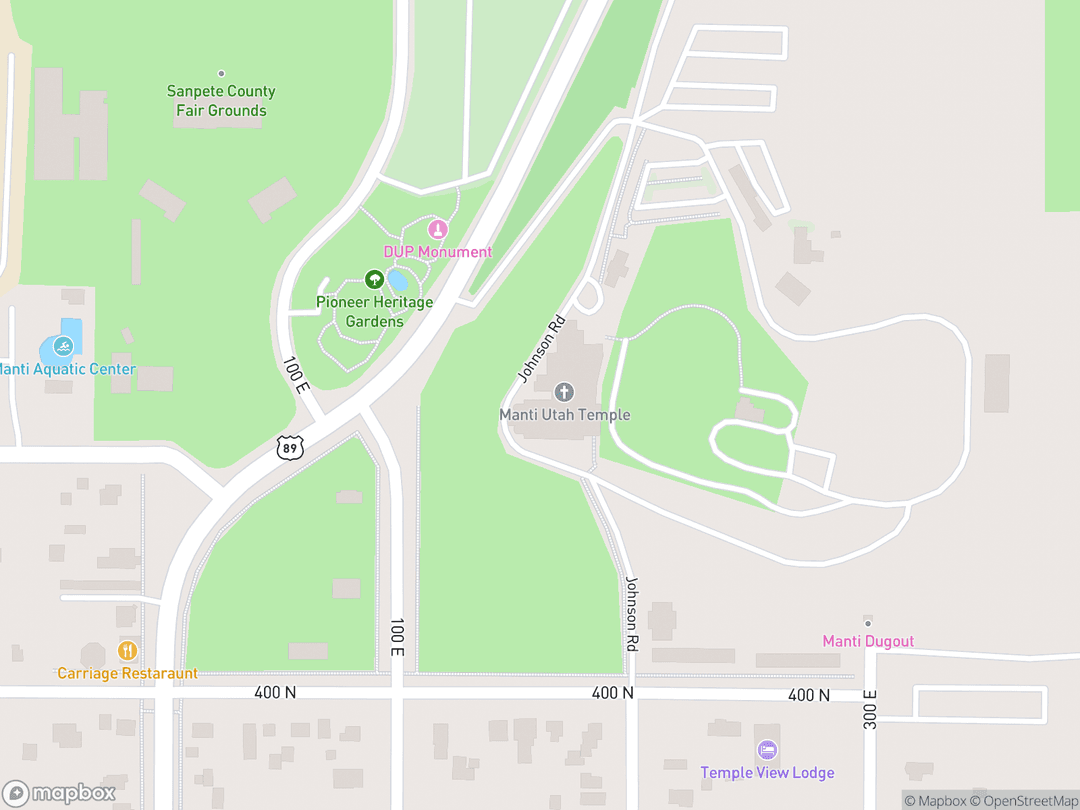
200 East 510 North, Manti, Utah 84642
Hours: Grounds open daily from dawn to dusk. Check churchofjesuschrist.org for interior operating hours.
Getting There: Located directly off US Highway 89 (Main Street) in Manti. The temple is the most prominent landmark in the city and impossible to miss.
Get DirectionsTips for Your Visit
Temple Hill Views
Walk the paths around the temple for incredible views of the Sanpete Valley. Sunset is particularly beautiful.
Historic Staircases
The temple is famous for its self-supporting spiral staircases. While only accessible to those entering for worship, their engineering remains a marvel of pioneer construction.
About
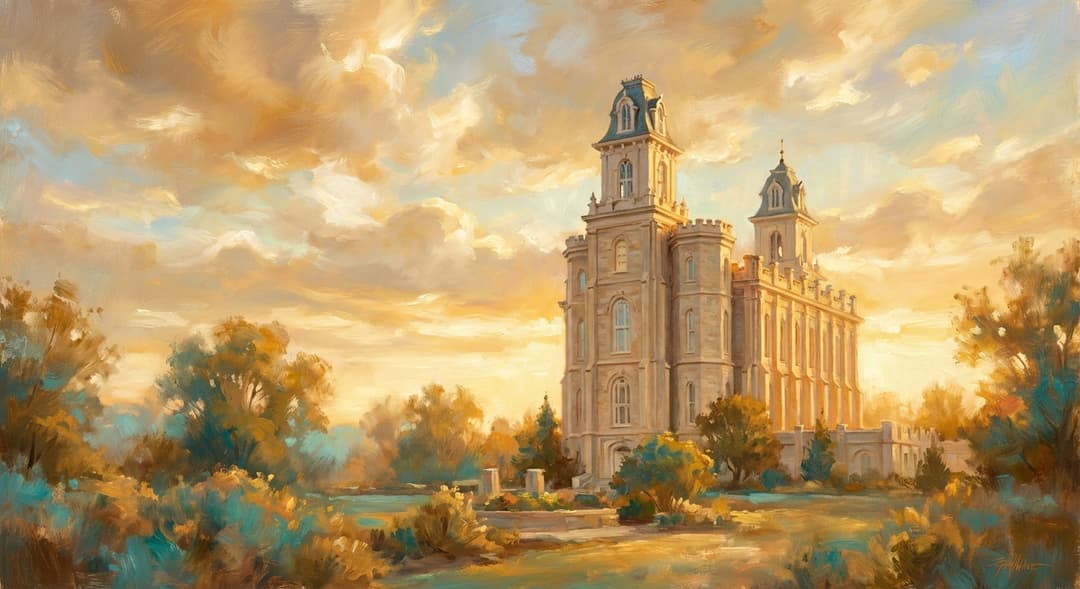
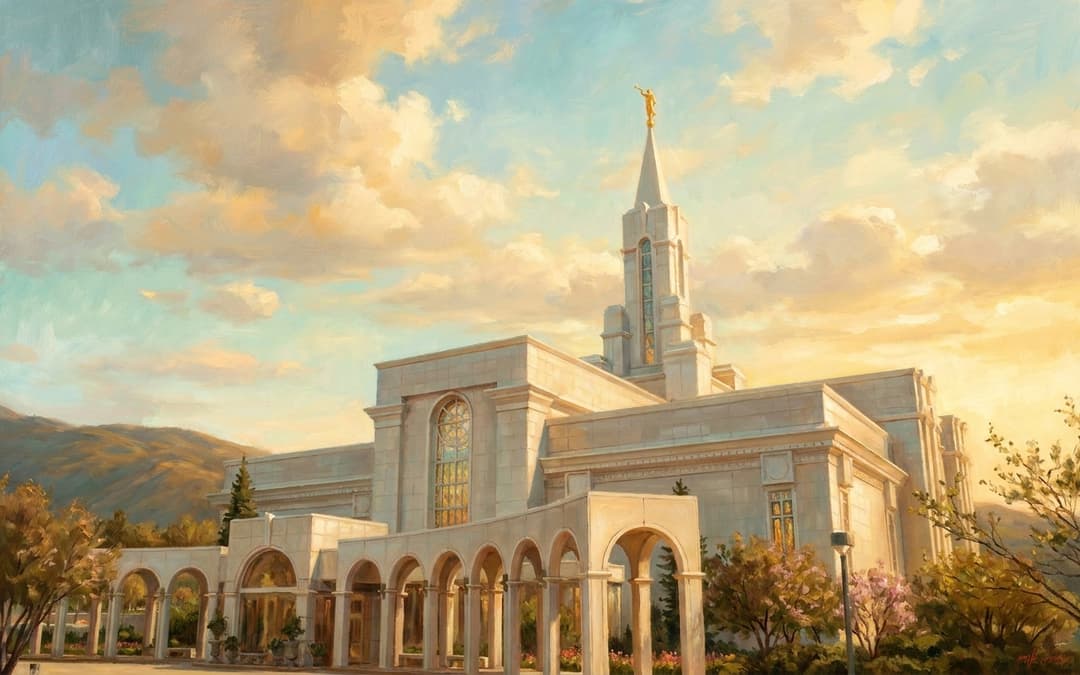
According to The Church of Jesus Christ of Latter-day Saints, the Manti Utah Temple is a masterpiece of pioneer architecture and a testament to the grit of early Latter-day Saint settlers. Perched atop a solid limestone hill that dominates the Sanpete Valley, the temple is visible for miles in every direction. Its cream-colored oolite stone walls, quarried from the very hill on which it stands, glow with a warm, golden hue in the setting sun. Designed by William Harrison Folsom, the edifice combines Castellated Gothic, French Renaissance Revival, and French Second Empire styles, creating a unique fortress-like appearance that symbolizes a spiritual refuge from the world.
Construction of the temple was a monumental saga of sacrifice. Announced by Brigham Young in 1875, the site was originally a rattlesnake-infested quarry known as the "Manti Stone Quarry." Settlers, many of whom were living in extreme poverty, donated labor and produce to build the House of the Lord. It is often said that the Manti Temple was "paid for in eggs, butter, and grain," as cash was scarce in the local economy. The temple was dedicated in 1888, becoming the third operating temple in Utah and the only one of the pioneer era to be dedicated by Lorenzo Snow.
The interior of the temple is as significant as its exterior. It houses two self-supporting spiral staircases—engineering marvels of the 19th century that rise five stories without a central pillar. The temple is also home to the renowned "World Room" murals painted by Minerva Teichert in 1947. Unlike traditional landscape murals, Teichert's work depicts a pageant of human history, earning the space the nickname "The People Room."
Following a major renovation completed in 2024, the temple was rededicated by President Russell M. Nelson. The project upgraded mechanical systems and accessibility while painstakingly preserving the historic murals, the spiral staircases, and the original pioneer craftsmanship. Today, it stands not only as a place of sacred ordinances but as a monument to the enduring faith of those who built Zion in the mountains.
Gallery
Symbolic Elements
The temple's exterior features intricate carvings, each rich with spiritual meaning:

The Fortress
The castellated battlements and castle-like architecture symbolize a spiritual fortress, offering a place of refuge and safety from the spiritual storms of the world.

The Holy Mountain
The temple's location on a prominent hill is a literal application of Isaiah's prophecy that the 'mountain of the Lord's house shall be established in the top of the mountains.'

The Beehive
Found on original doorknobs and hardware, the beehive represents industry, community cooperation, and the building of the Kingdom of God (Deseret).

East vs. West Towers
The East tower stands 179 feet tall, slightly higher than the 169-foot West tower, representing the Melchizedek Priesthood presiding over the Aaronic Priesthood.

Spiral Staircases
The open-center spiral staircases represent the difficult but upward journey of the soul, requiring effort and faith to ascend without visible means of support.

Oolite Stone
The use of stone from the temple hill itself symbolizes that the sacred can be brought forth from the immediate earth, sanctifying the local landscape.
Interesting Facts
The temple site was originally a rattlesnake-infested quarry known as 'Rattlesnake Hill.' Early settlers had to clear hundreds of snakes before construction could begin.
Due to a lack of currency in the pioneer economy, the temple was largely paid for in commodities like eggs, butter, and grain.
Brigham Young reportedly designated the site by saying, 'Here is the spot where the Prophet Moroni stood and dedicated this piece of land for a Temple site.'
The two massive spiral staircases have no central support column; they have shifted less than a fraction of an inch in over 130 years.
Minerva Teichert was 59 years old when she painted the World Room murals, often climbing scaffolding herself to complete the massive work.
In 1928, lightning struck the east tower, causing a fire that burned for three hours before it could be extinguished.
Much of the original stonework was laid without standard cement, using a lime mortar made from local stone that has hardened into a monolithic mass.
Until 2019, Manti was one of only two temples that still presented the endowment ceremony using live actors rather than film.
The temple is built of Manti oolite, a limestone quarried from the very hill on which the structure stands.
The East tower is 179 feet tall, ten feet higher than the West tower, symbolizing the presidency of the Melchizedek Priesthood over the Aaronic Priesthood.
Common Questions
Can the public enter the Manti Utah Temple?
The interior of the temple is open only to members of The Church of Jesus Christ of Latter-day Saints with a current temple recommend. However, the grounds are open to the public and are a popular destination for photography and walking.
What makes the spiral staircases unique?
The two spiral staircases in the west towers are engineering marvels of the pioneer era. Standing five stories tall, they are self-supporting, meaning they have no central pillar. The weight is transferred through the handrails and steps to the outer walls.
Are the Minerva Teichert murals still there?
Yes. During the 2021–2024 renovation, the Church took great care to preserve the historic murals painted by Minerva Teichert in the World Room, as well as the original pioneer woodwork.
Why does the temple look like a castle?
The temple was designed in a Castellated Gothic style to symbolize a spiritual fortress. The battlements and towers represent a place of refuge and safety from the spiritual storms of the world.
Is the Mormon Miracle Pageant still performed here?
No. The pageant was discontinued in 2019 after more than 50 years of performances. The decision was made to reduce the impact on the temple grounds and focus on the primary purpose of the temple as a house of worship.
Related Stories
Explore the rich history, traditions, and people connected to this sacred site.
 Historic Event
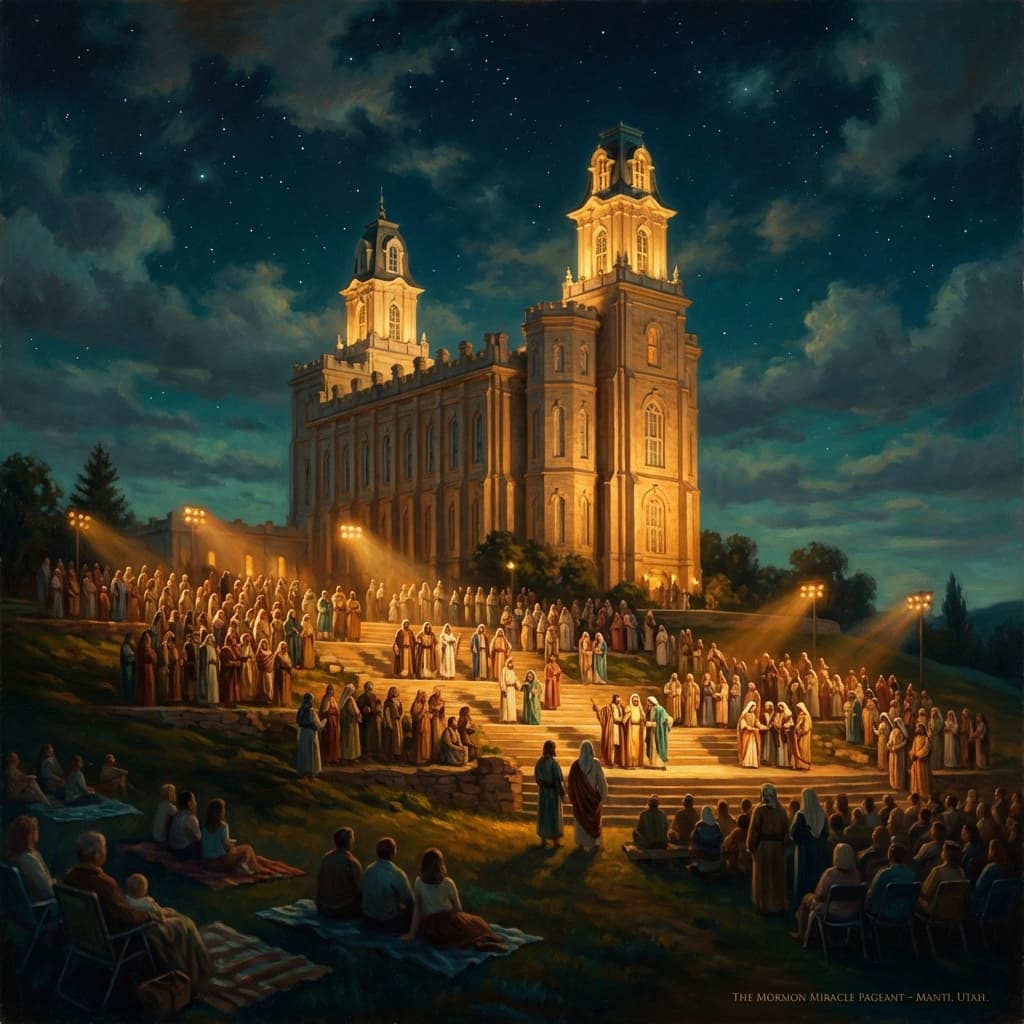
 The Mormon Miracle Pageant
For 53 years, the largest outdoor religious drama in America drew over 100,000 visitors to Manti each summer.
Explore Story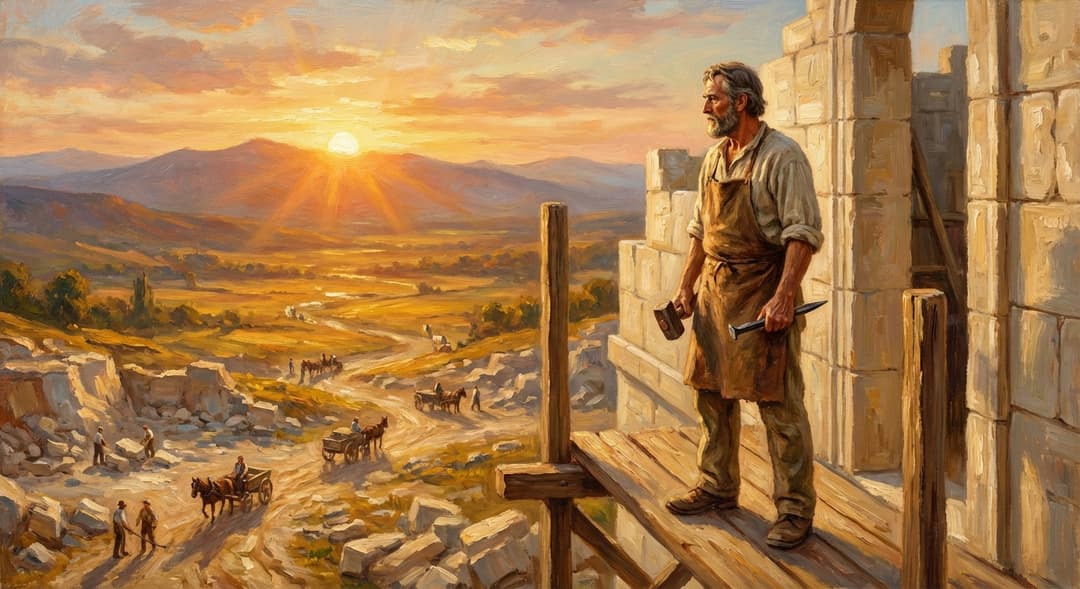 Notable Figure
 Edward Parry: Master Builder of the Manti Temple
The master mason who dreamed a worker would fall to his death — then checked the scaffolding and prevented it.
Explore Story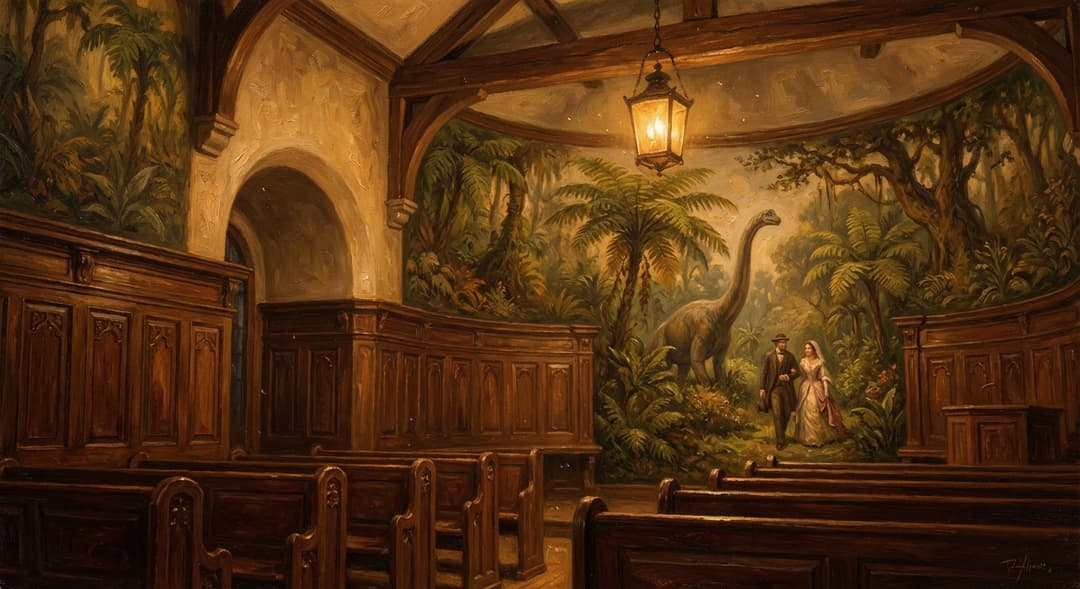 Heritage
 The Dinosaur Mural of Manti
In the Creation Room, painter C.C.A. Christensen depicted dinosaurs alongside Adam and Eve — a remarkable meeting of faith and 19th-century science.
Explore StoryFeatured Stories
The Rattlesnake Den
1870s
Before the Manti Temple could rise as a beacon of holiness, the site was known locally as a place of danger. The limestone quarry hill was infested with rattlesnakes, posing a lethal threat to the workers. Early accounts describe the settlers having to exterminate hundreds of snakes before the foundation could be safely laid.
This physical clearing of the 'serpent' from the hill became a powerful metaphor for the pioneers. It represented the spiritual preparation required to build a House of the Lord—clearing away the dangerous and the worldly to establish a foundation of peace and safety.
Source: Church History Topics
Paid in Eggs and Grain
1877–1888
The construction of the Manti Temple took place during a time of extreme economic hardship for the Sanpete Valley settlers. Cash was virtually non-existent, yet the desire to build the temple was overwhelming. The ledger books from the construction era tell a moving story of sacrifice, recording donations not in dollars, but in farm produce.
Families gave what they had: eggs, butter, grain, and vegetables. These commodities were used to feed the stonemasons and carpenters or traded for necessary hardware. It is literally true that the Manti Temple was built by the widow's mite, funded by the daily sustenance of a faithful people.
Source: Church History Topics
Minerva Teichert's Masterpiece
1947
In 1947, the renowned artist Minerva Teichert was commissioned to paint murals for the temple's World Room. At 59 years old, she undertook the massive project with characteristic energy, often climbing high scaffolding to reach the upper walls. Unlike typical temple murals that focus on landscapes, Teichert created a 'People Room.'
Her murals depict a grand pageant of human history, featuring biblical figures, Native Americans, and pioneers moving toward Zion. Her work adds a unique narrative layer to the temple, emphasizing the gathering of Israel and the universal scope of the gospel. These murals remain one of the most cherished artistic treasures in the Church.
Source: BYU Studies
Timeline
Settlement & Site Identification
Brigham Young sends the first settlers to the Sanpete Valley; they identify the stone quarry hill as a future temple site.
MilestoneTemple Announced
Brigham Young officially announces the construction of the temple.
MilestoneGroundbreaking
Site dedicated and ground broken. Brigham Young dedicates the spot just months before his death.
component.timeline.groundbreakingCornerstones Laid
The cornerstones are laid as construction begins in earnest using local oolite limestone.
component.timeline.constructionRoof Completed
The exterior structure is completed, allowing interior work to proceed.
component.timeline.constructionPrivate Dedication
Wilford Woodruff offers a private dedicatory prayer.
DedicationPublic Dedication
Lorenzo Snow offers the public dedicatory prayer. The temple is dedicated.
DedicationAnnex Constructed
A large stone stairway and annex are added to improve access to the temple.
RenovationLightning Strike
Lightning strikes the east tower, causing a fire that burns for three hours before being extinguished.
EventMurals Completed
Artist Minerva Teichert completes the grand murals in the World Room.
MilestoneRededication
Following extensive renovations, the temple is rededicated by President Gordon B. Hinckley.
DedicationPageant Discontinued
The 'Mormon Miracle Pageant,' held on the grounds for decades, ends to focus on the sacred nature of the temple.
EventRenovation Announced
Plans for a major renovation are announced. After public feedback, the Church commits to preserving the historic murals.
RenovationRededication
President Russell M. Nelson rededicates the temple following a multi-year preservation project.
DedicationHistory by Decade
1870s–1880s — The Pioneer Era
Here is the spot where the Prophet Moroni stood and dedicated this piece of land for a Temple site.
The Manti Temple was born from the vision of Brigham Young and the sweat of Sanpete Valley pioneers. Announced in 1875 and dedicated in 1888, its construction required the removal of a massive stone hill and the quarrying of local oolite limestone. It stands as the finest example of pioneer craftsmanship, utilizing local materials and labor to create a structure that rivaled the great buildings of the eastern United States.
1940s — Artistic Enrichment
While the structure remained largely unchanged, the interior received a significant artistic addition in 1947. Minerva Teichert, a student of Robert Henri, painted the World Room murals. Her distinctive style and focus on human figures transformed the room into a narrative masterpiece, distinguishing Manti from other temples of the era.
1980s — Modernization
By the 1980s, the temple required significant updates to its mechanical systems. It closed in 1981 for a four-year renovation. The project included the restoration of the pioneer craftsmanship and the installation of modern heating, cooling, and electrical systems. President Gordon B. Hinckley rededicated the temple in June 1985.
2020s — Preservation
In 2021, the Church announced another major renovation. Initial plans to remove the historic murals caused public concern, leading the Church to revise the plans to ensure the preservation of Teichert's work and the historic spiral staircases. The temple was rededicated in April 2024 by President Russell M. Nelson, ensuring this pioneer fortress will stand for generations to come.
Architecture & Facilities
Castellated Gothic / French Renaissance Revival blending military-inspired battlements with elegant Renaissance detailing, the Manti Utah Temple features twin towers, oolite limestone walls quarried from the adjacent hill, and a commanding hilltop presence visible throughout the Sanpete Valley.
Building Materials
Exterior
Cream-colored oolite limestone quarried from the temple hill.
Interior
Original pioneer woodwork, walnut and pine detailing.
Interior Features
Spiral Staircases
Two five-story, open-center spiral staircases located in the west towers.
World Room
Features wall-to-wall murals by Minerva Teichert depicting human history.
Temple Grounds
The temple sits on a 27-acre site featuring terraced lawns, flower gardens, and a large amphitheater space formerly used for the Mormon Miracle Pageant.
Religious Significance
The Manti Utah Temple is considered a 'House of the Lord,' a sacred space where faithful members of the Church participate in ordinances that unite families for eternity.
To provide a place for sacred covenants and ordinances, including the endowment and the sealing of families.
Sacred Ordinances
Endowment
A course of instruction relating to the nature of God and the purpose of life.
Sealing
The ordinance that unites husbands and wives, and children to parents, for eternity.
Initiatory
A ceremonial washing and anointing that symbolizes spiritual cleanliness and prepares members to receive the endowment.
Baptism for the Dead
Proxy baptisms performed on behalf of deceased ancestors, giving them the choice to accept the gospel in the next life.
The Spirit of Elijah
The temple is a center for proxy work, where members perform ordinances on behalf of their deceased ancestors, fulfilling the prophecy of turning the hearts of the children to their fathers.
Similar Temples
Sources & Research
Every fact on Temples.org is backed by verified Sources & Research. Each piece of information is rated by source tier and confidence level.
View All Sources (3)
| Field | Source | Tier | Retrieved |
|---|---|---|---|
| Official Temple Page | The Church of Jesus Christ of Latter-day Saints (opens in a new tab) | A | 2026-02-13 |
| Minerva Teichert Murals | BYU Studies (opens in a new tab) | B | 2026-02-13 |
| Architect Biography | Utah Division of State History (opens in a new tab) | B | 2026-02-13 |