Visitor Insights
Visiting St. George Utah Temple
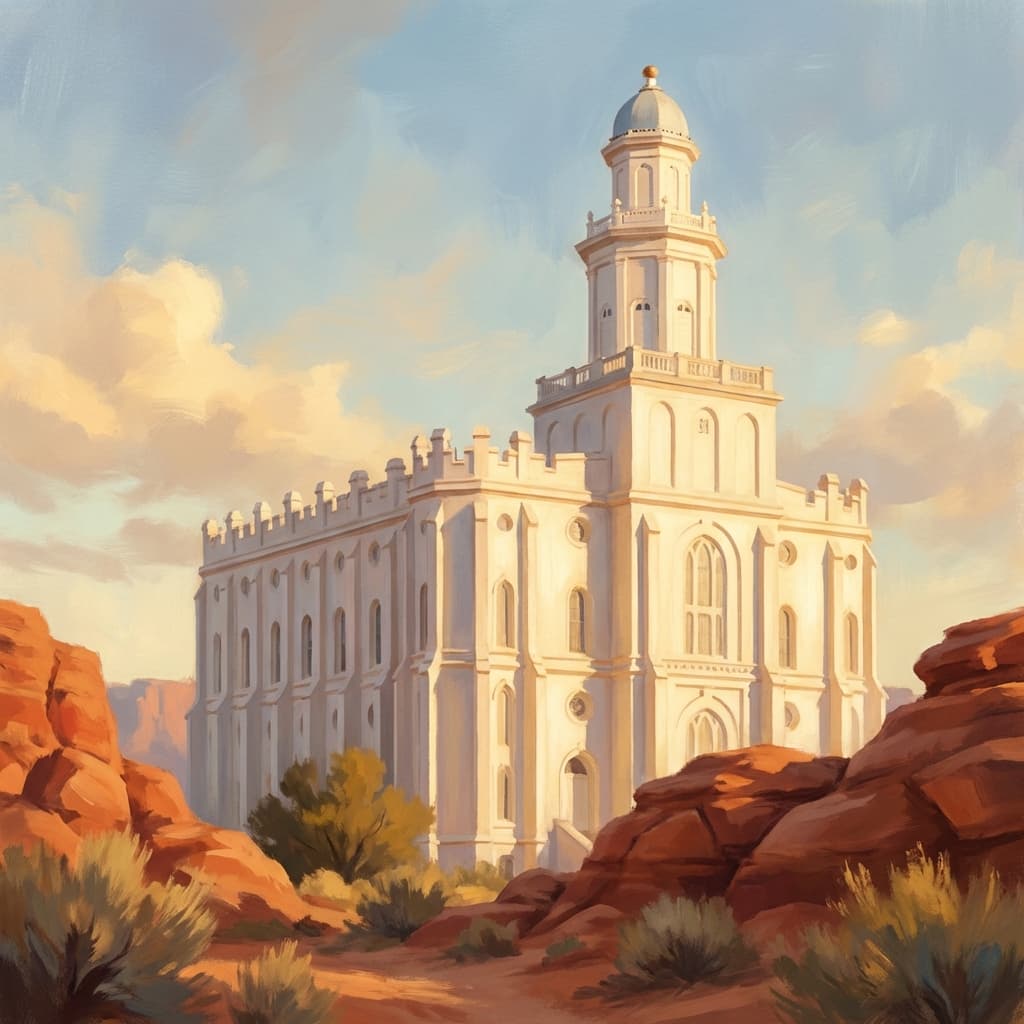
Visitors consistently describe the St. George Temple as a beautiful and peaceful place, especially against the backdrop of southern Utah's striking red rock landscape. The temple's brilliant white exterior stands in stunning contrast to the surrounding desert terrain. Following the 2023 renovation, the interior features restored pioneer-era craftsmanship that transports visitors to the 1870s. The grounds and Visitor's Center offer welcoming experiences for all.
Highlights
- Stunning white temple against southern Utah's red rock landscape
- Recently renovated interior with authentic 1870s pioneer aesthetic
- Beautiful temple grounds with mature landscaping
- Visitor's Center with free guided tours and exhibits
- Historic downtown St. George location within walking distance of shops and restaurants
- Crystal chandeliers that progress from dark to brilliant, symbolizing spiritual journey
Things to Know
- Temple interior is reserved for members with temple recommend
- Summer temperatures can exceed 100°F—spring and fall visits recommended
- No Angel Moroni statue (unlike most modern temples)
- Limited shade on temple grounds during midday
Location
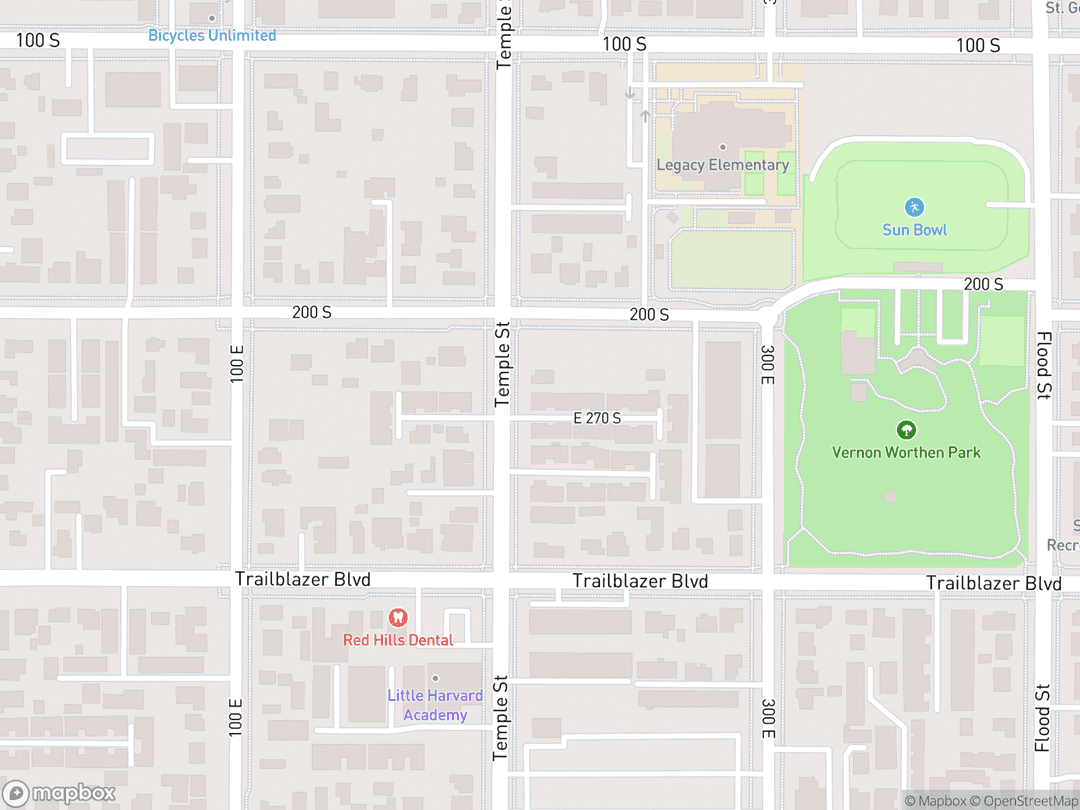
250 E 400 S, St. George, Utah 84770
Hours: Temple grounds open 7 AM - 10 PM daily. Visitor's Center 9 AM - 9 PM.
Getting There: Located in downtown St. George. Parking lot on north side of temple block. Ample street parking available. I-15 Exit 8 or 10.
Get DirectionsTips for Your Visit
Beat the Heat
Visit in spring (March-May) or fall (September-November) for pleasant weather. Summer temperatures often exceed 100°F. Early morning visits offer cooler temperatures and beautiful light.
Red Rock Backdrop
Position yourself on the east side of the temple for photographs featuring the red cliffs in the background—a uniquely Utah scene.
Visitor's Center
Take advantage of free tours offered by missionaries. The center features exhibits on pioneer history, temple purposes, and family history resources.
Downtown Exploration
The temple is within walking distance of historic downtown St. George, with local shops, restaurants, and the Brigham Young Winter Home (open for tours).
Sunday Mornings
For a quieter experience, visit on Sunday mornings when the grounds are typically less crowded.
Pioneer Architecture
Notice the 16 five-pointed stars circling the tower, the beehive carvings at the entrance, and the castellated battlements—all with symbolic meaning.
About
According to The Church of Jesus Christ of Latter-day Saints, the St. George Utah Temple stands as a monument to pioneer faith and sacrifice. Located in the southern Utah town that Brigham Young called "Utah's Dixie," it was the first temple completed in Utah Territory and the first temple where all sacred ordinances, including endowments for the deceased, could be performed.
Construction began in 1871 on a site Brigham Young personally selected—a swampy six-acre plot that locals thought unsuitable. Young insisted, and for nearly a year and a half, workers drove lava rock into the mud using a cannon as a pile driver to create a stable foundation. This extraordinary effort typified the determination that would see the temple to completion in just five years.
The temple combines Castellated Neo-Gothic and French Norman Revival architectural styles, with its distinctive white tower rising above the red rock landscape. Unlike later temples, the St. George Temple does not feature an Angel Moroni statue—a tradition that began with the Salt Lake Temple in 1892. Instead, 16 five-pointed stars encircle the tower below its dome, and beehive carvings flank the front entrance.
Following a comprehensive four-year renovation from 2019-2023, the temple interior was restored to reflect its original 1870s-era pioneer character, with period-appropriate furnishings, quatrefoil motifs, gold-starred entablatures, and new murals depicting the rugged Southwest Utah landscape. The temple was rededicated by President Jeffrey R. Holland on December 10, 2023.
Gallery
Symbolic Elements
The temple's exterior features intricate carvings, each rich with spiritual meaning:

Three-Tiered Tower
The distinctive tower rises in three octagonal tiers, topped by a small white dome. Represents the progressive journey toward heaven and communication between earth and the divine.

Five-Pointed Stars
Sixteen five-pointed stars encircle the tower just below the dome, representing celestial glory, divine guidance, and the Star of Bethlehem.

Beehive Carvings
Carved beehives flank the front entrance staircases, symbolizing industry, cooperation, community, Zion, and the State of Utah.

Quatrefoil Motif
The four-lobed decorative pattern appears throughout the interior, originally on entablatures and now restored. Represents the four Gospels and the eternal nature of covenants.

Castellated Battlements
Castle-like crenellations along the roofline represent the Kingdom of God on Earth and the protection offered by temple covenants and ordinances.
Interesting Facts
The St. George Temple is the oldest continuously operating temple of The Church of Jesus Christ of Latter-day Saints.
This was the only temple completed during Brigham Young's 30-year presidency—he died just four months after its dedication.
Workers used a cannon as a pile driver to pack lava rock into the swampy foundation for over a year before construction could begin.
The temple does not have an Angel Moroni statue—that tradition began with the Salt Lake Temple in 1892, 15 years later.
Brigham Young privately called the original tower 'squatty.' It was replaced with a taller one after lightning damage in 1883.
This was the first temple where endowments for deceased ancestors could be performed.
The interior chandeliers progress from ornate black to gold to crystal, symbolizing the spiritual journey back to God.
The brilliant white temple stands in stunning contrast to southern Utah's red rock landscape.
The 2023 renovation restored the interior to authentic 1870s pioneer-era character with period furnishings.
Sixteen five-pointed stars encircle the tower just below the dome, representing celestial glory.
Common Questions
Can I go inside the St. George Temple?
The temple interior is reserved for members of The Church of Jesus Christ of Latter-day Saints who hold a valid temple recommend. However, the temple grounds and the Visitor's Center are open to all visitors free of charge, with free guided tours available in multiple languages.
Why doesn't this temple have an Angel Moroni statue?
The St. George Temple was completed in 1877, before the Angel Moroni statue tradition began. The first Angel Moroni was placed on the Salt Lake Temple in 1892. Several pioneer-era temples—including Logan, Manti, and St. George—do not have this feature. Instead, the St. George Temple features 16 five-pointed stars encircling the tower.
Is this the oldest LDS temple?
The St. George Temple is the oldest continuously operating temple of The Church of Jesus Christ of Latter-day Saints. While temples in Kirtland, Ohio (1836) and Nauvoo, Illinois (1846) were built earlier, neither has been in continuous operation. The St. George Temple has operated nearly continuously since 1877.
How long did it take to build?
Construction took about five years—from groundbreaking in November 1871 to dedication in April 1877. However, the foundation work alone took nearly a year and a half due to the swampy conditions of the site, requiring workers to pack lava rock using a cannon as a pile driver.
What was the recent renovation about?
The temple closed in November 2019 for a comprehensive four-year renovation. The interior was restored to reflect its original 1870s-era pioneer character with period-appropriate furnishings, restored quatrefoil and star motifs, new murals depicting Southwest Utah landscapes, and progressive chandeliers from dark to crystal. The temple reopened with a public open house in fall 2023 and was rededicated in December 2023.
What makes the architecture unique?
The St. George Temple combines Castellated Neo-Gothic and French Norman Revival styles with local pioneer craftsmanship. Built from local red sandstone covered with white stucco, it features castle-like battlements, buttresses, and a distinctive three-tiered octagonal tower topped by a small dome. The tower features 16 five-pointed stars, and beehive carvings flank the entrance.
Related Stories
Explore the rich history, traditions, and people connected to this sacred site.
Featured Stories
A Cannon Pile Driver: Building on Swampy Ground
1871–1873
When Brigham Young selected the site for the St. George Temple, local leaders were puzzled. The six-acre plot was a swamp—hardly suitable for a permanent structure, let alone a sacred temple meant to stand for generations. But Young was insistent. 'This is the place,' he declared, and the work began.
The challenge was immense. The marshy ground could not support the weight of a stone building. Workers spent over a year solving the problem in a remarkably creative way: they packed lava rock into the mud, using a cannon as a pile driver to compact it into a stable base. Day after day, the cannon boomed across the valley as workers slowly transformed the swamp into solid ground.
Only after this extraordinary foundation work—lasting nearly a year and a half—could the first proper foundation stones be laid. The determination required to complete this task typified the pioneer spirit that would see the entire temple finished in just five years.
Source: Washington County Historical Society; From the Desk; Latter-day Saint Magazine
Brigham Young's Final Temple
April 6, 1877
When President Brigham Young presided over the dedication of the St. George Temple on April 6, 1877, he could not have known it would be the crowning achievement of his thirty-year presidency. The temple was dedicated during General Conference, held that year in St. George rather than Salt Lake City, to allow Young—who wintered in the warmer climate for his health—to participate.
Daniel H. Wells offered the dedicatory prayer, but Brigham Young presided over the ceremony. At 76 years old, he had lived to see what generations of pioneers had sacrificed for: a completed temple where all sacred ordinances could be performed. This was the first temple where endowments for deceased ancestors could be given—a doctrine central to Latter-day Saint belief.
Just four months later, on August 29, 1877, Brigham Young died in Salt Lake City. The St. George Temple remains the only temple completed during his long tenure as Church president. 'Squatty,' he had privately called its first tower—and true to his exacting standards, it was replaced with a taller one in 1883 after lightning damage.
Source: Church History; ChurchofJesusChristTemples.org; From the Desk
Restoration: The 2023 Renovation
2019–2023
When the St. George Temple closed in November 2019 for renovation, it marked the beginning of a four-year project to restore the building to its original pioneer-era character while modernizing its infrastructure for another century of service.
The renovation team studied historical records and photographs to recreate authentic 1870s-era details. Original entablature motifs featuring alternating quatrefoils and gold five-pointed stars—some preserved on the fourth floor—were meticulously reconstructed throughout the second-floor instruction rooms. Period-appropriate millwork, door hardware, and altars were crafted or restored. The chandeliers were designed to progress from ornate black in early instruction rooms to increasingly gold, culminating in magnificent crystal chandeliers in the celestial room—symbolizing the spiritual journey back to God.
New murals depicting the rugged Southwest Utah landscape replaced the 1970s-era paintings, connecting worshippers to the red rock country visible through the temple's windows. After a public open house from September to November 2023, President Jeffrey R. Holland rededicated the temple on December 10, 2023—147 years after its original dedication.
Source: Church Newsroom; ChurchofJesusChristTemples.org; LDS Daily
Timeline
Temple Announced
Brigham Young announces the decision to build a temple in St. George during a conference.
MilestoneGroundbreaking
President Brigham Young conducts the groundbreaking and site dedication ceremony on a swampy six-acre plot.
component.timeline.groundbreakingCannon Foundation
Workers spend over a year packing lava rock into the swampy ground using a cannon as a pile driver to create a stable foundation.
EventBaptistry Dedicated
Elder Erastus Snow performs a private dedication of the baptismal room. Wilford Woodruff dedicates the baptistry.
MilestoneOrdinances Begin
Temple ordinances officially begin—the first temple where endowments for the dead could be performed.
MilestoneFormal Dedication
Temple formally dedicated by Daniel H. Wells, with President Brigham Young presiding, during General Conference held in St. George.
DedicationBrigham Young Dies
President Brigham Young dies in Salt Lake City, just four months after dedicating the St. George Temple—the only temple completed during his presidency.
EventTower Replaced
Original tower, which Brigham Young had privately called 'squatty,' is replaced with a taller one after being damaged by lightning.
RenovationAnnex Fire
Fire destroys the temple annex, though records and furnishings are saved by quick-acting members.
EventMajor Remodel
Extensive renovations divide the lower hall into progressive-style muraled endowment rooms. An elevator is also added.
RenovationNew Annex
A new temple annex is constructed to replace the one lost in the 1928 fire.
RenovationRededication
Temple rededicated by President Spencer W. Kimball following significant renovations.
DedicationRenovation Begins
Temple closes for a comprehensive four-year renovation to restore pioneer-era character and update infrastructure.
RenovationOpen House Begins
Public open house begins, allowing visitors to tour the newly renovated interior for two months.
EventOpen House Concludes
Public open house concludes after welcoming thousands of visitors.
EventRededication
Temple rededicated by President Jeffrey R. Holland of the Quorum of the Twelve Apostles.
DedicationHistory by Decade
1870s — Vision & Completion
This temple must be built for the salvation of the living and the dead.
Brigham Young announced the St. George Temple on January 31, 1871, and personally selected a swampy six-acre site that locals thought unsuitable. Workers spent over a year packing lava rock with a cannon pile-driver before construction could begin. The temple was dedicated on April 6, 1877—the only temple completed during Young's thirty-year presidency. He died just four months later.
1880s–1920s — Early Operations
In 1883, the original tower—which Brigham Young had privately called 'squatty'—was replaced with a taller one after being struck by lightning. The temple operated continuously, becoming the center of Latter-day Saint worship in southern Utah. In November 1928, fire destroyed the temple annex, though quick-acting members saved records and furnishings.
1930s–1950s — Modernization
Major renovations in 1937-1938 divided the lower assembly hall into progressive-style muraled endowment rooms and added an elevator. A new annex was constructed in the 1950s to replace the one lost in the 1928 fire. These changes adapted the pioneer temple to mid-century worship practices.
1975 — Rededication
After another round of significant renovations, President Spencer W. Kimball rededicated the temple on November 11, 1975. A public open house preceded the ceremony, introducing the temple to a new generation of members and visitors.
2019–2023 — Historic Restoration
The temple closed in November 2019 for its most comprehensive renovation ever. The four-year project restored the interior to authentic 1870s-era pioneer character, with period furnishings, reconstructed quatrefoil and star motifs, progressive chandeliers, and new murals of Southwest Utah landscapes. After a public open house, President Jeffrey R. Holland rededicated the temple on December 10, 2023.
Architecture & Facilities
The St. George Utah Temple combines Castellated Neo-Gothic and French Norman Revival architectural styles, unique among Latter-day Saint temples. Its castle-like battlements, buttresses, and distinctive three-tiered tower evoke medieval European fortresses—symbolizing the literal Kingdom of God on Earth and the protection of sacred covenants.
Building Materials
Red Sandstone Walls
The original walls were constructed from locally quarried red sandstone, stacked and grouted. A layer of gunite and steel reinforcing was applied in the 1940s, covered with the white epoxy paint visible today.
Lava Rock Foundation
Due to the swampy site, workers spent over a year packing lava rock into the ground using a cannon as a pile driver before laying the first basalt foundation stones.
Three-Tiered Tower
The tower features a 32-foot square base, an octagonal second level, and a smaller octagonal third stage topped by a small dome. The tower structure is wood, distinct from the sandstone walls below.
Recent Updates (2023)
New triple-pane thermally insulated wood windows matching historic profiles. Red metaquartzite tile in baptistry. Decorative art glass skylight with quatrefoil motif.
Interior Features
Instruction Rooms
Progressive-style rooms with restored 1870s-era entablature motifs featuring quatrefoils and gold five-pointed stars.
Chandeliers
Progress from ornate black hardware in early rooms to gold, culminating in crystal chandeliers in the celestial room.
Murals
New murals (2023) depicting the rugged Southwest Utah landscape, replacing 1970s-era paintings.
Total Floor Area
143,969 square feet
Temple Grounds
The temple sits on a 6.5-acre site in historic downtown St. George. The grounds feature: - Visitor's Center: Free guided tours and exhibits on temple purpose, pioneer history, and family history. - Temple Block: Mature landscaping with paths for walking and quiet reflection. - Brigham Young Winter Home: Located nearby, open for tours. - Downtown Access: Within walking distance of historic downtown shops and restaurants.
Religious Significance
For members of The Church of Jesus Christ of Latter-day Saints, the St. George Temple holds unique significance as the oldest continuously operating temple and the first where complete temple ordinances—including endowments for deceased ancestors—could be performed.
Latter-day Saint temples are distinct from regular meetinghouses. While Sunday worship services are open to all, temples are reserved for members who have prepared spiritually and obtained a 'temple recommend' from their local leaders. Inside, members participate in sacred ordinances that they believe connect heaven and earth, bind families together eternally, and make possible the salvation of all humanity—including those who have died.
Sacred Ordinances
Endowment
A ceremony in which members receive instruction about God's plan, make covenants of faithfulness, and receive symbolic blessings of power and protection.
Initiatory
A ceremonial washing and anointing that symbolizes spiritual cleanliness and prepares members to receive the endowment.
Sealing
Marriages performed in temples are believed to last not just 'until death do you part' but for eternity. Families can also be 'sealed' together across generations.
Baptism for the Dead
Members are baptized on behalf of deceased ancestors, offering them the opportunity to accept the gospel in the afterlife. The St. George Temple was the first where this ordinance could be performed.
Why St. George Matters
Brigham Young did not choose to build his only completed temple in Salt Lake City, the Church's headquarters. He chose St. George—a remote desert outpost in 'Utah's Dixie.' Why? Perhaps because the pioneers there, struggling with heat, failed silk and cotton experiments, and isolation, needed the spiritual strength a temple could provide. The temple became a symbol that no sacrifice was too great, no place too remote, for sacred worship.
A Temple of Firsts
The St. George Temple holds a unique place in Church history. It was the first temple completed in Utah, the first where endowments for deceased ancestors could be performed, and the only temple completed during Brigham Young's thirty-year presidency. These 'firsts' made it the proving ground for practices that would spread to temples worldwide.
Watch and Learn
A Look Inside the St. George Utah Temple
Take a virtual tour of the historic St. George Utah Temple, exploring its newly renovated interior that blends pioneer craftsmanship with sacred spaces.
Similar Temples
Sources & Research
Every fact on Temples.org is backed by verified Sources & Research. Each piece of information is rated by source tier and confidence level.
View All Sources (6)
| Field | Source | Tier | Retrieved |
|---|---|---|---|
| Dedication & Status | The Church of Jesus Christ of Latter-day Saints (opens in a new tab) | A | 2026-01-30 |
| Rededication Details | Church News (opens in a new tab) | B | 2026-01-30 |
| Temple History & Facts | ChurchofJesusChristTemples.org (opens in a new tab) | C | 2026-01-30 |
| Construction History | Washington County Historical Society (opens in a new tab) | B | 2026-01-30 |
| Brigham Young's Involvement | From the Desk (opens in a new tab) | B | 2026-01-30 |
| 2023 Renovation Details | Church Newsroom (opens in a new tab) | A | 2026-01-30 |