Visitor Insights
Visiting Jordan River Utah Temple
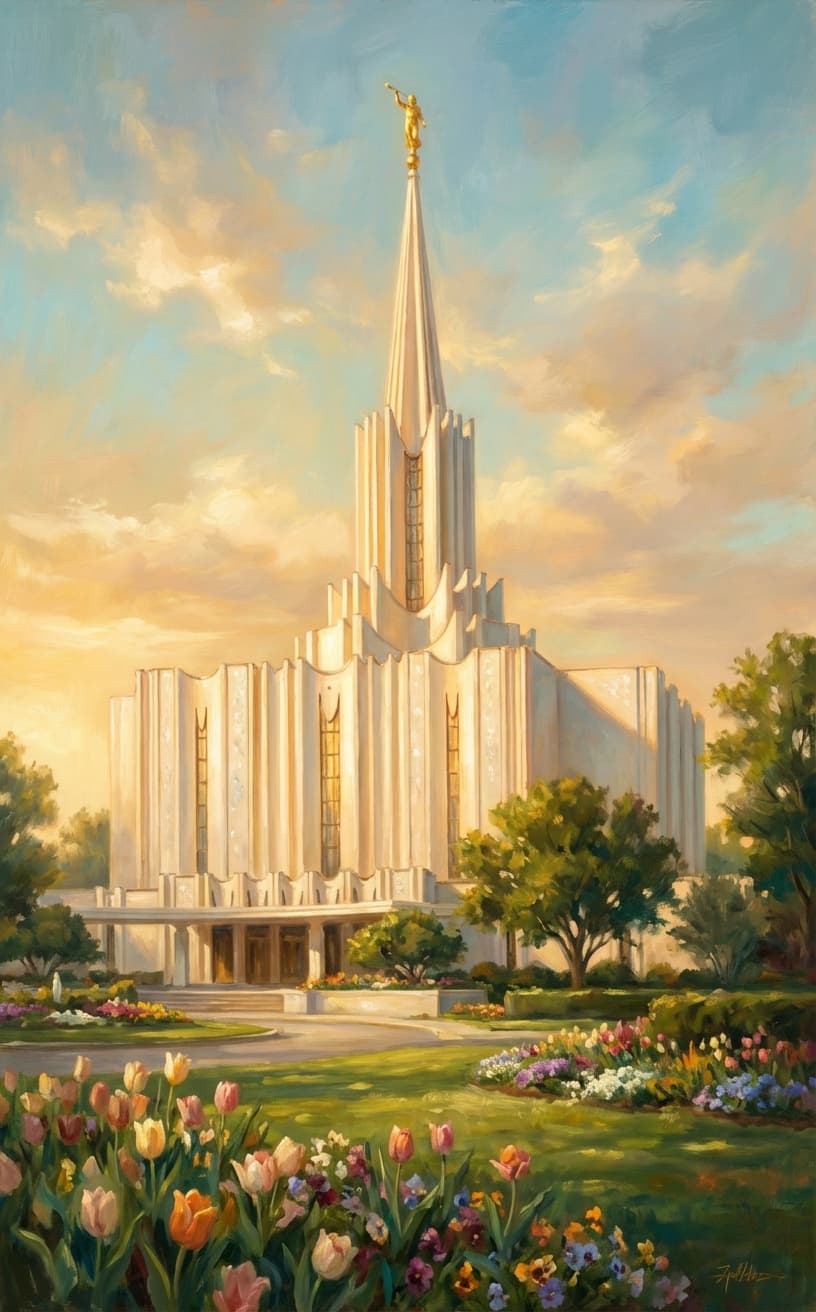
The Jordan River Utah Temple welcomes visitors to experience its serene grounds and admire its beautiful architecture. Located in a suburban setting, the temple offers a peaceful atmosphere for reflection and spiritual contemplation. Visitors can walk the meticulously maintained gardens, featuring colorful flowers, trees, and calming fountains. The temple's exterior, with its white marble chips and towering spire topped by the angel Moroni, provides a stunning visual experience.
Highlights
- Stroll through the beautifully landscaped gardens and enjoy the peaceful atmosphere.
- Admire the temple's architecture, including its white exterior and towering spire.
- Reflect on the spiritual significance of the temple and its role in the community.
Things to Know
- The temple grounds are open to the public, but access to the interior is restricted to members of The Church of Jesus Christ of Latter-day Saints with a valid temple recommend.
- Please dress respectfully when visiting the temple grounds.
- Photography inside the temple is not permitted.
Location
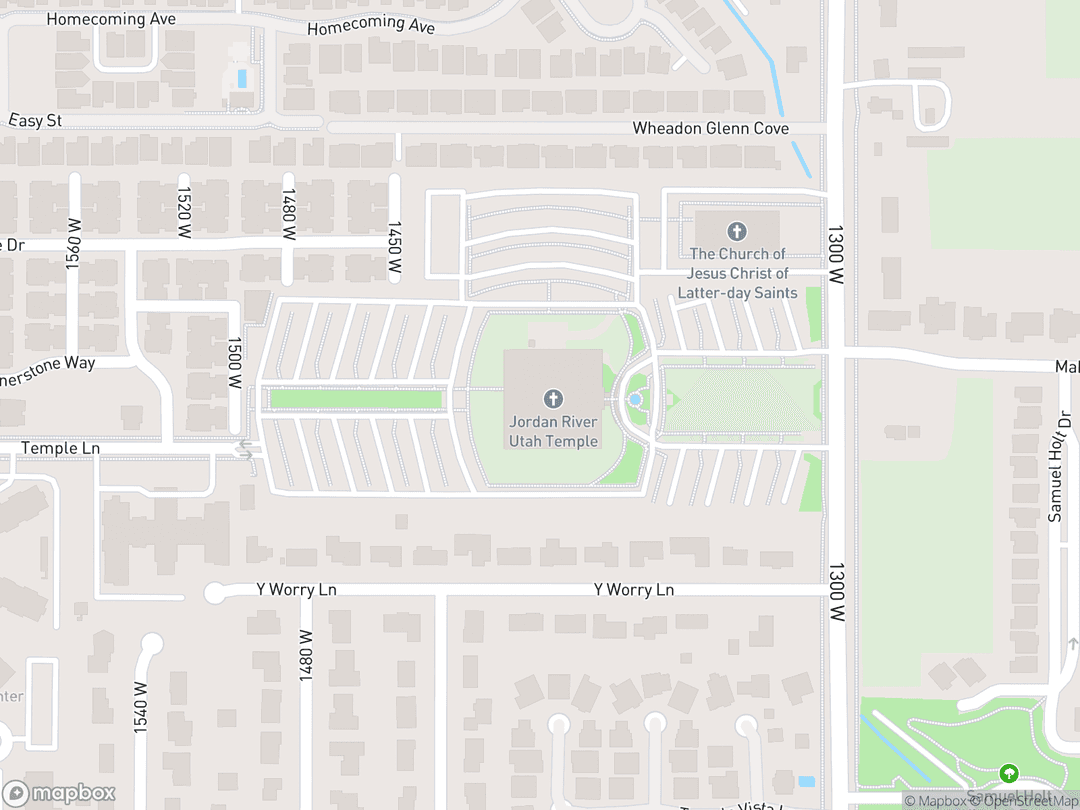
10200 S Temple Drive, South Jordan, Utah 84095
Hours: Grounds open daily from dawn to dusk. Check churchofjesuschrist.org for interior operating hours.
Getting There: The Jordan River Utah Temple is located at 10200 S Temple Drive, South Jordan, Utah. It is easily accessible by car, and parking is available on site. Public transportation options are also available.
Get DirectionsTips for Your Visit
Photography
The wide manicured lawns offer excellent unobstructed views of the temple's soaring single spire.
Accessibility
The sprawling grounds are relatively flat and widely paved, making them highly accessible for walking or wheelchairs.
About
The Jordan River Utah Temple, located in South Jordan, Utah, stands as the 20th operating temple of The Church of Jesus Christ of Latter-day Saints. This sacred edifice serves as a beacon of faith and a place of spiritual refuge for members of the Church in the Salt Lake Valley. Within its walls, faithful individuals participate in sacred ordinances, including baptisms for the dead, endowments, and sealings, which unite families for eternity.
Announced on February 3, 1978, by President Spencer W. Kimball, the Jordan River Utah Temple holds a special place in the hearts of Latter-day Saints. Groundbreaking ceremonies, also presided over by President Kimball, took place on June 9, 1979, marking the commencement of its construction. After more than two years of dedicated effort, the temple was dedicated from November 16-20, 1981, by Marion G. Romney.
Following extensive renovations, the temple was rededicated on May 20, 2018, by President Henry B. Eyring, renewing its sacred purpose and ensuring its continued service to the community. The Jordan River Utah Temple stands as a testament to the enduring faith and commitment of Latter-day Saints to the principles of eternal families and spiritual growth.
Gallery
Symbolic Elements
The temple's exterior features intricate carvings, each rich with spiritual meaning:

Angel Moroni Statue
The statue of the angel Moroni atop the temple holds a horn to his lips, symbolizing the spreading of the gospel throughout the world and the Second Coming of Jesus Christ, which will be announced by trumpet-blowing angels. The Jordan River Utah Temple is one of only five temples with an angel Moroni statue holding the gold plates.

Baptismal Font
The baptismal font rests on the backs of twelve oxen, which symbolize the twelve tribes of Israel. This reflects the ordinance of baptism for the dead, where individuals are baptized on behalf of those who have passed away without the opportunity to receive this essential ordinance.

Drape Motif
Drapes are a recurring motif throughout the temple, found in the windows in the spire and the sweeping exterior design, as well as the mahogany-fluted millwork in the interior. The drape motif symbolizes the sacred and private nature of the temple ordinances.

White Exterior
The temple's exterior is made of cast stone with white marble chips, symbolizing purity, cleanliness, and holiness. The white color reflects the sacred nature of the temple and its role as a place of spiritual cleansing and renewal.

Single Spire
The temple has a single spire, which represents a connection between heaven and earth. The spire directs attention upwards, symbolizing the aspiration to draw closer to God and receive divine guidance.

Landscaping
The temple sits on 15 acres with landscaping that includes fountains, trees, flowers and plants. The landscaping creates a peaceful and serene environment, inviting visitors to contemplate the beauty of creation and the presence of God.

Ordinance Rooms
The Jordan River Utah Temple has six ordinance rooms, each able to accommodate 125 people. These rooms are designed to facilitate sacred ceremonies, such as the endowment, where individuals learn about God's plan of salvation and make covenants with Him.

Sealing Rooms
The Jordan River Utah Temple has 16 sealing rooms, where families are united for eternity through the ordinance of sealing. This ordinance binds husbands and wives, parents and children, together in an eternal bond that transcends mortality.
Interesting Facts
The Jordan River Utah Temple was the seventh temple built in Utah and the second in the Salt Lake Valley.
The Jordan River Utah Temple and the Oquirrh Mountain Utah Temple were the first pair of temples to be built in the same city (South Jordan, Utah).
The Jordan River Utah Temple was the only temple dedicated by President Marion G. Romney.
The Jordan River Utah Temple is one of only five temples featuring an angel Moroni statue holding the gold plates.
The Jordan River Utah Temple was originally named the Jordan River Temple.
The construction and maintenance costs for the Jordan River Utah Temple were funded entirely by donations from local members. The site was also gifted to the Church.
President Spencer W. Kimball used a large power scoop shovel to begin the building process at the groundbreaking ceremony.
The Jordan River Utah Temple has six ordinance rooms, each able to accommodate 125 people.
At the time of its dedication, the Jordan River Utah Temple was the fourth-largest temple in the Church.
The Jordan River Utah Temple has 16 sealing rooms. As of 2013, it had the most sealing rooms of any temple.
More than 568,000 people toured the temple during its open house in 1981.
Twenty people who attended the Salt Lake Temple dedication in 1893 also attended the Jordan River Utah Temple dedication in 1981.
Common Questions
What is the purpose of the Jordan River Utah Temple?
The Jordan River Utah Temple is a sacred space where members of The Church of Jesus Christ of Latter-day Saints participate in sacred ordinances, such as baptisms for the dead, endowments, and sealings, which unite families for eternity. It serves as a place of worship, spiritual growth, and service.
Who can enter the Jordan River Utah Temple?
While the temple grounds are open to the public, access to the interior of the temple is restricted to members of The Church of Jesus Christ of Latter-day Saints who hold a valid temple recommend. This recommend signifies that they are living in accordance with the teachings of the Church and are worthy to participate in temple ordinances.
What should I wear when visiting the Jordan River Utah Temple grounds?
Visitors to the temple grounds are encouraged to dress respectfully. While there is no strict dress code, modest attire is appreciated to maintain the sacred atmosphere of the temple grounds.
Are there any accommodations for visitors with disabilities?
Yes, the Jordan River Utah Temple provides some accommodations for visitors with disabilities, including headsets for patrons with hearing impairment. Please contact the temple in advance to inquire about specific needs and available services.
Is photography allowed on the Jordan River Utah Temple grounds?
Photography is generally permitted on the temple grounds, but it is not allowed inside the temple itself. Please be respectful of the sacred environment and avoid disrupting temple patrons.
Related Stories
Explore the rich history, traditions, and people connected to this sacred site.
Featured Stories
The Announcement of the Jordan River Utah Temple
February 3, 1978
On February 3, 1978, Latter-day Saints in the Salt Lake Valley rejoiced as President Spencer W. Kimball announced the plans to construct the Jordan River Temple. This announcement came as a testament to the growing faith and dedication of the members in the region, who had long desired a temple closer to their homes. The news spread quickly, filling hearts with anticipation and gratitude for the blessings that would soon be available to them.
The announcement of the Jordan River Temple marked a significant milestone in the history of The Church of Jesus Christ of Latter-day Saints in Utah. It symbolized the Church's commitment to providing its members with access to sacred ordinances and opportunities for spiritual growth. The temple would serve as a beacon of hope and a place of refuge for generations to come, strengthening families and fostering a deeper connection with God.
Source: The Church of Jesus Christ of Latter-day Saints, Ensign, April 1978
The Dedication of the Jordan River Utah Temple
November 16-20, 1981
The dedication of the Jordan River Utah Temple was a momentous occasion, filled with reverence and spiritual power. Over five days, from November 16 to 20, 1981, Marion G. Romney, a member of the First Presidency, presided over fifteen dedicatory sessions, each filled with heartfelt prayers, inspiring messages, and sacred music. Thousands of Latter-day Saints gathered to witness this historic event, their hearts overflowing with gratitude for the blessings of the temple.
The dedicatory services were a time of profound spiritual reflection, as attendees contemplated the sacred purpose of the temple and the eternal covenants they would make within its walls. The spirit of the Lord was palpable, uniting all those present in a bond of faith and love. The dedication of the Jordan River Utah Temple marked the beginning of a new era of spiritual growth and service for the members of The Church of Jesus Christ of Latter-day Saints in the Salt Lake Valley.
Source: The Church News, November 1981
The Rededication of the Jordan River Utah Temple
May 20, 2018
Following extensive renovations, the Jordan River Utah Temple was rededicated on May 20, 2018, by President Henry B. Eyring, renewing its sacred purpose and ensuring its continued service to the community. The rededication was a time of celebration and renewal, as members of The Church of Jesus Christ of Latter-day Saints gathered to recommit themselves to the principles of eternal families and spiritual growth.
The rededication services were a testament to the enduring faith and dedication of the Latter-day Saints in the Salt Lake Valley. The renovated temple stood as a symbol of their commitment to providing a sacred space where individuals could connect with God and strengthen their families for eternity. The rededication of the Jordan River Utah Temple marked a new chapter in its history, promising continued blessings and opportunities for spiritual growth for generations to come.
Source: The Church News, May 20, 2018
Timeline
Land Purchase
William Holt, a 19-year-old English immigrant, bought 15 acres of land for $2.00 an acre, which would later become the temple site.
MilestoneLand Donation
Alma Holt and his family donated the land to The Church of Jesus Christ of Latter-day Saints.
MilestoneTemple Announcement
Church President Spencer W. Kimball announced plans to construct the Jordan River Temple.
MilestoneGroundbreaking Ceremony
Groundbreaking ceremonies were held, presided over by President Spencer W. Kimball, marking the beginning of construction.
component.timeline.groundbreakingPublic Open House
The temple was opened to the public for tours; over half a million people toured the temple, experiencing its beauty and learning about its sacred purpose.
EventTemple Dedication
Marion G. Romney dedicated the temple in fifteen sessions, consecrating it for its sacred work.
DedicationTemple Closure for Renovation
The temple closed for extensive renovations to update its systems and enhance its beauty.
RenovationPublic Open House After Renovation
Following the renovations, the temple was opened to the public once again, allowing the community to see the improvements.
EventTemple Rededication
The temple was rededicated by President Henry B. Eyring, reaffirming its sacred purpose and reopening it for temple ordinances.
DedicationHistory by Decade
1880s — Early Settlement
In 1880, William Holt, a 19-year-old English immigrant, demonstrated foresight when he purchased 15 acres of land for $2.00 an acre. Little did he know that this very land would one day become the sacred site of the Jordan River Utah Temple. This early acquisition laid the foundation for a place of profound spiritual significance in the Salt Lake Valley.
1970s — The Vision Takes Shape
Nearly a century later, in 1977, Alma Holt and his family, recognizing the land's potential for a higher purpose, generously donated it to The Church of Jesus Christ of Latter-day Saints. This act of selfless giving paved the way for the realization of a long-held dream among Latter-day Saints in the region: the construction of a temple closer to their homes.
1978 — The Announcement
On February 3, 1978, Church President Spencer W. Kimball, a visionary leader, formally announced the plans to construct the Jordan River Temple. This announcement resonated deeply with Latter-day Saints in the Salt Lake Valley, filling their hearts with joy and anticipation. The temple would serve as a beacon of hope and a place of refuge for generations to come.
1979 — Groundbreaking
On June 9, 1979, the groundbreaking ceremonies took place, presided over by President Spencer W. Kimball. This event marked the official commencement of construction, symbolizing the beginning of a dedicated effort to build a sacred edifice that would bless the lives of countless individuals. The groundbreaking was a time of unity and shared purpose, as members of the Church came together to celebrate this historic milestone.
1981 — Dedication
After more than two years of diligent construction, the Jordan River Utah Temple was dedicated from November 16-20, 1981, by Marion G. Romney. This dedication marked the culmination of years of planning, sacrifice, and faith. The temple was consecrated for its sacred work, becoming a place where individuals could draw closer to God and strengthen their families for eternity.
2016–2018 — Renovation and Rededication
In February 2016, the temple closed its doors for extensive renovations, a necessary step to ensure its continued service to the community. The renovations included updates to the temple's systems and enhancements to its beauty. Following the completion of the renovations, a public open house was held from March 17 – April 28, 2018, allowing the community to see the improvements. On May 20, 2018, the temple was rededicated by President Henry B. Eyring, reaffirming its sacred purpose and reopening it for temple ordinances.
Architecture & Facilities
The Jordan River Utah Temple blends modern design with traditional temple architecture, reflecting a contemporary aesthetic while maintaining the sacred symbolism inherent in temple design. The temple's design emphasizes light, space, and functionality, creating a welcoming and reverent atmosphere for temple patrons.
Building Materials
Cast Stone with White Marble Chips
The exterior of the temple is constructed of cast stone with white marble chips, providing a durable and aesthetically pleasing surface. The white marble chips add a subtle sparkle to the exterior, enhancing its beauty and reflecting the temple's sacred nature.
Fiberglass and Cemlite
The towers of the temple contain fiberglass and cemlite, lightweight materials that reduce the overall weight of the structure. These materials allow for the construction of tall and elegant towers without compromising the temple's structural integrity.
Interior Features
Ordinance Rooms
The temple features six ordinance rooms, each designed to accommodate 125 people. These rooms are used for sacred ceremonies, such as the endowment, where individuals learn about God's plan of salvation and make covenants with Him.
Sealing Rooms
The Jordan River Utah Temple has 16 sealing rooms, where families are united for eternity through the ordinance of sealing. These rooms provide a sacred and intimate setting for this important ceremony.
Temple Grounds
The temple sits on 15 acres with landscaping that includes fountains, trees, flowers and plants. The grounds are meticulously maintained, creating a peaceful and serene environment for visitors and temple patrons. The landscaping enhances the temple's beauty and invites contemplation and reflection.
Additional Facilities
The Jordan River Utah Temple provides various facilities to support temple patrons, including dressing rooms, waiting areas, and administrative offices. These facilities are designed to ensure a comfortable and efficient experience for all who visit the temple.
Religious Significance
Temples of The Church of Jesus Christ of Latter-day Saints are considered the most sacred structures on earth. They are dedicated to the Lord and serve as houses of worship where members of the Church can draw closer to God and receive divine blessings.
The primary purpose of the Jordan River Utah Temple is to provide a sacred space where members of The Church of Jesus Christ of Latter-day Saints can participate in sacred ordinances that are essential for their eternal salvation. These ordinances include baptisms for the dead, endowments, and sealings, which unite families for eternity.
Sacred Ordinances
Baptism for the Dead
Baptism for the dead is an ordinance performed in temples where individuals are baptized on behalf of those who have passed away without the opportunity to receive this essential ordinance. This ordinance allows deceased individuals to receive the blessings of baptism and progress towards eternal life.
Endowment
The endowment is a sacred ordinance where individuals learn about God's plan of salvation and make covenants with Him. This ordinance provides spiritual knowledge, power, and blessings that enable individuals to live a more righteous and fulfilling life.
Sealing
The sealing ordinance unites families for eternity, binding husbands and wives, parents and children, together in an eternal bond that transcends mortality. This ordinance ensures that families can remain together in the afterlife, enjoying the blessings of eternal companionship and love.
Initiatory
A ceremonial washing and anointing that symbolizes spiritual cleanliness and prepares members to receive the endowment.
The Importance of Temple Covenants
The covenants made in the temple are sacred promises between individuals and God. These covenants provide guidance, strength, and blessings that enable individuals to live a more righteous and fulfilling life. Keeping temple covenants is essential for receiving the full blessings of the gospel and progressing towards eternal life.
Similar Temples
Sources & Research
Every fact on Temples.org is backed by verified Sources & Research. Each piece of information is rated by source tier and confidence level.
View All Sources (5)
| Field | Source | Tier | Retrieved |
|---|---|---|---|
| About & Historical Background | The Church of Jesus Christ of Latter-day Saints (opens in a new tab) | A | 2024-01-03 |
| Basic Facts & Address | churchofjesuschristtemples.org (opens in a new tab) | C | 2024-01-03 |
| Architectural Description | photogent.com (opens in a new tab) | B | 2024-01-03 |
| Historical Timeline & Announcement | The Church of Jesus Christ of Latter-day Saints (opens in a new tab) | A | 2024-01-03 |
| Interesting Facts & Dedication | The Church of Jesus Christ of Latter-day Saints (opens in a new tab) | A | 2024-01-03 |