Visitor Insights
Visiting Ogden Utah Temple
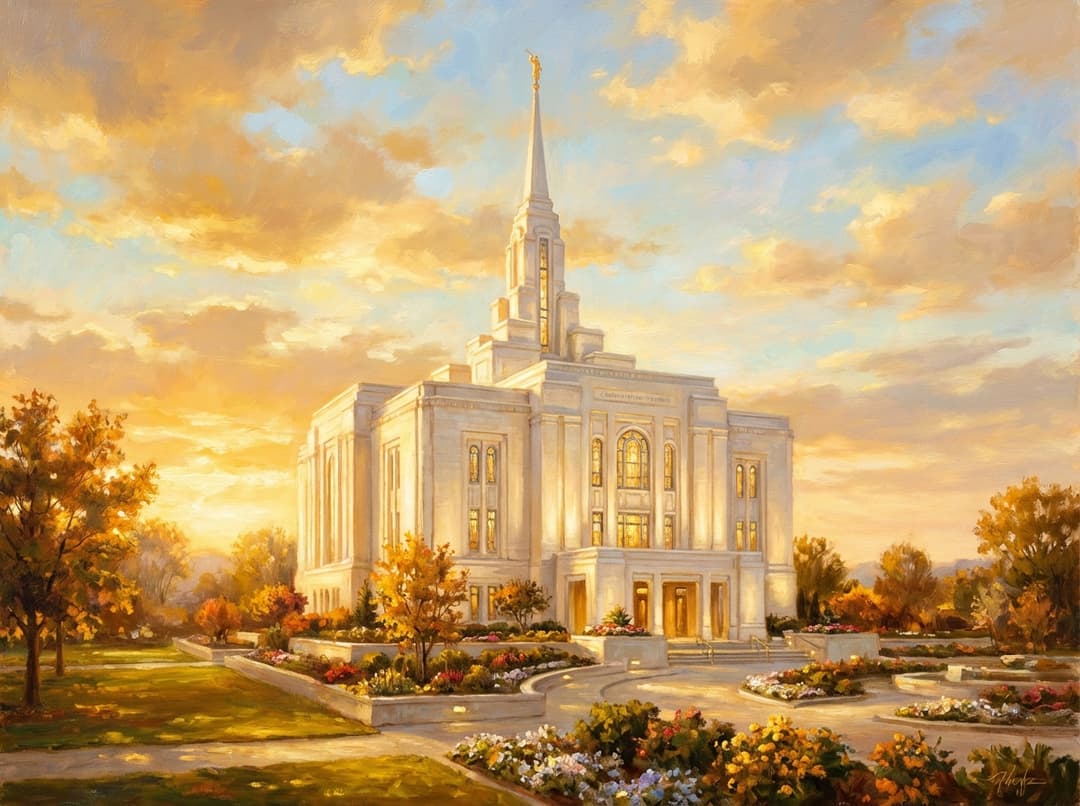
The Ogden Utah Temple is a focal point of the city, located directly on Washington Boulevard. While the interior is reserved for Church members, the 10-acre grounds are a public sanctuary featuring beautiful gardens, walking paths, and a large water feature. The adjacent Ogden Tabernacle is also open to the public and frequently hosts community events.
Highlights
- The Fountain of Living Water plaza
- Historic Ogden Tabernacle (on same block)
- Nighttime illumination of the Art Deco spire
Things to Know
- Underground parking is available for visitors
- Modest dress is appreciated on temple grounds
Location
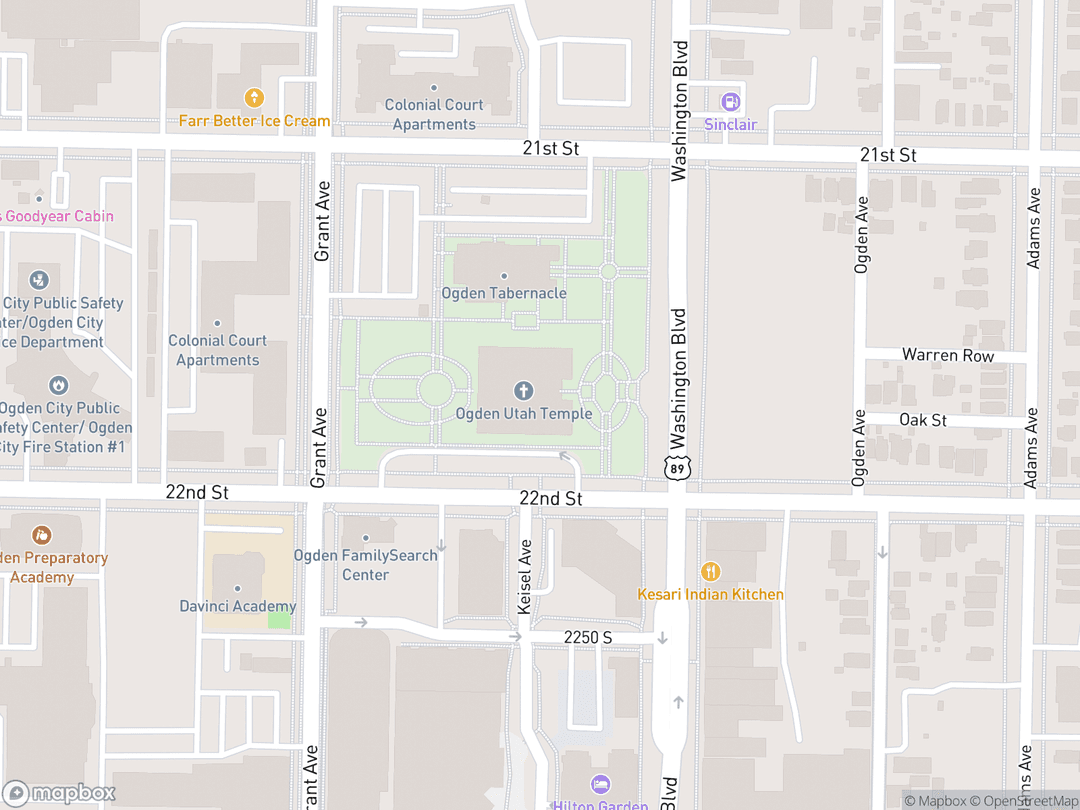
350 22nd Street, Ogden, Utah 84401, United States
Hours: Grounds are open daily from dawn until 9:00 PM. Check churchofjesuschrist.org for interior hours and current schedule.
Getting There: Located on US Highway 89 (Washington Blvd). Access the underground parking garage from 22nd Street.
Get DirectionsTips for Your Visit
Parking
Underground parking is very convenient and provides direct elevator access to the temple grounds.
Tabernacle Visit
The historic Ogden Tabernacle shares the block and is often open for visitors to see its beautiful interior.
About
The Ogden Utah Temple stands as a testament to renewal and spiritual permanence in the heart of downtown Ogden. Originally dedicated in 1972, it was the first temple constructed in Utah since statehood was granted in 1896, ending a nearly 80-year hiatus in local temple building. For decades, its modernist, elliptical design—mirrored by its sister temple in Provo—served as a highly efficient center of worship for the growing Church population in northern Utah.
In the early 21st century, the temple underwent one of the most radical transformations in the history of sacred architecture. Rather than a simple refurbishment, the structure was stripped to its steel and concrete core. The original "space-age" exterior was replaced with a new architectural envelope featuring "Temple White" granite, Art Deco styling, and Prairie School influences. This massive renovation, completed in 2014, reoriented the entrance to Washington Boulevard, firmly establishing the edifice as a city centerpiece.
Today, the temple occupies an entire city block, sharing the grounds with the historic Ogden Tabernacle. The surrounding plaza, featuring a prominent water feature and lush gardens, offers a serene retreat from the urban environment. The Ogden Utah Temple is unique in having possessed two completely distinct architectural identities, evolving to meet both the spiritual needs of the Saints and the aesthetic revitalization of the city it serves.
Gallery
Symbolic Elements
The temple's exterior features intricate carvings, each rich with spiritual meaning:

The Desert Rose
The primary decorative motif found throughout the temple is the desert rose, a stylized floral pattern accompanied by prairie grass. This motif connects the temple to the local landscape and appears in the art glass, stone carvings, and woodwork.

Fountain of Living Water
A prominent water feature on the temple grounds serves as a visual representation of the 'living water' offered by Jesus Christ. It creates a transition zone of peace between the busy city streets and the sacred temple entrance.

The Central Spire
The single central spire draws the eye heavenward, symbolizing the connection between God and man. In the renovated design, the spire emphasizes verticality and permanence, topped by the herald of the Restoration.

Temple White Granite
The exterior is clad in pristine white granite, chosen for its durability and purity. The stone symbolizes the purity required to enter the presence of God and the enduring nature of the covenants made within.

Art Glass Windows
The windows feature intricate grillwork and art glass that allow light to filter in while maintaining privacy. The designs incorporate the desert rose motif and utilize amber and gold tones to create a warm, spiritual atmosphere.

Fine Woods
The interior features African Sapele and painted maple woodwork. The use of high-quality natural materials reflects the belief that the temple is the House of the Lord and deserves the finest craftsmanship.
Interesting Facts
The Ogden and Provo temples were originally architectural twins, but following Ogden's 2014 renovation and Provo's planned reconstruction, they will no longer resemble each other.
Upon its 1972 dedication, it became the first temple built in Utah in 79 years, breaking a drought that lasted since the Salt Lake Temple's completion in 1893.
The original design was focused on extreme efficiency, featuring six ordinance rooms around a central projection room to start sessions every 20 minutes.
For the first 30 years of its existence (1972–2002), the temple did not feature an Angel Moroni statue on its spire.
The 2014 renovation replaced a large concrete parking terrace with an underground garage, reclaiming acres of land for gardens and green space.
Interior artwork includes a painting of Christ with Native American children, a copy of a mural originally painted for the San Salvador El Salvador Temple.
The renovation involved stripping the building down to its steel and concrete skeleton, essentially building a new temple on the old bones.
The temple sits on Washington Boulevard (US Highway 89), serving as a literal and spiritual anchor for the revitalization of downtown Ogden.
The stone used for the exterior is 'Temple White' granite, quarried and fabricated in China for its consistent color and density.
A symbolic cornerstone containing historical artifacts was placed during the 2014 rededication, representing Christ as the chief cornerstone.
Common Questions
Why does the temple look so different from old photos?
Between 2011 and 2014, the temple underwent a massive renovation where the original 1970s elliptical exterior was completely removed. The building was stripped down to its steel and concrete framework and rebuilt with a new Art Deco design, new stone, and a reconfigured layout, effectively creating a new building on the old skeleton.
Can the public enter the Ogden Utah Temple?
The interior of the temple is reserved for members of the Church of Jesus Christ of Latter-day Saints with a valid temple recommend. However, the public is welcome to walk the grounds, visit the gardens, and enter the historic Ogden Tabernacle located on the same block.
What is the building next to the temple?
The building sharing the temple block is the Ogden Tabernacle. Built in 1956, it is used for stake conferences, community events, and concerts. Unlike the temple, the Tabernacle is generally open to the public for scheduled events.
Where do visitors park?
During the 2014 renovation, the old above-ground parking terrace was demolished and replaced with a large underground parking structure. This change significantly increased the green space and gardens available on the surface level.
Was this the first temple in Utah?
No, but it was a significant milestone. When dedicated in 1972, it was the first temple built in Utah since the Salt Lake Temple was completed in 1893. Its construction ended a 79-year gap in Utah temple building.
Related Stories
Explore the rich history, traditions, and people connected to this sacred site.
Featured Stories
The Tale of Two Temples
1972–2014
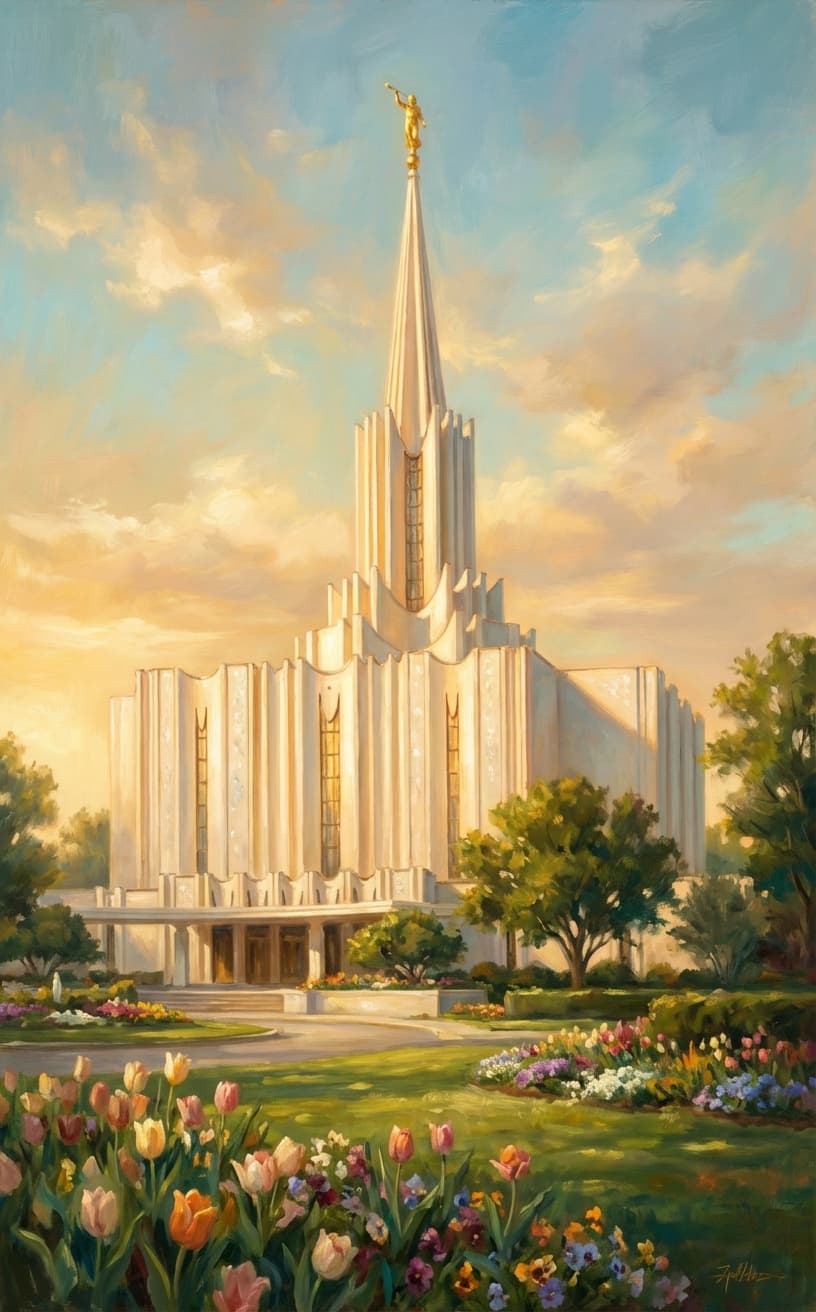
For decades, the Ogden and Provo temples were known as the 'sister temples' of Utah. Announced on the same day and built from the same blueprints, they featured a distinctive elliptical design intended to maximize efficiency and accommodate the booming Church population of the 1970s. Their 'space-age' appearance was a radical departure from pioneer-era architecture, symbolizing a modern, forward-looking Church.
However, time took the twins down different paths. While Provo's exterior remained largely unchanged for fifty years, Ogden's downtown location demanded a revitalization. The 2014 renovation completely erased the visual link between the two, transforming Ogden into an Art Deco landmark. With the announcement of Provo's own reconstruction in 2021, the era of the 'twins' has officially passed into history.
Source: Church History Department
A Radical Reinvention
2010–2014
When the Church announced the renovation of the Ogden Utah Temple, few anticipated the scale of the project. It was not merely a cosmetic update; it was a total structural metamorphosis. Construction crews stripped the building of its cast stone skin and gold aluminum grills, leaving only the bare steel and concrete skeleton exposed to the elements.
Architects utilized this existing core to create a completely new floor plan and exterior envelope. The entrance was moved from the west to the east to face the city's main thoroughfare, and the curved walls were squared off to create a feeling of strength and permanence. This 'new' old building stands as a powerful metaphor for spiritual rebirth—keeping the core foundation while becoming a new creature.
Source: Newsroom
Breaking the Dry Spell
January 1972
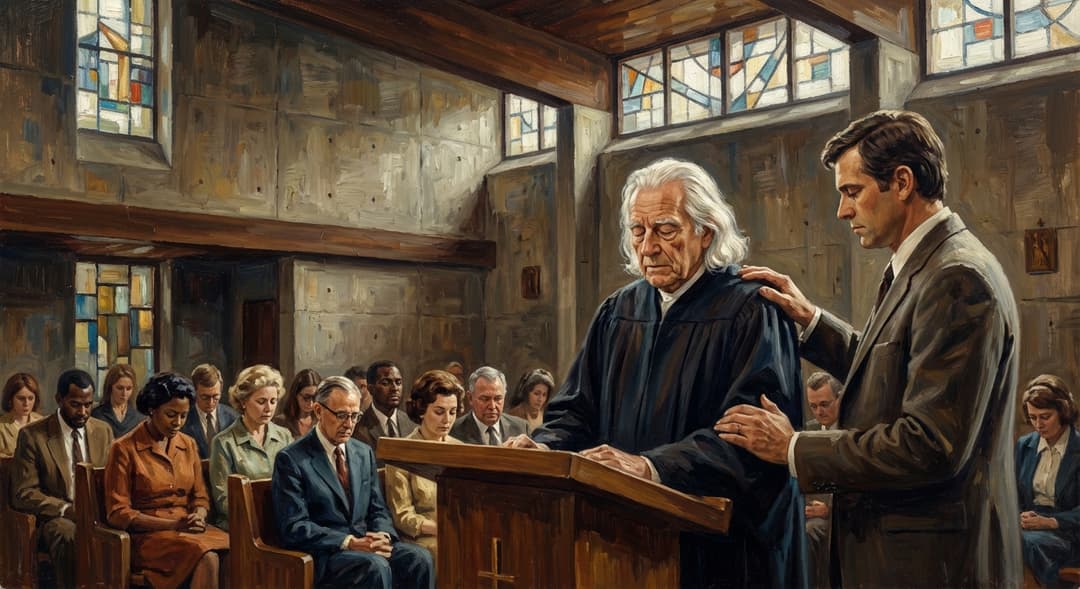
When President Joseph Fielding Smith dedicated the Ogden Utah Temple in 1972, it marked a monumental moment for Utah Saints. It had been nearly 80 years since a temple was dedicated in the state—the last being the Salt Lake Temple in 1893. For generations, Utahns had only known the four pioneer-era temples.
The dedication signaled the beginning of a new era of temple building that prioritized accessibility and efficiency. The Ogden temple was designed to handle high volumes of ordinance work, utilizing film projection and a circular layout to start sessions every twenty minutes. This focus on function over form set the stage for the rapid global expansion of temples that would follow in the late 20th century.
Source: Church History Department
Timeline
Temple Announced
The First Presidency announces plans for temples in Ogden and Provo to relieve overcrowding in Salt Lake and Logan.
MilestoneGroundbreaking
Ground is broken on President David O. McKay's 96th birthday.
component.timeline.groundbreakingOriginal Dedication
President Joseph Fielding Smith dedicates the temple, the first built in Utah in nearly 80 years.
DedicationAngel Moroni Added
A statue of the Angel Moroni is added to the central spire, which is painted white to match.
RenovationRenovation Announced
The Church announces a major architectural overhaul that will strip the building to its steel core.
MilestoneTemple Closure
The temple closes for the extensive three-year renovation project.
RenovationExterior Removal
The original cast stone exterior and elliptical shell are removed, leaving only the structural skeleton.
component.timeline.constructionReconstruction
Steel framing for the new entrance and squared-off design is installed.
component.timeline.constructionStatue Return
The Angel Moroni statue is placed atop the new, taller spire.
MilestonePublic Open House
Hundreds of thousands of visitors tour the completely reimagined interior.
EventCultural Celebration
Youth from northern Utah perform in a celebration honoring the temple's history.
EventRededication
President Thomas S. Monson rededicates the Ogden Utah Temple.
DedicationPandemic Closure
The temple closes temporarily due to COVID-19, reopening in phases.
EventProvo Reconstruction Announced
The announcement of the Provo Temple's reconstruction marks the end of the 'twin' era for these two buildings.
Milestone50th Anniversary
The temple marks 50 years since its original dedication by Joseph Fielding Smith.
MilestoneArchitecture & Facilities
Art Deco with Prairie School influences, the Ogden Utah Temple underwent a dramatic 2014 renovation that replaced its original modern-era facade with a striking gold-and-white exterior featuring chevron panels, geometric spire, and horizontal banding evocative of Frank Lloyd Wright's design philosophy.
Building Materials
Exterior
Temple White granite from China
Interior Stone
Sunny Vinato, Tiberias Gold, and Gallala marbles from Egypt
Woodwork
African Sapele and painted maple
Interior Features
Ordinance Rooms
Four instruction rooms with two-stage progression
Sealing Rooms
Twelve sealing rooms for marriages
Temple Grounds
10-acre city block featuring the 'Fountain of Living Water', extensive floral gardens, and the historic Ogden Tabernacle.
Religious Significance
The Ogden Utah Temple is a sanctuary where Latter-day Saints participate in sacred ordinances that unite families for eternity. It serves as a physical bridge between heaven and earth.
To provide a place where members can make formal promises and covenants with God, and perform vicarious ordinances for their ancestors.
Sacred Ordinances
Endowment
A course of instruction depicting the plan of salvation and the divine potential of humanity.
Sealing
A ceremony that binds husbands, wives, and children together as families for eternity.
Initiatory
A ceremonial washing and anointing that symbolizes spiritual cleanliness and prepares members to receive the endowment.
Baptism for the Dead
Proxy baptisms performed on behalf of deceased ancestors, giving them the choice to accept the gospel in the next life.
A Beacon of Renewal
Just as the temple structure was renewed on its original foundation, the temple teaches that individuals can be spiritually renewed through the Atonement of Jesus Christ.
Similar Temples
Sources & Research
Every fact on Temples.org is backed by verified Sources & Research. Each piece of information is rated by source tier and confidence level.
View All Sources (5)
| Field | Source | Tier | Retrieved |
|---|---|---|---|
| Church Newsroom Article | The Church of Jesus Christ of Latter-day Saints Newsroom (opens in a new tab) | A | 2026-02-13 |
| Official Temple Page | The Church of Jesus Christ of Latter-day Saints (opens in a new tab) | A | 2026-02-13 |
| Dedication History | Church History Department (opens in a new tab) | A | 2026-02-13 |
| Original Dedicatory Prayer | The Church of Jesus Christ of Latter-day Saints (opens in a new tab) | A | 2026-02-13 |
| Rededication Prayer | The Church of Jesus Christ of Latter-day Saints (opens in a new tab) | A | 2026-02-13 |