Visitor Insights
Visiting Provo Utah Temple
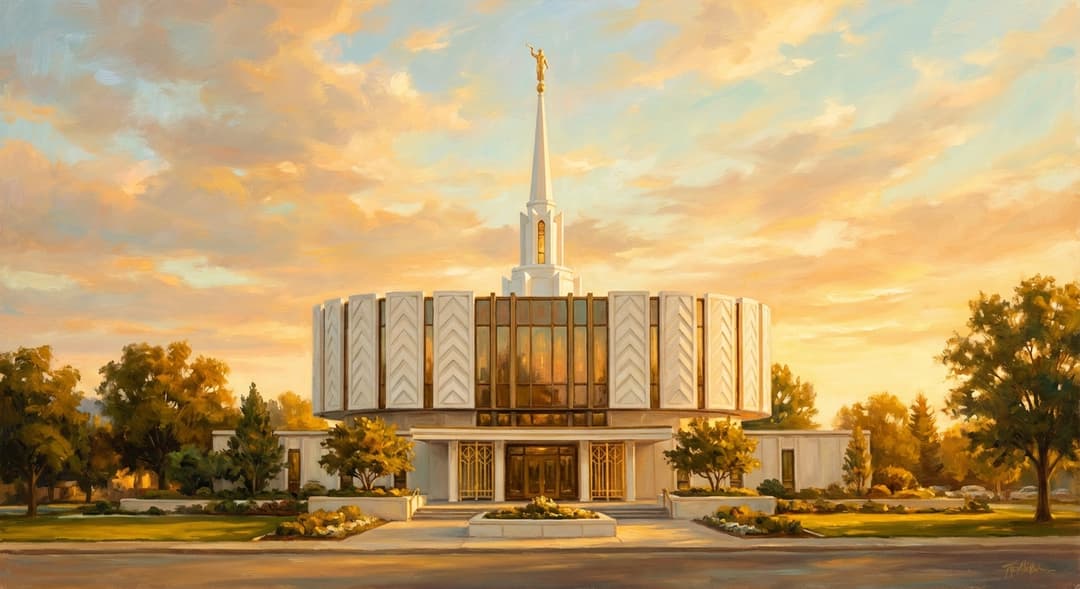
The Provo Temple is currently closed for complete demolition and reconstruction, with the site under active construction. Before closure, it was one of the most accessible temples in the Church due to its location on Temple Hill, walkable from both Brigham Young University and the Missionary Training Center. The temple grounds featured stunning reflection pools that created iconic photographs, especially during sunset and twilight hours when the temple was illuminated against the mountain backdrop.
Highlights
- Revolutionary modernist cylindrical architecture
- Dramatic views of Y Mountain and the Wasatch Front
- Nearly 250,000 endowment sessions performed annually
- Walking distance to BYU and the MTC
- Beautiful reflection pools and fountains
- Illuminated at night, visible throughout Utah Valley
Things to Know
- Temple is completely closed for demolition and reconstruction
- Construction expected to continue for several years
- Will reopen as the Provo Utah Rock Canyon Temple with entirely new design
- The Provo City Center Temple (downtown) serves the area during closure
- Historic photos in the gallery document the original temple before demolition began
Location
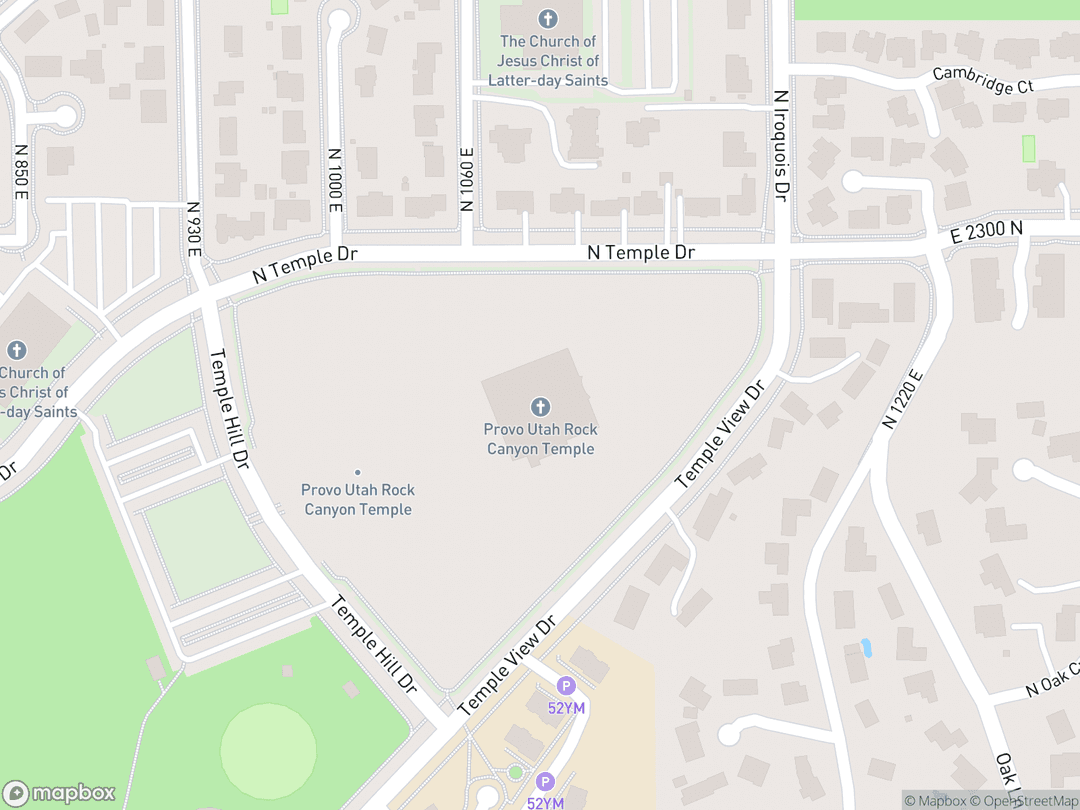
2200 Temple Hill Dr, Provo, UT 84604
Hours: Currently closed for reconstruction. No public access to the site.
Getting There: Located at 2200 Temple Hill Dr in Provo, adjacent to BYU and across from the MTC. The site is under active construction.
Get DirectionsTips for Your Visit
Current Status
The temple closed February 24, 2024 for complete reconstruction. The Provo City Center Temple in downtown Provo serves the area during the closure.
Historic Photos
Historic photos in the gallery document the original temple before demolition began. These are now irreplaceable historic records of the building.
New Design
The reconstructed temple will feature a completely new design and be renamed the Provo Utah Rock Canyon Temple, named for the nearby canyon east of the site.
BYU & MTC Connection
For over 50 years, the temple served generations of BYU students and MTC missionaries. It was often the first temple experience for missionaries before departing worldwide.
Sister Temple
The Ogden Utah Temple was built with an identical design to the Provo Temple. Both were constructed simultaneously and dedicated within months of each other in 1972.
About
According to ChurchofJesusChristTemples.org, the Provo Utah Temple stood for over five decades as arguably the most active and heavily utilized temple in The Church of Jesus Christ of Latter-day Saints. Its revolutionary modernist design—often called the "spaceship temple"—represented a bold departure from traditional temple architecture when dedicated in 1972. Perched on Temple Hill with Y Mountain as its dramatic backdrop, the temple served generations of Brigham Young University students, Missionary Training Center missionaries, and Utah Valley families.
Designed by Emil B. Fetzer, the Church's chief architect during the 1960s and 1970s, the Provo Temple was one of two "sister temples" built simultaneously—the other being the Ogden Utah Temple. The identical cylindrical designs featured precast white concrete panels arranged in a distinctive "accordion" chevron pattern, gold anodized aluminum grills, bronze glass panels, and a single central spire. Originally, the spire was gold-colored, intended to represent the "pillar of fire by night" from the biblical Exodus. In 2003, the spire was repainted white and an Angel Moroni statue was added.
The temple's location adjacent to BYU and directly across the street from the Missionary Training Center made it exceptionally busy. At its peak, the Provo Temple performed more ordinance work than any other temple in the Church, with some estimates suggesting it handled over 250,000 endowment sessions annually. For tens of thousands of young missionaries, the Provo Temple was where they received their own endowment before departing to serve around the world.
In October 2021, President Russell M. Nelson made a surprising announcement: the Provo Temple would not be renovated but completely demolished and rebuilt from the ground up. The temple closed on February 24, 2024, after its final ordinance session. When complete, it will rise again as the Provo Utah Rock Canyon Temple—a completely new structure on the same sacred hill, carrying forward the legacy of service while embracing a new architectural vision.
Gallery
Symbolic Elements
The temple's exterior features intricate carvings, each rich with spiritual meaning:

Cylindrical Form
The temple's unique cylindrical design represented a departure from traditional rectangular temple forms. The endless curve symbolizes eternity—a circle with no beginning or end, reflecting the eternal nature of temple covenants.

Chevron Panels
The accordion-like precast concrete panels created a rhythmic, ascending pattern around the temple's exterior. These chevron shapes pointed heavenward, symbolizing the upward journey of the soul toward God.
Central Spire
The single central spire pointed heavenward from the temple's crown. Originally gold to represent the 'pillar of fire by night' from Exodus, it was later painted white and topped with the Angel Moroni, representing the restoration of the gospel.

Reflection Pools
The entrance pools created mirror images of the temple, symbolizing the connection between heaven and earth, the temporal and the eternal. The reflection also represents the waters of baptism and spiritual renewal.

Mountain Backdrop
Y Mountain rising behind the temple represents the 'mountain of the Lord' referenced in scripture. The temple as a 'high place' connects to ancient traditions of meeting God on mountains—Moses on Sinai, Elijah on Carmel.

Bronze Glass Panels
The distinctive bronze-tinted glass panels filtered light into the interior while providing privacy. The warm tones created a sense of sacred warmth and represented the glory of God's presence within.
Interesting Facts
The 1972 dedication was broadcast live to the BYU Marriott Center and multiple overflow venues, with over 70,000 people attending—making it the largest temple dedication in Church history at that time.
The temple and BYU's Marriott Center were designed by the same architect, Emil B. Fetzer, giving them similar modernist aesthetics characteristic of his distinctive style.
The distinctive 'accordion' chevron panels were made of precast white concrete—a hallmark of 1970s modernist architecture that gave the temple its nickname, the 'spaceship temple.'
The original spire was gold-colored to symbolize the 'pillar of fire by night' that guided the Israelites in the Exodus. It was repainted white in 2003 when the Angel Moroni was added.
Provo became one of only a handful of cities worldwide with two operating temples when the Provo City Center Temple opened in 2016.
Due to its proximity to BYU and the MTC, the Provo Temple was consistently one of the busiest temples in the Church, performing an estimated 250,000+ endowment sessions annually at its peak.
The dedicatory prayer was read by Harold B. Lee because President Joseph Fielding Smith, at 95 years old, lacked the stamina for the full ceremony. Smith would pass away just five months later.
The temple was the sixth built in Utah and the first ever constructed in Utah County, serving a region that would later have multiple temples.
For tens of thousands of missionaries, the Provo Temple was where they received their own endowment ordinance before departing to serve missions around the world—a transformative spiritual experience.
The temple's construction was announced in 1967 partly because 52% of all Church ordinance work was being performed in just three Utah temples: Salt Lake, Logan, and Manti.
Common Questions
Why is the temple being demolished instead of renovated?
Church leadership determined that a complete reconstruction was more practical than renovation. The original 1972 building had reached the end of its functional lifespan, with outdated building systems and seismic standards. The new temple will have modern systems, improved accessibility, reconfigured ordinance rooms, and architectural elements suited for another century of service.
What will the new temple be called?
It will be renamed the Provo Utah Rock Canyon Temple, named for the prominent canyon east of the temple site that leads into the Wasatch Mountains.
When will the new temple reopen?
No official date has been announced. Construction began in 2024 following demolition and is expected to take several years. The Church will announce open house and dedication dates when appropriate.
Where can members attend temple in the meantime?
The Provo City Center Temple, dedicated in 2016 in the restored Provo Tabernacle building downtown, continues to serve the area. The Mount Timpanogos Utah Temple in American Fork is also nearby.
Why was the Provo Temple so busy?
Its location adjacent to Brigham Young University (over 35,000 students) and directly across from the Missionary Training Center (training thousands of missionaries year-round) created constant demand. At its peak, the temple performed more ordinance work than any other temple in the Church.
What happened to the original gold spire?
The original design featured a gold-colored spire, intended to symbolize the 'pillar of fire by night' from the Exodus story. In 2003, the spire was repainted white and an Angel Moroni statue was added to align with other modern temples.
Was the Provo Temple identical to the Ogden Temple?
Yes. Both temples were designed by Emil B. Fetzer with identical cylindrical modernist architecture. They were announced together in 1967, built simultaneously, and dedicated within months of each other in 1972. However, the Ogden Temple was reconstructed and rededicated in 2014, while the Provo Temple retained its original form until 2024.
What was the 'spaceship temple' nickname?
Due to its futuristic cylindrical design with the distinctive chevron panels and central spire, some members affectionately called it the 'spaceship temple.' The modernist architecture was considered revolutionary at the time of construction.
Related Stories
Explore the rich history, traditions, and people connected to this sacred site.
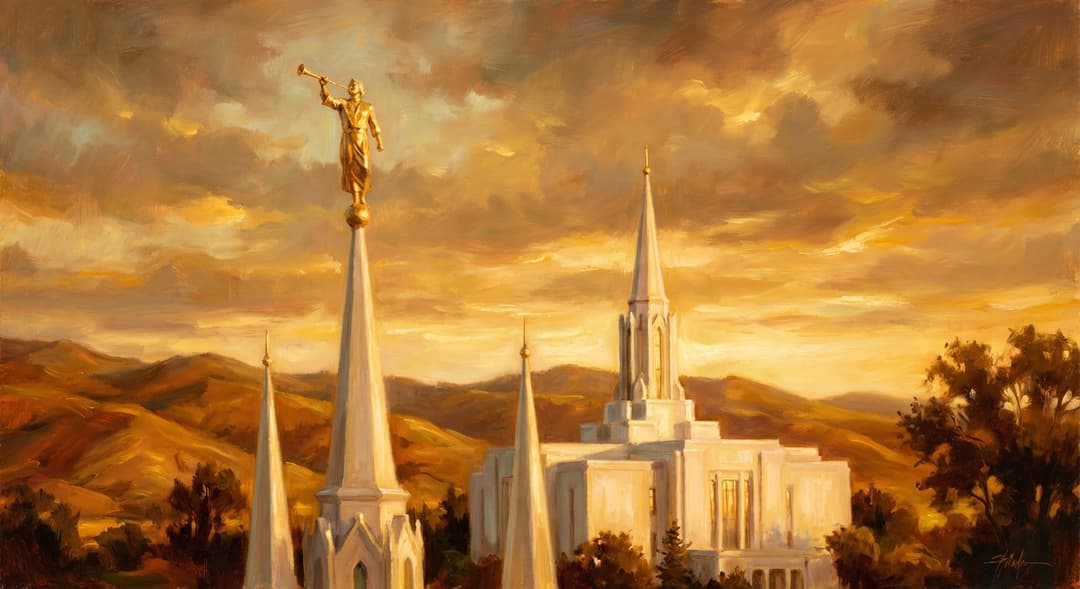
Featured Stories
A Modernist Vision for a New Era
1967–1972
When the Church announced new temples for Provo and Ogden in 1967, architect Emil B. Fetzer proposed a radical departure from traditional temple designs. Rather than Gothic spires or neoclassical columns, Fetzer envisioned a revolutionary cylindrical structure clad in precast white concrete panels—a bold statement of modernist sacred architecture that embraced the 'space age' optimism of the era.
The design was initially polarizing. Some members missed the familiar Gothic and classical elements of pioneer-era temples like Salt Lake or Manti. Others praised the contemporary vision as befitting a modern, growing Church. Critics called it the 'spaceship temple,' but supporters saw profound symbolism in the endless circular form representing eternity.
Fetzer drew inspiration from the Exodus narrative: the gold spire represented the 'pillar of fire by night' that guided Israel through the wilderness, while the white base symbolized the 'pillar of cloud by day.' The design married ancient scripture with modern materials—precast concrete, gold anodized aluminum, and bronze glass—creating a wholly unique sacred space.
Source: Church History and ArchEyes Architecture Review
The Largest Dedication in History
February 9, 1972
President Joseph Fielding Smith, then 95 years old and in declining health, presided over the temple's dedication. Unable to deliver the lengthy dedicatory prayer himself, it was read by his counselor Harold B. Lee, who would become Church President just five months later following Smith's passing.
For the first time in Church history, dedication services were broadcast live to multiple venues beyond the temple itself. The BYU Marriott Center, ironically also designed by Fetzer, hosted overflow crowds. Across all locations, more than 70,000 people attended—making it the largest temple dedication the Church had ever held.
The innovative broadcast set a precedent that would shape future dedications. President Smith remarked on the blessed day when so many Saints could participate in dedicating a new house of the Lord without being physically present in the temple itself.
Source: Church News and Deseret News Archives
The Temple Where Missionaries Begin
1978–2024
When the Missionary Training Center opened directly across the street from the Provo Temple in 1978, it transformed the temple's role in Church life. Suddenly, thousands of young missionaries preparing to serve around the world could walk to the temple to receive their own endowments before departing.
For many missionaries, entering the Provo Temple was a profound coming-of-age experience—their first temple ordinance beyond baptism for the dead. The temple became synonymous with the beginning of missionary service. Generations of elders and sisters would later recall with emotion their first temple experience on Temple Hill.
The proximity effect was dramatic: the Provo Temple became statistically the busiest temple in the Church, performing more endowment sessions than any other. At its peak, estimates suggested over 250,000 endowment sessions annually, with the temple operating at maximum capacity from early morning until late evening, six days per week.
Source: MTC History and Church Statistics
End of an Era
February 24, 2024
After serving faithfully for 52 years, the Provo Temple held its final ordinance sessions on February 24, 2024. The day was filled with emotion as patrons—many of whom had first entered the temple decades earlier as BYU students or MTC missionaries—said goodbye to the beloved building.
Unlike the Ogden Temple, which underwent intensive renovation in 2010–2014 while preserving its original exterior, the Provo Temple was slated for complete demolition. The decision surprised many who expected a similar renovation approach. Church leaders explained that a full reconstruction would better serve the next century of temple work, with modern systems and accessibility features impossible to incorporate into the 1972 structure.
When complete, the temple will rise again as the Provo Utah Rock Canyon Temple—named for the scenic canyon visible to the east. The new temple will carry forward the legacy of service from the same sacred hill, where generations experienced their first temple ordinances before embarking on missions or marriages that shaped their eternal lives.
Source: Deseret News and Church Newsroom
Timeline
Announcement
Plans announced to build temples in both Provo and Ogden to alleviate overcrowding at the Salt Lake, Logan, and Manti temples, which were performing 52% of all Church ordinance work.
component.timeline.announcementGroundbreaking
Ground is broken for the new temple on Temple Hill, a prominent site overlooking Utah Valley and adjacent to the growing BYU campus.
component.timeline.groundbreakingPublic Open House
The completed temple is opened for public tours before dedication, drawing tens of thousands of visitors to see the innovative modernist design.
EventDedication
Dedicated by President Joseph Fielding Smith in a historic ceremony broadcast to the BYU Marriott Center. Over 70,000 attended—the largest temple dedication in Church history at that time.
DedicationMTC Opens Across Street
The Missionary Training Center opens directly across the street from the temple, dramatically increasing temple usage as missionaries receive their endowments before departing.
MilestoneTemple Renamed
The temple is officially renamed from 'Provo Temple' to 'Provo Utah Temple' as part of a Church-wide standardization of temple naming conventions.
EventAngel Moroni Added
An Angel Moroni statue is added to the spire, which is also changed from its original gold color to white. This brought the temple in line with the appearance of most modern temples.
RenovationSecond Provo Temple
The Provo City Center Temple is dedicated downtown, making Provo one of only a few cities worldwide with two operating temples.
EventReconstruction Announced
President Russell M. Nelson announces the temple will be completely demolished and rebuilt—not merely renovated—in a surprising decision.
MilestoneTemple Closes
Final ordinance work is performed before closure. Generations of patrons share emotional farewells to the beloved building.
EventRededication
Will reopen as the Provo Utah Rock Canyon Temple with an entirely new design befitting its legacy of service.
DedicationHistory by Decade
1960s — The Space Age Temple
This temple will stand as a beacon of faith to a new generation.
By the mid-1960s, the three pioneer temples in Utah—Salt Lake, Logan, and Manti—were overwhelmed. A 1967 study revealed that 52% of all Church ordinance work was being performed in these three buildings alone. With BYU enrollment booming and Utah Valley's population rapidly growing, Church leaders announced plans for two new temples: one in Provo and one in Ogden. Architect Emil B. Fetzer proposed a revolutionary design unlike anything the Church had built. Inspired by the 'pillar of cloud by day and fire by night' from Exodus, Fetzer created a modernist cylindrical structure with distinctive chevron-patterned precast concrete panels, a gold spire, and bronze glass. Ground was broken on September 15, 1969, on Temple Hill overlooking the growing valley.
1970s — Dedication and MTC Connection
We dedicate this holy house unto Thee, that Thy Holy Spirit may ever be present herein.
The temple was completed in early 1972 and opened for public tours in January. On February 9, 1972, President Joseph Fielding Smith dedicated the building in a ceremony broadcast to the BYU Marriott Center—a first for temple dedications. Over 70,000 people participated, making it the largest dedication in Church history. The temple quickly became busy, but its role would transform dramatically in 1978 when the Missionary Training Center opened directly across the street. Suddenly, the Provo Temple became the place where tens of thousands of missionaries received their own endowments before departing to serve around the world. This connection would define the temple's identity for the next four decades.
1980s–1990s — Peak Capacity Era
The Provo Temple serves more patrons than any temple in the Church.
As BYU enrollment grew past 30,000 students and the MTC trained ever-larger numbers of missionaries, the Provo Temple reached peak usage. By the late 1980s, it was performing more ordinance work than any other temple in the Church—a distinction it would hold for decades. The temple operated at maximum capacity, with sessions running from early morning until late evening, six days per week. Temple workers served in extraordinary numbers to meet demand. In 1999, the temple was officially renamed from 'Provo Temple' to 'Provo Utah Temple' as part of a Church-wide standardization.
2000s — Angel Moroni and Continued Growth
In 2003, the temple underwent a significant modification: the original gold spire was repainted white and an Angel Moroni statue was installed at its apex. This brought the Provo Temple in line with the appearance of other modern temples, though some members nostalgically missed the distinctive gold spire that had symbolized the 'pillar of fire.' The temple continued operating at extraordinary capacity. A study suggested the Provo Temple was performing upwards of 250,000 endowment sessions annually—a staggering figure reflecting both its location advantages and the dedication of local Church members who served as temple workers.
2010s — Two Temples in One City
It is not possible, nor is it advisable, to remodel every tabernacle into a temple, but the Provo Tabernacle offers a unique opportunity.
In 2011, the Church announced that the historic Provo Tabernacle, severely damaged by fire in 2010, would be rebuilt as a second temple for Provo. The Provo City Center Temple was dedicated in 2016, making Provo one of only a handful of cities worldwide with two operating temples. Many expected the Provo Utah Temple to undergo renovation similar to its sister temple in Ogden, which was reconstructed between 2010 and 2014 with a dramatically updated interior while preserving its exterior shell. But the Provo Temple continued operating without major renovation as plans were developed.
2020s — Reconstruction and Legacy
In October 2021, President Russell M. Nelson made a surprising announcement: the Provo Utah Temple would not be renovated but completely demolished and rebuilt. Unlike the Ogden Temple approach, the Provo Temple required full reconstruction due to aging building systems and infrastructure. The temple closed for its final ordinance work on February 24, 2024. Generations of patrons who had received their endowments, been sealed in marriage, or served as temple workers said emotional farewells to the building. Demolition began shortly after closure. When complete, the temple will rise again as the Provo Utah Rock Canyon Temple—a new building on the same sacred hill, carrying forward over half a century of spiritual legacy.
Architecture & Facilities
Modern / Functional Modern with distinctive cylindrical form and chevron-patterned precast concrete panels. Sometimes classified as 'Late Modern' or described with 'Space Age' influences.
Building Materials
Exterior Walls
White precast concrete panels arranged in a distinctive accordion-like chevron pattern that wrapped around the cylindrical structure. The panels created texture and visual interest while providing structural support.
Spire
Single central spire rising from the crown of the temple. Originally gold-colored to represent the 'pillar of fire by night' from Exodus; repainted white in 2003 when the Angel Moroni statue was added.
Windows
Bronze-tinted glass panels set within gold anodized aluminum frames. The distinctive bronze color filtered light into the interior while maintaining privacy and creating warm, sacred ambiance.
Aluminum Grills
Gold anodized aluminum decorative grills provided texture and visual richness, particularly around the entrance and upper levels. A signature element of Fetzer's modernist vocabulary.
Foundation
Reinforced concrete foundation built to mid-20th century seismic standards, which would later prove inadequate for modern code requirements and contribute to the decision for full reconstruction.
Interior Features
Baptistry
Located in the lower level, featuring the traditional baptismal font resting on twelve life-size oxen representing the twelve tribes of Israel. Used for proxy baptisms on behalf of deceased ancestors.
Ordinance Rooms
Multiple ordinance rooms where patrons received the endowment ceremony via film presentations. The rooms were updated multiple times over the decades to accommodate new films and technology.
Celestial Room
A luminous central space representing the highest degree of glory, featuring elegant furnishings, chandeliers, and designed as a place for quiet contemplation and communion with the Spirit.
Sealing Rooms
Intimate rooms with altars where marriages for eternity and family sealings were performed. Mirrors on opposing walls created the iconic infinite reflection symbolizing eternal family relationships.
Temple Grounds
The temple sat on Temple Hill at an elevation offering commanding views of Utah Valley and the Wasatch Front. The grounds featured extensive landscaping, terraced lawns, and the iconic reflection pools at the main entrance that created stunning mirror images of the temple, especially during evening hours when the building was illuminated. The location adjacent to Brigham Young University and directly across the street from the Missionary Training Center made the grounds a natural gathering place for students and missionaries. Walking paths connected the temple to both the BYU campus and the MTC, facilitating the constant flow of patrons that made this the busiest temple in the Church.
Religious Significance
For over five decades, the Provo Temple was more than a building—it was a spiritual home for millions. As the busiest temple in the Church, it served as the starting point for countless missionary journeys, the altar for tens of thousands of eternal marriages, and the sanctuary where generations of students and families sought peace amid the pressures of life.
The temple is a place for sacred ordinances that unite families for eternity, provide instruction on God's plan for His children, and offer a quiet refuge from the noise of a troubled world. For BYU students and MTC missionaries, it was often their first adult temple experience—a transformative moment of covenant and commitment.
Sacred Ordinances
Endowment
A course of instruction about God's plan for His children, including covenants of obedience, sacrifice, and consecration. For tens of thousands of missionaries, receiving their endowment in the Provo Temple was a pivotal moment before departing to serve around the world.
Sealing
Marriages performed in the temple are believed to last for eternity, not just 'until death do us part.' Countless couples from BYU and the surrounding community were sealed in the Provo Temple, beginning eternal family relationships at the foot of Y Mountain.
Baptism for the Dead
Proxy baptisms performed on behalf of deceased ancestors who did not have the opportunity to receive the ordinance in life. Youth groups from throughout Utah Valley regularly attended the temple to perform this service.
Initiatory
A ceremonial washing and anointing symbolizing spiritual cleanliness and preparation to receive the endowment.
The Temple Where Missions Begin
For over 600,000 missionaries who trained at the adjacent MTC since 1978, the Provo Temple was often where they received their own endowment before departing to serve. This sacred ordinance—their first beyond baptism—became inseparably linked with their identity as called servants of the Lord. Many missionaries would later return to the Provo Temple to marry, creating a full-circle connection of covenant and service.
A Spiritual Home for Students
BYU students by the tens of thousands attended the Provo Temple throughout their university years. For many young adults, regular temple attendance became a foundational spiritual practice—a weekly or monthly retreat from academic pressures into a sanctuary of peace. The temple's proximity to campus made it accessible in ways other temples could not match.
The Mountain of the Lord
Temples in Latter-day Saint theology are often called 'mountains of the Lord' because they represent the highest point of spiritual ascent. The Provo Temple's location on Temple Hill with Y Mountain rising behind it physically embodied this principle—a sacred structure elevated above the valley, visible for miles as a beacon calling the faithful heavenward.
A Legacy of Service
With an estimated 250,000+ endowment sessions annually at its peak, the Provo Temple performed more ordinance work than any other temple in the Church. Thousands of dedicated temple workers served year after year, many for decades. The temple's closure marked the end of these individual service journeys, but the legacy of covenants made within its walls continues in eternal families around the world.
Similar Temples
Sources & Research
Every fact on Temples.org is backed by verified Sources & Research. Each piece of information is rated by source tier and confidence level.
View All Sources (7)
| Field | Source | Tier | Retrieved |
|---|---|---|---|
| Sister Temple Similarities | ChurchofJesusChristTemples.org (opens in a new tab) | C | 2026-03-17 |
| Downtown Provo Temple Added | ChurchofJesusChristTemples.org (opens in a new tab) | C | 2026-03-17 |
| Overcrowding Alleviation (Flagship) | ChurchofJesusChristTemples.org (opens in a new tab) | C | 2026-03-17 |
| Temple History & Statistics | ChurchofJesusChristTemples.org (opens in a new tab) | C | 2026-02-13 |
| Rock Canyon History & Statistics | ChurchofJesusChristTemples.org (opens in a new tab) | C | 2026-03-17 |
| Overcrowding Alleviation (Logan) | ChurchofJesusChristTemples.org (opens in a new tab) | C | 2026-03-17 |
| Overcrowding Alleviation (Manti) | ChurchofJesusChristTemples.org (opens in a new tab) | C | 2026-03-17 |