Visitor Insights
Visiting Logan Utah Temple
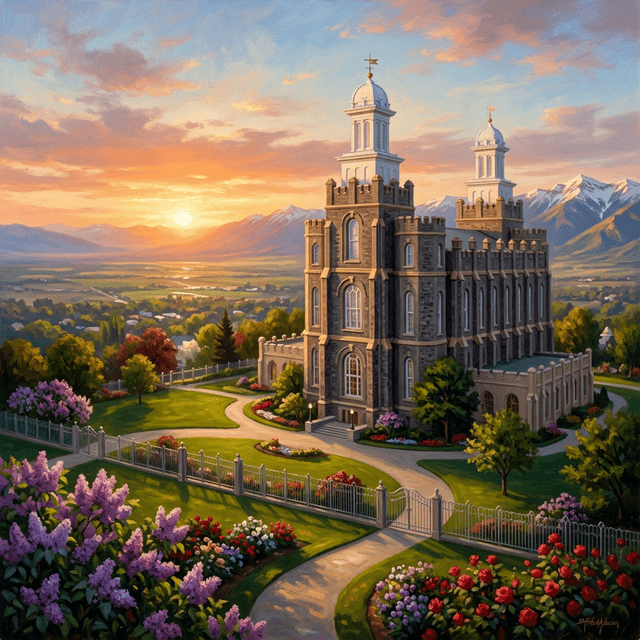
Perched on a prominent terrace, the Logan Utah Temple offers sweeping views of Cache Valley. Visitors are drawn to its unique castle-like appearance and the peaceful, meticulously manicured grounds. The absence of an Angel Moroni statue is a frequent conversation starter, highlighting its distinct historical era. The grounds are open to the public and are a favorite spot for walking, reflection, and wedding photography.
Highlights
- Unique "castle" architecture found nowhere else
- Stunning views of the Wellsville Mountains and Cache Valley
- Lush, award-winning gardens with seasonal floral displays
- Historic dark limestone masonry contrasting with light sandstone
- Peaceful reflecting fountains on the east side
- Walking distance to downtown Logan
Things to Know
- Temple interior is reserved for members with temple recommend
- Parking is free and abundant on the temple block
- Steps are required to access some parts of the upper grounds
- Popular spot for wedding photos, especially on weekends
Location
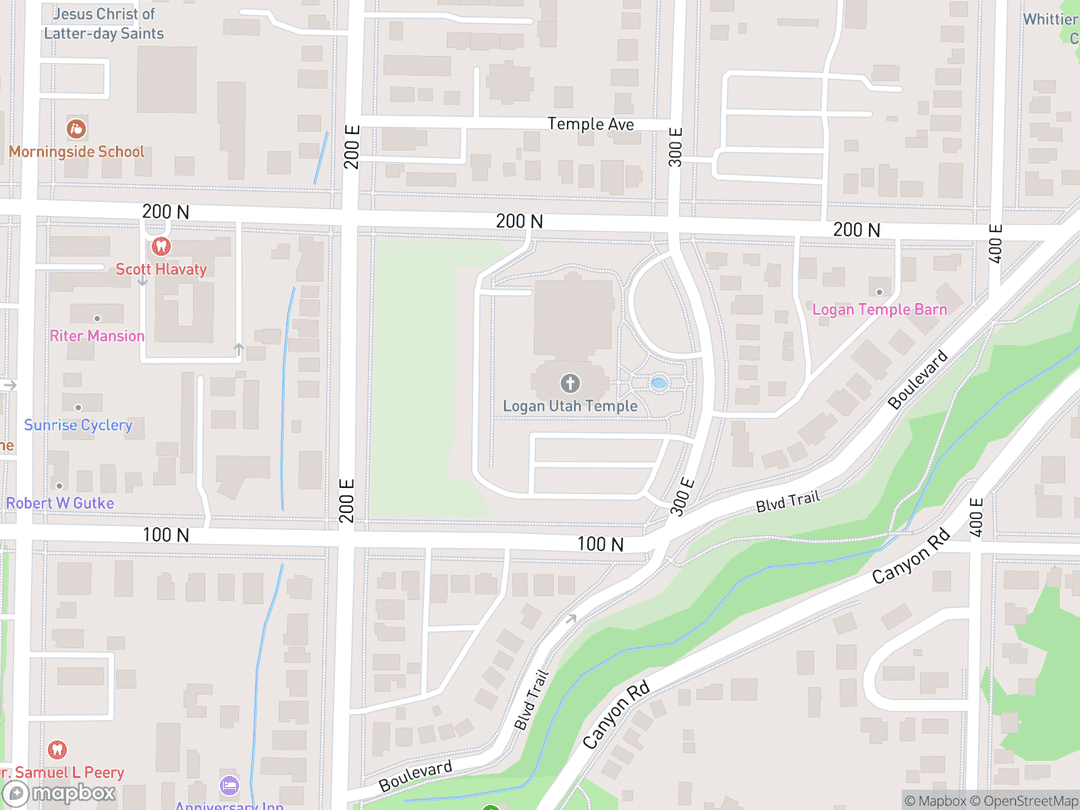
175 N 300 E, Logan, UT 84321-4720
Hours: Grounds open daily from dawn until 9:00 PM.
Getting There: Located at 175 N 300 E in Logan. Free parking available on-site. CVTD Route 7 stops nearby.
Get DirectionsTips for Your Visit
Best View
The view from 200 North looking east provides a dramatic perspective of the temple rising above the city.
Sunset
Visit at sunset to see the dark stone glow warm against the backdrop of the Bear River Mountains.
Gardens
Spring tulip displays and summer annuals make the grounds lush and colorful—perfect for a peaceful walk.
History
Notice the distinct lack of an Angel Moroni statue, preserving the original 1884 silhouette.
Winter
The temple grounds are beautifully illuminated with Christmas lights during the holiday season.
Tabernacle
Visit the nearby historic Logan Tabernacle on Main Street, another pioneer-era gem.
About
According to The Church of Jesus Christ of Latter-day Saints, the Logan Utah Temple, dedicated on May 17, 1884, is the second temple of the faith completed in Utah. Built entirely by pioneer labor over seven years, the temple features unique limestone battlements and pioneer-era Gothic architecture that give it the appearance of a medieval castle overlooking Cache Valley. It was the only temple of the pioneer era to remain in continuous operation until its 1976 renovation, standing as a testament to the sacrifice and determination of early Latter-day Saints in northern Utah.
The temple's architecture is unique among all Latter-day Saint temples, featuring a distinct "castellated" Gothic Revival style with octagonal towers and battlements that evoke the appearance of a medieval castle. The dark, siliceous limestone walls were quarried from Green Canyon, while the lighter buff sandstone trim came from Franklin, Idaho. This contrasting stonework highlights the temple's structural lines and enduring strength.
Unlike most temples today, the Logan Temple does not feature an Angel Moroni statue, maintaining its original 19th-century silhouette. The interior originally featured varying room heights and progressive murals, though these were extensively modified during a 1970s renovation to increase capacity. Despite these changes, the exterior remains a pristine example of pioneer craftsmanship.
The temple grounds are renowned for their meticulous landscaping, featuring fountains and vibrant flower gardens that occupy an entire city block. As the spiritual heart of Cache Valley, the "Temple on the Hill" continues to serve as a beacon of faith and a reminder of the pioneers who built it with their own hands.
Gallery
Symbolic Elements
The temple's exterior features intricate carvings, each rich with spiritual meaning:

Inverted Starstones
Five-pointed stars carved into the upper towers represent Jesus Christ as the 'Bright and Morning Star.' Unlike the Salt Lake Temple, Logan features inverted pentagrams—a historically common Christian symbol.
Priesthood Towers
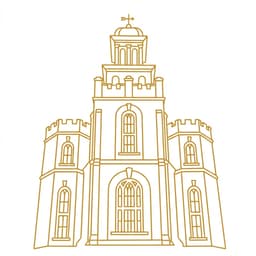
The two octagonal towers represent the Melchizedek (east, taller) and Aaronic (west) priesthoods. The east tower is intentionally higher, symbolizing the higher priesthood.

Castellated Battlements
The notched battlements evoke a medieval fortress, symbolizing the temple as a spiritual stronghold—a refuge from the storms of the world.

Contrasting Stone
Dark siliceous limestone from Green Canyon represents durability; lighter buff sandstone trim from Franklin, Idaho represents the light of the gospel.
Interesting Facts
The temple was once painted a pinkish-buff color in the late 1800s to hide the rough dark limestone; the paint was later removed to reveal its natural stone.
It is the only operating temple dedicated by President John Taylor.
Roughly 25,000 workers contributed labor or materials to build the temple.
Pioneer women hand-wove 2,144 square yards of carpet for the interior—a task taking two months of constant labor.
A 1917 fire caused by faulty wiring destroyed the grand staircase and much of the original woodwork.
The entire historic interior was gutted during the 1970s renovation, a decision called 'The Great Gutting' by historians.
It was the first temple to feature progressive-style murals, where patrons moved through rooms symbolizing their spiritual journey.
The exterior stone from Green Canyon is so hard that pioneer masons struggled to cut and dress it.
Common Questions
Why doesn't the Logan Utah Temple have an Angel Moroni?
The Logan Utah Temple does not have an Angel Moroni statue because it was designed and completed before the custom of placing the statue on temples became standard. It maintains its original 1884 historic silhouette.
Can I tour the inside of the Logan Utah Temple?
The interior of the Logan Utah Temple is reserved for members of The Church of Jesus Christ of Latter-day Saints with a current temple recommend. However, the public is welcome to walk the temple grounds and visit the waiting area.
What kind of stone is the Logan Utah Temple made of?
The walls of the Logan Utah Temple are made of dark siliceous limestone quarried from Green Canyon, while the lighter trim is buff sandstone from Franklin, Idaho.
Is the interior of the Logan Utah Temple original?
No, the interior of the Logan Utah Temple is not original. It was completely gutted and rebuilt during a major renovation in the late 1970s to convert it from progressive-style rooms to stationary rooms for higher capacity.
Related Stories
Explore the rich history, traditions, and people connected to this sacred site.
Featured Stories
The Castle on the Hill
1877–Present
When Brigham Young announced the Logan Temple, he envisioned a structure that would dominate the landscape of Cache Valley. Built on a prominent terrace that was once a public park, the temple was designed to be a visible beacon of faith.
Its unique 'castellated' style—featuring battlements like a medieval fortress—sets it apart from almost all other temples. This design choice was deliberate, symbolizing the temple as a spiritual fortress where the Saints could find protection from the spiritual storms of the world.
Source: Church History
A Temple Without Moroni
1884–Present
Visitors often ask, 'Where is the Angel Moroni?' The Logan Temple is one of the few operating temples that does not feature the iconic statue. When it was dedicated in 1884, the custom of placing Moroni on temples had not yet been fully established (the Nauvoo Temple had a weather vane, and Salt Lake would not receive its statue until 1892).
Over the years, despite renovations and opportunities to add one, the Church has chosen to preserve the temple's original historic silhouette. The twin octagonal towers stand unadorned, a testament to the pioneer era in which they were raised.
Source: LDS Living
Built by Donation
1877–1884
The construction of the Logan Temple was a massive community effort. It is estimated that nearly 25,000 people contributed labor or materials. Cash was scarce in the frontier economy, so members donated farm produce, eggs, and livestock to feed the construction workers.
A sawmill was established in Temple Fork (Logan Canyon) to provide the timber, and a lime kiln was built in the canyon to produce mortar. The dark limestone was quarried from Green Canyon and hauled by wagon to the site. Every stone in the temple represents a sacrifice by the early settlers of Cache Valley.
Source: Utah History Encyclopedia
Timeline
Announcement
Brigham Young announces the temple during General Conference.
MilestoneGroundbreaking
Ground is broken by John Willard Young. Site dedicated by Orson Pratt.
component.timeline.groundbreakingConstruction
Built entirely by volunteer pioneer labor using local limestone and timber.
EventDedication
Dedicated by President John Taylor, becoming the second temple in Utah.
DedicationRenovation Starts
Temple closes for extensive remodeling, replacing the entire interior structure.
RenovationRededication
Rededicated by President Spencer W. Kimball after complete interior renewal.
DedicationOperating
Continues to serve as the spiritual center for Latter-day Saints in northern Utah.
MilestoneHistory by Decade
1870s — Vision & Groundbreaking
We will build a temple on the bench... it will be a castle to the Lord.
Brigham Young announced the temple in 1876, and ground was broken in 1877. It was a time of intense activity as the Saints in northern Utah mobilized to build their House of the Lord.
1880s — Dedication
The temple was dedicated in 1884 by President John Taylor. It became the spiritual hub for Saints in northern Utah, southern Idaho, and western Wyoming.
1970s — Renewal
After nearly a century of heavy use, the interior was worn and outdated. In a controversial move by modern standards, the entire historic interior was gutted and replaced with a modern steel, concrete, and drywall structure to increase capacity and seismic safety. It was rededicated in 1979.
Architecture & Facilities
Gothic Revival with a castellated fortress appearance, the Logan Utah Temple features octagonal towers crowned with battlements, dark limestone contrasting with lighter stone trim, and robust masonry walls that evoke a medieval castle standing sentinel over the Cache Valley landscape.
Building Materials
Walls
Dark siliceous limestone from Green Canyon.
Trim
Buff-colored sandstone from Franklin, Idaho.
Towers
Twin octagonal towers with castellated battlements.
Interior Features
Design
The 1979 renovation completely gutted the pioneer interior and replaced it with a modern, highly efficient design featuring stationary ordinance rooms instead of the original progressive style.
Details
Features beautiful crystal chandeliers, intricate woodwork, and a predominantly light, peaceful color palette.
Temple Grounds
The temple grounds occupy an entire city block and are famous for their fountains and manicured flower beds. The east side features a large grassy slope perfect for sitting and reflecting.
Religious Significance
The Logan Temple has served as a beacon of faith for over 140 years.
Sacred Ordinances
Endowment
A course of instruction about God's plan for humanity and the making of sacred covenants.
Sealing
A ceremony that unites husbands, wives, and children as families for eternity.
Initiatory
A ceremonial washing and anointing that symbolizes spiritual cleanliness.
Baptism for the Dead
Proxy baptisms performed on behalf of deceased ancestors, giving them the choice to accept the gospel in the next life.
A Pioneer Legacy
For the descendants of the Cache Valley pioneers, this temple is a tangible link to their ancestors who sacrificed to build it.
Similar Temples
Sources & Research
Every fact on Temples.org is backed by verified Sources & Research. Each piece of information is rated by source tier and confidence level.
View All Sources (3)
| Field | Source | Tier | Retrieved |
|---|---|---|---|
| Official Temple Page | The Church of Jesus Christ of Latter-day Saints (opens in a new tab) | A | 2026-02-13 |
| Temple History & Facts | ChurchofJesusChristTemples.org (opens in a new tab) | C | 2026-02-13 |
| Church News - 12 Facts | Church News (opens in a new tab) | B | 2026-02-13 |