Visitor Insights
Visiting Nauvoo Illinois Temple
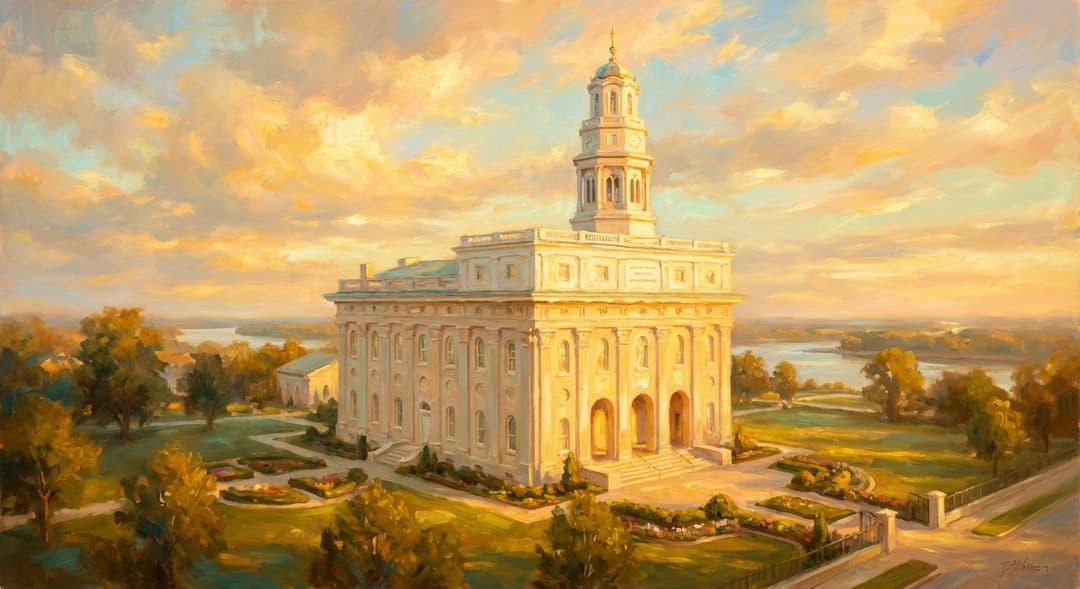
The Nauvoo Temple is the centerpiece of the "Historic Nauvoo" district, a National Historic Landmark. While the interior is reserved for Church members, the grounds are open to the public and offer commanding views of the Mississippi River. The site is surrounded by over 30 restored historic homes and shops from the 1840s.
Highlights
- The Sunstone Capitals on the exterior pilasters
- The West-facing Angel Moroni statue
- Views of the Mississippi River from the bluff
- Historic Nauvoo Visitors' Center exhibits
Things to Know
- Photography is permitted on the grounds but prohibited inside.
- Free tickets are often required for carriage rides during summer.
- Summer season (May–Oct) has extended hours.
Location
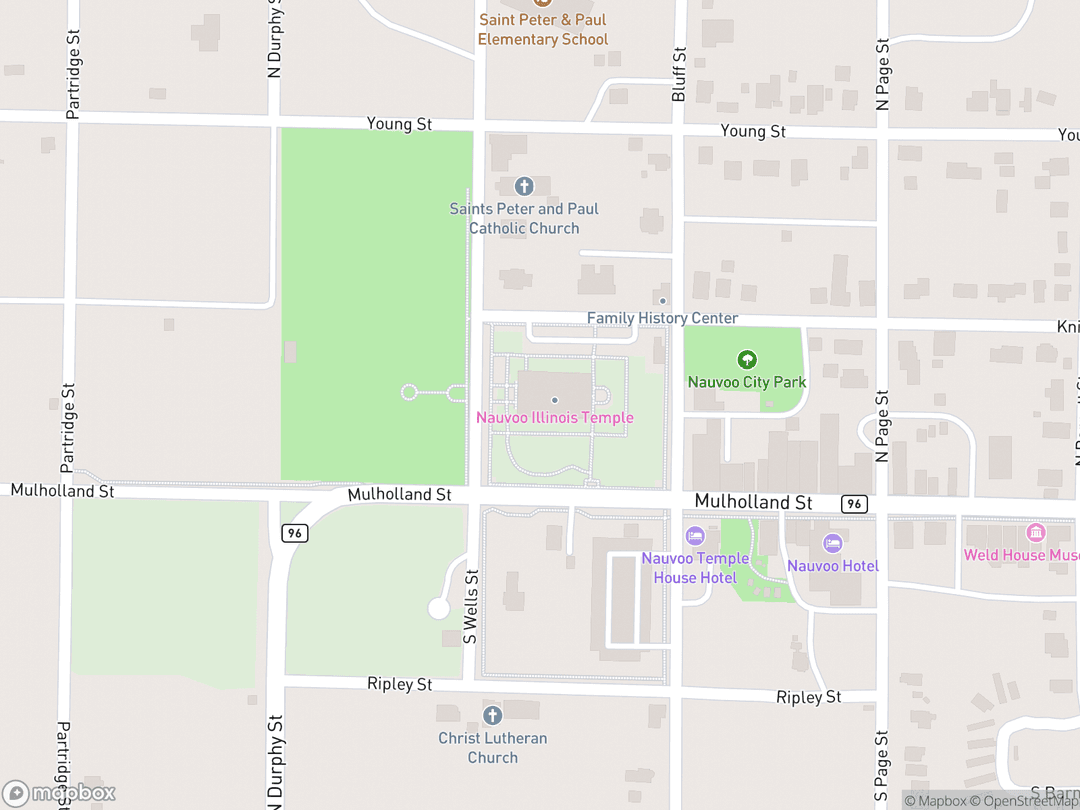
50 North Wells Street, Nauvoo, Illinois 62354, United States
Hours: Standard: Mon–Sat 10:00 AM – 4:00 PM. Summer: 9:00 AM – 6:00 PM.
Getting There: Located on IL-96 (Great River Road). Parking is available at the Visitors' Center and designated lots near the temple.
Get DirectionsAbout
According to the official Newsroom of The Church of Jesus Christ of Latter-day Saints, the Nauvoo Illinois Temple, dedicated on June 27, 2002, stands as a unique architectural and historical landmark within the tradition of the faith. It holds the distinct honor of being the only temple in the Church's history to be entirely destroyed by arson and natural disaster, only to be subsequently rebuilt on its original footprint over a century later. Located on a high bluff overlooking the Mississippi River, the edifice represents both the tragic expulsion of the Latter-day Saints from Illinois in the 1840s and their triumphant modern-day return to this sacred site.
The exterior is a faithful reconstruction of the original 1840s structure designed by William Weeks, utilizing the same Greek Revival style and limestone materials. While the original building was constructed from local stone quarried nearby, the reconstruction utilizes limestone from Russellville, Alabama, selected for its precise color and texture match to the original masonry. The building features the distinctive "Mormon Order" of architecture, including pilasters adorned with moonstones, sunstones, and starstones, symbolizing the glory of the cosmos and the restoration of the gospel.
Inside, the temple serves as a bridge between the past and present. It reintroduces the concept of progressive ordinance rooms—where patrons physically move from room to room to symbolize spiritual progression—and features hand-painted murals in the style of the Hudson River School. Dedicated in 2002 on the anniversary of the martyrdom of Joseph Smith, the Nauvoo Illinois Temple is not merely a functioning house of worship but a memorial to the sacrifice, industry, and faith of the early pioneers who built the city of Nauvoo from a swamp into a thriving metropolis.
Gallery
Symbolic Elements
The temple's exterior features intricate carvings, each rich with spiritual meaning:

The Sunstone
Located at the capital of the pilasters, these depict a face of the sun surrounded by clouds and rays with two hands holding trumpets. They represent the 'Morning of the Restoration' or the Celestial glory.

The Moonstone
Found at the base of the pilasters, these stones depict a crescent moon with a profile face. They symbolize the Terrestrial kingdom or the moon under the feet of the woman in Revelation 12.

The Starstone
Located on the frieze above the sunstones, these are inverted five-pointed stars. They represent the Telestial kingdom or the crown of twelve stars mentioned in scripture.

The Flying Angel
While the current temple has a standing Moroni, the original featured a horizontal weather vane angel. This unique symbol represented the angel flying through the midst of heaven with the everlasting gospel.

Twelve Oxen
The baptismal font rests upon the backs of twelve limestone oxen, symbolizing the twelve tribes of Israel. This follows the pattern of the Molten Sea in Solomon's Temple.

Inverted Stars
The five-pointed stars on the exterior are inverted (point down). In 19th-century theology, this was a symbol of Christ as the 'Morning Star' descending to earth, rather than a sinister symbol.

The Clasping Hands
Carved at the base of the pilasters alongside the moonstones, the clasping hands symbolize the fellowship and covenant-making central to temple worship, representing the bond between God and humanity.
Interesting Facts
The Nauvoo Temple is the only temple in Church history to be destroyed and subsequently rebuilt on its original footprint.
The Angel Moroni statue faces West, overlooking the river and the direction of the pioneer exodus, rather than the traditional East.
The baptismal font is the largest in the Church, a replica of the massive 1840s original designed for high-volume baptisms.
The 2002 dedication was the first to be broadcast via encrypted satellite to stake centers worldwide.
The temple was dedicated on June 27, 2002, exactly 158 years to the hour of Joseph Smith's martyrdom.
Reconstruction was made possible because the original architect William Weeks' drawings were preserved and reacquired.
It is one of only two modern temples to be destroyed and rebuilt (the other being Apia Samoa).
The original temple was built largely through 'labor tithing,' where members donated every tenth day to construction.
One original sunstone capital survived and is currently on display in the Nauvoo Visitors' Center.
The original temple featured a horizontal 'flying' angel weather vane rather than a standing statue.
Common Questions
Can the public enter the Nauvoo Temple?
Access to the interior is restricted to members of the LDS Church with a valid temple recommend. However, the grounds are open to the public, and the nearby Visitors' Center offers a cutaway model and exhibits about the interior.
Is this the original building from the 1840s?
No. The original temple was destroyed by fire in 1848 and a tornado in 1850. The current building, dedicated in 2002, is a faithful reconstruction built on the exact footprint of the original using modern materials and reinforced concrete.
Why does the Angel Moroni face West?
Unlike most temples where the angel faces East (symbolizing the Second Coming), the Nauvoo angel faces West toward the Mississippi River. This symbolizes the direction of the Saints' exodus to the Rocky Mountains.
What happened to the original stones?
Most original stones were scavenged for other buildings in Nauvoo or lost. Some were recovered during archaeological digs and are in museums. The current exterior uses Alabama limestone chosen to match the original color.
Does the temple have a bell?
Yes. The Nauvoo Temple is the only operating temple with a functioning bell tower. While the original bell's fate is unclear, a new bell rings in the reconstructed tower.
Featured Stories
The Fire and the Tornado
1848–1850
The destruction of the original Nauvoo Temple was a two-act tragedy that sealed the fate of the city. On October 9, 1848, an arsonist set fire to the building, and the flames, fed by the dried timber of the interior, gutted the structure leaving only the blackened limestone walls standing as a skeleton against the sky.
Nature finished what man began when a violent tornado struck on May 27, 1850. The storm toppled the north wall and compromised the structural integrity of the remaining masonry, leading the city council to eventually order the demolition of the dangerous ruins, leaving the site desolate for over a century.
Source: Church History Department
The Return of the Plans
Mid-20th Century
The precise reconstruction of the Nauvoo Temple would have been impossible without the miraculous preservation of the original blueprints. The original architect, William Weeks, had taken his detailed drawings with him when he left Nauvoo, and they remained in his family's possession for generations.
In a stroke of providence, the Church was able to reacquire these drawings from Weeks' descendants in the mid-20th century. When the decision to rebuild was made in 1999, architects FFKR were able to use Weeks' own lines and measurements to ensure the exterior was a faithful replica of the vision Joseph Smith had established.
Source: Official Church Records
A Temple of Exodus
Winter 1846
Few buildings in history have been constructed with such urgency only to be abandoned so quickly. As persecution mounted in late 1845, the Saints worked night and day to complete the attic story of the temple so that endowments could be performed before the forced evacuation.
Between December 1845 and February 1846, approximately 6,000 Latter-day Saints streamed through the temple day and night. They received their sacred ordinances and immediately crossed the frozen Mississippi River to begin their trek West, carrying the covenants made in that temple as their primary spiritual sustenance for the journey ahead.
Source: Saints, Vol. 1
Timeline
Settlement of Commerce
Latter-day Saints settle in Commerce, Illinois, renaming it Nauvoo.
MilestoneTemple Intention Announced
The First Presidency announces the intent to build a temple in Nauvoo.
component.timeline.announcementCornerstone Ceremony
Joseph Smith presides over the cornerstone laying; the 'Mormon Order' of architecture is established.
component.timeline.groundbreakingBaptismal Font Dedicated
A wooden font in the basement is dedicated for proxy baptisms.
MilestoneMartyrdom of Joseph Smith
Work is temporarily suspended following the death of Joseph and Hyrum Smith, then resumes with urgency.
EventAttic Dedication
The attic story is dedicated; 6,000 Saints receive endowments before fleeing west.
MilestoneOriginal Public Dedication
Orson Hyde dedicates the temple publicly, though most members had already evacuated.
DedicationDestruction by Fire
An arsonist sets fire to the temple, gutting the wooden interior and leaving only limestone walls.
component.timeline.destructionTornado Strike
A tornado topples the north wall, compromising the structural integrity of the ruin.
component.timeline.destructionSite Reacquisition Begins
The Church begins reacquiring the temple lot via public auction.
MilestoneSite Purchase Complete
The Church completes the purchase of the entire temple block.
MilestoneReconstruction Announced
President Gordon B. Hinckley announces the temple will be rebuilt on the original footprint.
component.timeline.announcementGroundbreaking
Ceremony held to commence the reconstruction using modern reinforced concrete.
component.timeline.groundbreakingPublic Open House
Over 330,000 visitors tour the completed temple during a six-week public open house before the dedication.
MilestoneTemple Dedication
Dedicated on the 158th anniversary of the martyrdom of Joseph Smith.
DedicationHistory by Decade
1840s — Construction and Exodus
We have built this temple... and now we are compelled to leave it.
The 1840s defined the rise and fall of the original temple. From the laying of the cornerstone in 1841 to the feverish completion of the attic in 1845, the temple was the focal point of the community. The decade ended in tragedy with the martyrdom of Joseph Smith, the forced exodus of the Saints, and the eventual arson that destroyed the building in 1848.
1850s–1930s — The Era of Ruins
Following the tornado of 1850, the temple block became a quarry for the local town. The limestone blocks that once formed the House of the Lord were scavenged to build wine cellars, homes, and commercial buildings in Nauvoo. For nearly ninety years, the site remained a ghost of its former glory, with only the memory of the temple persisting among the locals.
1990s–2000s — Resurrection
The announcement in 1999 by President Gordon B. Hinckley to rebuild the temple electrified the Church. Construction moved rapidly, utilizing modern engineering clad in traditional limestone. The dedication in 2002 marked the closure of a 156-year chapter of loss, symbolizing the permanent return of the faith to Nauvoo.
Architecture & Facilities
A faithful reconstruction of the original 1846 temple, designed by FFKR Architects to match William Weeks' Greek Revival masterpiece. The limestone exterior features 30 distinctive pilasters with sun, moon, and star stones, symbolizing degrees of glory. A single tower capped with a horizontal angel Moroni statue dominates the skyline, while the interior adapts the historic floor plan for modern ordinance work.
Building Materials
Exterior
Limestone from Russellville, Alabama, selected to match the original Nauvoo limestone.
Interior
Features intricate woodwork and hand-painted murals reminiscent of the 19th century.
Interior Features
Assembly Hall
Features tiered pulpits on both ends (Melchizedek and Aaronic) replicating the Kirtland/Nauvoo arrangement.
Baptistry
Contains the largest font in the Church, resting on twelve limestone oxen.
Temple Grounds
Overlooks the Mississippi River with extensive gardens and a statue of Joseph and Hyrum Smith.
Additional Facilities
The temple anchors the Historic Nauvoo district, a National Historic Landmark featuring over 30 restored 1840s homes, shops, and public buildings. The Historic Nauvoo Visitors' Center offers exhibits, a cutaway temple model, and a surviving original sunstone capital. Free guided tours and horse-drawn carriage rides are available seasonally.
Religious Significance
The Nauvoo Temple is theologically significant as the place where the fullness of temple liturgy was first introduced to the general Church membership.
To provide a place for the administration of ordinances for both the living and the dead.
Sacred Ordinances
Baptism for the Dead
First practiced in the Mississippi River, then in the temple basement font starting in 1841.
Endowment
The presentation of the endowment was administered to thousands in the temple attic before the exodus.
The Concept of Sealing
Nauvoo was where the authority to seal families together for eternity was fully exercised, a doctrine that remains central to temple worship today.
Similar Temples
Sources & Research
Every fact on Temples.org is backed by verified Sources & Research. Each piece of information is rated by source tier and confidence level.
View All Sources (9)
| Field | Source | Tier | Retrieved |
|---|---|---|---|
| Official Announcement | The Church of Jesus Christ of Latter-day Saints (opens in a new tab) | A | 2026-02-13 |
| Dedication Record | The Church of Jesus Christ of Latter-day Saints (opens in a new tab) | A | 2026-02-13 |
| Historical Timeline | Church History Department (opens in a new tab) | A | 2026-02-13 |
| Nauvoo Temple History | The Church of Jesus Christ of Latter-day Saints (opens in a new tab) | A | 2026-02-13 |
| Church Historian's Press | Church Historian's Press (opens in a new tab) | B | 2026-02-13 |
| BYU Studies - Nauvoo Architecture | BYU Studies (opens in a new tab) | B | 2026-02-13 |
| Deseret News Dedication Coverage | Deseret News (opens in a new tab) | B | 2026-02-13 |
| Nauvoo Restoration Inc. | Nauvoo Restoration Inc. (opens in a new tab) | B | 2026-02-13 |
| Architecture & Design | ChurchofJesusChristTemples.org (opens in a new tab) | C | 2026-02-13 |