Visitor Insights
Visiting Atlanta Georgia Temple
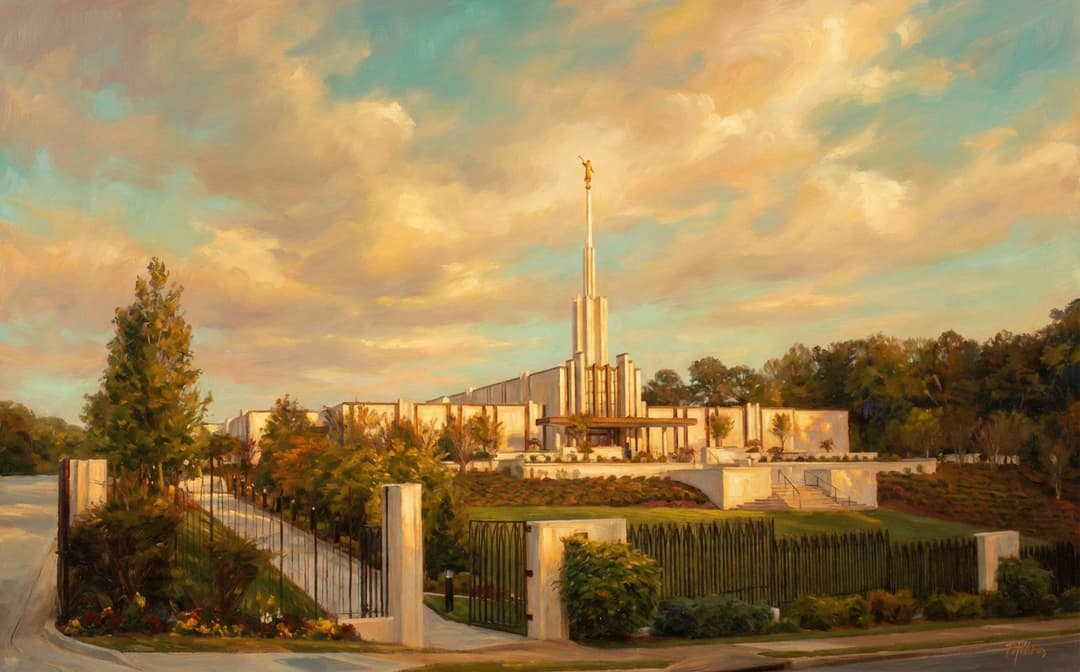
The Atlanta Georgia Temple is located in Sandy Springs, a northern suburb of Atlanta. The grounds are open to the public and feature peaceful walkways, fountains, and mature trees, making it a serene spot for reflection. The temple is particularly beautiful in the spring when azaleas are in bloom, and in the evening when the exterior is dramatically illuminated.
Highlights
- Historic first temple in the American Southeast
- Peaceful wooded grounds open to the public
- Beautiful art glass windows (viewable from exterior/waiting area)
- Close proximity to King and Queen towers (local landmarks)
Things to Know
- Temple interior is reserved for members with a recommend
- Photography is permitted on the grounds
- Sunday dress is encouraged but not required for grounds visitors
Location
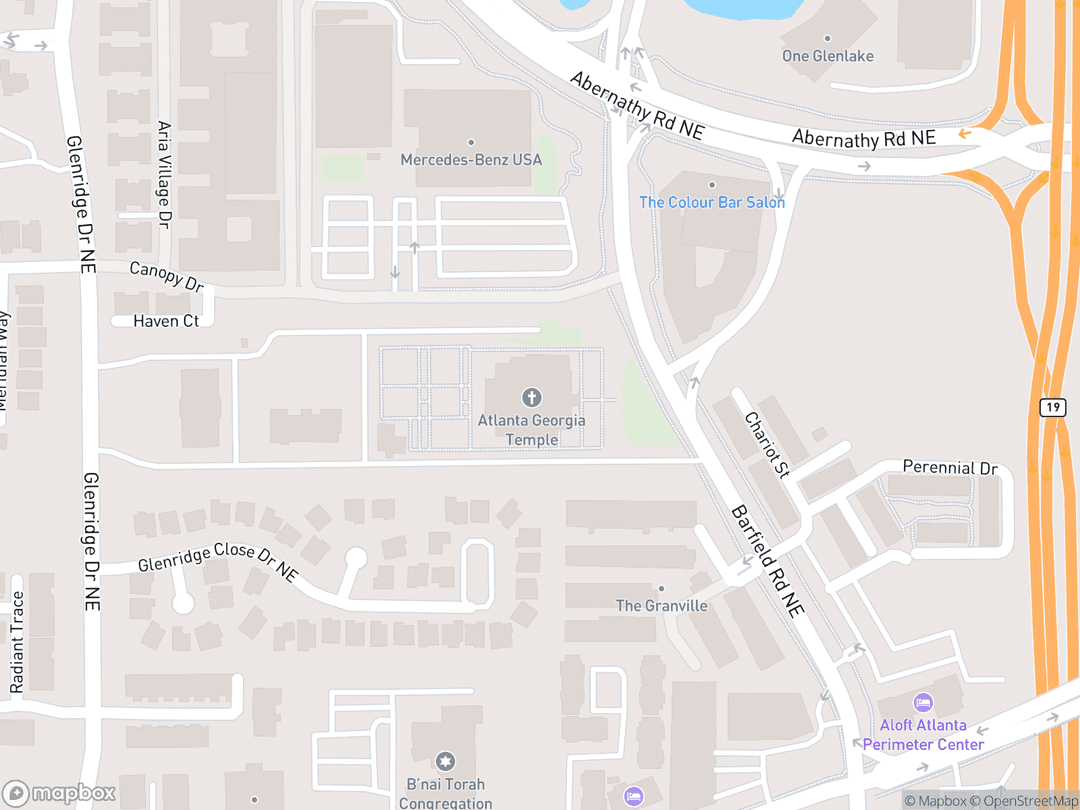
6450 Barfield Road NE, Sandy Springs, Georgia 30328, United States
Hours: Grounds are open daily from dawn to dusk. Visitor waiting area generally open during temple operating hours (Tuesday-Saturday).
Getting There: By Car: Located off GA-400 (Exit 4B) or I-285. Free on-site parking is available. By Transit: Take MARTA Red Line to Sandy Springs Station. The temple is a ~1 mile (19 min) walk or a short ride on Bus Route 5.
Get DirectionsTips for Your Visit
Best Photo Spot
The front plaza offers a clear view of the spire against the sky. Evening "blue hour" provides a stunning balance of artificial and natural light.
Azalea Season
Visit in early to mid-April to see the grounds erupt in color with blooming azaleas and dogwoods.
Public Transit
If staying downtown, the MARTA Red Line is a convenient way to reach Sandy Springs without navigating Atlanta traffic.
Nearby Dining
The Perimeter Center area just south of the temple offers extensive dining options for visitors.
About
The Atlanta Georgia Temple stands as a historic milestone for The Church of Jesus Christ of Latter-day Saints in the American South. Dedicated in 1983, it was the first temple constructed in the southeastern United States and the first built east of the Mississippi River since the original Nauvoo Temple in 1846. Its announcement in 1980 was hailed as a "Southern Miracle," marking the end of an era where members traveled thousands of miles to Washington D.C. or Salt Lake City for temple worship.
Located on a wooded 9.6-acre hill in Sandy Springs, the temple features a modern regional design characterized by clean vertical lines and pre-cast stone walls. Originally designed without a spire, a single attached spire topped with the Angel Moroni was added during the final design phase, bridging mid-century modern austerity with traditional temple iconography. Extensive renovations in 2011 introduced Brazilian eucalyptus woodwork and art glass windows, refining the interior to match the spiritual significance of the edifice.
Gallery
Symbolic Elements
The temple's exterior features intricate carvings, each rich with spiritual meaning:

Spire
A single vertical element drawing the eye upward to heaven, added to the design to distinguish the building as sacred.

Angel Moroni
A 10.5-foot gold-leafed statue blowing a trumpet, symbolizing the restoration of the gospel to the earth.

Crystal Motifs
Art glass windows feature crystal elements repurposed from the original chandelier, symbolizing purity and light.
Interesting Facts
The Atlanta Temple was the first temple dedicated by Gordon B. Hinckley, who would go on to dedicate or rededicate nearly 100 temples.
Before this temple was built, members in the South travelled to Washington D.C. or Salt Lake City—often a journey of thousands of miles.
The 2011 renovation incorporated crystal drops from the original 1983 celestial room chandelier into the new art glass windows.
The "Southern Lights" cultural celebration in 2011 featured 2,700 youth from 150 congregations across Georgia and Alabama.
The temple's single spire was not in the original plan but was added to better align with the traditional image of a temple.
Common Questions
Can anyone enter the Atlanta Temple?
The temple interior is reserved for members of the Church who hold a valid temple recommend. However, the beautifully landscaped grounds are open to the public and are a popular place for quiet reflection and photography.
When was the Atlanta Temple built?
It was dedicated on June 1, 1983. It was the first temple in the Southeast US, marking a major milestone in Church history.
What makes this temple unique?
Unlike many temples built today, the Atlanta Temple was a custom "regional" design. It features specific local touches like the use of Brazilian eucalyptus wood (added in 2011) and was the fulfillment of the "Southern Miracle" of church growth.
How do I get there on public transit?
The temple is accessible via the MARTA Red Line (Sandy Springs Station), followed by a 15-20 minute walk or a short bus ride.
Related Stories
Explore the rich history, traditions, and people connected to this sacred site.
Featured Stories
The "Southern Miracle"
1930–1983
The announcement of the Atlanta Temple in 1980 was widely hailed by members as a "Southern Miracle." For generations, the Church in the South was small and scattered, often facing localized persecution. In 1930, there were only about 4,000 members in Georgia.
By 1980, membership had exploded to over 27,000. The announcement of a temple in Atlanta signaled that the Church had come of age in the region. The groundbreaking ceremony drew an astonishing 10,000 people from across the South, many weeping openly at the realization that a temple would finally be in their midst.
Source: Church News; Comprehensive History of the Church
A Promise Kept
1983 & 1997
During the original dedication in 1983, President Gordon B. Hinckley noticed a design limitation: the baptistry was situated such that family members could not easily witness the ordinances being performed for their ancestors. It was a functional oversight in the layout.
Speaking to the youth present, President Hinckley promised, "Someday we will fix that." It took 14 years, but he remembered. When the temple underwent a remodel in 1997, a primary objective was to install a large viewing window for the baptistry. President Hinckley returned to rededicate the temple, fulfilling the specific promise he had made to the youth of the South.
Source: Church of Jesus Christ Temples; Oral Histories
Southern Lights
April 30, 2011
Ahead of the 2011 rededication, the Church rented the Atlanta Civic Center for a massive cultural celebration titled "Southern Lights." The production involved 2,700 youth performers from 150 congregations across Georgia and Alabama.
The performance woven together the history of the region—including the Civil War, the Civil Rights movement, and the growth of the Church—through music, dance, and narration. President Thomas S. Monson presided over the event, later remarking on the vibrancy and faith of the youth in a region where the Church was once so small.
Source: Church News; Deseret News
Timeline
First Stake in Georgia
The Atlanta Stake is organized, marking a significant maturity for the Church in the South and paving the way for future temple blessings.
MilestoneAnnouncement
President Spencer W. Kimball announces plans for the first temple in the Southern United States, ending decades of long-distance travel for members.
MilestoneGroundbreaking
President Kimball presides over the ceremony with 10,000 people in attendance—one of the largest gatherings of Saints in the South.
component.timeline.groundbreakingPublic Open House
Over 60,000 visitors tour the temple, including Georgia Governor Joe Frank Harris.
EventDedication
President Gordon B. Hinckley dedicates the temple in 11 sessions. It is the first temple dedication he presides over.
DedicationFirst Rededication
President Hinckley rededicates the temple after a remodel that added a viewing window to the baptistry.
DedicationMajor Renovation Begins
Temple closes for nearly two years for a complete overhaul of systems, landscaping, and interior finishes.
Renovation"Southern Lights" Celebration
2,700 youth perform at the Atlanta Civic Center to celebrate the temple's reopening.
EventSecond Rededication
President Thomas S. Monson rededicates the refined temple, now featuring eucalyptus wood and new art glass.
DedicationAngel Moroni Repositioned
The statue of the Angel Moroni is rotated to face east-northeast (previously due east) to better align with the site's orientation.
RenovationHistory by Decade
1980s — A New Era
The 1980s marked the arrival of the full blessings of the temple to the South. After the 1980 announcement and 1981 groundbreaking, the 1983 dedication by Gordon B. Hinckley was a watershed moment. For the first time, Saints in Georgia, Alabama, and South Carolina could attend the temple regularly without days of travel.
1990s — Refinement
As temple attendance grew, the need for updates became apparent. In 1997, the temple closed for a remodel that improved the baptistry experience—fulfilling President Hinckley's promise—and updated the landscaping. President Hinckley returned to rededicate the finished work.
2000s–2010s — Renovation & Rebirth
By 2009, the temple required major systems upgrades. It closed for nearly two years. The resulting renovation was practically a rebuild of the interior, introducing Brazilian eucalyptus wood, Italian marble, and custom art glass. The 2011 rededication by President Monson was a celebration of the temple's enduring legacy.
Architecture & Facilities
A modern regional design featuring pre-cast stone walls and a built-up roof. Originally constructed without a spire, the design was later modified to include a single attached spire topped with the Angel Moroni, a change that bridged mid-century modern austerity with the emerging standard of spire-topped temples. The interior highlights include Brazilian eucalyptus woodwork and marble sourced from Italy and Pakistan.
Building Materials
Pre-cast Stone
The exterior is clad in light-colored pre-cast stone panels, providing a clean, modern aesthetic.
Brazilian Eucalyptus
Added in 2011, this warm, sustainably harvested hardwood features prominently in the millwork and joinery.
Italian Marble
Statuary and Carrara marble from Italy (along with stone from Pakistan) adorns the altars and flooring.
Interior Features
Celestial Room
Features a raised ceiling (from the 2011 renovation) and large windows that flood the space with natural light.
Baptistry
Features a large viewing window added in 1997 to allow family to witness ordinances.
Art Glass
Custom windows installed in 2011 incorporate crystal drops salvaged from the temple's original chandelier.
Temple Grounds
Hilltop Setting
The 9.6-acre site sits on a wooded hill, offering a sense of separation from the busy city below.
Gardens
Rolling lawns, mature trees, and seasonal azalea beds create a park-like atmosphere open to the community.
Similar Temples
Sources & Research
Every fact on Temples.org is backed by verified Sources & Research. Each piece of information is rated by source tier and confidence level.
View All Sources (7)
| Field | Source | Tier | Retrieved |
|---|---|---|---|
| Official Details | The Church of Jesus Christ of Latter-day Saints (opens in a new tab) | A | 2026-02-13 |
| "A Southern Miracle" (Church News) | Church News (opens in a new tab) | B | 2026-02-16 |
| Architecture & History | ChurchofJesusChristTemples.org (opens in a new tab) | C | 2026-02-13 |
| MARTA Transit Info | Metropolitan Atlanta Rapid Transit Authority (opens in a new tab) | B | 2026-02-16 |
| Mormon Wiki | MormonWiki (opens in a new tab) | C | 2026-02-16 |
| Local Visiting Info | Atlanta.com (opens in a new tab) | C | 2026-02-16 |
| Photogent History | Photogent.com (opens in a new tab) | C | 2026-02-16 |