Visitor Insights
Visiting Boise Idaho Temple
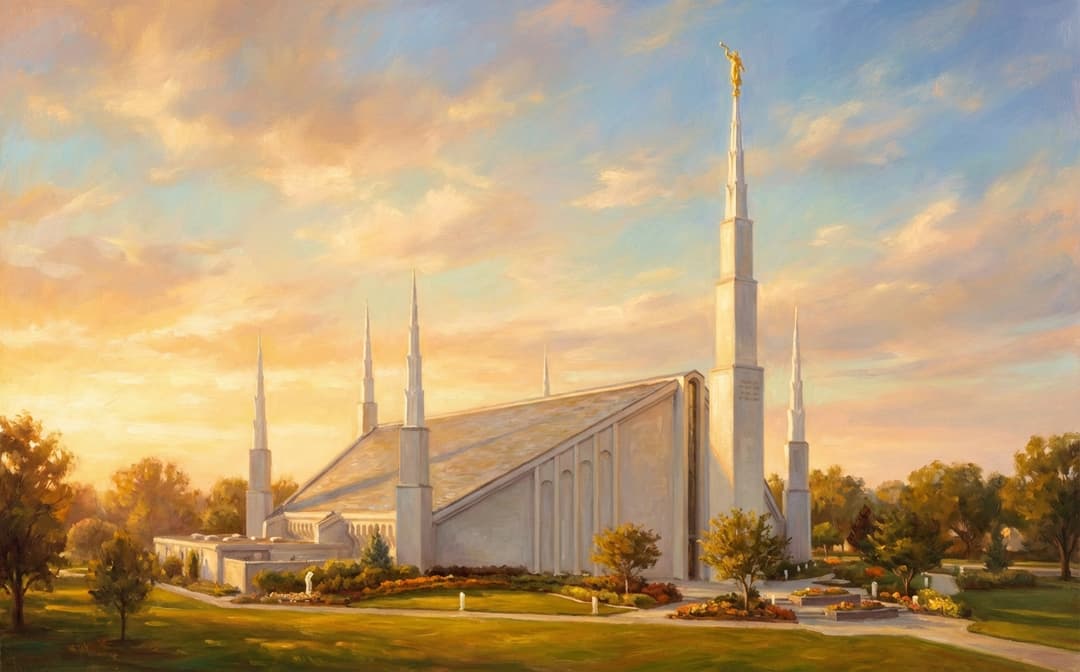
Visitors describe the Boise Idaho Temple grounds as a peaceful oasis featuring a beautiful reflecting pool, mature trees, and manicured landscaping. The white granite exterior gleams in the Idaho sun, and the six-spire silhouette is recognizable from miles away along Cole Road. While the temple interior is reserved for members with a temple recommend, the grounds are open and welcoming to all visitors.
Highlights
- Stunning white granite exterior with six distinctive spires
- Beautiful grounds with reflecting pool and mature landscaping
- Peaceful atmosphere amid the busy Boise cityscape
- Angel Moroni statue gleaming atop the eastern spire
- Interior features syringa (Idaho state flower) motifs throughout
Things to Know
- Temple interior is reserved for members with a temple recommend
- Scheduled appointments encouraged but walk-ins welcome
- No on-site visitors' center, arrival center, or distribution center
- Modest dress recommended when visiting the grounds
Location
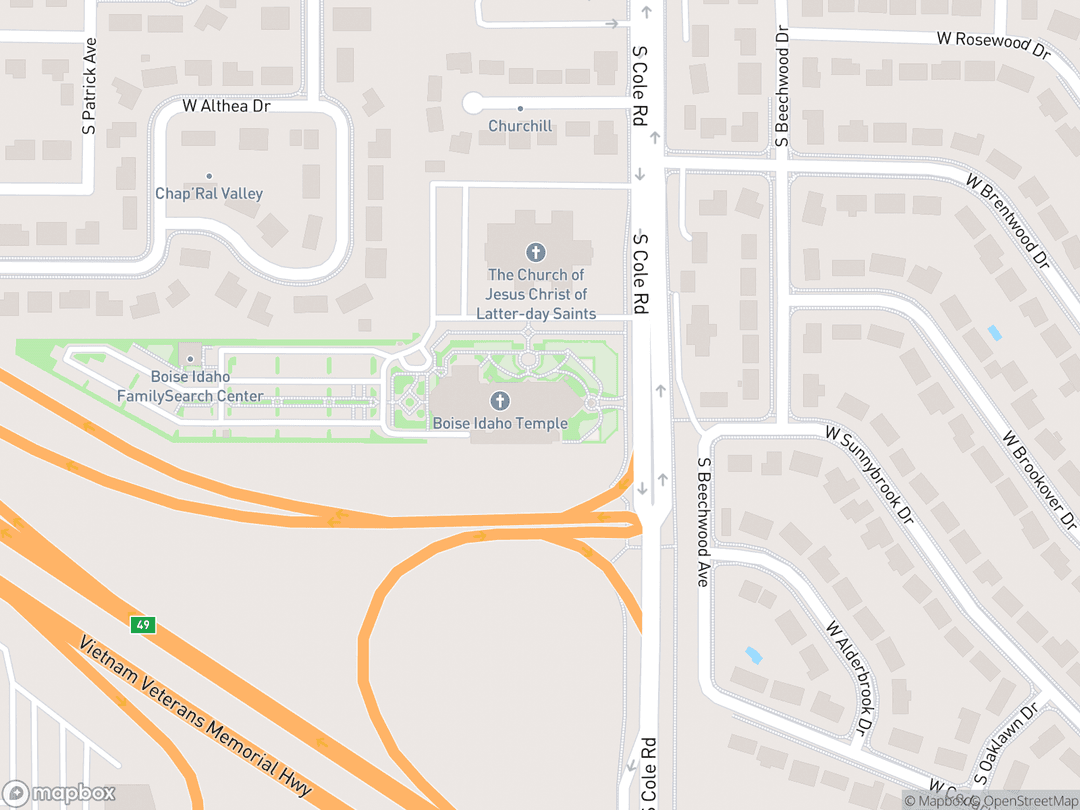
1211 South Cole Road, Boise, Idaho 83709-1871, United States
Hours: The temple operates on a regular schedule. Contact the temple at +1 208-322-4422 for current session times.
Getting There: Located at 1211 S Cole Rd in southwest Boise. Accessible from I-84 via the Cole Road exit heading south. Free parking is available on the temple grounds.
Get DirectionsTips for Your Visit
Best Photography
The white granite exterior photographs beautifully in the golden hour before sunset, especially from the south side where the reflecting pool creates mirror-like reflections.
Seasonal Beauty
The temple grounds are particularly stunning in spring when the gardens bloom and in winter when fresh snow blankets the landscape against the white granite.
Appointments Encouraged
Scheduled appointments are recommended but walk-ins are welcome. Patrons who arrive without an appointment may be asked to wait or participate in another ordinance.
Temple Clothing
Patrons are encouraged to bring their own temple clothing. Clothing rental is no longer available since the 2012 renovation.
Drive the Neighborhood
The temple is visible from many points in the Boise area. Drive along Cole Road for excellent views of all six spires against the foothills.
About
The Boise Idaho Temple is a spiritual landmark in Idaho's capital city, serving members of The Church of Jesus Christ of Latter-day Saints throughout western Idaho and eastern Oregon. Church leaders discussed building a temple in western Idaho as early as 1939, but the Idaho Falls Temple was prioritized due to the concentration of members in the eastern part of the state. It was not until March 31, 1982, that Gordon B. Hinckley announced the intent to build a temple in Boise, fulfilling a 43-year-old aspiration.
Dedicated on May 25, 1984, the Boise Idaho Temple introduced a revolutionary new architectural design featuring six detached spires and a distinctive sloping roofline. This efficient layout was so successful that it was adapted for 14 other temples built between 1984 and 1989 — including the Dallas Texas Temple and the Chicago Illinois Temple, which are considered direct sister buildings. In its first year of operation, the temple ran at 102% capacity, a testament to the pent-up demand from Saints in the region.
The temple has undergone two major renovations. The first, completed in 1987, expanded the facility after just two-and-a-half years of operation to accommodate the overwhelming demand. The second and more extensive renovation took place from 2011 to 2012, during which the original pearl gray marble tile exterior — which had suffered discoloration due to adhesive issues — was replaced with elegant white granite from China. A new gold-leafed Angel Moroni statue was placed atop the eastern spire, and the interior was completely refreshed with a decorative theme centered on the syringa, Idaho's beloved state flower. Old windows were creatively crushed and transformed into art glass, preserving the temple's spiritual heritage while giving it new life.
Nearly 170,000 people toured the renovated temple during the 2012 public open house before President Thomas S. Monson rededicated it on November 18, 2012.
Gallery
Symbolic Elements
The temple's exterior features intricate carvings, each rich with spiritual meaning:

Angel Moroni
A gold-leafed Angel Moroni statue stands atop the eastern spire, facing east in anticipation of the Second Coming of Jesus Christ. A new statue was installed during the 2012 renovation, bringing the temple to its current height of 112 feet.

Six Spires
The six detached spires represent priesthood authority and give the temple its distinctive silhouette. This pioneering design became the template for 14 other temples worldwide during the 1980s.

Syringa Motif
The syringa (mock orange), Idaho's state flower, appears throughout the temple interior in art glass windows, carved woodwork, woven textiles, and decorative elements — connecting this house of the Lord to its Idaho home.

Art Glass Windows
During the 2012 renovation, the original windows were crushed and transformed into art glass that now decorates the interior, symbolically preserving the spiritual heritage of the original temple within the renewed structure.
Interesting Facts
Church leaders considered building a temple in western Idaho as early as 1939 — 43 years before the Boise Temple was finally announced.
The Boise Idaho Temple was the second temple built in Idaho, after the Idaho Falls Idaho Temple.
It was the first temple to use the new six-spire design that became the standard for 14 temples built between 1984 and 1989.
The Dallas Texas Temple and Chicago Illinois Temple are considered direct sister buildings, sharing nearly identical architecture.
During the 1984 open house, over 128,000 people toured the temple — nearly double the anticipated 70,000.
In its first year, the temple operated at 102% capacity, leading to an expansion just two-and-a-half years after dedication.
The temple was closed for its first renovation only two years after dedication due to overwhelming demand from western Idaho and eastern Oregon Saints.
During the 2012 renovation, the original multicolored marble tiles were replaced with white granite from China to solve adhesive discoloration issues.
Old windows from the pre-renovation temple were crushed and creatively transformed into art glass for interior decoration.
A new Angel Moroni statue was placed atop the temple during the 2012 renovation, bringing the total height to 112 feet.
Nearly 170,000 people toured the temple during the 2012 open house before its rededication by President Thomas S. Monson.
The interior design features repeated motifs of the syringa, Idaho's state flower, in art glass, woodwork, and textiles throughout the temple.
Common Questions
Can visitors tour the Boise Idaho Temple?
The temple interior is reserved for members of The Church of Jesus Christ of Latter-day Saints who hold a valid temple recommend. However, the temple grounds are open to the public and feature beautiful landscaping, a reflecting pool, and views of the six-spire exterior. Public open houses were held in 1984 (128,000 visitors) and 2012 (170,000 visitors) before each dedication.
What is the six-spire design and why is it significant?
The Boise Idaho Temple introduced a revolutionary design featuring six detached spires and a sloping roofline. This efficient layout was so successful that it was adapted for 14 other temples built between 1984 and 1989, including the Dallas Texas Temple and Chicago Illinois Temple. It became the standard template for temple construction during that era.
Why was the marble exterior replaced with granite?
The original pearl gray marble tile exterior suffered from discoloration caused by issues with the adhesive used to attach the tiles. During the 2011-2012 renovation, all the marble was removed and replaced with durable white granite sourced from China, giving the temple its current elegant white appearance.
What happened to the old windows during the renovation?
In a creative touch, the old windows from the pre-renovation temple were crushed and transformed into art glass that now decorates the interior. This preserved the spiritual heritage of the original building while giving it new artistic expression.
How did the temple operate at 102% capacity?
In its first year of operation (1984-1985), the Boise Idaho Temple processed ordinances at 102% of its designed capacity. This remarkable demand led to the first renovation just two-and-a-half years after dedication, adding dressing rooms, a new baptistry, and additional facilities.
What is the significance of the syringa in the temple?
The syringa (Philadelphus lewisii) is Idaho's state flower. Following the 2012 renovation, the interior decorative scheme extensively features the syringa in art glass, woodwork, textiles, and decorative motifs throughout the temple, connecting the sacred space to its Idaho home.
Related Stories
Explore the rich history, traditions, and people connected to this sacred site.
Featured Stories
The Design That Changed Everything
1984–1989
When the Boise Idaho Temple was dedicated in May 1984, no one could have predicted the impact its architectural design would have on temple construction worldwide. The six-spire, sloping-roof layout — designed by Ron Thurber and Church Architectural and Engineering Services — was conceived to maximize efficiency, optimize sacred space, and significantly reduce both construction costs and building timelines compared to earlier temple designs.
The design proved so successful that it was adapted for 14 other temples built between 1984 and 1989, including the Dallas Texas Temple, the Chicago Illinois Temple, the Manila Philippines Temple, the Taipei Taiwan Temple, the Guatemala City Guatemala Temple, and the Stockholm Sweden Temple. The Dallas and Chicago temples are considered direct sister buildings, sharing nearly identical floor plans and exterior profiles with the Boise original.
This standardized approach marked a philosophical shift in temple construction — moving from one-of-a-kind architectural statements to repeatable, efficient designs that could bring temples closer to members around the world more quickly. The Boise Temple's legacy is not just in its own sacred walls but in the dozens of temples its design made possible.
Source: Church of Jesus Christ of Latter-day Saints; ChurchofJesusChristTemples.org; Idaho Architecture Project
102% Capacity and the Two-Year Renovation
1984–1987
When the Boise Idaho Temple opened for regular ordinance work in 1984, western Idaho and eastern Oregon members poured in with a fervor that stunned church planners. In its very first year, the temple processed ordinances at 102% of its designed capacity — a pace that was simply unsustainable for the building's original layout.
The demand was so intense that just two-and-a-half years after its dedication, the temple was closed in October 1986 for a major expansion. The remodeling added dressing rooms, office space, a new baptistry, and a cafeteria. An annex was created to house waiting rooms and a nursery, giving families a more comfortable experience.
On February 14, 1987 — Valentine's Day — James E. Faust rededicated the expanded temple. The rapid turnaround from dedication to renovation underscored a happy problem: the Saints of the region had yearned for this temple for decades, and when it finally arrived, they showed up in numbers no one had imagined.
Source: ChurchofJesusChristTemples.org; Church News
From Marble to Granite — The 2012 Transformation
2011–2012
The Boise Idaho Temple's original exterior was clad in pearl gray marble tiles — attractive but ultimately problematic. Over the years, the adhesive used to attach the tiles caused discoloration, and the exterior began to lose its pristine appearance. When the decision was made to undertake a comprehensive renovation in 2011, the solution was dramatic and thorough.
Every marble tile was removed and replaced with gleaming white granite sourced from China, transforming the temple's appearance from gray-toned marble to a brilliant white that better matched the building's spiritual symbolism. Inside, the renovation was equally transformative. The cafeteria and clothing rental were removed, the basement was expanded, ceilings were raised, and every surface received new finishes and furnishings.
Perhaps the most touching detail was the treatment of the old windows. Rather than simply discarding them, craftspeople crushed the original glass and incorporated the fragments into new art glass installations throughout the interior. The old temple literally became part of the new — a symbolic continuity that resonated deeply with members who had worshipped within those walls for nearly three decades. When Thomas S. Monson rededicated the temple on November 18, 2012, it was both entirely new and deeply familiar.
Source: Church News; KSL.com; churchofjesuschrist.org
Timeline
Western Idaho Temple Discussed
Church leaders discuss building a temple in western Idaho but ultimately prioritize the Idaho Falls Idaho Temple due to the concentration of members in eastern Idaho.
EventTemple Announced
Gordon B. Hinckley announces the intent to build a temple in Boise, under the direction of President Spencer W. Kimball. Western Idaho members had waited 43 years.
MilestoneGroundbreaking
Elder Mark E. Petersen presides over the groundbreaking and site dedication ceremony in Boise.
component.timeline.groundbreakingPublic Open House
Over 128,000 visitors tour the completed temple during the public open house — far exceeding the anticipated 70,000.
EventDedication
Gordon B. Hinckley dedicates the temple in 24 sessions over six days. It becomes the 27th operating temple and the second in Idaho.
DedicationFirst Renovation Begins
Just two-and-a-half years after dedication, the temple closes for expansion to accommodate unexpectedly high attendance, including additional dressing rooms, a new baptistry, and a cafeteria.
RenovationRededication After Expansion
James E. Faust rededicates the temple following the addition of dressing rooms, office space, a new baptistry, a cafeteria, and an annex with waiting rooms and nursery.
DedicationMajor Renovation Begins
The temple closes for an extensive 15-month renovation that will completely transform its exterior and interior.
RenovationNew Angel Moroni Installed
A new gold-leafed Angel Moroni statue is placed atop the eastern spire, bringing the total height to 112 feet.
MilestoneSecond Open House
Nearly 170,000 people tour the renovated temple, marveling at the new white granite exterior and syringa-themed interior.
EventRededication
President Thomas S. Monson rededicates the temple following its comprehensive renovation.
DedicationPandemic Closure
The temple closes temporarily due to the worldwide coronavirus pandemic before reopening for limited ordinance work.
EventHistory by Decade
1930s–1980s — A 43-Year Wait
The Lord has heard the prayers and faith of the members throughout western Idaho.
The dream of a temple in western Idaho began in 1939 when Church leaders discussed the possibility. However, the Idaho Falls Idaho Temple was prioritized due to the concentration of members in eastern Idaho. For over four decades, western Idaho Saints made the long journey east. It was not until March 31, 1982, that Gordon B. Hinckley finally announced a temple for Boise, under the direction of President Spencer W. Kimball. The groundbreaking followed on December 18, 1982, presided over by Elder Mark E. Petersen.
1984 — Dedication & Record Demand
The public open house from May 1-19 drew over 128,000 visitors — nearly double the 70,000 anticipated. Gordon B. Hinckley dedicated the temple in 24 sessions over six days. As the 27th operating temple and only the second in Idaho, it introduced the revolutionary six-spire design that would become the standard for temples worldwide. In its first year, the temple operated at 102% capacity.
1986–1987 — The Fastest Renovation in Temple History
Just two-and-a-half years after dedication, the temple's overwhelming popularity forced its closure for expansion. The remodeling added dressing rooms, a new baptistry, a cafeteria, and an annex with waiting rooms and a nursery. James E. Faust rededicated the expanded temple on Valentine's Day, February 14, 1987.
2011–2012 — A Complete Transformation
The temple closed on July 11, 2011, for a 15-month renovation that would touch every surface inside and out. The aging marble exterior was replaced with white granite, a new Angel Moroni was installed, and the interior was completely reimagined with syringa motifs honoring Idaho's state flower. Old windows were crushed and reborn as interior art glass. Nearly 170,000 visitors toured during the open house before Thomas S. Monson rededicated the temple on November 18, 2012.
2020–Present — Continuing Service
The temple closed temporarily during the 2020 coronavirus pandemic before reopening for limited ordinance work. Today, the Boise Idaho Temple continues to serve the Saints of western Idaho and eastern Oregon, standing as a gleaming white beacon along Cole Road — its six spires a familiar landmark on the Boise skyline.
Architecture & Facilities
A pioneering modern six-spire design that became the standard template for 14 temples built between 1984 and 1989. The structure features six detached spires rising from a distinctive sloping roofline, described as a modern adaptation of Gothic design with numerous curved arches. Originally clad in pearl gray marble tile, the exterior was completely re-clad in white granite from China during the 2011-2012 renovation to resolve adhesive discoloration issues. The interior decorative scheme extensively features the syringa, Idaho's state flower, in art glass, woodwork, and textiles throughout.
Building Materials
White Granite Exterior
Sourced from China, the current white granite cladding replaced the original pearl gray marble tiles during the 2012 renovation. The marble had developed adhesive-related discoloration, prompting the switch to the more durable and visually striking white granite.
Slate Roof
The distinctive sloping roofline is covered in slate, providing a natural-toned contrast to the white granite walls and contributing to the temple's dramatic profile from any angle.
Art Glass Windows
During the 2012 renovation, the original windows were crushed and incorporated into new art glass installations throughout the interior. The glass features syringa motifs and other decorative elements in blue, green, and earth tones.
Gold-Leafed Angel Moroni
A new gold-leafed Angel Moroni statue was installed atop the eastern spire on February 16, 2012, replacing the original and bringing the temple's total height to 112 feet.
Interior Features
Ordinance Rooms
Four instruction rooms where members participate in the endowment ceremony, featuring the temple's signature syringa-themed decorative elements and art glass.
Sealing Rooms
Four sealing rooms where marriages and family sealings are performed, featuring altars and mirrors representing eternity.
Celestial Room
The most sacred space in the temple, featuring stained glass windows and a large crystal chandelier. Decorated in serene tones with blue, green, and earth-colored accents.
Baptistry
Added during the 1987 expansion, the baptistry features a font resting on twelve sculpted oxen, representing the Twelve Tribes of Israel. A new entrance was added during the 2012 renovation.
Temple Grounds
Reflecting Pool
A beautiful water feature added during the 2012 renovation that creates mirror-like reflections of the temple's white granite exterior and six spires.
Mature Landscaping
The 4.83-acre grounds feature mature trees, manicured gardens, seasonal plantings, and new sidewalks, stairways, benches, and planters added during the 2012 renovation.
Additional Facilities
The temple grounds include a large fountain and reflecting pool, enhanced landscaping with benches and pathways for visitors. No on-site visitors' center, arrival center, patron housing, or distribution center. Patrons are encouraged to bring their own temple clothing as rental is no longer available following the 2012 renovation.
Religious Significance
For members of The Church of Jesus Christ of Latter-day Saints, the Boise Idaho Temple is a sacred space where eternal covenants are made with God. Latter-day Saint temples are distinct from regular meetinghouses — while Sunday worship services are open to all, temples are reserved for members who have prepared spiritually and obtained a temple recommend from their local leaders. Inside, members participate in ordinances (sacred ceremonies) that they believe connect heaven and earth, bind families together eternally, and make possible the salvation of all humanity.
The Boise Idaho Temple serves as a house of the Lord where members participate in sacred ordinances essential to God's plan of salvation. These ordinances include the endowment, celestial marriage sealings, and baptisms for the deceased — enabling members to make covenants with God and extend those blessings to ancestors who did not have the opportunity in life. The temple's history of operating at 102% capacity in its first year speaks to the deep spiritual hunger of the Saints in this region, who had waited over four decades for a temple in western Idaho.
Sacred Ordinances
Endowment
A sacred ceremony in which members receive instruction about God's plan of happiness, make covenants of faithfulness and obedience, and receive symbolic blessings of power, protection, and knowledge to guide them through mortality.
Sealing
Marriages performed in the temple are believed to be valid not only for this life but for eternity. Families can also be sealed together across generations, creating an unbroken chain of family relationships that Latter-day Saints believe will persist beyond death.
Baptism for the Dead
Members are baptized by proxy on behalf of deceased ancestors, offering them the opportunity to accept the gospel in the afterlife. This is the driving force behind the Church's extensive genealogical research and family history efforts.
The Temple in Latter-day Saint Life
For many Latter-day Saints, attending the temple is a regular practice — a respite from the noise of the world where they seek peace, spiritual clarity, and a deeper connection to God. Members describe the temple as a place where the veil between heaven and earth feels thin, where personal revelation flows more freely, and where the eternal nature of family relationships becomes tangible. The temple recommend interview process, which involves affirming personal worthiness and faith, ensures that temple attendance remains a meaningful spiritual commitment rather than a casual visit.
Covenants and Eternal Families
Central to Latter-day Saint temple worship is the belief that families can be together forever. The sealing ordinance — in which husbands and wives, parents and children are bound together by priesthood authority — is considered one of the most important blessings available through temple worship. This doctrine of eternal families gives temple worship a deeply personal dimension, as members return to perform ordinances not only for themselves but for deceased ancestors, creating an unbroken chain of family connections reaching back through generations.
Similar Temples
Sources & Research
Every fact on Temples.org is backed by verified Sources & Research. Each piece of information is rated by source tier and confidence level.
View All Sources (10)
| Field | Source | Tier | Retrieved |
|---|---|---|---|
| Dedication Date & Status | The Church of Jesus Christ of Latter-day Saints (opens in a new tab) | A | 2026-02-16 |
| About & Historical Background | ChurchofJesusChristTemples.org (opens in a new tab) | C | 2026-02-16 |
| Architecture Details | Idaho Architecture Project (opens in a new tab) | C | 2026-02-16 |
| Timeline & Featured Stories | Church News (opens in a new tab) | B | 2026-02-16 |
| Construction History | MormonWiki (opens in a new tab) | B | 2026-02-16 |
| Architecture & Interesting Facts | Idaho Architecture Project (opens in a new tab) | C | 2026-02-16 |
| About & Historical Background | The Church of Jesus Christ of Latter-day Saints (opens in a new tab) | A | 2026-02-16 |
| Renovation Details | KSL.com (opens in a new tab) | C | 2026-02-16 |
| Dedication Date & Status | The Church of Jesus Christ of Latter-day Saints (opens in a new tab) | A | 2026-02-16 |
| Tips & Visiting Hours | The Church of Jesus Christ of Latter-day Saints (opens in a new tab) | A | 2026-02-16 |