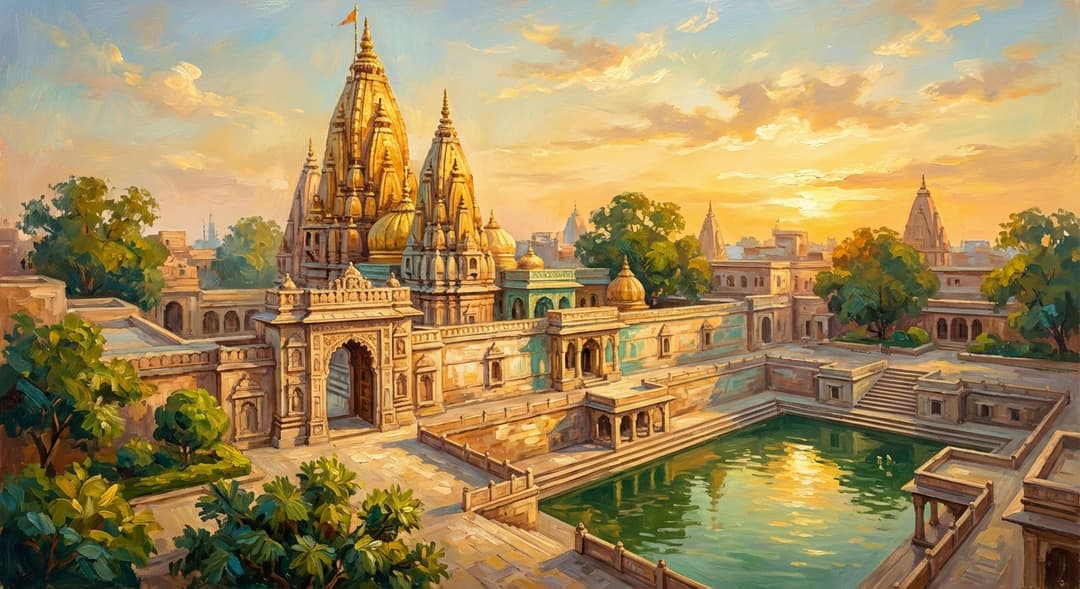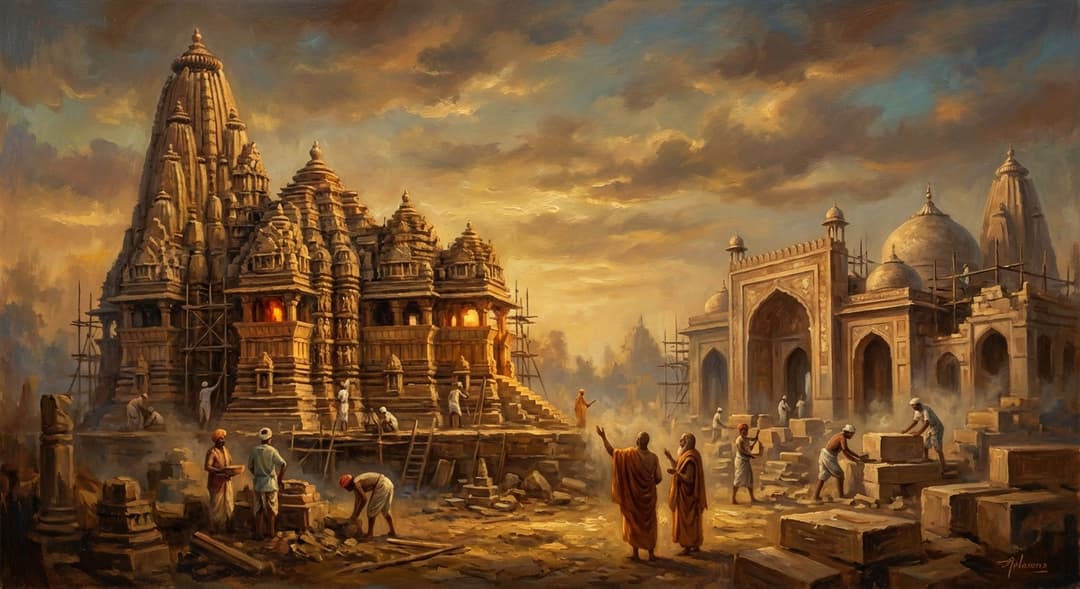
The story of the Shri Kashi Vishwanath Temple and the Gyanvapi Mosque is a complex tapestry woven with threads of faith, power, and historical conflict. At the heart of Varanasi, one of Hinduism's holiest cities, stands the revered Shri Kashi Vishwanath Temple, a site of continuous worship for centuries. However, its history is punctuated by periods of destruction and rebuilding, most notably during the reign of the Mughal Emperor Aurangzeb.
In 1669, under Aurangzeb's rule, a portion of the temple was demolished, an act attributed to religious zealotry, political assertion, or a response to local rebellions. The motivations behind this act remain a subject of debate among historians, but the impact was undeniable. Following the demolition, the Gyanvapi Mosque was constructed on a section of the temple grounds, incorporating remnants of the original temple structure, including its foundation and some walls. This act transformed the sacred landscape and sowed the seeds of a lasting dispute.
The construction of the Gyanvapi Mosque adjacent to the remaining temple structure created a complex that embodies the intertwined histories of Hinduism and Islam in India. While the mosque became a place of worship for the Muslim community, the demolition of the temple remains a poignant symbol of religious persecution for Hindus. In 1780, Ahilyabai Holkar, the Maratha queen of Indore, rebuilt the Shri Kashi Vishwanath Temple in its current form, adjacent to the Gyanvapi Mosque, further solidifying the shared space.
Today, the Gyanvapi Mosque-Kashi Vishwanath Temple complex stands as a testament to a tumultuous past and a focal point of ongoing legal and political debates. The ownership and control of the land remain contested, and conflicting historical narratives fuel tensions between Hindu and Muslim communities. Understanding the historical context and the perspectives of all parties involved is crucial for navigating this sensitive issue and fostering a path towards reconciliation.
Key Details
- Year of Demolition 1669
- Mughal Emperor Aurangzeb
- Temple Rebuilder Ahilyabai Holkar
- Mosque Name Gyanvapi Mosque
- Current Temple Construction 1780
- Possible Motivations Religious Zealotry, Political Assertion, Response to Rebellion
Timeline
Temple Demolition
A portion of the Shri Kashi Vishwanath Temple is demolished under the orders of Mughal Emperor Aurangzeb.
component.timeline.historicalGyanvapi Mosque Construction
The Gyanvapi Mosque is constructed on a portion of the temple site, incorporating remnants of the original structure.
component.timeline.historicalTemple Rebuilt
Ahilyabai Holkar, the Maratha queen of Indore, rebuilds the Shri Kashi Vishwanath Temple in its current form.
RenovationSources & Research
Every fact on Temples.org is backed by verified Sources & Research. Each piece of information is rated by source tier and confidence level.
View All Sources (4)
| Field | Source | Tier | Retrieved |
|---|---|---|---|
| Academic Books on Mughal History | Scholarly Publishers (opens in a new tab) | A | 2024-01-01 |
| Historical Archives of the Mughal Period | Government Archives (opens in a new tab) | A | 2024-01-01 |
| Archaeological Reports of the Gyanvapi Complex | Archaeological Survey of India (opens in a new tab) | B | 2024-01-01 |
| Hindu Scriptures and Islamic Religious Texts | Religious Institutions (opens in a new tab) | B | 2024-01-01 |