Visitor Insights
Visiting Shri Kashi Vishwanath Temple
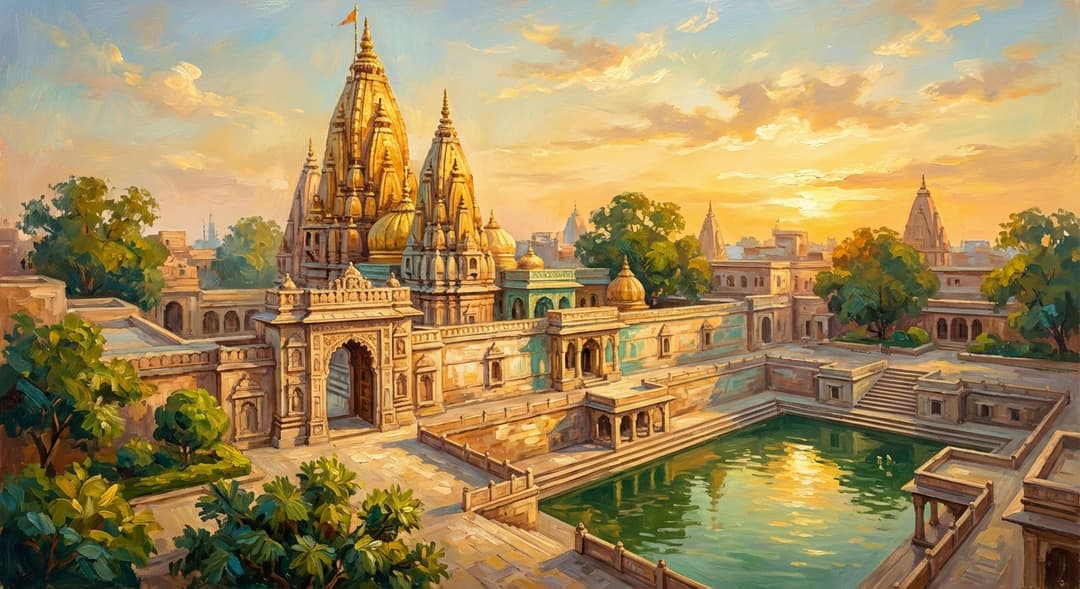
Visiting the Shri Kashi Vishwanath Temple is a deeply spiritual experience, immersing visitors in the vibrant atmosphere of one of Hinduism's most revered sites. Expect to encounter a bustling environment filled with devotees, priests, and the sounds of prayers and chants. The temple complex offers a serene escape from the city's chaos, providing a space for reflection and connection with the divine. Be prepared for security checks and dress modestly as a sign of respect.
Highlights
- Witness the sacred rituals and ceremonies performed by priests.
- Experience the spiritual energy of the Jyotirlinga.
- Walk through the Kashi Vishwanath Corridor connecting the temple to the Ganges.
Things to Know
- Dress modestly, covering arms and legs.
- Be prepared for security checks and potential queues.
- Photography may be restricted in certain areas.
Location
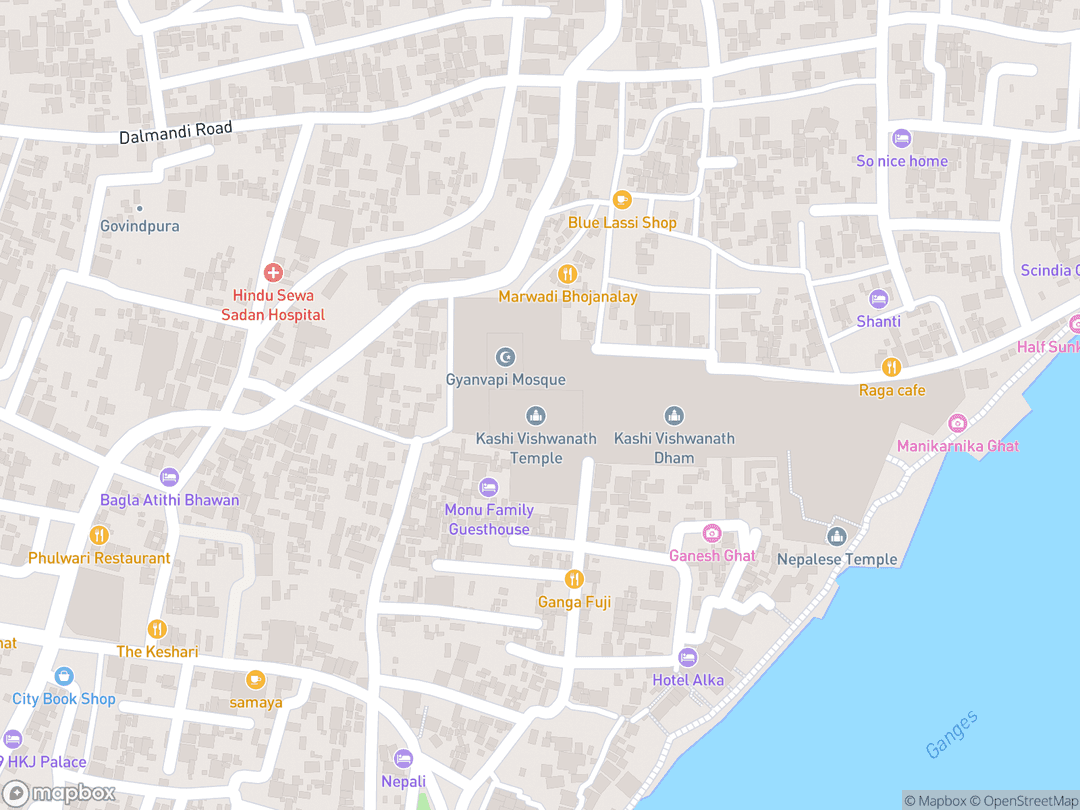
Vishwanath Gali, Varanasi, Uttar Pradesh 221001, India
Hours: 3:00 AM to 11:00 PM daily
Getting There: Accessible by air, rail, and road. The nearest airport is Lal Bahadur Shastri International Airport. Varanasi Junction and Kashi Railway Station are the closest railway stations. Auto-rickshaws, e-rickshaws, and cycle rickshaws are available from major parts of the city.
Get DirectionsTips for Your Visit
Visit Early
Visit early in the morning to avoid long queues and experience a more peaceful atmosphere.
Book Aarti in Advance
Book Aarti slots in advance, especially during festivals like Shravan and Maha Shivratri.
Explore the Corridor
Take a walk through the Kashi Vishwanath Corridor to enjoy panoramic views connecting the temple to the ghats.
About
The Shri Kashi Vishwanath Temple, located in Varanasi, Uttar Pradesh, is one of the most sacred Hindu temples dedicated to Lord Shiva. It is situated on the western bank of the holy River Ganges and is one of the twelve Jyotirlingas, the most sacred abodes of Shiva. The temple holds immense religious significance and attracts millions of pilgrims and devotees from all over the world.
Varanasi, also known as Kashi, is considered one of the oldest living cities in the world and is believed to be the abode of Lord Shiva and Parvati. The Kashi Vishwanath Temple has a rich history, with the original structure believed to have been built centuries ago. However, the temple has faced repeated destruction and reconstruction over the course of history. The current structure was built in 1780 by Maharani Ahilyabai Holkar of Indore.
The temple complex is a vibrant and bustling place, with devotees engaging in prayers, rituals, and ceremonies. The main sanctum houses the Shiva Linga, a black stone representation of Lord Shiva, which is the focal point of worship. The temple is not only a place of religious importance but also a symbol of cultural heritage and architectural grandeur. The recently completed Kashi Vishwanath Corridor has further enhanced the temple's accessibility and aesthetics, providing a seamless connection to the Ganges River.
Gallery
Symbolic Elements
The temple's exterior features intricate carvings, each rich with spiritual meaning:

Jyotirlinga
The Jyotirlinga at Kashi Vishwanath Temple represents the supreme power of Lord Shiva. It is a symbol of the eternal column of light that manifested in Varanasi, signifying the divine presence and energy that permeates the universe. Devotees believe that worshiping the Jyotirlinga brings them closer to Shiva and helps them attain spiritual liberation.

Trishul (Trident)
The Trishul, or trident, is a prominent symbol associated with Lord Shiva and is often depicted atop the temple. It represents the three fundamental aspects of existence: creation, preservation, and destruction. The Trishul symbolizes Shiva's power to control these forces and maintain cosmic balance, reminding devotees of the cyclical nature of life and the importance of spiritual awareness.

Ganga River
The Ganges River, flowing adjacent to the Kashi Vishwanath Temple, is considered the most sacred river in Hinduism. It is believed to have the power to purify sins and grant salvation. The river symbolizes spiritual cleansing, renewal, and the eternal flow of life. Devotees often take a dip in the Ganges before visiting the temple to purify themselves and seek blessings.

Golden Dome
The golden dome of the Kashi Vishwanath Temple is a striking architectural feature that symbolizes the temple's spiritual significance and grandeur. The gold plating was donated by Maharaja Ranjit Singh in the 19th century, adding to the temple's splendor. The dome represents the divine realm and the radiant energy of Lord Shiva, drawing devotees closer to the sacred space.

Nandi Bull
The Nandi Bull, a sacred bull, is the vahana (mount) of Lord Shiva and is often found in temples dedicated to him. The Nandi symbolizes strength, devotion, and unwavering faith. It is believed that Nandi listens to the prayers of devotees and conveys them to Lord Shiva. Devotees often whisper their wishes into Nandi's ear, seeking divine intervention and blessings.

Shiva Linga
The Shiva Linga, a black stone representation of Lord Shiva, is the central deity in the Kashi Vishwanath Temple. It symbolizes the formless and eternal nature of Shiva, representing the cosmic energy and creative power of the universe. The Shiva Linga is the focal point of worship, and devotees offer prayers, flowers, and sacred substances to seek blessings and spiritual fulfillment.

Kashi Vishwanath Corridor
The Kashi Vishwanath Corridor, completed in 2021, is a significant architectural and spiritual addition to the temple complex. It provides a direct and seamless connection between the temple and the Ganges River, enhancing accessibility and creating a more immersive experience for devotees. The corridor symbolizes the unification of the sacred space and the divine river, fostering a deeper connection with the spiritual essence of Varanasi.
Interesting Facts
Kashi Vishwanath Temple has been destroyed and rebuilt several times over the centuries.
It is believed that a visit to the Kashi Vishwanath temple and a dip in the holy Ganges river can free one from the cycle of birth and death (salvation).
The temple is popularly known as the Golden Temple, due to the gold plating of its spire.
The Kashi Vishwanath Corridor Project, completed in 2021, has transformed the temple complex by enhancing the entryways, creating open spaces, and improving facilities for devotees.
The temple is one of the most visited Hindu temples in India, with an average 45,000 pilgrims per day in 2023.
It is believed that the Kashi Vishwanath Temple was constructed at the place where Sati's ear fell during the dance (Tandav) performed by Lord Shiva in his sorrow.
The temple has a well called “Well of Wisdom” because when Aurangzeb was planning to destroy the temple all the Lord Shiva's idol was hidden in that well.
Legendary spiritual figures like Adi Shankaracharya, Swami Vivekananda, and Goswami Tulsidas have visited this temple.
The Kashi Vishwanath Linga symbolizes the unchanging, eternal reality amidst the transitory nature of the universe.
The Manikarnika Ghat on the banks of Ganges near to the Kashi Vishwanath Temple is considered as a Shakti Peetha, a revered place of worship for the Shaktism sect.
Common Questions
What is the significance of Kashi Vishwanath Temple?
The Kashi Vishwanath Temple is one of the most sacred Hindu temples dedicated to Lord Shiva and is one of the twelve Jyotirlingas. It holds immense religious importance and is believed to be the abode of Lord Shiva and Parvati. A visit to the temple and a dip in the Ganges is believed to lead to liberation from the cycle of birth and death.
Who built the current structure of the temple?
The current structure of the Kashi Vishwanath Temple was built in 1780 by Maharani Ahilyabai Holkar of Indore. She was a Maratha ruler known for her devotion and contributions to the construction and renovation of several temples across India.
What are the daily timings of the temple?
The Kashi Vishwanath Temple is open from 3:00 AM to 11:00 PM daily. The timings may vary slightly during festivals and special occasions. It is advisable to check the official website or contact the temple authorities for the most accurate and up-to-date information.
What is the Kashi Vishwanath Corridor?
The Kashi Vishwanath Corridor is a redevelopment project that connects the Kashi Vishwanath Temple to the Ganges River through a spacious pathway. The corridor has enhanced the temple premises, improved accessibility, and provided better facilities for devotees. It was inaugurated in 2021 by Prime Minister Narendra Modi.
What is the dress code for visiting the temple?
Visitors to the Kashi Vishwanath Temple are expected to dress modestly as a sign of respect. It is recommended to cover arms and legs. Traditional Indian attire is preferred, but any modest clothing that adheres to the guidelines is acceptable.
Related Stories
Explore the rich history, traditions, and people connected to this sacred site.
Featured Stories
Before Dawn: Waking Vishwanath
Daily
Before dawn, the temple begins its day with Mangala Aarti. Priests awaken Vishwanath with Vedic recitation, conch shells, bells, and circling lamps. The ritual presents the Jyotirlinga as a focus of spiritual awakening.
This is the human rhythm behind the temple's early opening hours. It shows why Kashi Vishwanath is not only a historic monument or a destination on a pilgrimage route, but a living place of worship whose day begins before sunrise.
Source: https://kashi.gov.in/listing-details/shri-kashi-vishwanath
When Shiva Came to Ask for Food
Sacred tradition
At the heart of a well-known Kashi tradition is a disagreement between Shiva and Parvati. Shiva calls the material world, including food, an illusion. Parvati withdraws nourishment, and the world suffers hunger. When Shiva recognizes the importance of nourishment, he seeks food from Parvati herself.
She appears in Kashi as Annapurna, holding a vessel of grain and a golden ladle, feeding Shiva and the world. Her nearby temple gives the Vishwanath visit a fuller meaning: reverence for the divine is joined to gratitude for daily bread.
Source: https://kashi.gov.in/listing-details/annapurna-bhavani-temple
The Queen Who Rebuilt Kashi
1780
The temple in its present form dates to 1780 and is attributed to Maharani Ahilyabai Holkar of Indore. Her patronage gave Kashi Vishwanath the form that pilgrims encounter today.
Her work is more than an architectural footnote. It gave a sacred city a focal point that has endured for nearly two and a half centuries.
Source: https://kashi.gov.in/listing-details/shri-kashi-vishwanath
Gold From Punjab
Nineteenth century
The official Kashi portal dates Maharaja Ranjit Singh's gift of gold for two of Kashi Vishwanath's domes to 1839. The Sikh ruler of Punjab's donation came from far beyond Varanasi, a visible expression of the temple's reach across regions and communities in the subcontinent.
The golden domes became one of the temple's defining features. They turn sunlight into a landmark, but they also preserve the memory of a ruler who honored a shrine outside his own kingdom.
Source: https://kashi.gov.in/listing-details/shri-kashi-vishwanath
A Passage Reopened to the Ganges
December 13, 2021
The Kashi Vishwanath Dham Corridor, inaugurated on December 13, 2021, created a direct, accessible route between the shrine and the Ganges, changing how pilgrims arrive, move, and gather.
The project also brought long-hidden temples into view. Academic research records that 41 temples found among buildings acquired and demolished during redevelopment were preserved. The transformation, however, was not only architectural. It required the demolition and relocation of homes and shops. A 2023 study based on newspaper reporting found sharply divided responses: many pilgrims welcomed the access and amenities, while affected residents and shopkeepers described economic, social, and emotional loss.
Source: https://link.springer.com/article/10.1186/s43238-023-00098-w
Timeline
First Temple Structure
The first recorded structure of the temple is believed to have been built by King Harishchandra.
MilestoneDestruction by Qutb-ud-din Aibak
The temple was destroyed by Qutb-ud-din Aibak, a commander of Muhammad Ghori, and a mosque was built on the site.
RenovationRebuilt by Gujarati Merchant
The temple was rebuilt by a Gujarati merchant during the reign of Delhi's Sultan Iltutmish.
MilestoneRepeated Destruction
The temple faced repeated destruction during the rule of Hussain Shah Sharqi (1447–1458) or Sikandar Lodi (1489–1517).
RenovationReconstruction by Raja Man Singh
Raja Man Singh started rebuilding the temple during Akbar's reign, with Raja Todar Mal furthering the reconstruction.
MilestoneConstruction by Vir Singh Deo
Vir Singh Deo completed the construction of the earlier temple during the rule of Jahangir.
MilestoneDestruction by Aurangzeb
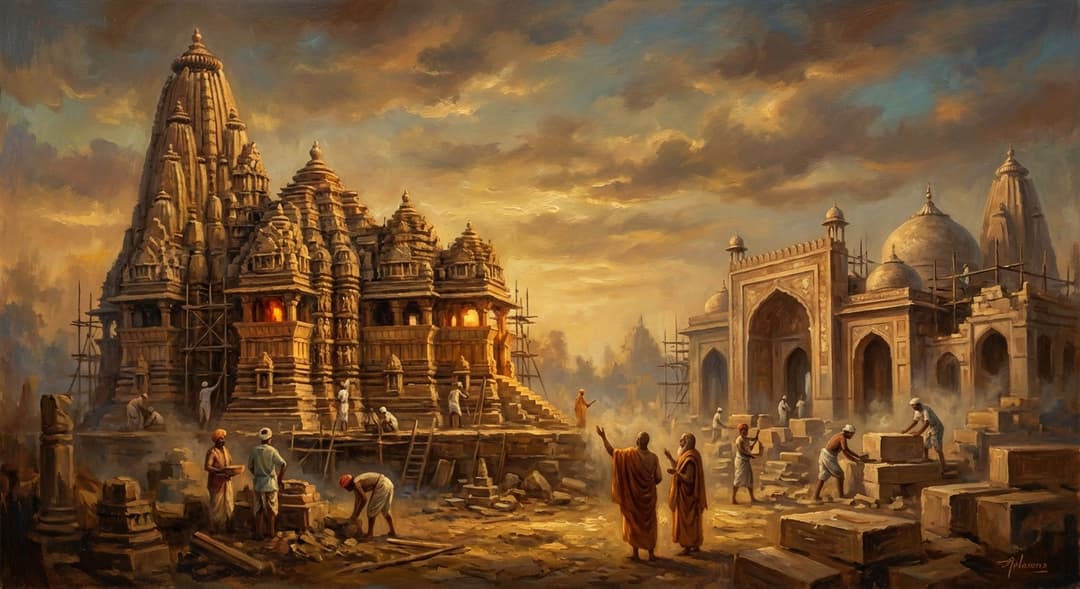
Mughal Emperor Aurangzeb destroyed the temple and built the Gyanvapi Mosque in its place.
RenovationConstruction by Ahilyabai Holkar
The current structure was built by the Maratha ruler, Maharani Ahilyabai Holkar of Indore, and consecrated on August 25, 1777.
MilestoneNaubatkhana Construction
A Naubatkhana (drum house) was constructed in front of the temple by Collector Mohammed Ibrahim.
EventColonnade by Baiza Bai
Baiza Bai, widow of the Maratha ruler Daulat Rao Scindhia, built a low-roofed colonnade in the Gyan Vapi precinct.
EventGold Donation by Ranjit Singh
Maharaja Ranjit Singh of Punjab donated gold to plate the temple's domes.
EventReplication Plan by Malaviya
Pandit Madan Mohan Malaviya planned to replicate Shri Kashi Vishwanath Mandir in the campus of Benaras Hindu University.
EventNew Vishwanath Temple Construction
The construction of the new Vishwanath Temple was completed.
MilestoneKumbhabhishekham Ceremony
The Kumbhabhishekham (consecration ceremony) of the temple was held, conducted by Nattukottai Nagarathar.
DedicationKashi Vishwanath Corridor Project Launched
The Kashi Vishwanath Corridor Project was launched by Prime Minister Narendra Modi.
EventKashi Vishwanath Dham Corridor Inaugurated
The Kashi Vishwanath Dham Corridor connecting the Ganga river with the temple was inaugurated by Prime Minister Modi.
DedicationSanctum Gold-Plated
The sanctum sanctorum of the temple was gold-plated after an anonymous donor donated 60 kg of gold.
EventPilgrim Count
The temple had an average of 45,000 pilgrims per day.
EventAsset Estimation
The total assets of the temple were estimated to be more than ₹6 crores.
EventSimilar Temples
Sources & Research
Every fact on Temples.org is backed by verified Sources & Research. Each piece of information is rated by source tier and confidence level.
View All Sources (6)
| Field | Source | Tier | Retrieved |
|---|---|---|---|
| About & Historical Background | Shri Kashi Vishwanath Temple Trust (opens in a new tab) | A | 2024-02-29 |
| About & Historical Background | Varanasi District Administration (opens in a new tab) | A | 2024-02-29 |
| Historical Timeline | Varanasi District Administration (opens in a new tab) | A | 2026-08-10 |
| Sacred Tradition & Nearby Shrines | Varanasi District Administration (opens in a new tab) | A | 2026-08-10 |
| Corridor History & Community Impact | Built Heritage (opens in a new tab) | B | 2026-08-10 |
| Architectural Description | Archidust.com (opens in a new tab) | B | 2024-02-29 |