Visitor Insights
Visiting Dwarkadhish Temple
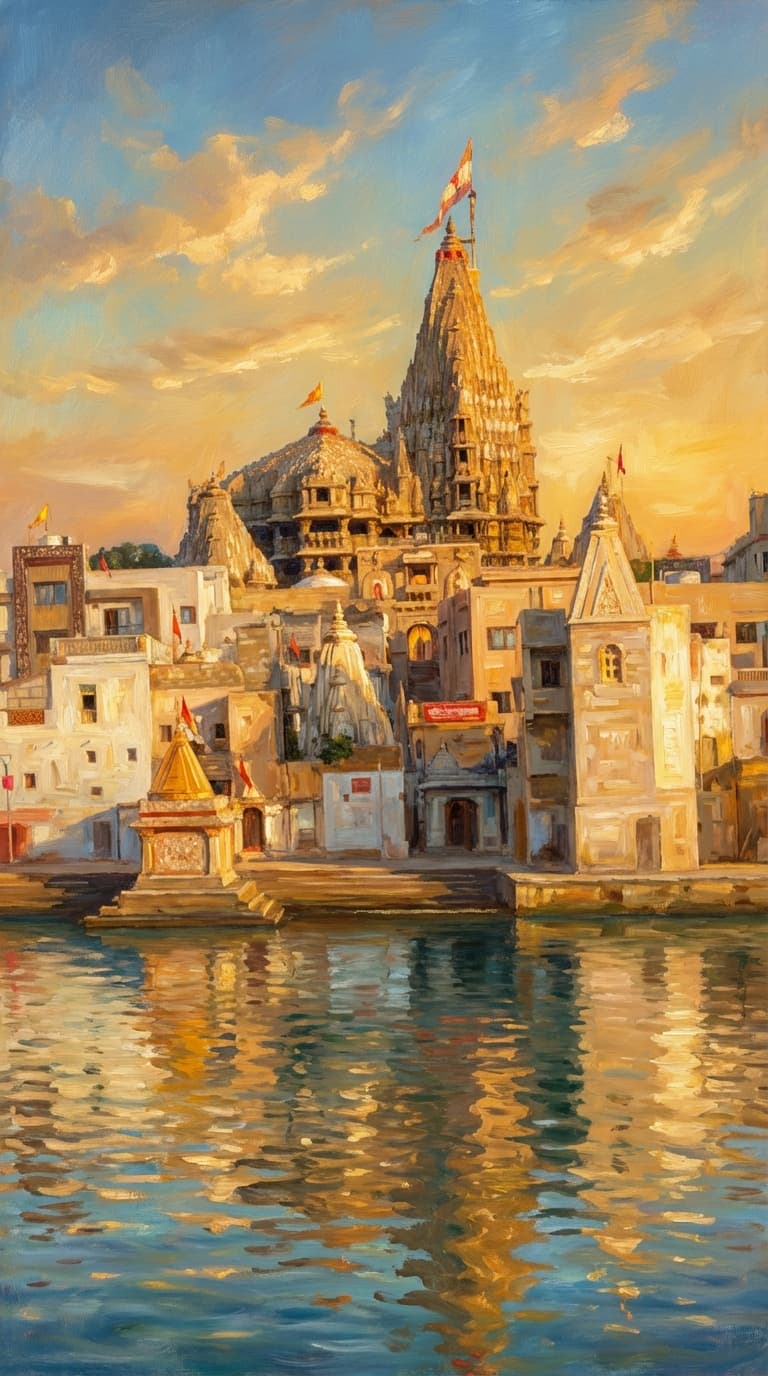
Visiting the Dwarkadhish Temple is a deeply spiritual experience. The temple's ancient architecture and the vibrant atmosphere filled with devotional chants create a serene ambiance. Expect to encounter large crowds, especially during festivals, and be prepared to remove your shoes before entering the main shrine.
Highlights
- Witness the changing of the flag atop the shikhara, a daily ritual.
- Explore the intricate carvings and sculptures that adorn the temple walls.
Things to Know
- Dress modestly in traditional attire.
- Photography is restricted inside the inner sanctum.
Location
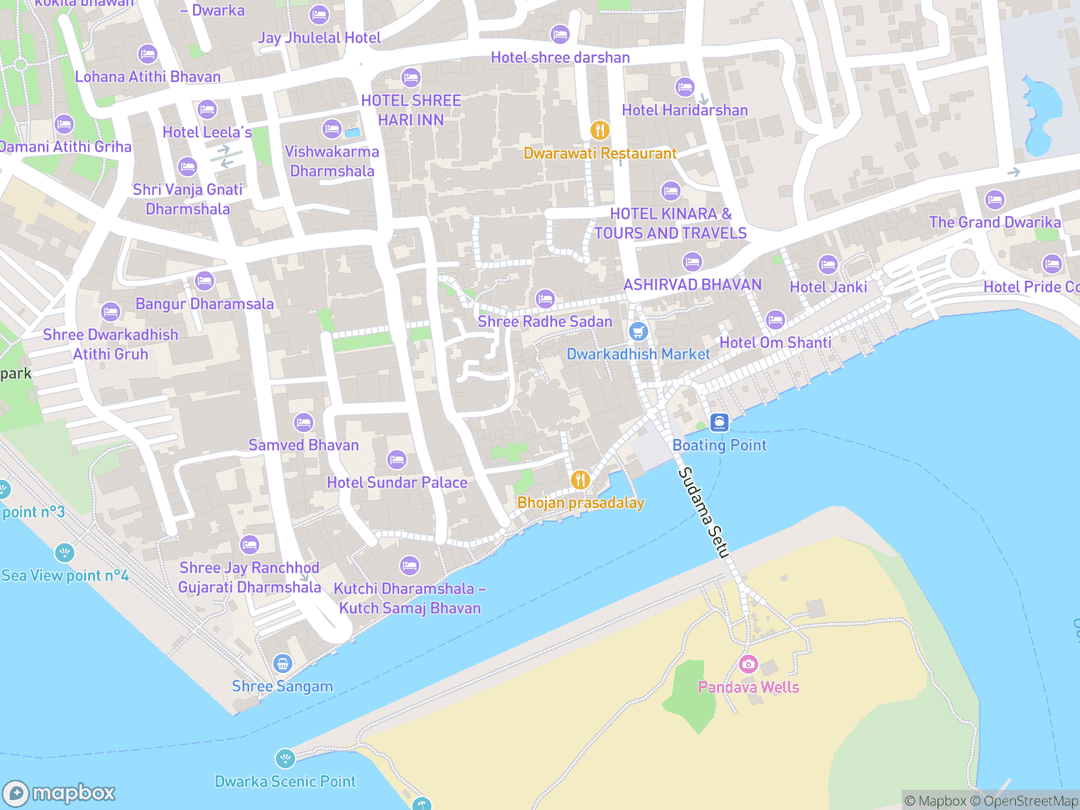
Dwarka, Gujarat 361335, India
Hours: Generally from 6:30 AM to 1:00 PM and 5:00 PM to 9:30 PM; may extend during festivals.
Getting There: Accessible by air (Porbandar or Jamnagar airports), train (Dwarka Railway Station), and road (NH-947).
Get DirectionsAbout
The Dwarkadhish Temple, also known as Jagat Mandir, is a prominent Hindu temple dedicated to Lord Krishna, revered as Dwarkadhish, the 'King of Dwarka'. Located in Dwarka, Gujarat, India, it holds immense religious significance as part of the Char Dham pilgrimage, one of the most sacred circuits for Hindus. The temple stands as a testament to faith, history, and architectural brilliance, attracting millions of devotees annually.
The original temple is believed to have been constructed around 200 BCE by Vajranabha, the great-grandson of Lord Krishna, over Krishna's residential place (Hari-Griha). The current structure dates back to the 15th-16th century, rebuilt and enlarged by the rulers of Gujarat. The temple showcases the Chalukya style of architecture, constructed using limestone and sandstone.
The Dwarkadhish Temple continues to be a vibrant center of Hindu worship, attracting pilgrims and tourists from around the world. Its rich history, intricate architecture, and deep religious significance make it a must-visit destination for those seeking spiritual enrichment and cultural immersion. The temple's enduring legacy is a testament to the unwavering devotion of its followers and the timeless appeal of Lord Krishna's teachings.
Gallery
Symbolic Elements
The temple's exterior features intricate carvings, each rich with spiritual meaning:

Dwarkadhish Deity
Lord Krishna is worshipped as Dwarkadhish, the King of Dwarka, symbolizing divine kingship and the balance between spiritual wisdom and worldly responsibility. His presence in the temple is the central focus of devotion.

Sun and Moon Flag
The flag atop the shikhara bears the symbols of the sun and moon, signifying that Krishna will remain present as long as the sun and moon exist on Earth. The flag is changed five times daily, representing an eternal connection.

Char Dham Significance
As one of the Char Dham pilgrimage sites, Dwarkadhish represents the western direction of spiritual salvation, with a visit believed to grant moksha (liberation). This pilgrimage is considered one of the most sacred journeys in Hinduism.

56 Steps to Swarga Dwara
The 56 steps leading to the Swarga Dwara symbolize the 56 Yadava kings who ruled over Dwarka. These steps represent the historical lineage and the royal heritage associated with Lord Krishna's kingdom.

Limestone and Sandstone Construction
The temple is constructed using limestone and sandstone, materials that have stood the test of time. These materials symbolize strength, durability, and the enduring nature of faith.

72 Pillars of the Main Shrine
The main shrine is a five-storied structure supported by 72 pillars, representing stability and architectural grandeur. These pillars are a testament to the skilled craftsmanship of the builders.

Moksha Dwara and Swarga Dwara
The temple has two main gateways: the Moksha Dwara (Gate of Salvation) and the Swarga Dwara (Gate to Heaven), representing the paths to spiritual liberation. These gateways symbolize the journey from earthly existence to divine enlightenment.

Shikhara (Spire)
The shikhara (spire) rises to a height of 78 meters (256 ft), dominating the skyline and serving as a beacon of faith. Its height and design symbolize the aspiration to reach the divine realm.
Interesting Facts
Dwarkadhish Temple is also known as Jagat Mandir.
The temple is believed to be over 2,500 years old, although the current structure dates back to the 15th-16th century.
The temple is one of the 108 Divya Desams, holy abodes of Vishnu, and is the 98th Divya Desam.
The flag atop the temple is changed five times daily, a tradition maintained by different devotee families for centuries.
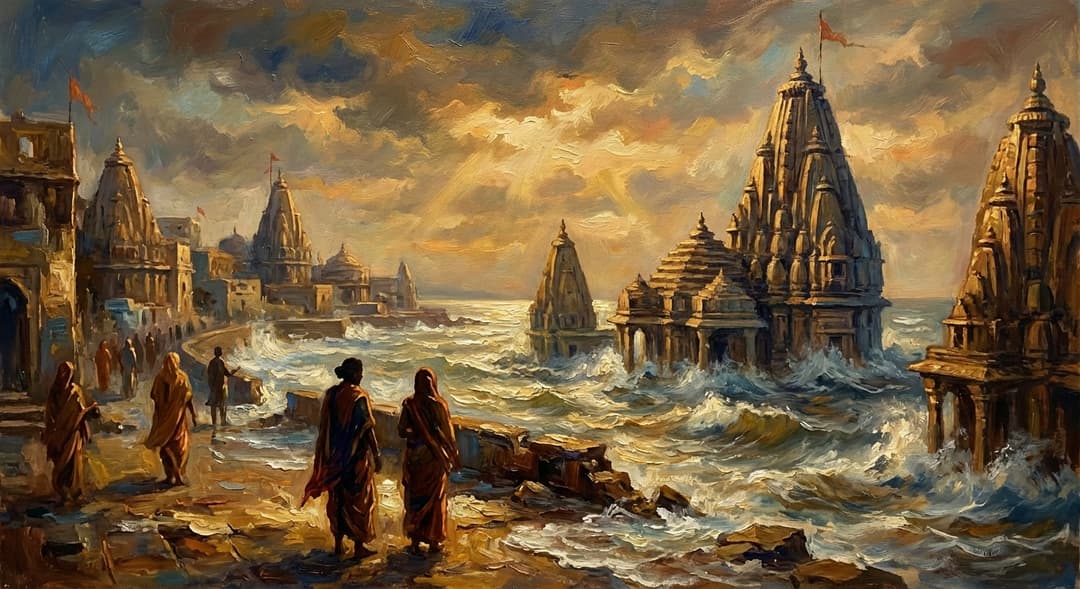
Archaeological studies have revealed submerged remains of ancient Dwarka city off the coast.
The temple has survived multiple invasions and restorations.
The sound of the conch shell blown at dawn is believed to be heard far beyond the Arabian Sea coast.
The temple is built on the site of Lord Krishna's palace.
The temple is aligned in such a way that the first rays of the morning sun fall directly on the feet of Lord Krishna's idol during certain times of the year.
The Dwarkadhish Temple represents the western direction of spiritual salvation in the Char Dham pilgrimage.
Common Questions
What is the significance of the Dwarkadhish Temple?
The Dwarkadhish Temple is one of the Char Dham pilgrimage sites, holding immense religious significance for Hindus. It is dedicated to Lord Krishna as Dwarkadhish, the 'King of Dwarka,' and is believed to grant moksha (liberation) to those who visit.
When was the Dwarkadhish Temple built?
The original temple is believed to have been constructed around 200 BCE. The current structure dates back to the 15th-16th century, rebuilt and enlarged by the rulers of Gujarat.
What is the architectural style of the Dwarkadhish Temple?
The Dwarkadhish Temple showcases the Chalukya style of architecture, also known as Māru-Gurjara architecture. It is constructed using limestone and sandstone, with intricate carvings and sculptures.
What are the timings for visiting the Dwarkadhish Temple?
The temple is generally open from 6:30 AM to 1:00 PM and 5:00 PM to 9:30 PM. However, these timings may extend during festivals and special occasions.
What is the dress code for visiting the Dwarkadhish Temple?
Traditional attire is recommended for visiting the Dwarkadhish Temple. Visitors are advised to avoid wearing shorts or sleeveless clothing as a sign of respect.
How can I reach the Dwarkadhish Temple?
The Dwarkadhish Temple is accessible by air (Porbandar or Jamnagar airports), train (Dwarka Railway Station), and road (NH-947). Dwarka is well-connected to the rest of Gujarat.
Related Stories
Explore the rich history, traditions, and people connected to this sacred site.
Featured Stories
The Legend of Vajranabha and the Original Temple
200 BCE
According to local legends, the original Dwarkadhish Temple was constructed by Vajranabha, the great-grandson of Lord Krishna. He sought to honor his ancestor by building a magnificent temple over Krishna's residential place, known as Hari-Griha. This act of devotion marked the beginning of Dwarka as a sacred pilgrimage site.
Vajranabha's dedication to preserving the memory of Lord Krishna laid the foundation for the temple's enduring legacy. The construction of the original temple symbolized the continuation of Krishna's divine presence and the importance of Dwarka as a place of spiritual significance. This story highlights the deep-rooted connection between the temple and the lineage of Lord Krishna.
Source: Local Legends and Historical Accounts
Adi Shankaracharya's Renovation and Spiritual Revival
8th Century
In the 8th century, the revered Hindu philosopher Adi Shankaracharya visited Dwarka and played a pivotal role in revitalizing the Dwarkadhish Temple. He not only renovated the existing structure but also established the Sharada Matha, one of the four Peethas (religious centers) that he founded across India. This act solidified Dwarka's position as a major center of Hindu learning and spirituality.
Adi Shankaracharya's contributions extended beyond physical renovations. He established the shrine of Adi Shakti on the fourth floor of the temple, further enriching its spiritual significance. His visit marked a turning point in the temple's history, ensuring its continued prominence as a place of worship and philosophical discourse. This story underscores the importance of spiritual leaders in preserving and promoting religious heritage.
Source: Historical Records and Religious Texts
The Reinstallation of the Idol After a Century of Protection
19th Century
During a period of invasions and unrest, the idol of Lord Krishna was hidden away for over a century to protect it from desecration. This act of safeguarding the deity reflects the deep devotion and unwavering faith of the temple's custodians. The reinstallation of the idol in the 19th century marked a triumphant return and a renewed commitment to preserving the temple's sanctity.
The reinstallation ceremony was a momentous occasion, symbolizing the resilience of the Hindu faith and the enduring power of Lord Krishna's presence. The event brought together devotees from far and wide, reaffirming Dwarkadhish Temple's status as a beacon of hope and spiritual solace. This story highlights the importance of protecting religious symbols and the enduring strength of faith in the face of adversity.
Source: Temple Archives and Historical Narratives
Timeline
Original Temple Construction
The original temple is believed to have been constructed by Vajranabha, the great-grandson of Lord Krishna, over Krishna's residential place (Hari-Griha).
MilestoneAdi Shankaracharya's Visit
Adi Shankaracharya visited Dwarka, established the Sharada Matha, and renovated the Dwarkadhish Temple, establishing the shrine of Adi Shakti on the fourth floor.
RenovationTemple Sections Dated
Some sections of the temple have been dated to this period, indicating ongoing construction and renovation.
RenovationTemple Destruction
The original structure was destroyed by Mahmud Begada, leading to a period of rebuilding and restoration.
RenovationTemple Rebuilt and Enlarged
The temple was rebuilt and enlarged by the rulers of Gujarat, with Raja Jagat Singh Rathore constructing the present temple.
RenovationIdol Reinstallation
The idol of Lord Krishna was reinstalled in the temple after being hidden for over a century to protect it from invasions.
RenovationDaily Rituals and Festivals
The temple continues to be a vibrant center of Hindu worship, with daily rituals and festivals attracting pilgrims and tourists from around the world.
EventBest Time to Visit
The months of November to February are considered the best time to visit Dwarkadhish Temple due to the pleasant weather.
EventJanmashtami Celebrations
The festival of Janmashtami, celebrating the birth of Lord Krishna, is a major event at the Dwarkadhish Temple, attracting large crowds of devotees.
EventFlag Changing Ceremony
The flag atop the shikhara is changed five times daily, a tradition maintained by different devotee families for centuries.
EventOriginal Temple Construction (Archaeological Evidence)
Archaeological findings suggest the original temple was built in 200 BCE at the earliest, indicating a long history of worship at the site.
MilestoneTemple Alignment
The temple is aligned in such a way that the first rays of the morning sun fall directly on the feet of Lord Krishna's idol during certain times of the year.
EventSurviving Invasions and Restorations
The temple has survived multiple invasions and restorations, standing as a symbol of resilience and enduring faith.
RenovationConch Shell Sound
The sound of the conch shell blown at dawn is believed to be heard far beyond the Arabian Sea coast, marking the beginning of daily rituals.
EventDwarkadhish Temple Today
Dwarkadhish Temple continues to be a major pilgrimage site, attracting devotees and tourists from around the world.
EventSimilar Temples
Sources & Research
Every fact on Temples.org is backed by verified Sources & Research. Each piece of information is rated by source tier and confidence level.
View All Sources (10)
| Field | Source | Tier | Retrieved |
|---|---|---|---|
| About & Historical Background | Devbhumi Dwarka District Official Website (opens in a new tab) | A | 2024-01-02 |
| About & Historical Background | Gujarat Tourism Official Website (opens in a new tab) | A | 2024-01-02 |
| Architectural Description | India Times (opens in a new tab) | B | 2024-01-02 |
| Symbolic Elements | Gujarat Tourism Official Website (opens in a new tab) | B | 2024-01-02 |
| Visitor Information | Sanatan Vasudev Kutumb (opens in a new tab) | C | 2024-01-02 |
| Interesting Facts | Online Tour and Travel (opens in a new tab) | C | 2024-01-02 |
| Historical Timeline | Utsav Gov.in (opens in a new tab) | B | 2024-01-02 |
| Architectural Description | Behind Every Temple (opens in a new tab) | C | 2024-01-02 |
| Historical Timeline | IndiTales (opens in a new tab) | B | 2024-01-02 |
| Visitor Information | Kiomoi (opens in a new tab) | D | 2024-01-02 |