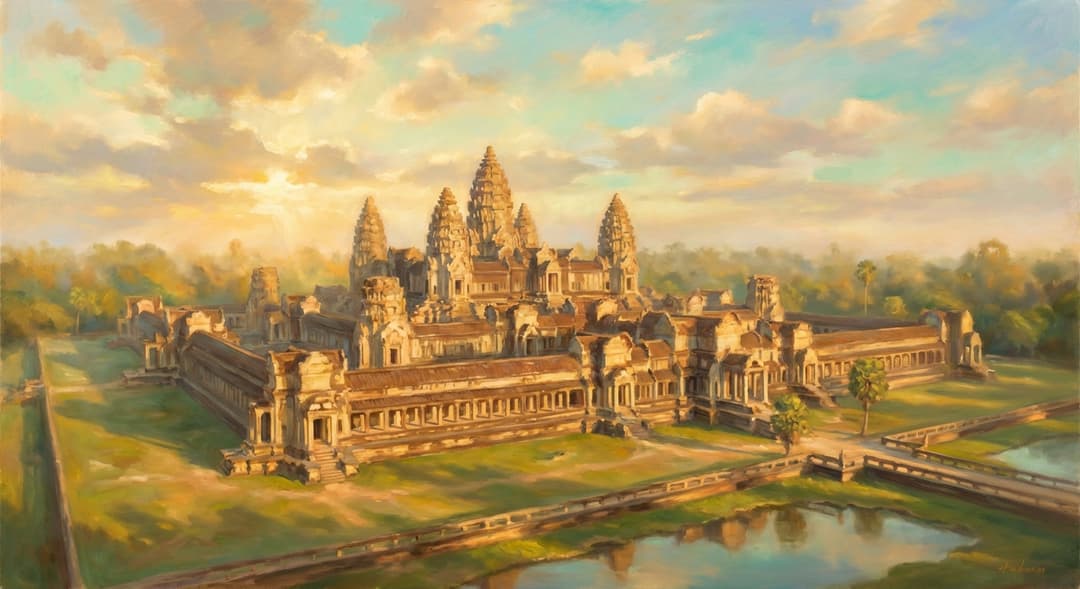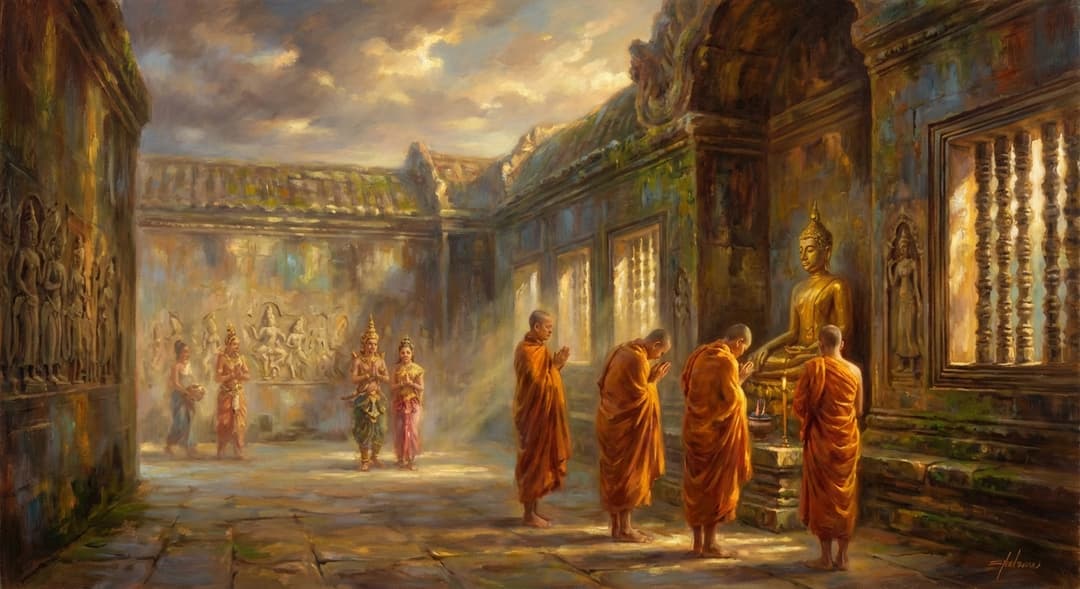
Angkor Wat, a magnificent temple complex in Cambodia, stands as a powerful testament to the ebb and flow of religious influence in Southeast Asia. Originally conceived as a Hindu temple dedicated to Vishnu in the 12th century, it underwent a gradual but profound transformation into a Theravada Buddhist site. This conversion reflects not only the changing religious landscape of the Khmer Empire but also the remarkable adaptability of its culture.
The shift began in earnest during the reign of King Jayavarman VII in the late 12th century. While initially a Hindu ruler, Jayavarman VII embraced Mahayana Buddhism, declaring it the state religion. Although he focused on building new Buddhist temples, his reign marked a significant departure from the predominantly Hindu traditions that had shaped the Khmer Empire for centuries. This transition paved the way for the later adoption of Theravada Buddhism.
The complete conversion to Theravada Buddhism occurred over several centuries, gaining momentum in the 14th century. Monks and missionaries from Sri Lanka played a crucial role in disseminating Theravada teachings throughout the region. As Theravada Buddhism gained prominence, Angkor Wat gradually absorbed Buddhist elements, with Hindu sculptures being modified or replaced with Buddhist imagery. The temple's rituals and ceremonies also transitioned, incorporating Buddhist chants, meditation practices, and the veneration of Buddha.
Today, Angkor Wat stands as a unique synthesis of Hindu and Buddhist traditions. While its architectural grandeur and intricate carvings still reflect its Hindu origins, the presence of Buddhist iconography and the practice of Buddhist rituals underscore its enduring connection to Theravada Buddhism. This remarkable transformation highlights the dynamic interplay of religious beliefs and cultural adaptation that has shaped the history of Cambodia.
Key Details
- Original Dedication Vishnu (Hindu deity)
- Conversion Period 14th Century
- Key Religion Theravada Buddhism
- Influential King Jayavarman VII
- Religious Shift Hinduism to Mahayana Buddhism to Theravada Buddhism
- Location Angkor, Cambodia
Timeline
Reign of Suryavarman II
Suryavarman II commissions the construction of Angkor Wat as a Hindu temple dedicated to Vishnu.
MilestoneReign of Jayavarman VII
Jayavarman VII adopts Mahayana Buddhism as the state religion, marking a shift away from Hinduism.
MilestoneRise of Theravada Buddhism
Theravada Buddhism gains prominence in the region, influencing the gradual conversion of Angkor Wat.
EventAngkor Wat as a Buddhist Site
Angkor Wat becomes primarily a Buddhist site, attracting pilgrims and tourists from around the world.
component.timeline.historicalSources & Research
Every fact on Temples.org is backed by verified Sources & Research. Each piece of information is rated by source tier and confidence level.
View All Sources (5)
| Field | Source | Tier | Retrieved |
|---|---|---|---|
| loc.gov - the mellette county pioneer | Library of Congress (opens in a new tab) | D | 2024-01-01 |
| loc.gov - the cordova daily times | Library of Congress (opens in a new tab) | D | 2024-01-01 |
| loc.gov - northern wisconsin advertiser | Library of Congress (opens in a new tab) | D | 2024-01-01 |
| APSARA Authority - Angkor Wat | APSARA National Authority (opens in a new tab) | A | 2024-01-01 |
| Britannica - Angkor Wat | Encyclopedia Britannica (opens in a new tab) | A | 2024-01-01 |