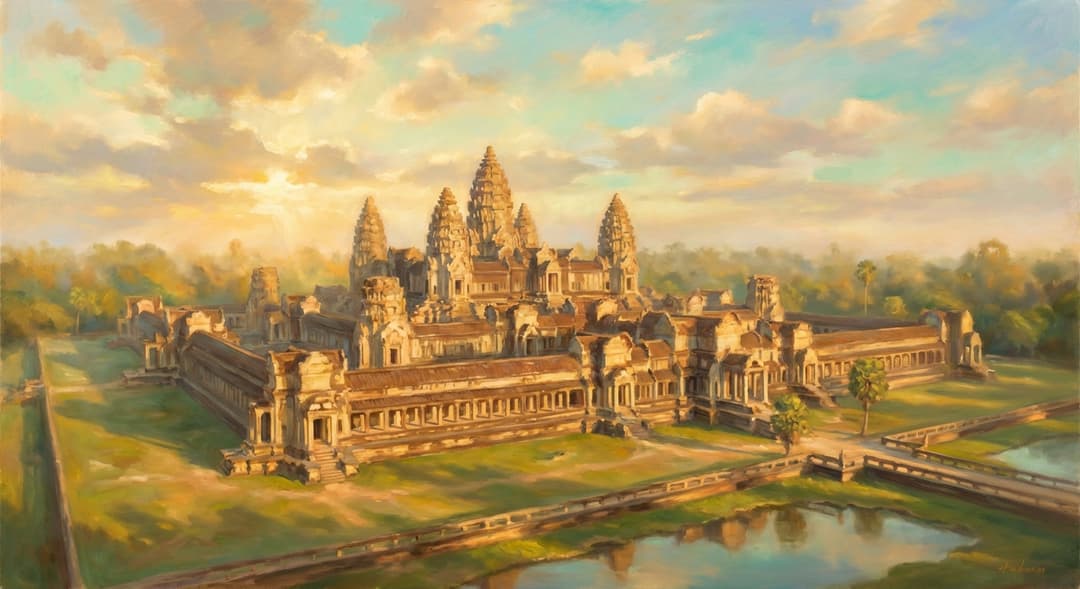
Angkor Wat, a majestic temple complex in Cambodia, began its life as a Hindu shrine dedicated to the god Vishnu in the early 12th century. Commissioned by King Suryavarman II, it served as his state temple and eventual mausoleum, meticulously designed according to Hindu cosmology. The temple's intricate carvings and towering structures reflected the king's devotion and the prevailing religious beliefs of the Khmer elite, solidifying its place as a central hub for Hindu worship within the empire.
However, the religious landscape of Cambodia gradually transformed, and with it, the destiny of Angkor Wat. Over several centuries, Buddhism, particularly Theravada Buddhism, gained increasing prominence. This shift was influenced by the decline of the Khmer Empire, increased interactions with Buddhist kingdoms like Sukhothai, and the growing appeal of Buddhist teachings to the general populace. As Buddhism's influence grew, subtle changes began to appear within the temple's sacred spaces.
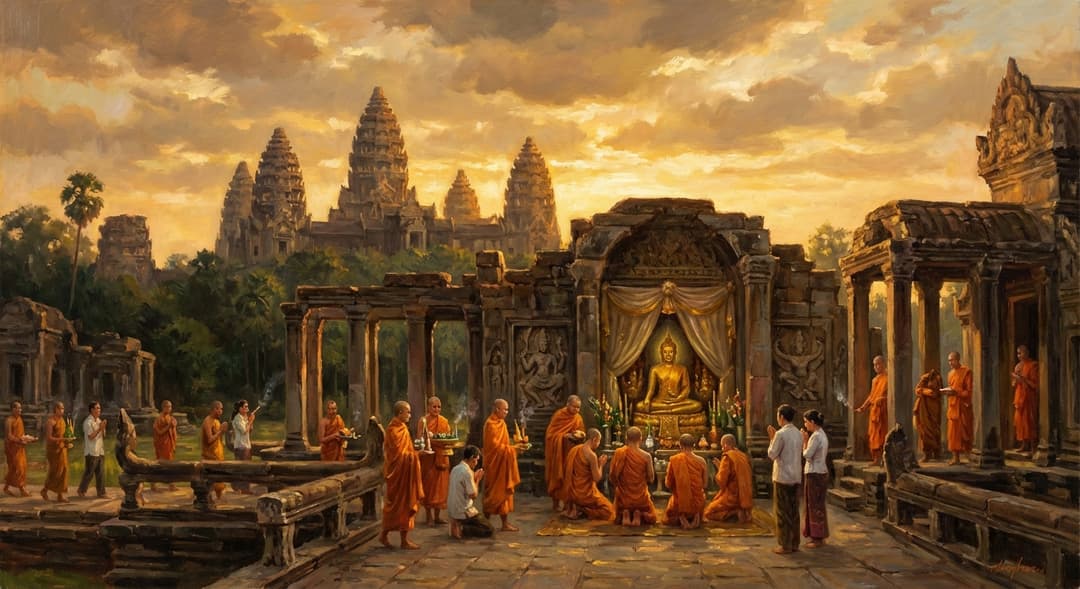
The conversion of Angkor Wat into a Buddhist temple was not a sudden event but a gradual evolution. Hindu deities were slowly supplemented with Buddhist imagery, statues of the Buddha were added, and existing Hindu carvings were reinterpreted through a Buddhist lens. Architectural modifications were made to accommodate Buddhist practices, with spaces repurposed into meditation halls and shrines. The rituals performed within the temple shifted from Hindu ceremonies to Buddhist practices, marking a profound transformation in its religious identity.
Today, Angkor Wat stands as a testament to the adaptability of sacred spaces and the enduring influence of Buddhism on Cambodian culture. It remains a site of religious devotion and pilgrimage, drawing visitors from around the world who come to marvel at its architectural grandeur and reflect on its rich and complex history. The temple's conversion symbolizes the dynamic nature of religious identity and the capacity of religious traditions to evolve and adapt over time, solidifying its place as a powerful symbol of Cambodian national identity and cultural heritage.
Key Details
- Original Dedication Vishnu
- Conversion Period Late 13th - 14th Century
- Dominant Buddhist Tradition Theravada
- Key Architectural Change Addition of Buddha Statues
- Initial Function State Temple and Mausoleum
- Influencing Kingdom Sukhothai
Timeline
Construction Begins
Angkor Wat is constructed under the reign of King Suryavarman II as a Hindu temple dedicated to Vishnu.
component.timeline.groundbreakingJayavarman VII's Reign
King Jayavarman VII embraces Mahayana Buddhism, fostering religious tolerance and paving the way for Theravada Buddhism.
MilestoneGradual Conversion
Angkor Wat undergoes a gradual conversion to a Buddhist temple, with iconographic and architectural changes.
EventSymbol of Cambodia
Angkor Wat stands as a symbol of Cambodian national identity and a testament to the country's rich cultural heritage.
component.timeline.historicalSources & Research
Every fact on Temples.org is backed by verified Sources & Research. Each piece of information is rated by source tier and confidence level.
View All Sources (5)
| Field | Source | Tier | Retrieved |
|---|---|---|---|
| Angkor Wat: History | Encyclopædia Britannica (opens in a new tab) | A | 2024-01-01 |
| Angkor Wat: The Mother of all Temples | The Vintage News (opens in a new tab) | A | 2024-01-01 |
| Angkor Wat Temple History | Angkor Temples (opens in a new tab) | B | 2024-01-01 |
| Buddhism in Cambodia | Access to Insight (opens in a new tab) | B | 2024-01-01 |
| Angkor Wat Facts | Fact Retriever (opens in a new tab) | C | 2024-01-01 |