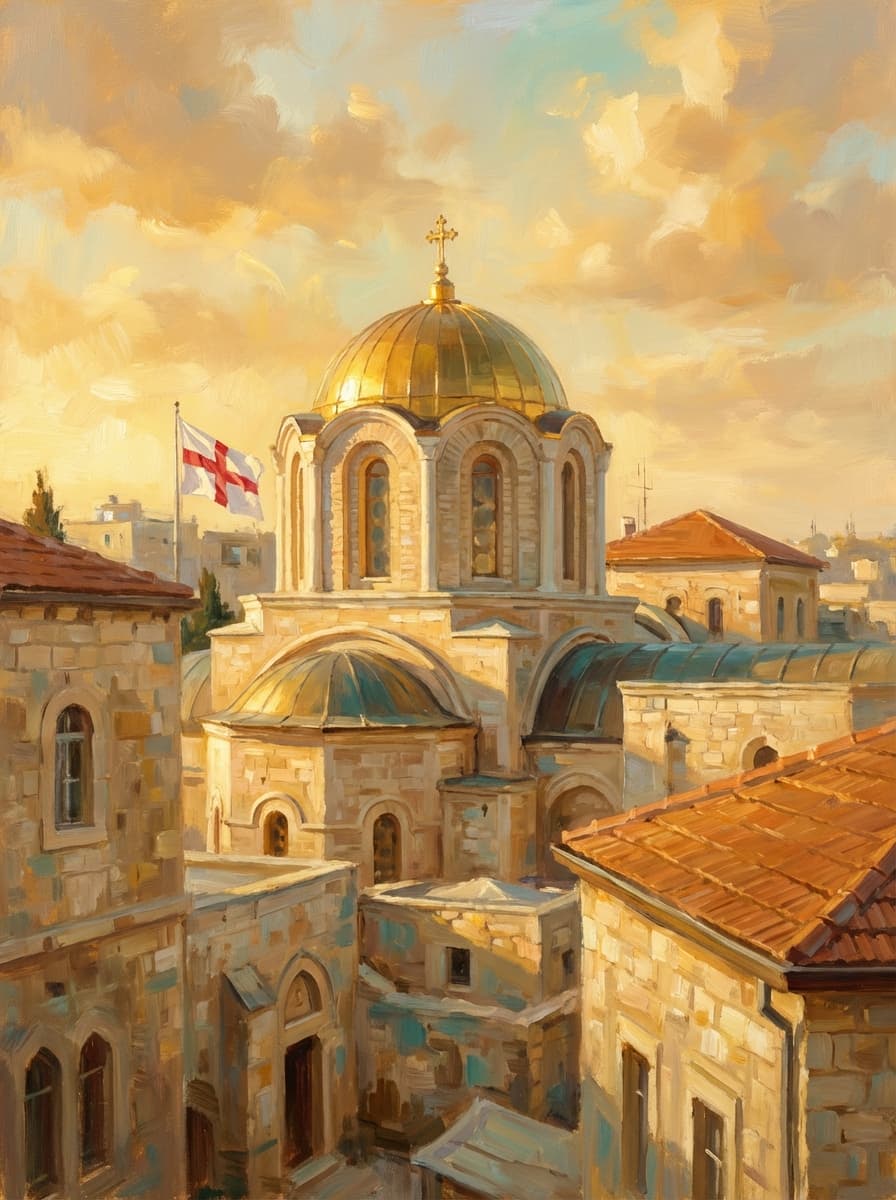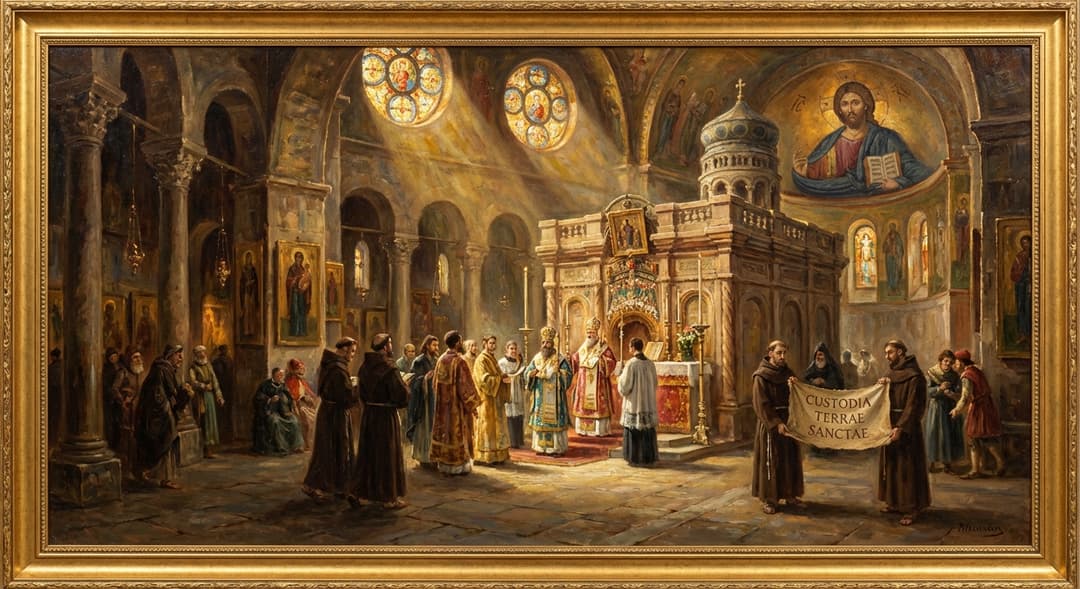
The "Custody of the Holy Land" represents a complex and enduring narrative of control, access, and preservation concerning the Christian Holy Places, primarily within Jerusalem and its environs. This intricate issue is profoundly interwoven with the historical trajectory of the Greek Orthodox Church of Jerusalem, alongside other Christian denominations, and carries significant political, religious, and cultural implications. The struggle for custody mirrors centuries of shifting power dynamics, theological divergences, and imperial ambitions, shaping the landscape of religious authority in the region.
The Holy Land holds unparalleled significance for Christians as the epicenter of Jesus Christ's life, ministry, crucifixion, and resurrection. Following the Roman Empire's embrace of Christianity, the region transformed into a paramount pilgrimage destination. The construction of churches and shrines, notably under the patronage of Emperor Constantine and his mother Helena in the 4th century, solidified the importance of sites such as the Church of the Holy Sepulchre, believed to house Jesus's tomb, and the Church of the Nativity in Bethlehem, marking Jesus's birthplace. These sacred locations became focal points of Christian devotion and architectural marvels, attracting pilgrims from across the known world.
Throughout the ebb and flow of empires, control over the Holy Land shifted hands, each transition bringing new challenges to the Christian communities and their rights to worship and maintain their holy sites. The Byzantine Empire, Islamic Caliphates, Crusader kingdoms, Mamluks, and Ottoman Empire each held dominion at various junctures. The Greek Orthodox Church of Jerusalem, one of the oldest Christian churches, has played a pivotal role in preserving Christian traditions and maintaining a continuous presence in the Holy Land. Its influence, however, has often been contested by other Christian denominations, particularly concerning control over specific areas within the holy sites and the rights to perform religious ceremonies. The Status Quo agreement of 1757, intended to resolve disputes, has paradoxically become a recurring source of tension.
The ongoing disputes over the Custody of the Holy Land serve as a poignant reminder of the divisions within Christianity and the challenges of maintaining unity amidst historical and political complexities. The preservation of these sites is viewed as an essential act of piety, connecting believers to the origins of their faith. In the modern era, the Israeli-Palestinian conflict has further complicated the custody of the Holy Land, adding layers of political and territorial disputes to the existing religious contentions. The future of these sacred spaces remains a subject of intense negotiation and a testament to the enduring power of faith and history.
Key Details
- Church of the Holy Sepulchre Believed to be the site of Jesus's tomb.
- Church of the Nativity Marks Jesus's birthplace in Bethlehem.
- Status Quo Agreement Established in 1757 to define rights within holy sites.
- Greek Orthodox Church of Jerusalem One of the oldest Christian churches in the world.
- Constantine and Helena Patrons of early church construction in the Holy Land.
- Ottoman Empire Controlled the Holy Land from 1517.
Timeline
Construction of Major Churches
Major churches are built in the Holy Land under Constantine and Helena, promoting pilgrimage.
MilestoneJerusalem Under Islamic Rule
Jerusalem falls under Islamic rule, impacting the status of Christian communities.
EventFirst Crusade
The First Crusade captures Jerusalem, establishing a Crusader kingdom.
EventSaladin Recaptures Jerusalem
Saladin recaptures Jerusalem, ending the Crusader kingdom.
EventOttoman Control
The Ottoman Empire gains control of the Holy Land.
EventStatus Quo Agreement
The *Status Quo* agreement is established, defining rights within holy sites.
MilestoneCrimean War
The Crimean War erupts, partly due to disputes over the protection of Christian sites.
EventSources & Research
Every fact on Temples.org is backed by verified Sources & Research. Each piece of information is rated by source tier and confidence level.
View All Sources (3)
| Field | Source | Tier | Retrieved |
|---|---|---|---|
| Daily National Intelligencer (Washington City [D.C.]) 1813-1869 | Library of Congress, Chronicling America (opens in a new tab) | A | 2024-01-01 |
| The Wheatland World (Wheatland, Laramie County, Wyo.) 1894-1921 | Library of Congress, Chronicling America (opens in a new tab) | A | 2024-01-01 |
| The Republic (Washington [D.C.]) 1849-1853 | Library of Congress, Chronicling America (opens in a new tab) | A | 2024-01-01 |