Visitor Insights
Visiting Greek Orthodox Church of Jerusalem
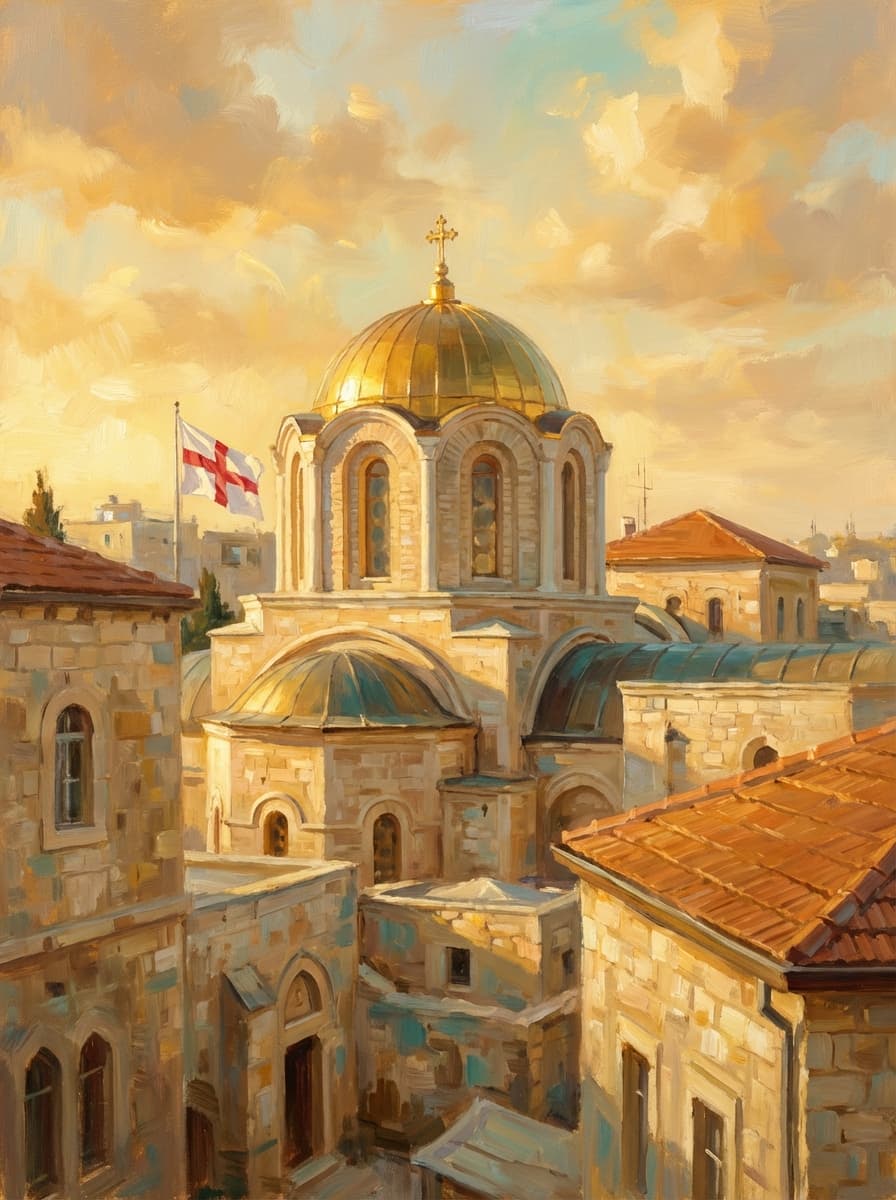
Visiting the Greek Orthodox Church of Jerusalem offers a profound experience, steeped in centuries of religious history and tradition. The atmosphere is often filled with the scent of incense and the sounds of chanting, creating a deeply spiritual ambiance. Visitors should expect to encounter a diverse mix of pilgrims and local worshippers, all drawn to the sacred sites under the Patriarchate's care. Modest dress is required, and respecting the religious customs is essential for a meaningful visit.
Highlights
- Witnessing the Divine Liturgy in the Church of the Holy Sepulchre.
- Exploring the ancient monasteries and churches in the Old City.
- Experiencing the rich traditions of Eastern Orthodox Christianity.
Things to Know
- Modest dress is required when visiting churches and monasteries.
- Photography may be restricted in certain areas.
- Be prepared for crowds, especially during religious holidays.
Location
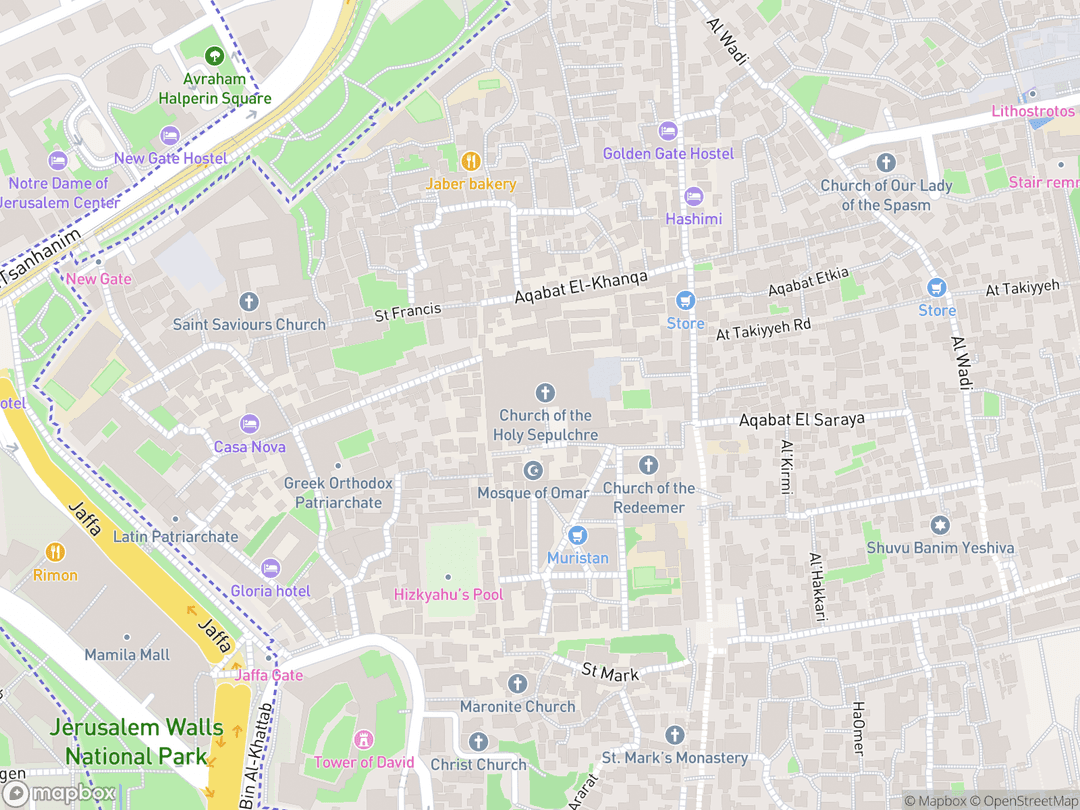
P.O. Box 19632, 91190 Jerusalem, Israel
Hours: Hours vary by location; contacting the Patriarchate or individual monasteries directly is advisable.
Getting There: The Church of the Holy Sepulchre is located in the Christian Quarter of the Old City of Jerusalem. It is accessible by foot or public transportation.
Get DirectionsTips for Your Visit
Dress Modestly
Ensure your shoulders and knees are covered when visiting holy sites.
Respect Local Customs
Be mindful of prayer times and religious ceremonies.
Plan Ahead
Check opening hours and accessibility information before your visit.
About
The Greek Orthodox Church of Jerusalem, also known as the Greek Orthodox Patriarchate of Jerusalem, stands as a beacon of Eastern Orthodox Christianity in the Holy Land. As one of the oldest patriarchates in Christendom, its roots trace back to the very origins of Christianity, with its foundation traditionally linked to the day of Pentecost. This deep historical connection imbues the church with immense spiritual significance for Orthodox Christians worldwide.
The Patriarchate's primary seat is located within the Church of the Holy Sepulchre in Jerusalem, a site revered as the location of Jesus Christ's crucifixion, burial, and resurrection. This places the Greek Orthodox Church at the heart of Christian pilgrimage and makes it a custodian of some of Christianity's most sacred spaces. The Patriarchate's influence extends beyond Jerusalem, encompassing a wide geographical area that includes Palestine, Jordan, and Israel, where it serves a diverse community of Orthodox Christians.
Throughout its long and storied history, the Greek Orthodox Church of Jerusalem has faced numerous challenges, including periods of foreign rule, religious conflict, and political upheaval. Despite these trials, the church has persevered, maintaining its traditions, preserving its cultural heritage, and continuing to serve as a spiritual center for its faithful. Its ongoing presence in Jerusalem is a testament to the enduring strength and resilience of Orthodox Christianity in the Holy Land.
Gallery
Symbolic Elements
The temple's exterior features intricate carvings, each rich with spiritual meaning:
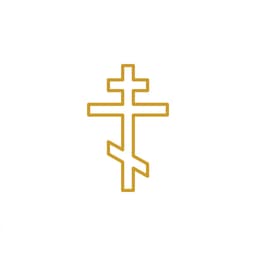
The Cross
The Greek Orthodox Cross, with all four members of equal shape, is a central symbol of the Christian faith. It represents the crucifixion of Jesus Christ and his subsequent resurrection, signifying the victory over sin and death. The cross is a reminder of the sacrifice made for humanity's salvation and is a powerful emblem of Christian identity.
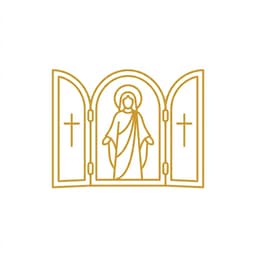
Icons
Icons are a central feature of Orthodox worship, serving as windows into heaven and depicting Christ, the Virgin Mary, and the saints. These sacred images are not merely artistic representations but are believed to be imbued with divine grace, allowing believers to connect with the spiritual realm. Icons are venerated through prayer, kissing, and the lighting of candles, fostering a sense of communion with the figures they portray.
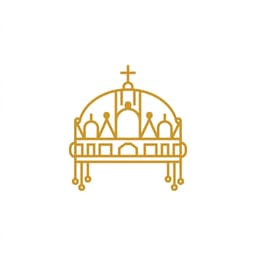
The Emperor's Crown
The coat of arms of the Jerusalem Greek Patriarchate features the emperor's crown at the top, symbolizing the historical ties between the church and the Byzantine Empire. This crown represents the authority and prestige that the Patriarchate held within the empire, as well as its continued role as a guardian of Christian traditions and values. It is a reminder of the church's enduring legacy and its importance in the broader context of Orthodox Christianity.
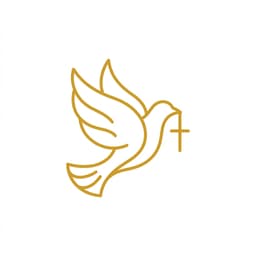
Dove
A dove, often depicted holding a cross in its beak, represents the Holy Spirit and a new covenant in Christian symbolism. The dove is a symbol of peace, purity, and divine guidance, representing the presence of God in the world. Its association with the Holy Spirit signifies the transformative power of faith and the promise of eternal life through Jesus Christ.

Aedicule
The emblem of the Jerusalem Greek Patriarchate features the Aedicule, the inner structure of the Holy Sepulchre, which enshrines the tomb of Jesus Christ. This emblem represents the core of the Christian faith, symbolizing the resurrection of Jesus and the promise of eternal life. The Aedicule is a sacred space where pilgrims gather to pray and reflect on the significance of Christ's sacrifice and triumph over death.

Chi Rho
This monogram of the first two letters (X and P) of the Greek word for Christ is a common symbol in Christian art and architecture. The Chi Rho represents the name of Jesus Christ and is a reminder of his presence in the world. It is often used in conjunction with other Christian symbols, such as the Alpha and Omega, to convey the message of Christ's divinity and his role as the savior of humanity.

Alpha and Omega
Often used with the Chi Rho, these letters indicate that Christ is the beginning and the end, the first and the last. These symbols represent the eternal nature of Jesus Christ and his role as the creator and sustainer of the universe. They are a reminder of God's infinite power and his unwavering love for humanity.
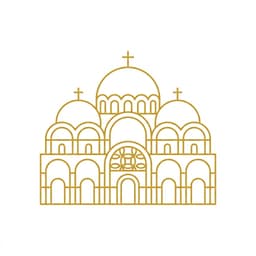
Byzantine Architecture
The architectural style of many Greek Orthodox churches, including elements within the Church of the Holy Sepulchre, reflects Byzantine influences. Characterized by domes, arches, and intricate mosaics, this style creates a sense of grandeur and spiritual transcendence. The use of rich colors and symbolic imagery enhances the worship experience and connects believers to the traditions of the Eastern Orthodox Church.
Interesting Facts
The Greek Orthodox Patriarchate of Jerusalem is considered the 'Mother of all Churches' because the Christian Church was established in Jerusalem on the day of Pentecost.
The Patriarchate is one of the five original patriarchates of Christianity, alongside Rome, Constantinople, Alexandria, and Antioch.
The Church of Jerusalem was elevated to the rank of Patriarchate in 451 AD at the Council of Chalcedon.
The Patriarchate’s jurisdiction includes the territories of Palestine, Jordan, and Israel, serving a diverse community of Orthodox Christians.
The Greek Orthodox Patriarchate of Jerusalem is the second biggest owner of land in Israel, after the Israeli government, reflecting its historical and economic significance.
The church celebrates its liturgy in the ancient Byzantine Rite, with Koine Greek as the sacred language, preserving ancient traditions.
The majority of Orthodox Christians under the patriarchate are Palestinians and Jordanians, reflecting the demographic composition of the region.
The Greek Orthodox Church shares control of the Church of the Holy Sepulchre with other Christian denominations, maintaining arrangements that have remained largely unchanged for centuries.
The Patriarchate also includes the autonomous Archdiocese of Mount Sinai, home to St. Catherine's Monastery, the oldest surviving Orthodox monastery in the world.
The Greek Orthodox Church has faced numerous challenges throughout its history, including Persian and Islamic invasions, Crusader rule, and Ottoman governance.
Common Questions
What is the Greek Orthodox Church of Jerusalem?
The Greek Orthodox Church of Jerusalem is an autocephalous church within the wider communion of Eastern Orthodox Christianity, tracing its foundation to the day of Pentecost. It is one of the oldest patriarchates in Christendom and is headquartered in the Church of the Holy Sepulchre in Jerusalem.
Where is the Greek Orthodox Church of Jerusalem located?
The primary seat of the Greek Orthodox Church of Jerusalem is located within the Church of the Holy Sepulchre in the Old City of Jerusalem. The Patriarchate's influence extends beyond Jerusalem, encompassing a wide geographical area that includes Palestine, Jordan, and Israel.
Who is the current Patriarch of Jerusalem?
The current Patriarch of Jerusalem is Theophilos III, who was elected in 2005 as the 141st Patriarch.
What is the significance of the Church of the Holy Sepulchre?
The Church of the Holy Sepulchre is revered as the location of Jesus Christ's crucifixion, burial, and resurrection, making it one of the most sacred sites in Christianity. It is a major pilgrimage destination and a symbol of the Christian faith.
What are some of the challenges faced by the Greek Orthodox Church of Jerusalem throughout its history?
The Greek Orthodox Church of Jerusalem has faced numerous challenges, including periods of foreign rule, religious conflict, and political upheaval. These challenges have tested the church's resilience and its ability to maintain its traditions and serve its faithful.
What is the dress code for visiting holy sites under the Greek Orthodox Patriarchate?
Modest dress is required when visiting churches and monasteries. Visitors should ensure their shoulders and knees are covered out of respect for the religious customs and traditions.
Related Stories
Explore the rich history, traditions, and people connected to this sacred site.
Featured Stories
The Miracle of the Holy Fire
Every Holy Saturday
Each year on Holy Saturday, the day before Orthodox Easter, a remarkable event occurs at the Church of the Holy Sepulchre known as the Miracle of the Holy Fire. The Greek Orthodox Patriarch of Jerusalem enters the tomb of Jesus, and after a period of prayer, a divine fire emanates from within, lighting his candles and spreading throughout the church. This miraculous fire is seen as a symbol of Christ's resurrection and a testament to the enduring power of faith.
Pilgrims from around the world gather to witness this extraordinary event, their candles ready to be lit by the Holy Fire. The atmosphere is charged with anticipation and reverence as the Patriarch emerges from the tomb, carrying the sacred flame. The fire is said to not burn for a short period, allowing believers to touch it to their faces and hands without harm, a further testament to its divine origin.
The Miracle of the Holy Fire is a deeply spiritual experience for Orthodox Christians, reaffirming their belief in the resurrection of Jesus Christ and the promise of eternal life. It is a reminder of the power of faith to overcome darkness and a symbol of hope for a world in need of healing and redemption. The event is broadcast live around the world, allowing millions to share in the joy and wonder of this annual miracle.
Source: Greek Orthodox Patriarchate of Jerusalem
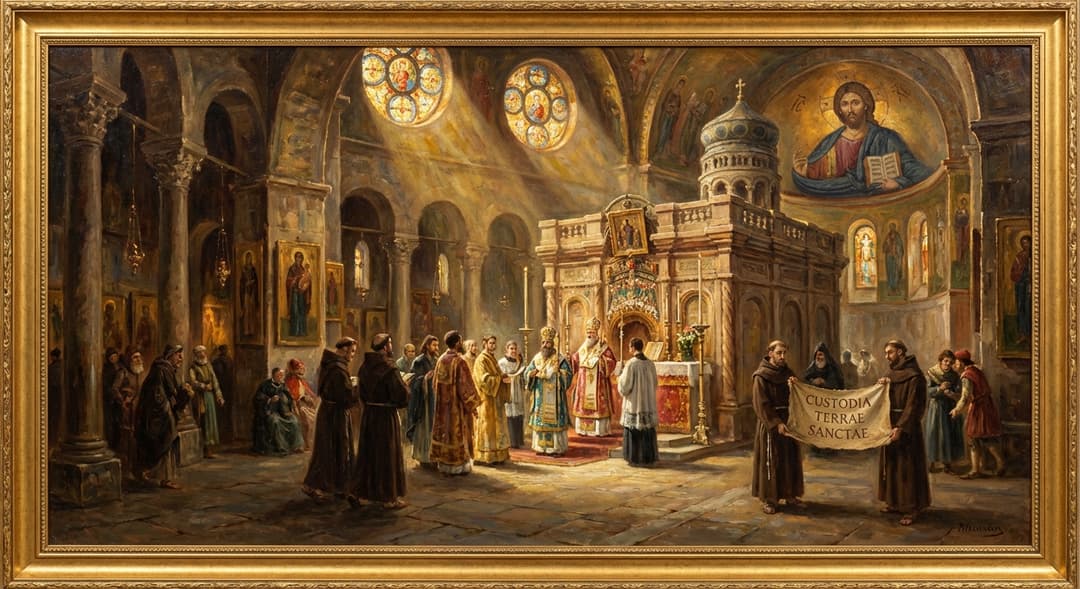
The Custodians of the Holy Sepulchre
Centuries of Tradition
For centuries, the Greek Orthodox Patriarchate of Jerusalem has served as one of the primary custodians of the Church of the Holy Sepulchre, sharing responsibility with other Christian denominations. This role involves maintaining the sacred spaces, preserving the historical artifacts, and ensuring the smooth operation of the church for pilgrims and worshippers from around the world. The Patriarchate's commitment to this task is a testament to its deep reverence for the site and its dedication to serving the Christian community.
The delicate balance of power and responsibility among the different denominations requires constant negotiation and cooperation. The Status Quo agreement, established in the 18th century, governs the rights and responsibilities of each group, ensuring that no single denomination can unilaterally alter the shared spaces. This agreement has helped to maintain peace and stability within the church, allowing pilgrims to experience the sacred site without disruption.
The Greek Orthodox Patriarchate's role as a custodian of the Holy Sepulchre is not merely a matter of administration but a sacred duty. It is a commitment to preserving the legacy of Jesus Christ and to providing a space where believers can connect with the divine. The Patriarchate's dedication to this task is a reflection of its deep faith and its unwavering commitment to serving the Christian community in the Holy Land.
Source: Christian Information Center
The Restoration of the Aedicule
2016-2017
In 2016, a major restoration project was undertaken to preserve the Aedicule, the structure that enshrines the tomb of Jesus Christ within the Church of the Holy Sepulchre. The Aedicule had suffered damage over the centuries due to earthquakes, fire, and the effects of time, threatening its structural integrity. The restoration project was a collaborative effort involving the Greek Orthodox Patriarchate, the Franciscan Custody of the Holy Land, and the Armenian Patriarchate, demonstrating a spirit of unity and cooperation among the different Christian denominations.
The restoration involved carefully dismantling the Aedicule, cleaning and repairing the stones, and reinforcing the structure with modern materials. The project also provided an opportunity to study the Aedicule's history and construction, revealing new insights into the sacred site. The restoration was completed in 2017, and the Aedicule was reopened to the public, allowing pilgrims to once again visit the tomb of Jesus in a safe and secure environment.
The restoration of the Aedicule was a significant achievement, not only for the preservation of a historical landmark but also for the demonstration of interfaith cooperation. It was a reminder that despite their differences, the Christian denominations can work together to protect and preserve the sacred sites that are important to all believers. The restored Aedicule stands as a symbol of hope and renewal, a testament to the enduring power of faith and the importance of preserving our shared heritage.
Source: National Geographic
Timeline
Foundation of the Church
The church traces its foundation to the day of Pentecost, marking the descent of the Holy Spirit upon the disciples of Jesus Christ in Jerusalem.
MilestoneFirst Apostolic Council
The first Apostolic Council was held in Jerusalem, addressing key issues in the early Christian community.
EventDestruction of Jerusalem
Roman Emperor Titus captured and destroyed Jerusalem, leading the Christian community to move to Pella.
EventHadrian's Temple
Emperor Hadrian built a pagan temple over Golgotha and the Holy Tomb, renaming Jerusalem as Aelia Capitolina.
EventConstruction of the Church of the Holy Sepulchre
St. Helen, commissioned by Emperor Constantine the Great, erected the Church of the Resurrection (Holy Sepulchre) in Jerusalem.
MilestoneElevation to Patriarchate
The Church of Jerusalem was promoted to a patriarchate by the 4th Ecumenical Council of Chalcedon.
MilestonePersian Invasion
The Persian invasion was a catastrophe for the Church of Jerusalem, causing significant damage and disruption.
EventIslamic Invasion
The Islamic invasion ended Byzantine sovereignty over the city, bringing about a new era of governance.
EventGreat Schism
In the Great Schism, the patriarch of Jerusalem joined the Eastern Orthodox Church, solidifying its distinct identity.
EventCrusader Capture of Jerusalem
Crusaders captured Jerusalem, expelling the Orthodox patriarch and establishing a Latin hierarchy.
EventSaladin's Restoration
Saladin restored the rights of the Church of Jerusalem, allowing it to regain its influence and authority.
EventOttoman Rule
The church was under the authority of the Ottoman Empire, navigating the complexities of governance during this period.
EventMonastic Autonomy
The Ecumenical Patriarch declared the monastic community autonomous, granting it greater independence and self-governance.
EventArab Orthodox Movement
The Arab Orthodox Movement began, seeking to Arabize the church hierarchy and promote greater representation for Arab members.
EventPatriarch Diodorus I
Under Patriarch Diodorus I, the Patriarchate of Jerusalem became a spokesman for Orthodox churches reserved about ecumenism.
EventDeposition of Patriarch Irenaios I
Patriarch Irenaios I was deposed due to controversial real estate deals, leading to a period of uncertainty and transition.
EventElection of Theophilus III
Theophilus III was elected as the 141st Patriarch of Jerusalem, ushering in a new era of leadership and direction.
MilestoneHistory by Decade
1st Century
They devoted themselves to the apostles’ teaching and to fellowship, to the breaking of bread and to prayer.
The history of the Greek Orthodox Church of Jerusalem begins in the 1st century with the establishment of the Christian community in Jerusalem. The church traces its foundation to the day of Pentecost, when the Holy Spirit descended upon the apostles of Jesus Christ. St. James, the brother of Jesus, is considered the first bishop of Jerusalem, leading the early Christian community in the city. The first Apostolic Council was held in Jerusalem around 49-52 AD, addressing key issues in the early church.
2nd–4th Centuries
We ought to obey God rather than men!
In 70 AD, Roman Emperor Titus captured and destroyed Jerusalem, scattering the Christian community. By 135 AD, Emperor Hadrian built a pagan temple over Golgotha and the Holy Tomb, renaming Jerusalem as Aelia Capitolina. Despite these challenges, the Christian community persisted, maintaining its faith and traditions. A new era began in the 4th century when St. Helen, commissioned by Emperor Constantine the Great, erected the Church of the Resurrection (Holy Sepulchre) in Jerusalem, marking a turning point for Christianity in the city.
5th–7th Centuries
Go therefore and make disciples of all nations, baptizing them in the name of the Father and of the Son and of the Holy Spirit.
The 5th century saw the Church of Jerusalem elevated to the rank of Patriarchate in 451 AD at the Council of Chalcedon, solidifying its position as one of the major centers of Christianity. However, the church faced new challenges in the 7th century with the Persian invasion in 614, which caused significant damage and disruption. This was followed by the Islamic invasion in 638, which ended Byzantine sovereignty over the city and brought about a new era of governance.
11th–15th Centuries
For where two or three are gathered in my name, there am I among them.
The 11th century marked a significant turning point with the Great Schism in 1054, when the patriarch of Jerusalem joined the Eastern Orthodox Church, solidifying its distinct identity. In 1099, Crusaders captured Jerusalem, expelling the Orthodox patriarch and establishing a Latin hierarchy. However, in 1187, Saladin restored the rights of the Church of Jerusalem, allowing it to regain its influence and authority.
16th–19th Centuries
Render to Caesar the things that are Caesar’s, and to God the things that are God’s.
From 1517 to 1917, the church was under the authority of the Ottoman Empire, navigating the complexities of governance during this period. In 1575, the Ecumenical Patriarch declared the monastic community autonomous, granting it greater independence and self-governance. The 19th century saw the rise of the Arab Orthodox Movement, seeking to Arabize the church hierarchy and promote greater representation for Arab members.
20th–21st Centuries
Peace I leave with you; my peace I give to you. Not as the world gives do I give to you. Let not your hearts be troubled, neither let them be afraid.
The 20th and 21st centuries have brought new challenges and opportunities for the Greek Orthodox Church of Jerusalem. Under Patriarch Diodorus I (1981–2000), the Patriarchate became a spokesman for Orthodox churches reserved about ecumenism. In 2001–2005, Patriarch Irenaios I was deposed due to controversial real estate deals. In 2005, Theophilus III was elected as the 141st Patriarch of Jerusalem, ushering in a new era of leadership and direction.
Architecture & Facilities
The architectural presence of the Greek Orthodox Church of Jerusalem is most significantly embodied in its control and stewardship of key holy sites, particularly the Church of the Holy Sepulchre. This church is not defined by a single architectural style but rather represents a compilation of various influences and modifications over centuries, reflecting Roman, Byzantine, Crusader, and Ottoman influences.
Building Materials
Stone
The Church of the Holy Sepulchre is primarily constructed of stone, reflecting the local building materials and the enduring nature of the structure. The stone has been sourced from various quarries in the region over the centuries, contributing to the unique character of the building.
Marble
Marble is used extensively in the interior of the Church, particularly in the Aedicule and other sacred spaces. The marble cladding adds a sense of grandeur and reverence to the interior, enhancing the worship experience.
Wood
Wood is used for doors, roofs, and other structural elements within the Church. The wooden components have been replaced and restored over the centuries, reflecting the ongoing maintenance and preservation efforts.
Mosaics
Intricate mosaics adorn the walls and ceilings of the Church, depicting biblical scenes and saints. These mosaics are a hallmark of Byzantine art and contribute to the spiritual ambiance of the interior.
Interior Features
Anastasis (Rotunda)
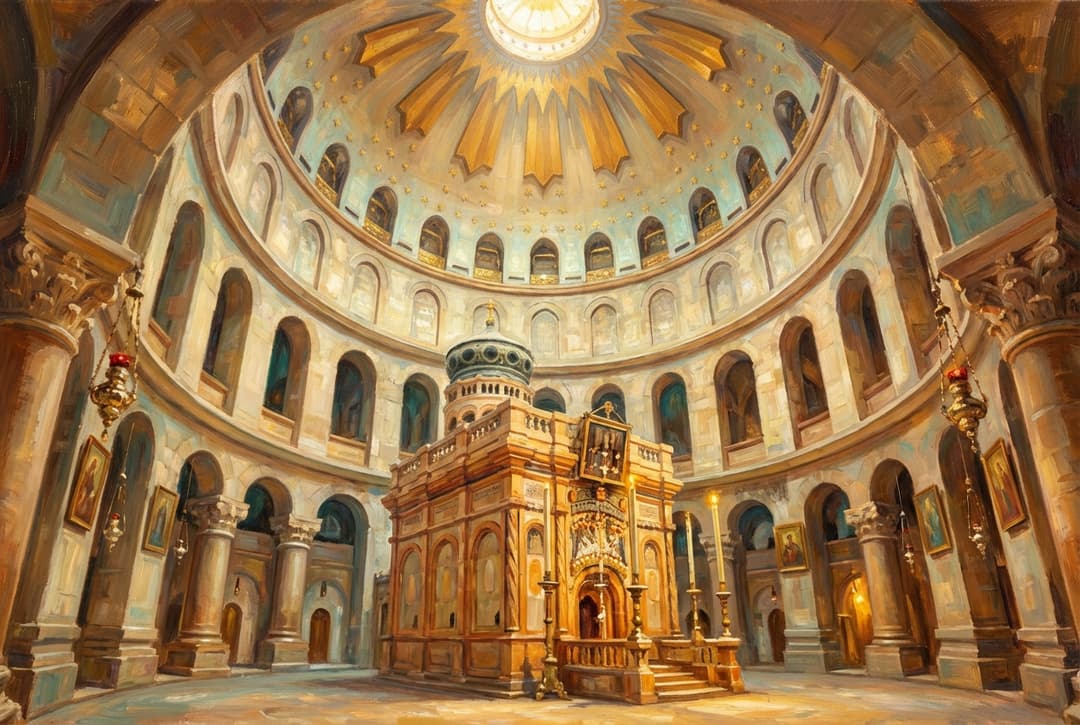
The Anastasis, or Rotunda, is the central space within the Church of the Holy Sepulchre, housing the Aedicule that enshrines the tomb of Jesus Christ. This space is a focal point of veneration and pilgrimage, drawing believers from around the world.
Aedicule
The Aedicule is the inner structure of the Holy Sepulchre, housing the tomb of Jesus Christ. This sacred space is the most revered site within the Church, symbolizing the resurrection of Jesus and the promise of eternal life.
Greek Orthodox Catholicon
The Greek Orthodox Catholicon is a central space for worship within the Church, used for liturgical services and other religious ceremonies. This space is adorned with icons, mosaics, and other sacred objects, creating a spiritual atmosphere.
Chapels and Oratories
Various chapels and oratories represent different Christian traditions within the Church, reflecting the shared custody of the site. These spaces are used for private prayer and smaller religious gatherings.
Temple Grounds
The grounds surrounding the Church of the Holy Sepulchre are limited, given its location within the Old City of Jerusalem. However, the courtyards and pathways provide space for pilgrims to gather and reflect. The surrounding buildings and streets contribute to the historical and cultural context of the site.
Additional Facilities
The Church of the Holy Sepulchre includes various facilities for pilgrims and visitors, including restrooms, information centers, and gift shops. These facilities are designed to enhance the visitor experience and provide practical support during their pilgrimage.
Similar Temples
Sources & Research
Every fact on Temples.org is backed by verified Sources & Research. Each piece of information is rated by source tier and confidence level.
View All Sources (5)
| Field | Source | Tier | Retrieved |
|---|---|---|---|
| About & Historical Background | Greek Orthodox Patriarchate of Jerusalem (opens in a new tab) | A | 2024-01-02 |
| Architectural Description | Madain Project (opens in a new tab) | B | 2024-01-02 |
| Architectural Description | Jewish Virtual Library (opens in a new tab) | B | 2024-01-02 |
| Interesting Facts | Pro Oriente (opens in a new tab) | B | 2024-01-02 |
| Interesting Facts | World Council of Churches (opens in a new tab) | A | 2024-01-02 |