Visitor Insights
Visiting Church of the Multiplication
Visiting the Church of the Multiplication offers a serene and spiritually enriching experience. Located on the tranquil shores of the Sea of Galilee, the church provides a peaceful atmosphere for reflection and contemplation. Visitors can explore the beautiful neo-Byzantine architecture, admire the ancient mosaics, and reflect on the biblical miracle that the church commemorates.
Highlights
- Admire the 5th-century mosaics, among the earliest examples of Christian figurative floor mosaics.
- Visit the limestone rock under the altar, believed to be where Jesus placed the loaves and fishes.
- Enjoy the peaceful setting on the shores of the Sea of Galilee.
Things to Know
- Dress modestly when visiting the church.
- Be aware of the church's opening hours, which vary on Sundays.
- Combine your visit with other nearby attractions around the Sea of Galilee.
Location
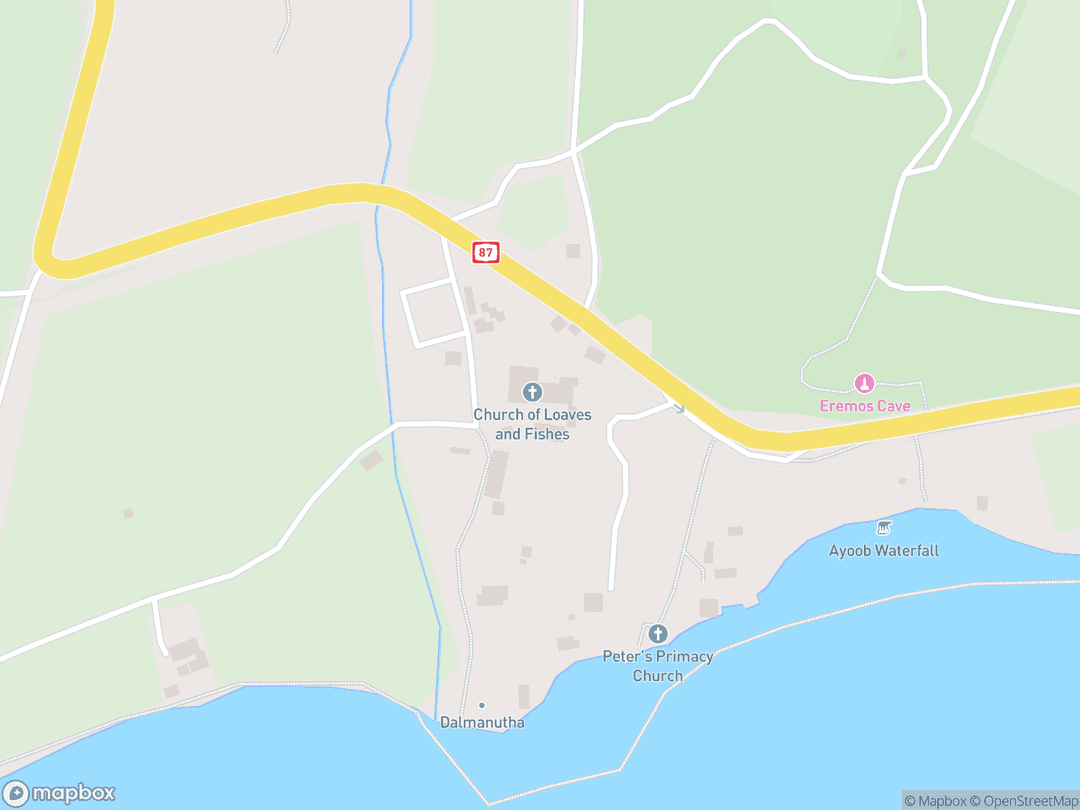
Tabgha, Israel
Hours: Monday to Saturday, 8:00 AM to 4:45 PM; Sunday, 11:00 AM to 4:45 PM
Getting There: The church is accessible by car or taxi. It can also be included as part of a guided tour of the Galilee region.
Get DirectionsTips for Your Visit
Best Time to Visit
Visit during the off-season or early in the morning to avoid crowds.
Dress Code
Dress modestly out of respect for the sacred nature of the site. Shoulders and knees should be covered.
About
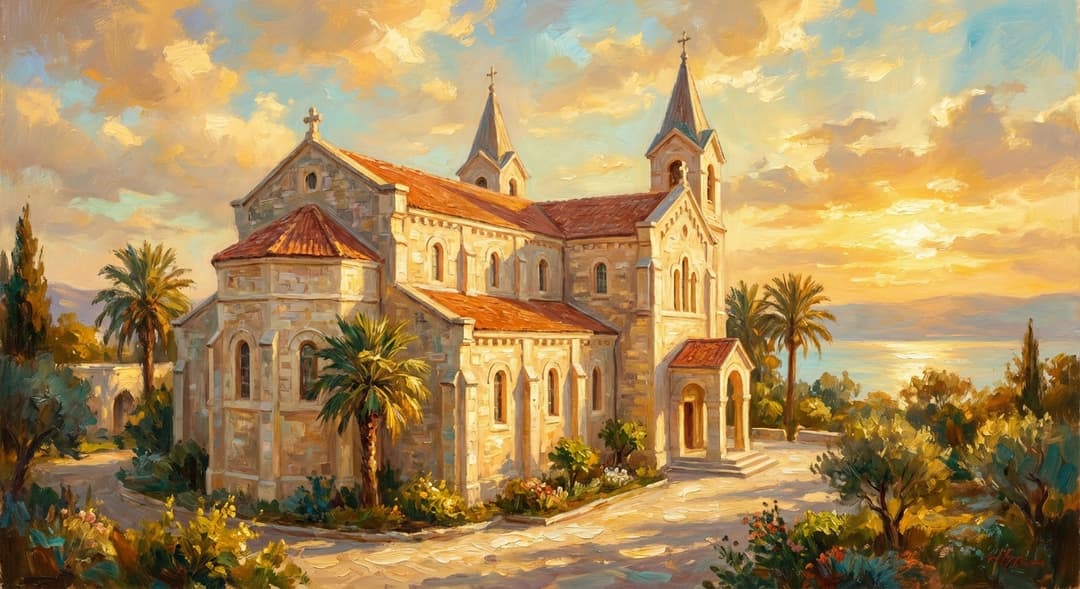
The Church of the Multiplication, also known as the Church of the Loaves and Fishes, is a Roman Catholic church located in Tabgha, on the northwest shore of the Sea of Galilee in Israel. This sacred site commemorates the biblical miracle where Jesus fed 5,000 people with only five loaves of bread and two fish, an event recounted in all four Gospels. The church stands as a testament to this profound act of generosity and divine provision.
The modern church is built upon the foundations of two earlier churches, with the earliest dating back to the 4th century. The site has been a place of Christian pilgrimage for centuries, drawing visitors from around the world who come to reflect on the miracle and experience the spiritual significance of the location. The preservation of ancient mosaics and architectural elements within the current structure provides a tangible link to the early Christian community.
Today, the Church of the Multiplication continues to serve as a place of worship and reflection. Its serene setting by the Sea of Galilee offers a peaceful environment for visitors to contemplate the teachings of Jesus and the enduring message of the miracle. The church's historical and religious importance makes it a significant landmark in the Holy Land.
Gallery
Symbolic Elements
The temple's exterior features intricate carvings, each rich with spiritual meaning:

Loaves and Fishes Mosaic
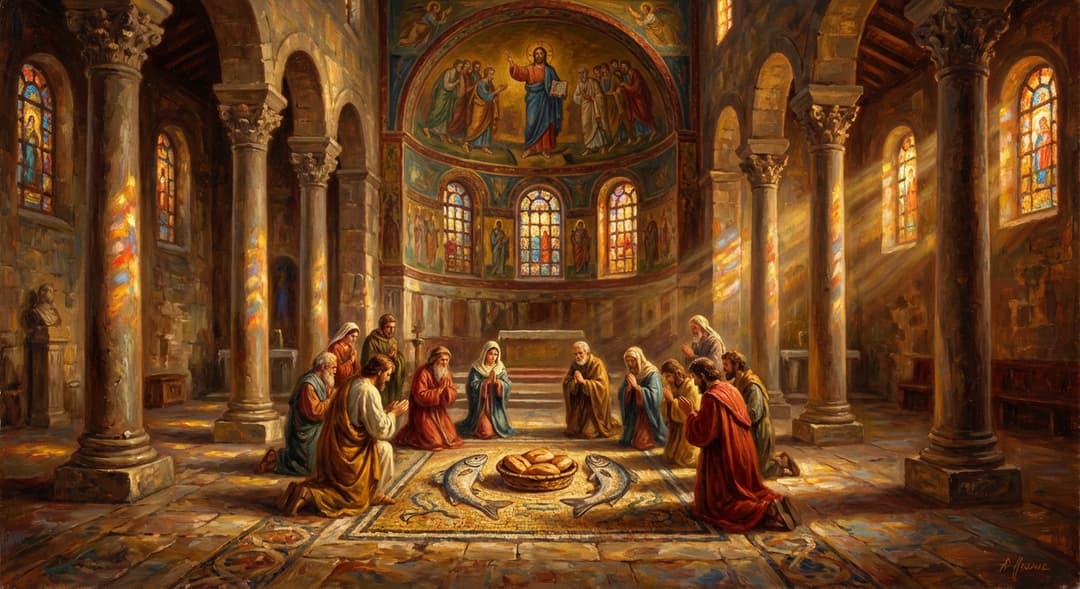
The mosaic in front of the altar depicts two fish flanking a basket containing four loaves of bread. This iconic image symbolizes the miracle of Jesus feeding 5,000 people and is a central element of the church's religious significance. The mosaic serves as a visual reminder of divine provision and the abundance of God's grace.
Limestone Rock Under the Altar
Beneath the altar lies a block of limestone, venerated as the stone on which the miraculous meal was laid. This stone is a focal point for pilgrims who visit the church, offering a tangible connection to the biblical event. It represents the physical location where Jesus blessed and broke the bread, making it a sacred object of reverence.
Neo-Byzantine Architecture
The church's neo-Byzantine architectural style reflects the historical influences of the Byzantine era. The design incorporates elements such as arches, domes, and intricate detailing, reminiscent of early Christian churches. This architectural style enhances the spiritual atmosphere of the church and connects it to the rich history of Christian art and architecture.
Alabaster Windows
The windows of the church are fitted with alabaster panels, which allow soft, diffused light to filter into the interior. Alabaster, a translucent mineral, creates a gentle and ethereal glow, enhancing the sense of peace and tranquility within the church. The use of alabaster adds to the overall aesthetic beauty and spiritual ambiance of the space.
Black Basalt Walls
Some of the ancient black basalt walls from the earlier churches have survived and remain visible in the current structure. These basalt walls provide a tangible link to the historical foundations of the site, connecting visitors to the early Christian community that worshipped there. The rugged texture and dark color of the basalt add a sense of antiquity and permanence to the church.

Wetland Bird Mosaics
The mosaics in the transepts depict various wetland birds and plants, including the lotus flower. These images suggest the artist's use of a Nilotic landscape, a popular motif in Roman and Early Byzantine art. The presence of these natural elements adds a layer of symbolic richness to the church, evoking themes of life, fertility, and the beauty of creation.
The Apse
The apse is a semi-circular recess, typically found at the east end of the church. It often houses the altar. In the Church of the Multiplication, the apse serves as a focal point for worship and reverence. Its design and decoration contribute to the overall spiritual atmosphere of the church, drawing attention to the sacred space where religious ceremonies are performed.

Seven Springs (Heptapegon)
The location of Tabgha itself, with its seven springs (Heptapegon), may also hold symbolic importance. While less directly tied to the Church's specific iconography, the presence of these springs could represent abundance and life-giving waters. The springs may have been a factor in choosing this location for the church, linking the miracle to the natural resources of the area.
Interesting Facts
The name Tabgha is derived from the Greek word 'Heptapegon,' meaning 'seven springs'.
The mosaic floor is one of the earliest known examples of figurative floor mosaics in Christian art in the Holy Land.
The lotus flower depicted in the mosaics is not indigenous to the area, suggesting the artist's familiarity with Nilotic landscapes.
The church was destroyed in 614 AD, likely during the Persian invasion, and its exact location was lost for over 1,300 years.
The current church was built to the same floor plan as the 5th-century Byzantine church.
The untrimmed stone preserved under the altar is believed to be the stone on which Jesus placed the loaves and fishes.
In 2015, an arson attack damaged an auxiliary building next to the church, but the church was restored and reopened in 2017.
The Benedictine order has administered the property since 1939.
The church's mosaics may reference the three original Byzantine water towers that once stood in Tabgha.
The Church of the Primacy of St. Peter is located nearby, commemorating Jesus' appearance to his disciples after his resurrection.
Common Questions
What is the significance of the Church of the Multiplication?
The Church of the Multiplication commemorates the biblical miracle where Jesus fed 5,000 people with only five loaves of bread and two fish. This event is a powerful symbol of divine provision and generosity, making the church a significant pilgrimage site for Christians.
When was the current church built?
The current church was completed and inaugurated in 1984. It was built on the same floor plan as the 5th-century Byzantine church, incorporating some of the ancient black basalt walls that have survived.
What are the famous mosaics in the church?
The church is renowned for its 5th-century mosaics, which are among the earliest known examples of figurative floor mosaics in Christian art in the Holy Land. The most famous mosaic depicts two fish flanking a basket containing four loaves of bread.
What happened to the church in 2015?
In 2015, an arson attack by Jewish extremists damaged an auxiliary building next to the church. The church was subsequently restored and reopened in February 2017.
Who administers the Church of the Multiplication?
The property has been administered by the Benedictine order as a daughter-house of the Dormition Abbey in Jerusalem since 1939.
What are the visiting hours for the church?
The church is open Monday to Saturday from 8:00 AM to 4:45 PM, and on Sunday from 11:00 AM to 4:45 PM.
Related Stories
Explore the rich history, traditions, and people connected to this sacred site.
Featured Stories
The Discovery of the Mosaics
1930s
In the 1930s, archaeological excavations at Tabgha unearthed the remarkable mosaic floors of the 5th-century Byzantine church. These mosaics, hidden for centuries beneath layers of earth and debris, revealed intricate depictions of loaves, fishes, and wetland birds. The discovery was a pivotal moment, confirming the site's historical and religious significance and providing invaluable insights into early Christian art and iconography.
The unearthing of the mosaics not only validated the biblical narrative but also showcased the artistic skill and cultural influences of the Byzantine era. The meticulous craftsmanship and vibrant imagery of the mosaics captivated scholars and visitors alike, solidifying the Church of the Multiplication's place as a treasure trove of early Christian heritage. The discovery sparked renewed interest in the site, leading to further research and preservation efforts.
Source: Archaeological records and historical accounts of the excavations at Tabgha.
The Arson Attack and Restoration
2015–2017
In 2015, the Church of the Multiplication faced a devastating act of vandalism when an arson attack damaged an auxiliary building next to the church. The attack, perpetrated by Jewish extremists, sent shockwaves through the local community and the international Christian world. The incident underscored the ongoing tensions and challenges faced by religious sites in the region.
Despite the damage, the church community rallied together, determined to restore the sacred site to its former glory. With the support of local authorities, international organizations, and countless volunteers, the church underwent extensive restoration work. In February 2017, the Church of the Multiplication reopened its doors, symbolizing resilience, reconciliation, and the enduring power of faith in the face of adversity.
Source: News reports and official statements regarding the arson attack and restoration efforts.
The Benedictine Order's Stewardship
1939–Present
Since 1939, the Benedictine order has played a vital role in the preservation and administration of the Church of the Multiplication. As a daughter-house of the Dormition Abbey in Jerusalem, the Benedictine monks have dedicated themselves to maintaining the site's religious integrity, welcoming pilgrims, and fostering a spirit of peace and contemplation. Their unwavering commitment has ensured that the church remains a beacon of faith and a place of spiritual renewal for generations to come.
The Benedictine order's stewardship extends beyond the physical upkeep of the church. They also engage in educational outreach, sharing the history and significance of the site with visitors from around the world. Through their hospitality and dedication, the monks embody the values of service, humility, and devotion, enriching the experience of all who come to the Church of the Multiplication.
Source: Records and accounts of the Benedictine order's involvement with the Church of the Multiplication.
Timeline
First Church Built
A small chapel was built by Joseph of Tiberias to commemorate the miracle of the loaves and fishes.
MilestoneEgeria's Visit
The Spanish pilgrim Egeria visited the church and described it in her writings.
EventChurch Enlarged
The church was significantly enlarged and floor mosaics were added, attributed to Patriarch Martyrius of Jerusalem.
RenovationDestruction of the Byzantine Church
The Byzantine church was destroyed, likely during the Persian invasion.
RenovationSite Acquired
The German Catholic Society for Palestine acquired the site.
MilestoneArchaeological Surveys Begin
Archaeological surveys began, leading to the discovery of the mosaic floors.
EventFull Excavations Started
Full excavations started, revealing the foundations of the 4th-century chapel.
EventBenedictine Administration
The property has been administered by the Benedictine order as a daughter-house of the Dormition Abbey in Jerusalem.
MilestoneCurrent Church Built
The current church was completed and inaugurated, built on the same floor plan as the 5th-century Byzantine church.
DedicationArson Attack
An arson attack by Jewish extremists damaged an auxiliary building next to the church.
RenovationChurch Reopened
The church was reopened after restoration work following the arson attack.
DedicationEarly Christian Pilgrimage
The site becomes an important destination for early Christian pilgrims, drawn by the significance of the miracle.
EventMosaic Art Flourishes
The church's mosaic floors become renowned as some of the earliest examples of Christian figurative art in the Holy Land.
EventShrine Lost
The site of the shrine was lost for about 1,300 years after the destruction of the Byzantine church.
EventArchitecture & Facilities
Neo-Byzantine architecture characterized by thick stone walls, rounded arches, a modest stone facade, and a traditional basilica plan with ancient mosaic floors depicting flora and fauna of the Sea of Galilee region.
Building Materials
Limestone
The primary building material, providing a bright and airy atmosphere.
Basalt
Dark volcanic stone from the original 4th and 5th-century churches, used in the foundations and some walls.
Wood
Used for the open truss roof, adding warmth and acoustics to the space.
Similar Temples
Sources & Research
Every fact on Temples.org is backed by verified Sources & Research. Each piece of information is rated by source tier and confidence level.
View All Sources (4)
| Field | Source | Tier | Retrieved |
|---|---|---|---|
| About & Historical Background | Sacred Destinations (opens in a new tab) | B | 2024-01-02 |
| About & Historical Background | www.gov.il (opens in a new tab) | A | 2024-01-02 |
| Architectural Description & Mosaics | Bein Harim Tours (opens in a new tab) | A | 2024-01-02 |
| Historical Timeline | Jewish Virtual Library (opens in a new tab) | B | 2024-01-02 |