Visitor Insights
Visiting Church of the Holy Sepulchre
Visiting the Church of the Holy Sepulchre is a deeply moving experience for many, offering a tangible connection to the foundational events of Christianity. Expect a bustling atmosphere filled with pilgrims and tourists from around the world, creating a vibrant, yet often crowded, environment. The air is thick with incense and the sounds of prayer, fostering a sense of reverence and spiritual reflection. Be prepared for queues, especially at popular sites like the Aedicule and Calvary, and dress modestly out of respect for the sacred nature of the space.
Highlights
- Witness the Aedicule, the shrine enclosing the tomb of Jesus.
- Visit Calvary (Golgotha), the site of Jesus' crucifixion.
- Experience the diverse Christian traditions present within the church.
Things to Know
- Modest dress is required (shoulders and knees covered).
- Be prepared for crowds, especially during peak seasons and religious holidays.
- Photography may be restricted in certain areas.
Location
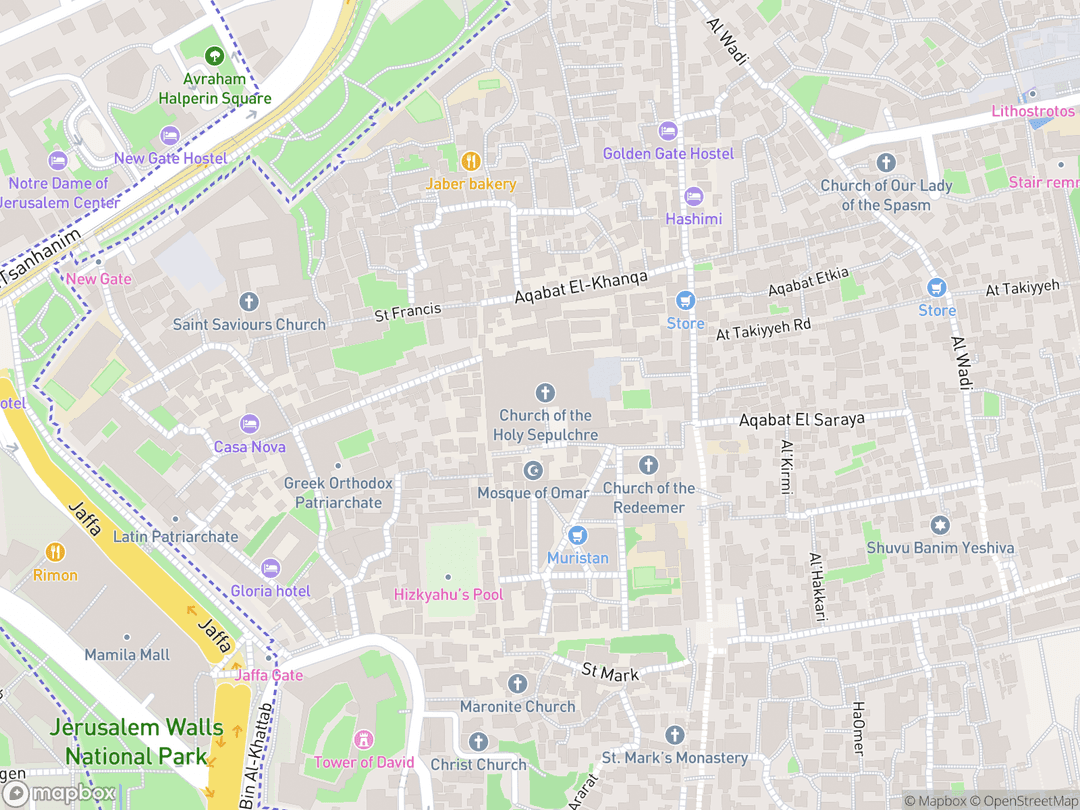
Christian Quarter, Old City of Jerusalem, Israel
Hours: Vary depending on the season; generally open from early morning to evening. Check the official website for current hours.
Getting There: The church is located in the Christian Quarter of the Old City of Jerusalem and is accessible on foot through the Jaffa Gate, the New Gate, or the Damascus Gate.
Get DirectionsTips for Your Visit
Arrive Early
Visit early in the morning to avoid the largest crowds.
Dress Modestly
Ensure shoulders and knees are covered out of respect for the sacred site.
About
The Church of the Holy Sepulchre, also known as the Church of the Resurrection, stands in the Christian Quarter of the Old City of Jerusalem as the most sacred site in Christendom. It encompasses the sites of Jesus Christ's crucifixion at Calvary (Golgotha), his burial, and his resurrection, making it a focal point of Christian pilgrimage and worship for centuries. The church's history is a complex tapestry of construction, destruction, and restoration, reflecting the tumultuous history of Jerusalem itself.
The original church was commissioned by Emperor Constantine I in 325/326 AD, following the identification of the site as Golgotha by his mother, Helena. Consecrated in 335 AD, this early basilica marked a turning point in the Christianization of the Roman Empire. Over the centuries, the church faced numerous challenges, including destruction by Persians in 614 AD and by the caliph al-Hakim bi-Amr Allah in 1009. Each time, the church was rebuilt and restored, often with the support of Byzantine emperors and, later, the Crusaders, who completed a major rebuilding in 1149.
Today, the Church of the Holy Sepulchre is a synthesis of architectural styles, reflecting its long and varied history. It is simultaneously the seat of the Armenian Patriarchate of Jerusalem, the Greek Orthodox Patriarchate of Jerusalem, and the Catholic Latin Patriarchate of Jerusalem, a testament to its enduring significance and the diverse Christian traditions that have shaped its identity. The current structure dates mainly from 1810, with ongoing restoration efforts aimed at preserving this sacred site for future generations.
Gallery
Symbolic Elements
The temple's exterior features intricate carvings, each rich with spiritual meaning:

The Aedicule
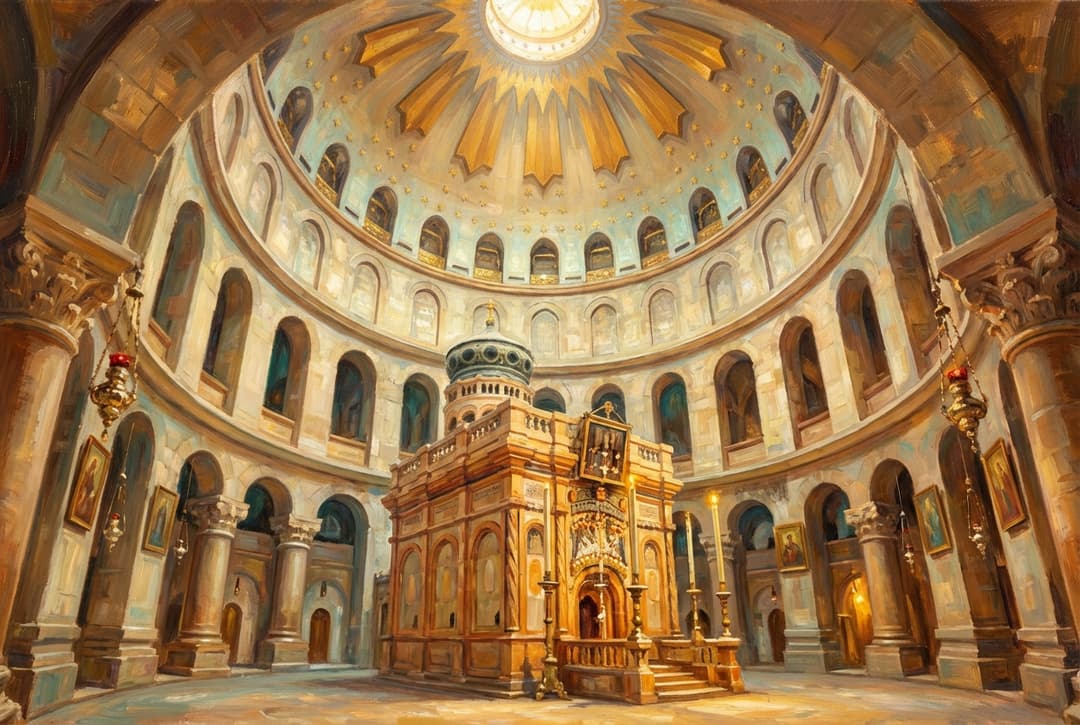
The Aedicule is a small chapel that encloses the tomb of Jesus. The current structure dates from 1810 and was built in an Ottoman Baroque style. It represents the resurrection of Jesus, the cornerstone of Christian faith, and serves as the focal point for pilgrims visiting the church.
Calvary (Golgotha)
Calvary, also known as Golgotha, is the site of Jesus' crucifixion, located inside the church. This elevated area is revered as the place where Jesus made the ultimate sacrifice for humanity, symbolizing redemption and the forgiveness of sins. Pilgrims often kneel and pray at this sacred spot, reflecting on the profound significance of the crucifixion.

The Stone of Anointing
The Stone of Anointing is believed to be where Jesus' body was prepared for burial. This rectangular stone is a place of veneration, where pilgrims often kneel and touch the stone, offering prayers and reflecting on the events following Jesus' crucifixion. The stone represents the preparation of Jesus' body for burial and the love and care shown to him.

The Rotunda
The Rotunda features a domed ceiling and contains the Aedicule. The dome represents heaven, or the domain of God, and its architectural design creates a sense of awe and reverence. The Rotunda serves as a central gathering place for worship and reflection, connecting the earthly realm with the divine.

The Bell Tower
The Bell Tower was added during the Crusader period and stands as a prominent feature of the church's skyline. The tower serves as a symbol of Christian presence in Jerusalem and a call to worship for believers. Its architectural style reflects the historical influences of the Crusades and the enduring legacy of Christian faith in the region.

The Katholikon
The Katholikon is the main Orthodox cathedral within the Church of the Holy Sepulchre. Its name means 'universal' or 'catholic', and it serves as the center of Orthodox worship within the complex. The Katholikon is richly decorated with icons, mosaics, and chandeliers, creating a space of profound spiritual significance for Orthodox Christians.
The Crusader Architecture
The Crusader architecture, particularly the Romanesque style, is evident in various parts of the church. This architectural influence reflects the period when the Crusaders controlled Jerusalem and made significant additions and renovations to the church. The sturdy stone construction and rounded arches are characteristic of Romanesque design, adding to the church's historical and artistic significance.
Interesting Facts
The Church of the Holy Sepulchre is one of the oldest Christian churches in the world, with origins dating back to the 4th century AD.
The church is managed by several Christian denominations, including the Greek Orthodox, Roman Catholic, and Armenian Apostolic churches.
The Stone of Anointing is covered with a decorative canopy gifted by Ethiopian Emperor Haile Selassie in 1959.
The Ethiopian Orthodox Church has a monastery located on the rooftop of the church.
The church has two prominent domes: the larger dome covers the Katholikon, and the smaller dome covers the Aedicule.
All of Jerusalem's kings up to 1187 (except Queen Melisende) were buried in the Calvary Chapel.
The church has been a center of pilgrimage for centuries, attracting millions of visitors worldwide.
The church was built on the site of a former temple to the deity Aphrodite, built by the Emperor Hadrian.
Common Questions
What is the significance of the Church of the Holy Sepulchre?
The Church of the Holy Sepulchre is considered the holiest site in Christianity, encompassing the sites of Jesus Christ's crucifixion, burial, and resurrection. It is a focal point of Christian pilgrimage and worship.
Who manages the Church of the Holy Sepulchre?
The church is managed by several Christian denominations, including the Greek Orthodox, Roman Catholic, Armenian Apostolic, Coptic Orthodox, Ethiopian Orthodox, and Syriac Orthodox churches.
What are the opening hours of the Church of the Holy Sepulchre?
The opening hours vary depending on the season, but the church is generally open from early morning to evening. It is advisable to check the official website for current hours.
Is there a dress code for visiting the Church of the Holy Sepulchre?
Yes, modest clothing is required. Shoulders and knees should be covered out of respect for the sacred nature of the site.
What is the best time to visit the Church of the Holy Sepulchre?
The best time to visit is early morning or late evening to avoid the largest crowds. Be prepared for queues, especially at popular sites like the Aedicule and Calvary.
Related Stories
Explore the rich history, traditions, and people connected to this sacred site.
Featured Stories
The Discovery of the True Cross
4th Century AD
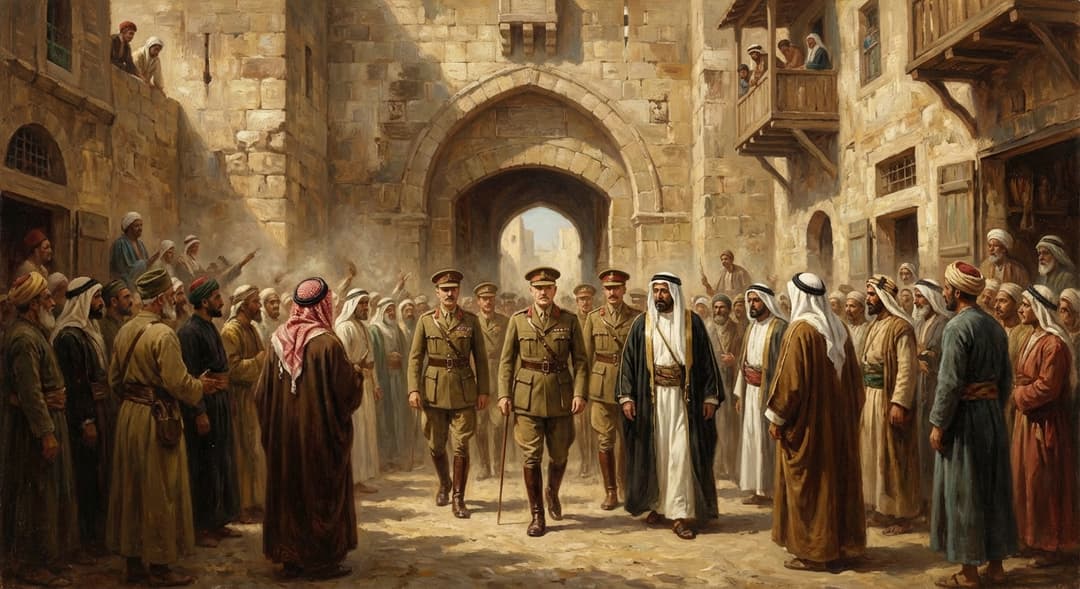
According to tradition, Helena, the mother of Emperor Constantine, embarked on a pilgrimage to Jerusalem in the 4th century AD to locate the sacred sites of Christianity. Her search led her to the site of the Holy Sepulchre, where she oversaw excavations that purportedly uncovered the True Cross, the cross upon which Jesus Christ was crucified. This discovery was a pivotal moment in Christian history, solidifying the church's significance as the holiest site in Christendom.
The discovery of the True Cross transformed the site into a major pilgrimage destination, attracting believers from across the Roman Empire and beyond. The relics of the cross were venerated and distributed, further spreading the story of Helena's discovery and the sacredness of the Holy Sepulchre. This event cemented the church's place as the heart of Christian faith and a symbol of the enduring power of the crucifixion.
Source: Historical accounts and church traditions
The Agreement of the Status Quo
18th Century
Over centuries, control and maintenance of the Church of the Holy Sepulchre became a complex issue, with various Christian denominations vying for influence. To prevent conflicts and maintain peace, the Status Quo agreement was established in the 18th century. This agreement defined the rights and responsibilities of each denomination within the church, including the Greek Orthodox, Armenian Apostolic, and Roman Catholic churches.
The Status Quo agreement remains in effect today, governing the division of space and the scheduling of religious ceremonies within the church. While it has helped to prevent major conflicts, it has also led to occasional disputes and challenges in coordinating maintenance and restoration efforts. The agreement stands as a testament to the delicate balance of power and the enduring importance of the Holy Sepulchre to multiple Christian traditions.
Source: Historical records and agreements between Christian denominations
The Restoration of the Aedicule
2016–2017
In 2016, the three main Christian communities—Greek Orthodox, Franciscan Order, and Armenian Church—reached a historic agreement to undertake a major restoration of the Aedicule, the shrine enclosing the tomb of Jesus. The structure had been in need of repair for decades, and the project aimed to stabilize and preserve this sacred space for future generations. The restoration involved removing centuries of accumulated grime and reinforcing the structure against earthquakes.
The completion of the Aedicule's restoration in 2017 was a moment of celebration for Christians worldwide. The restored shrine revealed the beauty of the original stonework and provided a renewed sense of reverence for the site of Jesus' resurrection. The project demonstrated the possibility of cooperation between different Christian traditions in preserving their shared heritage and maintaining the sanctity of the Holy Sepulchre.
Source: News reports and official statements from the Christian communities
Timeline
Site as a Rock Quarry and Roman Temple
The site was originally a rock quarry. Around 135 AD, the Roman Emperor Hadrian built a temple to Jupiter or Venus on the site.
MilestoneConstantine I Commissions the First Church
Emperor Constantine I commissioned the building of the first Church of the Holy Sepulchre after his mother, Helena, identified the site as Golgotha.
MilestoneConsecration of the First Church
The first Church of the Holy Sepulchre was consecrated, marking a significant moment in the Christianization of the Roman Empire.
DedicationChurch Burned by the Persians
The church was burned by the Persians, causing significant damage to the structure.
RenovationDestruction by Caliph al-Hakim bi-Amr Allah
The church was destroyed by the caliph al-Hakim bi-Amr Allah, leading to a period of reconstruction.
RenovationReconstruction Funded by Byzantine Emperors
Byzantine emperors, including Constantine IX Monomachos, funded a reconstruction of the church, completed in 1048.
RenovationCrusaders Complete General Rebuilding
The Crusaders carried out a general rebuilding of the church, furnishing it in Romanesque style and adding a bell tower.
RenovationStatus Quo Agreement Signed
The Status Quo agreement was signed, defining the division of the site among six Christian denominations.
EventPresent Church Dates Mainly from This Period
The present church dates mainly from 1810, following renovations and restorations.
RenovationEthiopian Emperor Gifts Canopy
The Stone of Anointing is covered with a decorative canopy gifted by Ethiopian Emperor Haile Selassie.
EventRestoration Plan Agreed Upon
The three main Christian communities (Greek Orthodox, Franciscan Order, and Armenian Church) agreed to a restoration plan for the Edicule.
RenovationRestoration of the Edicule Completed
The restoration of the Edicule was completed before Easter, preserving this sacred site.
RenovationHelena Identifies Golgotha
Helena, mother of Constantine I, identifies the site as Golgotha, leading to the construction of the first church.
MilestoneCrusader Additions
Crusaders add Romanesque elements and a bell tower during their rebuilding efforts.
RenovationSimilar Temples
Sources & Research
Every fact on Temples.org is backed by verified Sources & Research. Each piece of information is rated by source tier and confidence level.
View All Sources (9)
| Field | Source | Tier | Retrieved |
|---|---|---|---|
| Basic Facts & Historical Timeline | The Church of the Holy Sepulchre (opens in a new tab) | A | 2024-02-29 |
| Architectural Description & Symbolic Elements | Britannica (opens in a new tab) | B | 2024-02-29 |
| Visitor Information & Interesting Facts | El Al Airlines (opens in a new tab) | C | 2024-02-29 |
| Historical Timeline & Restoration | World Monuments Fund (opens in a new tab) | B | 2024-02-29 |
| Historical Overview & Significance | History Hit (opens in a new tab) | B | 2024-02-29 |
| Architectural Details & Chapels | Museum WNF (opens in a new tab) | B | 2024-02-29 |
| Opening Hours | thechurchoftheholysepulchre.com (opens in a new tab) | D | 2024-02-29 |
| Historical Timeline | churchoftheholysepulchre.net (opens in a new tab) | A | 2024-02-29 |
| Visiting the Church | Backpack Israel (opens in a new tab) | C | 2024-02-29 |