Visitor Insights
Visiting Mount of Olives
Visiting the Mount of Olives offers a profound experience, blending historical exploration with spiritual reflection. The atmosphere is serene, with panoramic views of Jerusalem creating a powerful backdrop. Expect to encounter significant religious sites, ancient burial grounds, and diverse architectural landmarks. Practical considerations include comfortable walking shoes, as the terrain can be uneven, and respecting the religious customs of the area.
Highlights
- Panoramic views of Jerusalem's Old City
- The Garden of Gethsemane, a site of profound religious significance
- The Church of All Nations with its stunning gold mosaic
Things to Know
- Dress modestly when visiting religious sites.
- Be prepared for walking on uneven terrain.
- Check opening hours for specific churches and sites.
Location
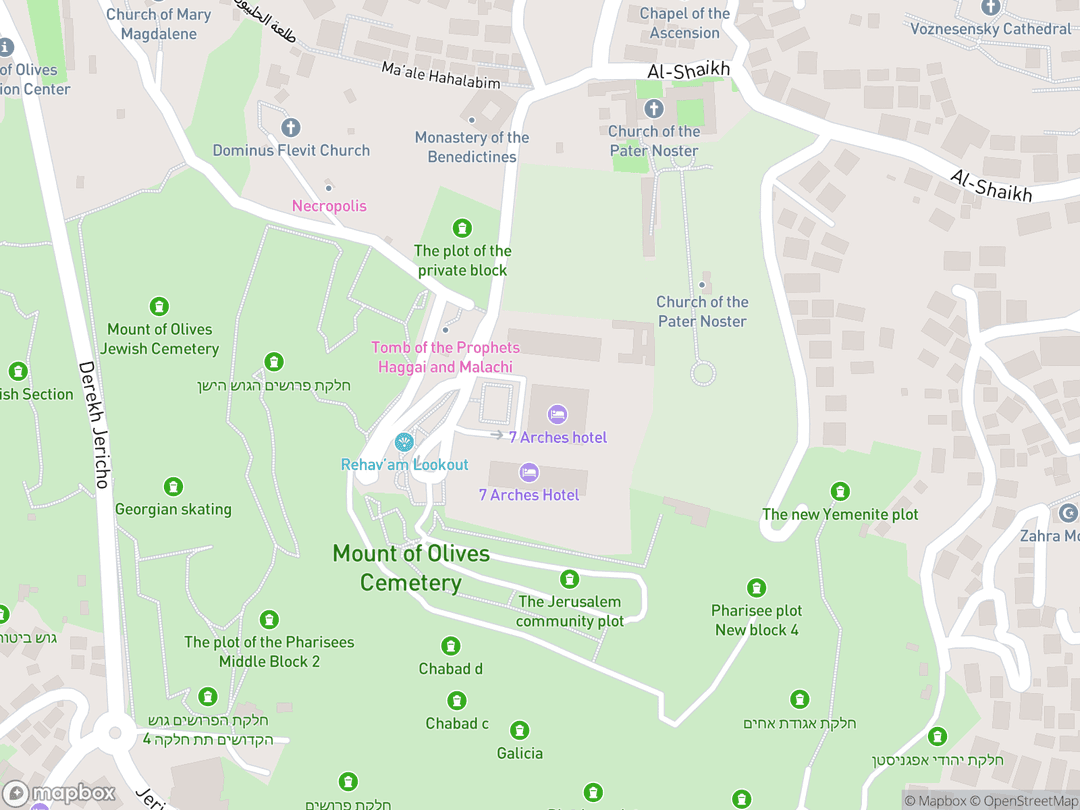
Mount of Olives, East Jerusalem, Israel
Hours: Vary by site; check individual locations for details.
Getting There: Accessible by walking or bus from the city center.
Get DirectionsTips for Your Visit
Wear Comfortable Shoes
The Mount of Olives involves a lot of walking, often on uneven ground.
Dress Modestly
When visiting religious sites, dress respectfully to honor local customs.
About
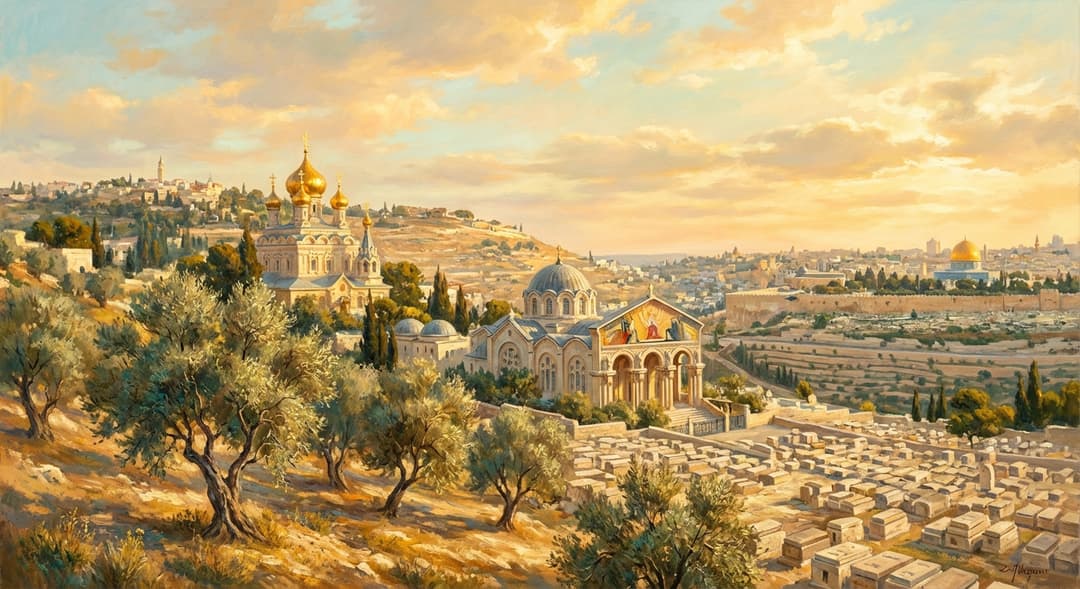
The Mount of Olives, located in East Jerusalem near the Old City, is a site of immense religious and historical significance. Named for the olive groves that once covered its slopes, it holds a prominent place in Judaism, Christianity, and Islam. In Christianity, it is particularly revered as the location of several key events in the life of Jesus, as narrated in the Gospels.
Throughout history, the Mount of Olives has been a focal point for religious ceremonies, burials, and pivotal moments in biblical narratives. From King David's flight from Absalom to Jesus's triumphal entry into Jerusalem, the Mount has witnessed significant events that have shaped religious traditions. Its slopes are adorned with numerous churches, monasteries, and the oldest Jewish cemetery in Jerusalem, reflecting its diverse religious heritage.
Today, the Mount of Olives remains a vibrant religious site, attracting pilgrims and visitors from around the world. Its panoramic views of Jerusalem, coupled with its rich historical and spiritual legacy, make it a compelling destination for those seeking to connect with the past and explore the intersection of faith and history. The area includes residential areas and continues to be a site of reverence and reflection.
Gallery
Symbolic Elements
The temple's exterior features intricate carvings, each rich with spiritual meaning:

Garden of Gethsemane
The Garden of Gethsemane is a place of profound spiritual significance, known as the site where Jesus prayed before his crucifixion. Olive trees, some of which are centuries old, stand as silent witnesses to the events that unfolded there. The garden symbolizes Jesus's agony, obedience, and ultimate sacrifice for humanity.

Church of All Nations
The Church of All Nations, also known as the Basilica of the Agony, stands as a testament to the universal appeal of Christianity. Its stunning gold mosaic facade depicts Jesus as the mediator between God and humanity. The church commemorates Jesus's suffering in the Garden of Gethsemane and serves as a place of prayer and reflection for pilgrims from around the world.

Church of Mary Magdalene
The Church of Mary Magdalene, with its distinctive Russian Revival architecture and gilded onion domes, is a striking landmark on the Mount of Olives. Built by Tsar Alexander III in honor of his mother, the church commemorates Mary Magdalene, a devoted follower of Jesus. Its unique design and serene atmosphere make it a place of beauty and spiritual contemplation.

Dominus Flevit Church
The Dominus Flevit Church, shaped like a teardrop, commemorates the moment when Jesus wept over Jerusalem, foreseeing its destruction. Its design reflects the sorrow and compassion that Jesus felt for the city and its inhabitants. The church offers panoramic views of Jerusalem and serves as a reminder of the importance of empathy and understanding.

Jewish Cemetery
The Jewish cemetery on the Mount of Olives is the oldest and most important Jewish cemetery in Jerusalem, with a history spanning over 3,000 years. It is believed to be the place where the Messiah will appear, and the resurrection of the dead will begin. The cemetery serves as a sacred burial ground and a symbol of Jewish continuity and hope.

Olive Trees
The olive trees on the Mount of Olives are not only a source of the mountain's name but also a symbol of peace, resilience, and divine blessing. Some of these trees are centuries old, bearing witness to the passage of time and the enduring significance of the Mount. They represent the connection between the land, its people, and their faith.

Panoramic View of Jerusalem
The panoramic view of Jerusalem from the Mount of Olives is a breathtaking sight that connects visitors to the city's rich history and spiritual significance. From this vantage point, one can see the Old City walls, the Dome of the Rock, and other iconic landmarks. The view serves as a reminder of Jerusalem's central role in Judaism, Christianity, and Islam.

Kidron Valley
The Kidron Valley, separating the Mount of Olives from the Old City, holds historical and religious significance. It is mentioned in the Bible and is believed to be the site of future judgment. The valley adds to the dramatic landscape of the area and serves as a physical and symbolic boundary between the Mount and the city.
Interesting Facts
The Mount of Olives is one of three peaks of a mountain ridge.
It is separated from the Old City by the Kidron Valley.
The Jewish cemetery on the Mount of Olives is the oldest and most important Jewish cemetery in Jerusalem.
The cemetery contains an estimated 150,000 graves.
Several key events in the life of Jesus took place on the Mount of Olives.
The Mount of Olives is mentioned in both the Old and New Testaments.
The Messiah is believed to appear here on the Day of Judgment in Jewish tradition.
The Church of Mary Magdalene was built by Tsar Alexander III in honor of his mother.
The Mount of Olives offers an unrivaled vista of the Old City and its environs.
The Mount of Olives has been a site of Christian worship since ancient times.
Common Questions
What is the significance of the Mount of Olives in Christianity?
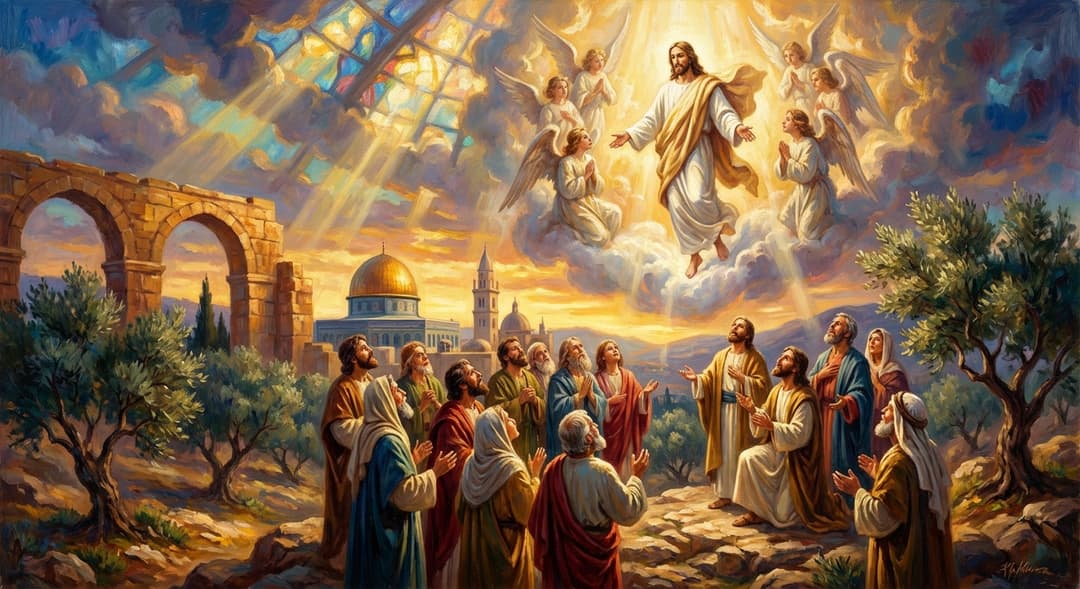
The Mount of Olives is significant in Christianity as the location of several key events in the life of Jesus, including his triumphal entry into Jerusalem, his agony in the Garden of Gethsemane, and his ascension into heaven. It is a revered site for Christian pilgrims and a place of deep spiritual importance.
Why is the Mount of Olives important in Judaism?
In Judaism, the Mount of Olives is significant as a traditional Jewish burial location for over 3,000 years. It is also believed to be the place where the Messiah will appear, and the resurrection of the dead will begin. The Jewish cemetery on the Mount of Olives is the oldest and most important Jewish cemetery in Jerusalem.
What are some of the key architectural landmarks on the Mount of Olives?
Key architectural landmarks on the Mount of Olives include the Church of All Nations, the Church of Mary Magdalene, the Church of the Pater Noster, the Dominus Flevit Church, and the Russian Orthodox Church of the Ascension. These churches represent various architectural styles and reflect the diverse religious heritage of the Mount.
How can visitors access the Mount of Olives?
Visitors can access the Mount of Olives by walking or by bus from the city center of Jerusalem. The Mount is located just east of the Old City and is easily accessible for those wishing to explore its religious and historical sites.
What should visitors consider when planning a trip to the Mount of Olives?
Visitors should consider wearing comfortable shoes, as the terrain can be uneven. It is also important to dress modestly when visiting religious sites. Checking the opening hours for specific churches and sites is advisable, as they may vary. Respecting the religious customs of the area is essential for a meaningful visit.
Related Stories
Explore the rich history, traditions, and people connected to this sacred site.
Featured Stories
Jesus's Agony in the Garden of Gethsemane
New Testament Era
In the Garden of Gethsemane, nestled on the slopes of the Mount of Olives, Jesus experienced profound agony as he prayed before his crucifixion. Knowing the immense suffering that awaited him, he pleaded with his Father, saying, 'Father, if you are willing, take this cup from me; yet not my will, but yours be done.' This moment of intense spiritual struggle highlights Jesus's humanity and his unwavering commitment to fulfilling God's will.
The Garden of Gethsemane, with its ancient olive trees, stands as a silent witness to this pivotal event in Christian history. Pilgrims from around the world visit this sacred site to reflect on Jesus's sacrifice and to find solace in his example of obedience and faith. The garden serves as a reminder of the power of prayer and the importance of surrendering to God's plan, even in the face of adversity.
Source: The Gospels
The Triumphal Entry into Jerusalem
Palm Sunday
On Palm Sunday, Jesus began his triumphal entry into Jerusalem from the Mount of Olives, riding on a donkey as crowds of people lined the road, waving palm branches and shouting, 'Hosanna to the Son of David! Blessed is he who comes in the name of the Lord!' This event marked Jesus's arrival as the Messiah and fulfilled ancient prophecies. The Mount of Olives served as the starting point for this momentous occasion, symbolizing Jesus's humble yet triumphant entrance into the city.
The waving of palm branches and the shouts of 'Hosanna' reflected the people's hope and expectation that Jesus would deliver them from Roman oppression. However, Jesus's entry on a donkey, rather than a warhorse, signified his role as a peaceful and compassionate leader. The Triumphal Entry is celebrated by Christians worldwide as a reminder of Jesus's messianic mission and his ultimate sacrifice for humanity.
Source: The Gospels
The Weeping Over Jerusalem
New Testament Era
As Jesus approached Jerusalem from the Mount of Olives, he wept over the city, foreseeing its destruction and the suffering that would befall its inhabitants. He lamented, 'If you, even you, had only known on this day what would bring you peace—but now it is hidden from your eyes.' This moment of profound sorrow reveals Jesus's deep love for Jerusalem and his concern for its future.
The Dominus Flevit Church, shaped like a teardrop, commemorates this event and serves as a reminder of the importance of empathy and compassion. Jesus's weeping over Jerusalem reflects his understanding of the consequences of rejecting God's message and his desire for the city to embrace peace and righteousness. The story encourages believers to mourn for the suffering of others and to work towards reconciliation and healing.
Source: The Gospels
Timeline
Mentioned in the Old Testament
The Mount of Olives is mentioned in connection with King David's flight from Absalom.
MilestoneSite of Religious Ceremonies
The Mount of Olives was a site of various religious ceremonies during the Second Temple Period.
EventKey Events in the Life of Jesus
Several key events in the life of Jesus occurred on the Mount of Olives, including his triumphal entry into Jerusalem and prayer in the Garden of Gethsemane.
EventConstruction of Churches and Monasteries
Numerous churches and monasteries were built on the Mount of Olives during the Byzantine Period.
MilestoneJewish Burials Continued
Jewish burials continued on the southern slopes of the Mount of Olives during these periods.
EventThe Jewish Cemetery Takes Shape
The Jewish cemetery on the Mount of Olives began to take its present shape.
MilestoneUnder Jordanian Rule
During this time, the cemetery suffered damage, and Israelis were not allowed to visit the Mount of Olives.
RenovationUnder Israeli Rule
The Mount of Olives came under Israeli rule after the Six-Day War.
MilestoneChurch of Mary Magdalene Construction
Construction began on the Church of Mary Magdalene, built by Tsar Alexander III.
MilestoneTriumphal Entry into Jerusalem
Jesus began his triumphal entry into Jerusalem on Palm Sunday from the Mount of Olives.
EventJesus's Agony and Prayer
Jesus experienced his agony and prayed in the Garden of Gethsemane before his crucifixion.
EventJesus's Ascension into Heaven
The Mount of Olives is traditionally believed to be the location from which Jesus ascended into heaven.
EventJesus Foresees Jerusalem's Destruction
Jesus wept over Jerusalem, foreseeing its destruction, while on the Mount of Olives.
EventJewish Cemetery
The Jewish cemetery on the Mount of Olives continues to be a significant burial site.
EventChristian Pilgrimage Site
The Mount of Olives remains a popular pilgrimage site for Christians worldwide.
EventSimilar Temples
Sources & Research
Every fact on Temples.org is backed by verified Sources & Research. Each piece of information is rated by source tier and confidence level.
View All Sources (11)
| Field | Source | Tier | Retrieved |
|---|---|---|---|
| About & Historical Background | latitude.to (opens in a new tab) | A | 2024-02-29 |
| About & Historical Background | Britannica (opens in a new tab) | B | 2024-02-29 |
| About & Historical Background | SeeTheHolyLand.net (opens in a new tab) | C | 2024-02-29 |
| Historical Timeline | Jewish Virtual Library (opens in a new tab) | B | 2024-02-29 |
| Historical Timeline | BibleHub (opens in a new tab) | B | 2024-02-29 |
| Architectural Description | Bein Harim Tours (opens in a new tab) | D | 2024-02-29 |
| Symbolic Elements | Holy Land Tours Travel (opens in a new tab) | B | 2024-02-29 |
| Visitor Information | Backpack Israel (opens in a new tab) | D | 2024-02-29 |
| Interesting Facts | Medium (opens in a new tab) | B | 2024-02-29 |
| 1948-1967 | Madain Project (opens in a new tab) | B | 2024-02-29 |
| Post-1967 | Sarel Academy (opens in a new tab) | D | 2024-02-29 |