Visitor Insights
Visiting Mount of Temptation
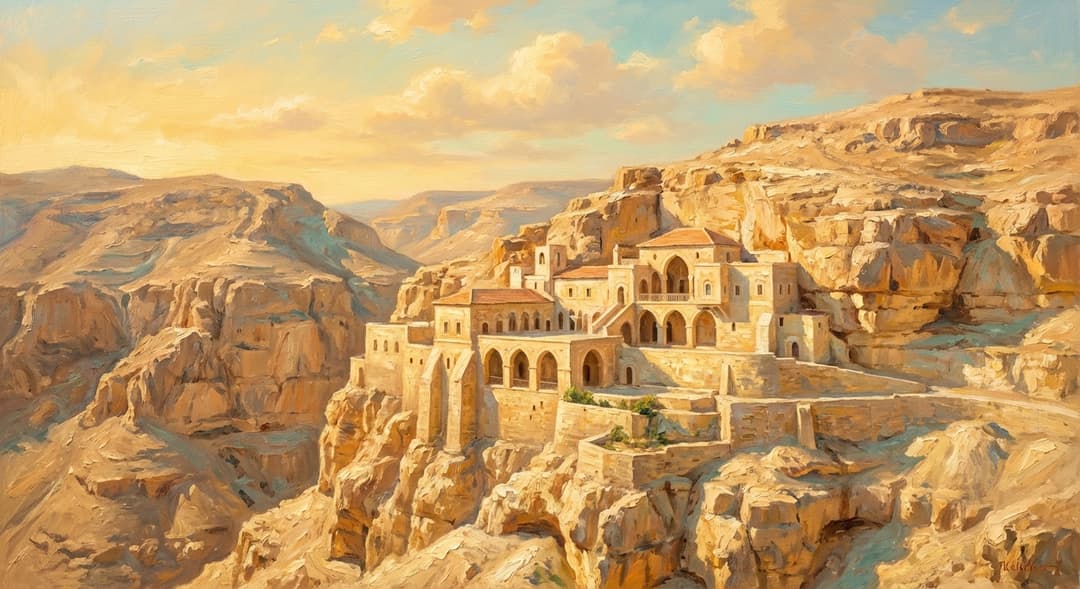
Visiting the Mount of Temptation offers a unique opportunity to connect with a pivotal moment in Christian history. The site exudes a sense of serenity and spiritual significance, inviting contemplation and reflection. Whether you choose to hike the ancient path or ascend by cable car, the panoramic views from the summit are breathtaking, encompassing the Jordan Valley, the Dead Sea, and the distant mountains.
Highlights
- Explore the Greek Orthodox Monastery of the Temptation, built into the cliffside.
- Visit the cave chapel, believed to be the site of Jesus's first temptation.
- Enjoy panoramic views of the Jordan Valley and surrounding landscapes.
Things to Know
- The hike to the monastery is steep and can be challenging.
- Dress modestly when visiting the monastery.
- Check the monastery's opening hours before your visit.
Location
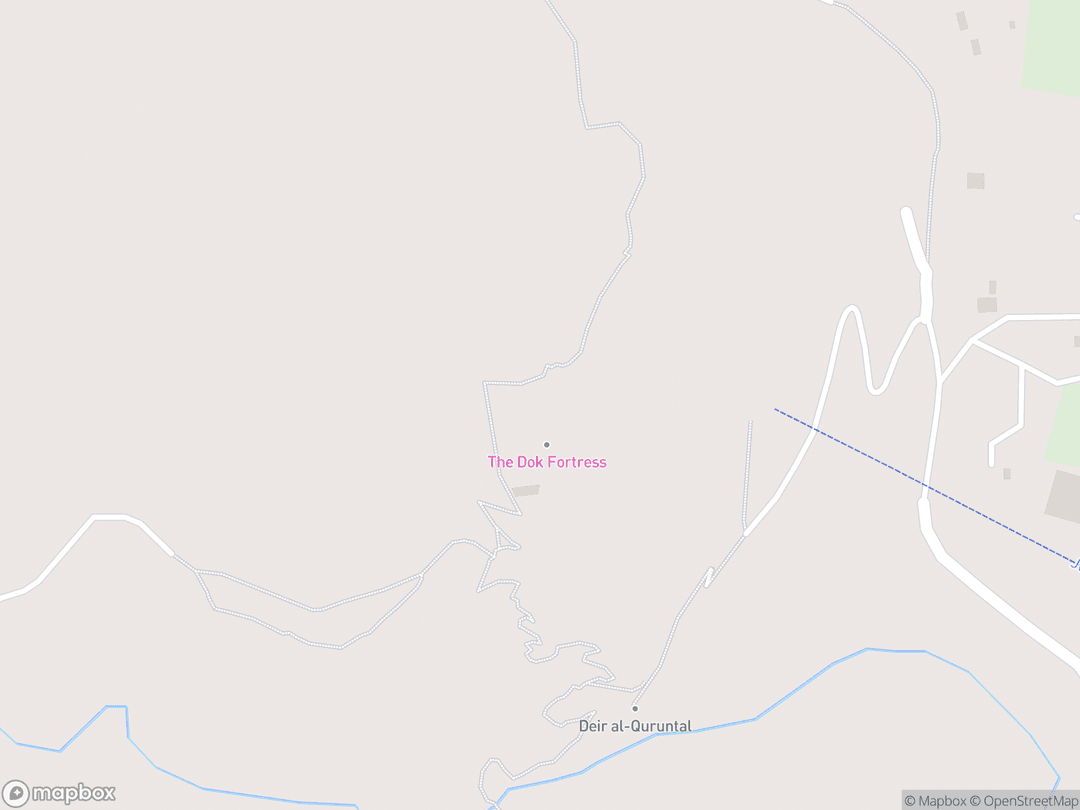
Jericho, West Bank, Palestine
Hours: Weekdays from 9:00 a.m. to 1:00 p.m. and 3:00 p.m. to 4:00 p.m., Saturdays from 9:00 a.m. to 2:00 p.m. Closed on Sundays.
Getting There: The Mount of Temptation is located approximately 5 km northwest of Jericho. Visitors can reach the monastery either by hiking up a steep path for about 30 minutes or by taking a cable car from Tel Jericho.
Get DirectionsAbout
The Mount of Temptation, known locally as Jebel Quruntul, is a mountain in the West Bank that overlooks the city of Jericho. This site holds immense religious significance for Christians as it is believed to be the location where Jesus Christ was tempted by the devil after fasting for 40 days and nights in the wilderness. The Gospels of Matthew, Mark, and Luke recount how the devil offered Jesus dominion over all the kingdoms of the world if he would worship him, a temptation that Jesus steadfastly resisted.
Throughout history, the Mount of Temptation has been a place of spiritual retreat and monastic life. In the 4th century, Christian hermits and monks sought solitude in the caves of the mountain, and a lavra-type monastery was established by Chariton the Confessor. Saint Helena, mother of Emperor Constantine, identified the mountain as a holy site during her pilgrimage in 326 AD, further solidifying its importance in Christian tradition.
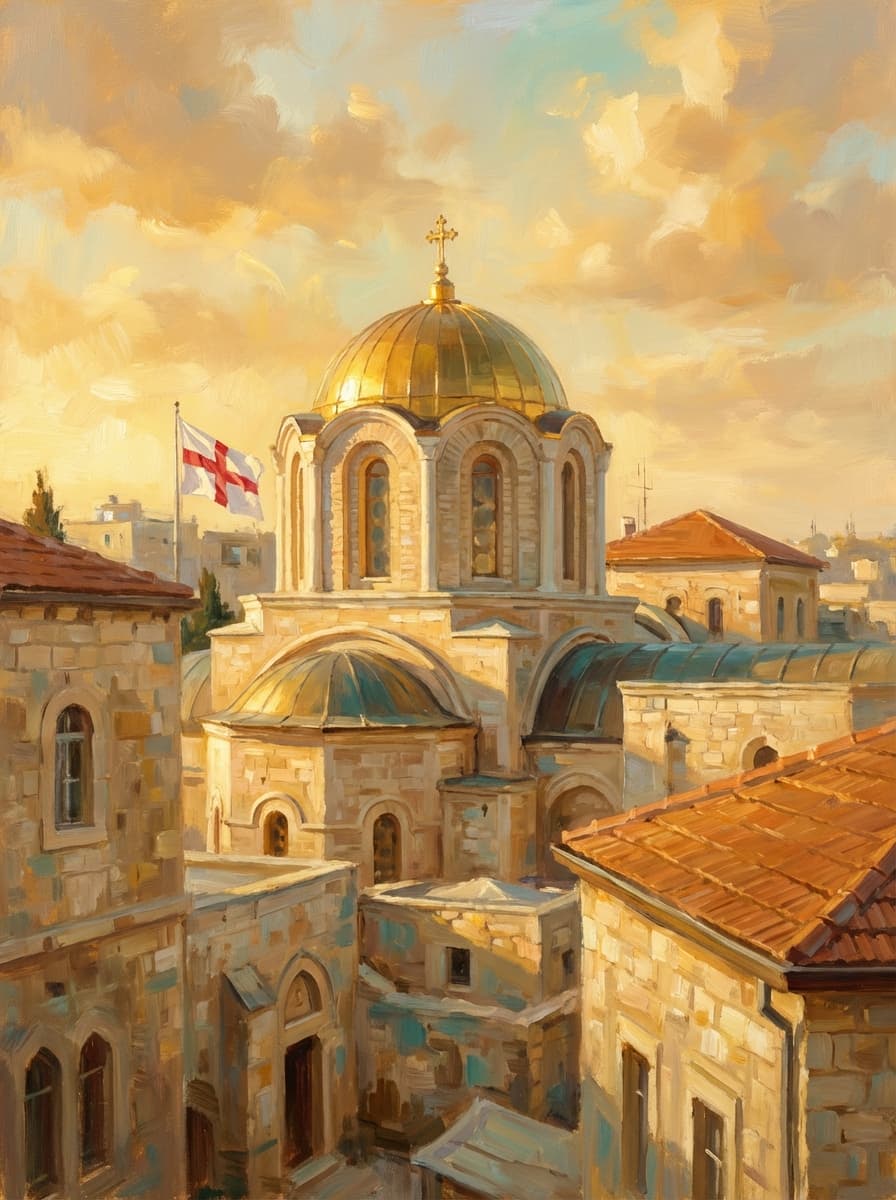
Today, the Greek Orthodox Monastery of the Temptation clings to the steep cliffs of the mountain, a testament to centuries of faith and devotion. Visitors can reach the monastery either by hiking up a challenging path or by taking a cable car from Tel Jericho, enjoying panoramic views of the Jordan Valley and the surrounding landscape. The Mount of Temptation remains a powerful symbol of Jesus's strength and faithfulness in the face of temptation, drawing pilgrims and tourists alike to experience its spiritual atmosphere and historical significance.
Gallery
Symbolic Elements
The temple's exterior features intricate carvings, each rich with spiritual meaning:
Cave Chapel
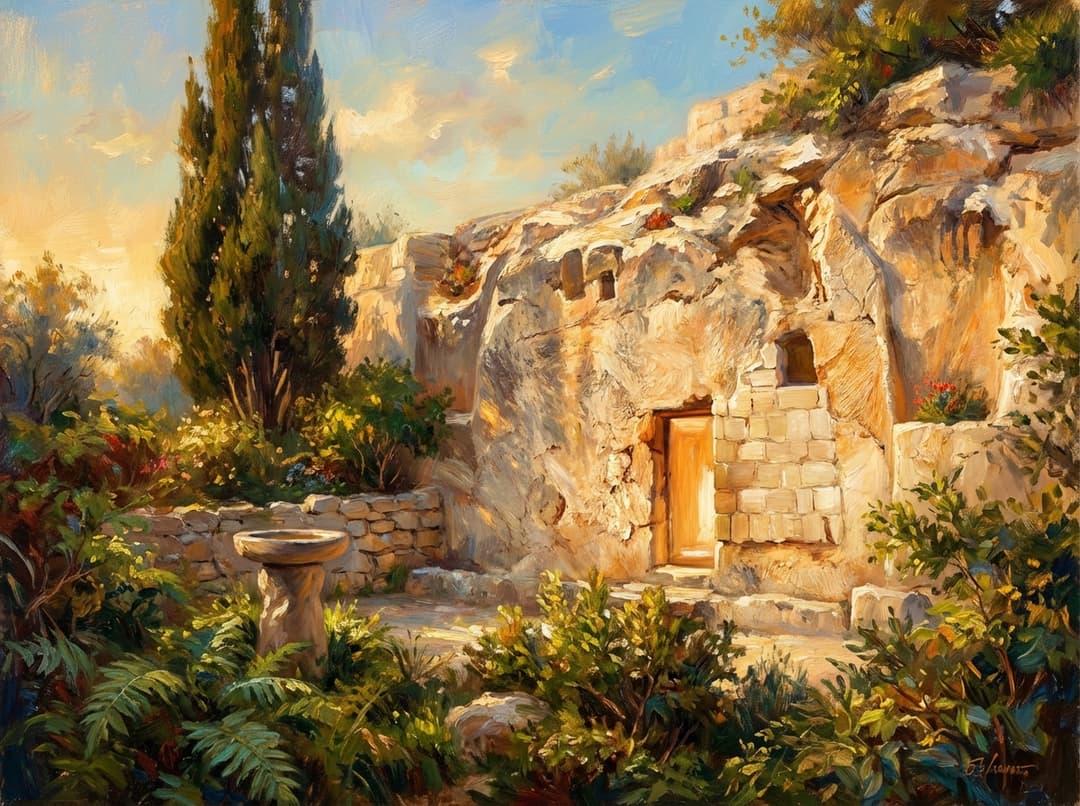
The cave chapel within the Monastery of the Temptation is believed to be the very site where Jesus was tempted by the devil. This ancient cave serves as a focal point for pilgrims, offering a tangible connection to the biblical narrative. Its rough-hewn walls and dimly lit interior evoke a sense of reverence and contemplation.
Stone of Temptation
According to tradition, the Stone of Temptation is the rock upon which Jesus sat during one of his temptations. This stone is venerated by visitors as a symbol of Jesus's strength and resilience in the face of adversity. Pilgrims often touch or pray near the stone, seeking inspiration and guidance in their own lives.

Cliffside Architecture
The Monastery of the Temptation is built directly into the steep cliffs of the Mount of Temptation, showcasing a remarkable feat of engineering and architectural ingenuity. The monastery's design seamlessly integrates with the natural landscape, creating a harmonious blend of human construction and natural beauty. This cliffside architecture symbolizes the enduring strength and resilience of faith.

Cable Car
The cable car that ascends to the Monastery of the Temptation represents a modern connection to an ancient site. Providing easy access for visitors of all abilities, the cable car offers stunning views of the surrounding landscape. It symbolizes the bridging of time and technology, allowing people from all walks of life to experience the spiritual significance of the Mount of Temptation.

Panoramic Views
The panoramic views from the summit of the Mount of Temptation offer a breathtaking perspective of the Jordan Valley, the Dead Sea, and the mountains of Moab and Gilead. These expansive vistas symbolize the vastness of God's creation and the spiritual heights that can be attained through faith. The views serve as a reminder of the world that Jesus resisted for his devotion to God.
Greek Orthodox Cross
The Greek Orthodox cross, prominently displayed atop the Monastery of the Temptation, is a powerful symbol of Christian faith and tradition. This cross represents the sacrifice of Jesus Christ and the hope of salvation for all believers. Its presence on the mountain serves as a constant reminder of the spiritual significance of the site.

Desert Landscape
The arid desert landscape surrounding the Mount of Temptation evokes the harsh conditions in which Jesus fasted and prayed. This barren environment symbolizes the spiritual wilderness that individuals often encounter in their own lives. The stark beauty of the desert serves as a reminder of the importance of inner strength and resilience in the face of adversity.

Monastic Cells
The monastic cells within the Monastery of the Temptation represent a life of devotion and contemplation. These simple dwellings provide a space for monks to dedicate themselves to prayer, study, and service. The cells symbolize the importance of seeking solitude and spiritual growth in the pursuit of a deeper connection with God.
Interesting Facts
The Mount of Temptation is also known as Mount Quarantania and Jebel Quruntul.
The name 'Quarantania' comes from the Latin word 'quarentena,' meaning 40, referring to the number of days Jesus fasted.
Monks and hermits have lived in caves on the Mount of Temptation since the early centuries of Christianity.
The Greek Orthodox Monastery of the Temptation appears to grow out of the mountain.
Inside the monastery is a stone where, according to tradition, Jesus sat during one of his temptations.
The monastery is under the jurisdiction of the Palestinian National Authority but is owned and managed by the Greek Orthodox Church of Jerusalem.
The cable car ride to the monastery offers views of the remains of ancient Jericho.
The mountain has a sophisticated system of conduits that brought rainwater into five caves used as reservoirs.
The 'Temptation Rock' is a large boulder said to be the very rock upon which the devil tempted Jesus.
The city of Jericho is one of the oldest cities in the world and is located near the Mount of Temptation.
Common Questions
Why is the Mount of Temptation important to Christians?
The Mount of Temptation is believed to be the site where Jesus Christ was tempted by the devil after fasting for 40 days and nights. This event is a significant part of Christian theology, demonstrating Jesus's faithfulness and strength in resisting temptation.
How can I get to the Monastery of the Temptation?
Visitors can reach the monastery either by hiking up a steep path for about 30 minutes or by taking a cable car from Tel Jericho. The cable car offers a convenient and scenic alternative to the hike.
What are the opening hours of the Monastery of the Temptation?
The Monastery of the Temptation is open to both men and women. Weekdays from 9:00 a.m. to 1:00 p.m. and 3:00 p.m. to 4:00 p.m., Saturdays from 9:00 a.m. to 2:00 p.m. It is closed on Sundays.
What can I see from the top of the Mount of Temptation?
The summit of the Mount of Temptation offers panoramic views of the Jordan Valley, the Dead Sea, and the mountains of Moab and Gilead. The views are particularly stunning at sunrise and sunset.
Is there a dress code for visiting the Monastery of the Temptation?
Yes, visitors are advised to dress modestly when visiting the monastery. This typically means covering shoulders and knees, and avoiding revealing clothing.
Related Stories
Explore the rich history, traditions, and people connected to this sacred site.
Featured Stories
The Temptation of Christ
First Century AD
Following his baptism in the Jordan River, Jesus was led by the Holy Spirit into the wilderness, where he fasted for forty days and forty nights. During this time of intense spiritual preparation, the devil appeared to him, seeking to undermine his divine mission. The devil presented Jesus with three distinct temptations, each designed to exploit his physical and spiritual vulnerabilities.
First, the devil challenged Jesus to turn stones into bread to satisfy his hunger, appealing to his basic human need. Jesus responded with unwavering faith, declaring that man shall not live on bread alone, but on every word that comes from the mouth of God. This rejection of material gratification demonstrated his commitment to spiritual nourishment above all else.
Next, the devil tempted Jesus to throw himself down from the highest point of the Temple in Jerusalem, testing God's promise of protection. Jesus rebuked this challenge, asserting that it is forbidden to put the Lord God to the test. This refusal to seek validation through reckless action underscored his humility and trust in God's divine plan.
Finally, the devil offered Jesus all the kingdoms of the world if he would bow down and worship him, appealing to his desire for power and dominion. Jesus vehemently rejected this offer, commanding the devil to depart and affirming that only the Lord God should be worshipped and served. This decisive act of resistance solidified his unwavering loyalty to God and his commitment to fulfilling his divine purpose.
Source: Gospels of Matthew, Mark, and Luke
The Legacy of Saint Helena
326 AD
In the year 326 AD, Saint Helena, the mother of Emperor Constantine, embarked on a pilgrimage to the Holy Land, seeking to identify and commemorate the sacred sites associated with the life of Jesus Christ. Her journey was driven by a deep faith and a desire to honor the historical events that had shaped the Christian faith. During her travels, she visited the Mount of Temptation, guided by local traditions and her own spiritual discernment.
Inspired by the stories of Jesus's temptation, Saint Helena recognized the Mount of Temptation as a place of profound spiritual significance. She identified the mountain as the very location where Jesus had resisted the devil's temptations, solidifying its importance in Christian tradition. Her recognition of the site helped to establish it as a destination for pilgrims and a place of monastic retreat.
Saint Helena's pilgrimage had a lasting impact on the development of Christian holy sites in the Holy Land. Her efforts to identify and commemorate these locations helped to preserve their memory and inspire generations of believers. The Mount of Temptation, thanks to her recognition, became a symbol of Jesus's strength and faithfulness, drawing pilgrims and tourists alike to experience its spiritual atmosphere.
Source: Historical accounts of Saint Helena's pilgrimage
The Monastery's Enduring Faith
1874-1904
The Monastery of the Temptation, clinging precariously to the cliffs of the Mount of Temptation, stands as a testament to the enduring power of faith and the resilience of the human spirit. Throughout its long history, the monastery has faced numerous challenges, including destruction by invaders, earthquakes, and the ravages of time. Yet, despite these hardships, the monastic community has persevered, rebuilding and restoring the site time and again.
In the late 19th and early 20th centuries, the Greek Orthodox Church undertook a major restoration project, rebuilding the monastery and solidifying its presence on the mountain. This ambitious undertaking required immense effort and dedication, as materials had to be transported up the steep slopes and construction workers faced the challenges of building on a precarious cliffside.
The rebuilt Monastery of the Temptation stands as a symbol of the unwavering commitment of the monastic community to preserving the sacred site and providing a place of worship and pilgrimage for generations to come. Its presence on the Mount of Temptation serves as a beacon of hope and inspiration, reminding visitors of the enduring power of faith in the face of adversity.
Source: Historical records of the Greek Orthodox Church
Timeline
Seleucid and Maccabean Fortress
The mountain was the site of a Seleucid and Maccabean fortress known as Dok, where Simon Maccabeus was assassinated in 134 BC.
MilestoneAssassination of Simon Maccabeus
Simon Maccabeus and two of his sons were assassinated at the fortress of Dok on the Mount of Temptation.
EventChristian Tradition
Christian tradition associates the mountain with Jesus's 40-day fast and temptation. Chariton the Confessor established a lavra-type monastery on the mountain.
MilestoneSaint Helena's Pilgrimage
Saint Helena identified the mountain as a holy site during her pilgrimage, further solidifying its importance in Christian tradition.
EventEarliest Monastery Construction
The earliest monastery was constructed on the Mount of Temptation, marking the beginning of organized monastic life on the site.
MilestonePersian Invasion
The monastery was destroyed during the Persian invasion, leading to a period of abandonment and disrepair.
RenovationCrusader Churches
The Crusaders built two churches on the site, reflecting the renewed Christian presence in the region.
MilestoneGreek Orthodox Acquisition
The Greek Orthodox Church acquired the property, initiating a new era of restoration and development.
MilestoneMonastery Rebuilt
The Monastery of the Temptation was rebuilt, restoring the site to its former glory and providing a place of worship and pilgrimage.
RenovationCurrent Monastery Construction
The current monastery was constructed around a cave chapel, incorporating elements of the earlier structures and adapting to the challenging terrain.
RenovationCable Car Construction
A cable car was built connecting Tel Jericho to the monastery, providing easier access for visitors and enhancing the site's accessibility.
MilestoneJericho Oasis Archaeological Park
The mountain and monastery became part of the State of Palestine’s 'Jericho Oasis Archaeological Park', recognizing its cultural and historical significance.
MilestoneWorld Heritage Nomination
The Mount of Temptation was nominated to the Tentative List for World Heritage status, highlighting its potential for international recognition.
MilestonePilgrimage and Tourism
The Mount of Temptation continues to be a popular destination for pilgrims and tourists, drawn by its religious significance and stunning views.
EventPreservation Efforts
Ongoing efforts are made to preserve and maintain the monastery and its surroundings, ensuring its continued accessibility and historical integrity.
RenovationArchitecture & Facilities
The architecture of the Monastery of the Temptation is a unique blend of Byzantine and traditional monastic styles, adapted to the challenging terrain of the Mount of Temptation. The monastery's design seamlessly integrates with the natural landscape, creating a harmonious balance between human construction and the surrounding environment. Its cliffside location and intricate details make it a remarkable feat of engineering and architectural ingenuity.
Building Materials
Limestone
The primary building material of the Monastery of the Temptation is limestone, quarried from the surrounding mountains. This durable and readily available stone has been used for centuries in the construction of buildings in the Holy Land. The limestone gives the monastery a natural and earthy appearance, blending seamlessly with the rocky cliffs.
Mortar
Mortar, a mixture of lime, sand, and water, is used to bind the limestone blocks together in the construction of the monastery. This traditional building material has been used for thousands of years and provides a strong and durable bond between the stones. The mortar helps to create a solid and stable structure that can withstand the harsh desert climate.
Wood
Wood is used for various elements of the monastery, including doors, windows, and roof beams. The wood provides a warm and natural contrast to the cool stone walls. The use of wood adds a touch of elegance and sophistication to the monastery's interior and exterior.
Tile
Tile is used for flooring and decorative elements throughout the monastery. The tile provides a durable and easy-to-clean surface, while also adding color and visual interest to the interior spaces. The use of tile reflects the influence of Byzantine and traditional monastic styles.
Interior Features
Cave Chapel
The cave chapel is the heart of the Monastery of the Temptation, believed to be the very site where Jesus was tempted by the devil. This ancient cave is a place of prayer and contemplation, offering a tangible connection to the biblical narrative. Its rough-hewn walls and dimly lit interior evoke a sense of reverence and spiritual significance.
Monastic Cells
The monastic cells provide a space for monks to dedicate themselves to prayer, study, and service. These simple dwellings are sparsely furnished, reflecting the monks' commitment to a life of simplicity and devotion. The cells offer a quiet and secluded retreat from the outside world.
Courtyard
The courtyard serves as a central gathering space for the monastic community. This open-air area provides a place for monks to socialize, relax, and enjoy the fresh air. The courtyard is often decorated with plants and flowers, creating a peaceful and inviting atmosphere.
Refectory
The refectory is the dining hall where the monks gather to share meals. This communal space fosters a sense of community and fellowship. The refectory is typically a simple and functional room, designed for practical use rather than elaborate decoration.
Temple Grounds
The grounds surrounding the Monastery of the Temptation are characterized by the rugged and arid landscape of the Mount of Temptation. The monastery is built directly into the cliffside, with limited space for gardens or landscaping. However, the monks have created small terraces and pathways, allowing visitors to explore the area and enjoy the stunning views. The natural beauty of the desert landscape adds to the spiritual atmosphere of the site.
Additional Facilities
The Monastery of the Temptation includes a small gift shop where visitors can purchase religious items and souvenirs. There is also a small cafe where visitors can enjoy refreshments and take a break from exploring the site. The cable car provides easy access to the monastery for visitors of all abilities.
Religious Significance
The Mount of Temptation holds profound religious significance for Christians as the site where Jesus Christ was tempted by the devil after fasting for 40 days and nights. This event is a central part of Christian theology, demonstrating Jesus's faithfulness and strength in resisting temptation. The mountain serves as a powerful symbol of the spiritual challenges that all believers face and the importance of remaining steadfast in their faith.
The core spiritual purpose of the Mount of Temptation is to serve as a reminder of Jesus's victory over temptation and the power of divine grace. The site inspires believers to resist temptation in their own lives and to seek strength and guidance from God. The mountain is a place of pilgrimage and spiritual reflection, where visitors can connect with the biblical narrative and deepen their faith.
Sacred Ordinances
Prayer
Prayer is a central practice at the Mount of Temptation, as visitors seek to connect with God and to reflect on the events that took place at this sacred site. Pilgrims often pray in the cave chapel, believed to be the location of Jesus's temptation, seeking guidance and strength in their own lives.
Fasting
Fasting is a traditional practice associated with the Mount of Temptation, as Jesus fasted for 40 days and nights before being tempted by the devil. Some visitors choose to fast as a way of honoring Jesus's sacrifice and of seeking spiritual purification. Fasting can be a powerful way to connect with God and to deepen one's faith.
Pilgrimage
Pilgrimage to the Mount of Temptation is a way of honoring Jesus's life and teachings. Pilgrims travel from all over the world to visit this sacred site, seeking to connect with the biblical narrative and to deepen their faith. Pilgrimage can be a transformative experience, offering a chance for spiritual renewal and growth.
The Three Temptations
The three temptations that Jesus faced on the Mount of Temptation are symbolic of the challenges that all believers face in their lives. The temptation to turn stones into bread represents the desire for material gratification. The temptation to throw himself down from the Temple represents the desire for worldly recognition. The temptation to worship the devil represents the desire for power and dominion. By resisting these temptations, Jesus demonstrated his unwavering commitment to God and his divine mission.
The Significance of Forty Days
The number forty holds symbolic significance in the Bible, often representing a period of testing or preparation. Jesus's forty days of fasting in the wilderness is a parallel to other biblical events, such as the forty years that the Israelites wandered in the desert. This period of testing and preparation is essential for spiritual growth and development.
The Power of Resistance
Jesus's resistance to temptation on the Mount of Temptation demonstrates the power of divine grace and the importance of remaining steadfast in one's faith. By relying on God's word and resisting the allure of worldly temptations, believers can overcome the challenges they face in their lives and fulfill their divine purpose.
Similar Temples
Sources & Research
Every fact on Temples.org is backed by verified Sources & Research. Each piece of information is rated by source tier and confidence level.
View All Sources (4)
| Field | Source | Tier | Retrieved |
|---|---|---|---|
| About & Historical Background | Bein Harim Tours (opens in a new tab) | D | 2024-02-27 |
| Visitor Information | See the Holy Land (opens in a new tab) | D | 2024-02-27 |
| Visitor Information | Visit Palestine (opens in a new tab) | D | 2024-02-27 |
| About & Historical Background | PeakVisor (opens in a new tab) | B | 2024-02-27 |