Visitor Insights
Visiting St. George's Cathedral
A visit to St. George's Cathedral offers a peaceful retreat from the bustling streets of East Jerusalem. The cathedral's "English Collegiate" style quadrangle and lush gardens provide a serene atmosphere for reflection. Visitors can attend services in English or Arabic, explore the historic grounds, and stay at the renowned Pilgrim Guesthouse.
Highlights
- Explore the Neo-Gothic architecture and the unique central monument in the courtyard.
- Attend a service to experience the Anglican liturgy in the Holy Land.
- Visit the Pilgrim Guesthouse, a historic institution of hospitality.
Things to Know
- Modest dress is recommended when visiting the cathedral.
- Check the schedule for service times and special events.
- The cathedral is located in East Jerusalem, easily accessible from the Old City.
Location
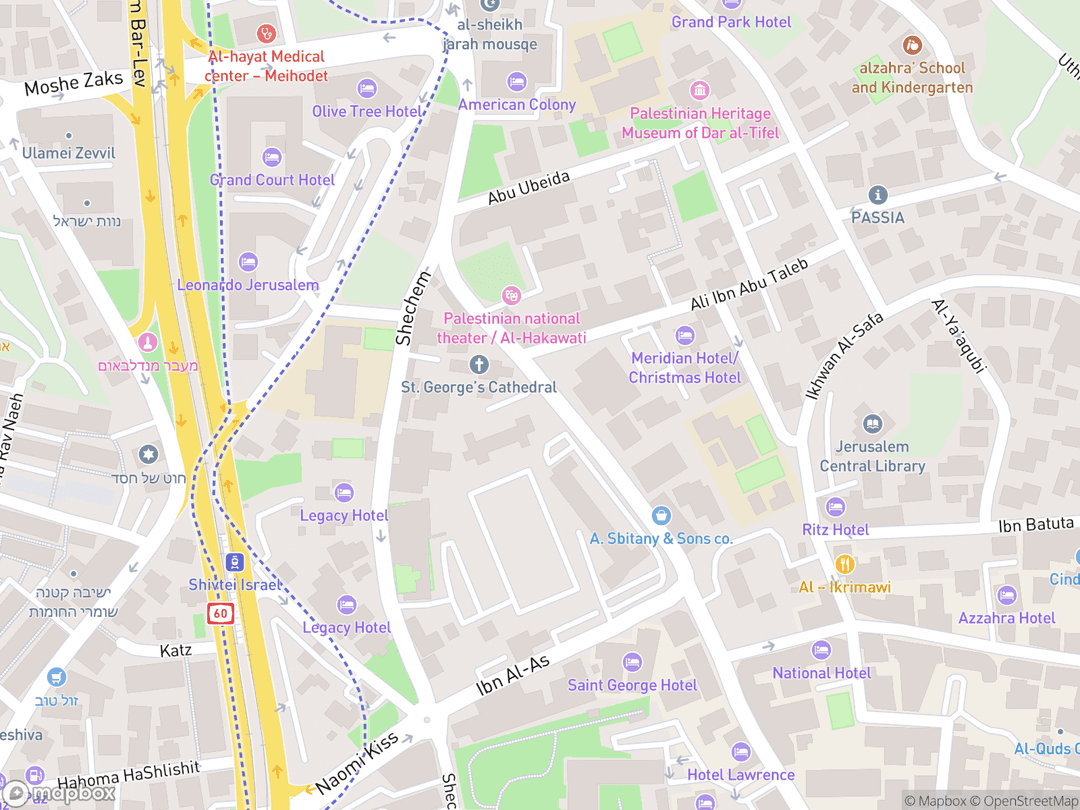
20 Nablus Road, Jerusalem, Israel
Hours: Open daily for visitors; Sunday services at 8:00 AM (Holy Eucharist) and 10:30 AM (Sung Eucharist).
Getting There: Located on Nablus Road in East Jerusalem, a short walk from Damascus Gate. Accessible by taxi or bus.
Get DirectionsTips for Your Visit
Stay at the Guesthouse
Consider staying at the Pilgrim Guesthouse for a unique and immersive experience.
Courtyard Reflection
Spend time in the tranquil courtyard to admire the central monument and gardens.
About
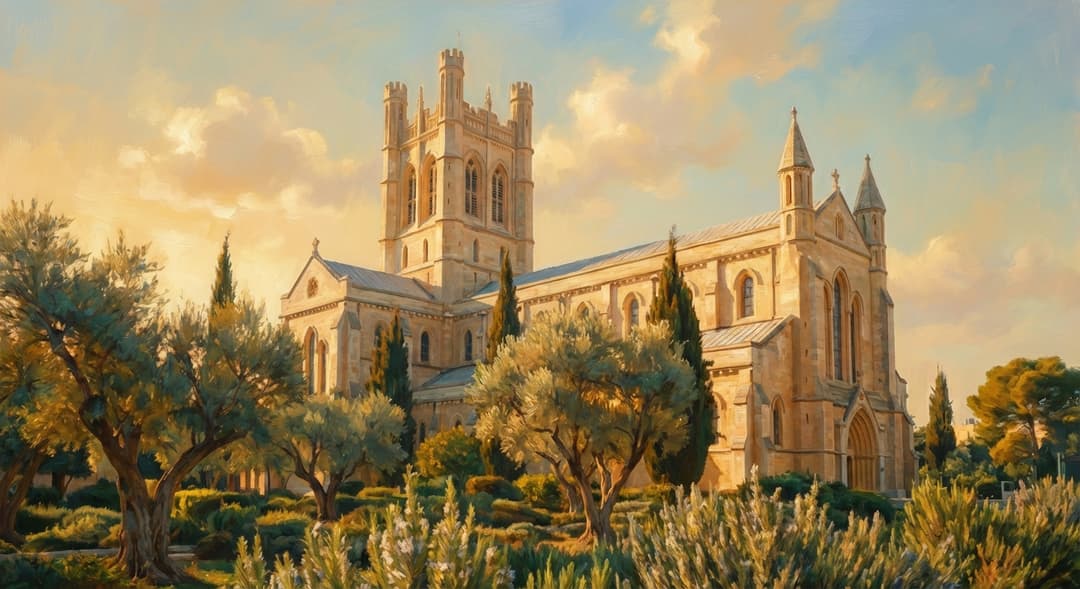
St. George's Cathedral in Jerusalem is the cathedral church of the Episcopal Diocese of Jerusalem and the Middle East. Consecrated in 1898, it serves as the seat of the Anglican Bishop in Jerusalem. The cathedral is part of a larger compound that includes St. George's College, a pilgrim guesthouse, and the bishop's residence, all arranged around a tranquil collegiate quadrangle.
Designed by architect George Jeffery in the Neo-Gothic style, the cathedral is a striking example of English architecture in the Holy Land. It was established by Bishop George Francis Popham Blyth to strengthen the Anglican presence in Jerusalem and to provide a spiritual home for both expatriates and local Palestinian Christians.
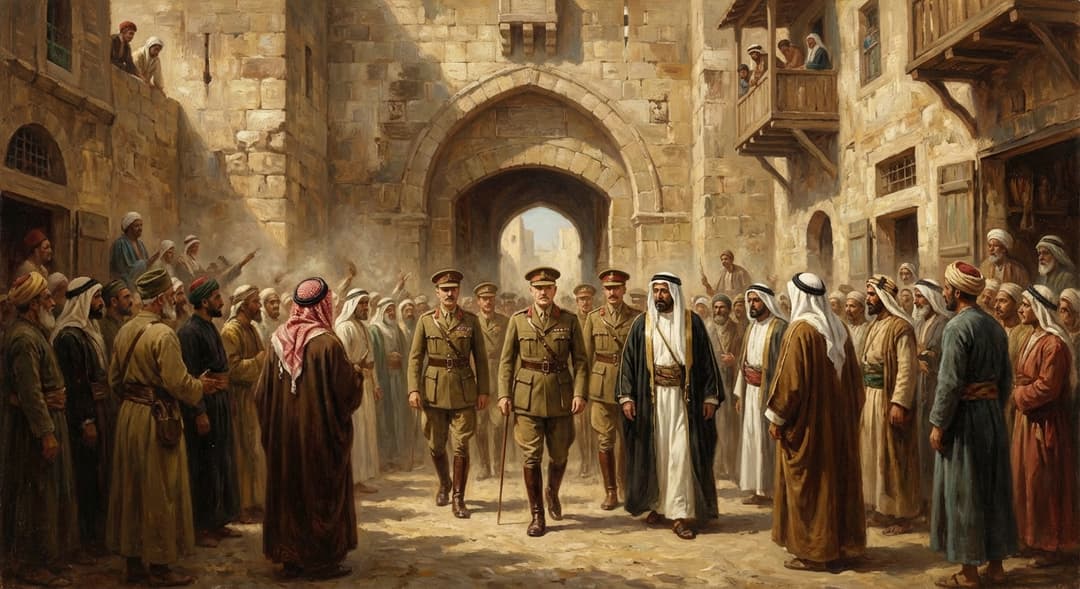
The cathedral played a significant role in history, notably serving as the site where the Ottoman Turks signed their surrender of Jerusalem to General Edmund Allenby in 1917. Today, it remains a vibrant center of worship, education, and hospitality, welcoming pilgrims from around the world.
Gallery
Symbolic Elements
The temple's exterior features intricate carvings, each rich with spiritual meaning:

The Central Monument
Located in the courtyard, this unique monument consists of a Byzantine column topped by a Roman cannonball and a cross. It symbolizes the triumph of Christianity over conflict and the deep historical roots of faith in the region.

Immersion Pool
Unlike most Anglican churches, St. George's features a baptismal pool for full immersion. This architectural choice honors the traditions of the local Eastern Orthodox churches and the early Christian practice of immersion baptism.

Jerusalem Cross
The Jerusalem Cross, or "Crusader's Cross," is a prominent symbol within the cathedral. Consisting of a large cross surrounded by four smaller crosses, it represents the five wounds of Christ or the four Gospels spreading from Jerusalem to the four corners of the world.

Neo-Gothic Tower
The cathedral's tower, with its crenellations and English style, stands as a distinctive landmark in East Jerusalem. It represents the English presence and the architectural heritage of the Anglican communion in the Holy Land.

The Bishop's Chair (Cathedra)
As the seat of the Bishop, the Cathedra symbolizes the bishop's teaching authority and pastoral care for the diocese. It is the focal point of the cathedral's function as the mother church of the diocese.
Interesting Facts
The cathedral features a rare immersion pool for baptisms, a nod to local Orthodox customs.
The Ottoman surrender of Jerusalem in 1917 was signed in the Bishop's study at the cathedral.
The courtyard monument features a Byzantine column topped by a Roman cannonball.
Queen Elizabeth II serves as the patron of St. George's College, located on the grounds.
It is one of the few cathedrals in the region built in the English Neo-Gothic style.
Common Questions
What denomination is St. George's Cathedral?
St. George's Cathedral is Anglican (Episcopal). It is the seat of the Bishop of the Episcopal Diocese of Jerusalem and the Middle East.
Can I stay at the cathedral?
Yes, the cathedral complex includes the historic St. George's Pilgrim Guesthouse, which offers accommodation to travelers and pilgrims.
Is the cathedral open to the public?
Yes, the cathedral and its grounds are open to visitors. It is a place of worship, so respectful behavior is expected.
Related Stories
Explore the rich history, traditions, and people connected to this sacred site.
Featured Stories
The Surrender of Jerusalem
December 9, 1917
In a moment of immense historical significance, the surrender of Jerusalem by the Ottoman Turks to the British forces took place within the precincts of St. George's Cathedral. On December 9, 1917, after the mayor of Jerusalem had offered the city's surrender, the formalities were concluded at the Bishop's residence. General Edmund Allenby later made his famous humble entry into the Old City on foot, but the diplomatic and military transition began here.
The event marked the end of four centuries of Ottoman rule and the beginning of the British Mandate. The cathedral's role in this transition underscores its status as a central institution in the modern history of Jerusalem, bridging the gap between empires and serving as a witness to the city's changing fortunes.
Source: Historical records of the British Mandate and Diocese archives.
Bishop Blyth's Vision
1887–1914
Bishop George Francis Popham Blyth arrived in Jerusalem with a vision to establish a distinct Anglican presence that respected the ancient Orthodox churches while serving the needs of the local and expatriate community. He founded St. George's not just as a church, but as a "collegiate church" with a mission of education and hospitality. His legacy lives on in the cathedral, the college, and the guesthouse that continue to thrive today.
Bishop Blyth's diplomatic approach helped navigate the complex religious landscape of Jerusalem. By incorporating local customs like the immersion pool and fostering the "English Collegiate" style, he created a unique institution that is both Anglican and deeply rooted in the Holy Land.
Source: Diocesan history.
Timeline
Foundation Laid
construction began under the stewardship of Bishop George Francis Popham Blyth.
MilestoneConsecration
The nave was consecrated on St. Luke's Day by the Bishop of Salisbury, representing the Archbishop of Canterbury.
DedicationConstruction Completed
The choir, transepts, and central tower were completed, finalizing the cathedral structure.
component.timeline.constructionTurkish Surrender
The Ottoman surrender of Jerusalem to the British forces was signed at the Bishop's House within the cathedral close.
EventPilgrim Guesthouse Established
The Pilgrim Guesthouse was formally established to provide accommodation for visitors to the Holy Land.
MilestoneMandate End
Following the end of the British Mandate, the cathedral became a spiritual home for the local Arabic-speaking congregation.
EventNew Organ
A new pipe organ was installed, enhancing the cathedral's musical tradition.
RenovationHistory by Decade
1890s
Bishop Blyth arrives and initiates the construction of St. George's. The foundation stone is laid in 1891, and the nave is consecrated in 1898. The architectural style is chosen to reflect English collegiate traditions.
1910s
The cathedral structure is completed in 1910. In 1917, during World War I, the cathedral grounds are used by the Ottoman army. Following the Battle of Jerusalem, the surrender of the city is signed at the Bishop's House in the cathedral close.
1920s-1940s
The Pilgrim Guesthouse is established in 1923. During the British Mandate, the cathedral serves as a spiritual hub for British officials and the growing Anglican community. In 1948, following the partition, it becomes a home for displaced Palestinian Anglicans.
1950s-Present
The Diocese of Jerusalem is reorganized. St. George's College expands its educational programs. The cathedral continues to stand as a center for peace, reconciliation, and hospitality in the midst of regional conflict.
Architecture & Facilities
St. George's Cathedral is a striking example of Neo-Gothic architecture in the heart of Jerusalem, characterized by its pointed arches, ribbed vaults, and buttressed walls in the English Collegiate tradition. Designed by architect George Jeffery and consecrated in 1898, the cathedral was deliberately modeled after English university college chapels, with buildings arranged around a central quadrangle to create the feel of an Oxford or Cambridge college transplanted to the Holy Land. The prominent central tower, with its distinctive crenellations, rises above Nablus Road as one of East Jerusalem's most recognizable landmarks. The use of local Jerusalem limestone — the same warm, honey-toned stone used throughout the Old City — ties the unmistakably English Gothic design to the materiality and palette of its surroundings, creating a unique architectural hybrid found nowhere else in the world.
Building Materials
Jerusalem Stone
The local limestone used for the exterior and interior, grounding the building in its Holy Land context.
Wood
Used for the roof trusses and pews (or chairs), adding warmth to the stone interior.
Stained Glass
English-style stained glass windows depicting biblical scenes and saints.
Interior Features
Nave
The main body of the church, simple and dignified, with chairs instead of fixed pews.
Chancel
The area containing the choir and high altar, separated by a rood screen in the traditional style.
Baptistery
Features the unique immersion pool, a significant departures from typical Anglican fonts.
Temple Grounds
The cathedral close is a "garden of peace," featuring a central courtyard with the "Byzantine column" monument, herbal gardens, and the cloistered walkways of the Pilgrim Guesthouse.
Additional Facilities
The complex includes St. George's College, the Pilgrim Guesthouse, and the Bishop's residence.
Similar Temples
Sources & Research
Every fact on Temples.org is backed by verified Sources & Research. Each piece of information is rated by source tier and confidence level.
View All Sources (3)
| Field | Source | Tier | Retrieved |
|---|---|---|---|
| The Episcopal Diocese of Jerusalem | Episcopal Diocese of Jerusalem (opens in a new tab) | A | 2024-02-27 |
| St. George's Cathedral Pilgrim Guesthouse | St. George's Cathedral (opens in a new tab) | B | 2024-02-27 |
| Visit A City - St. George's Cathedral | Visit A City (opens in a new tab) | C | 2024-02-27 |