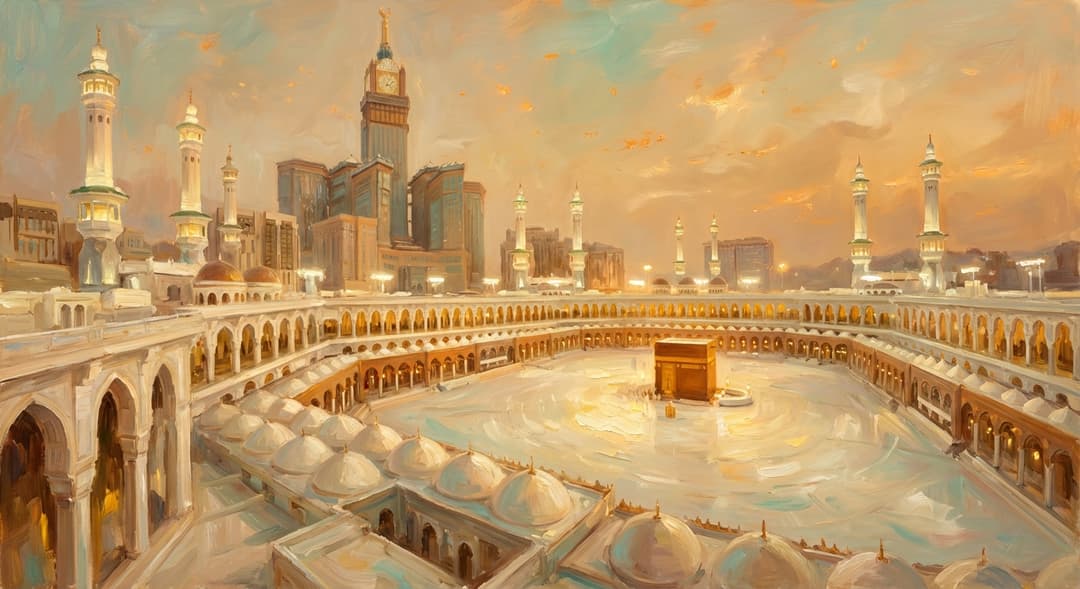
The Black Stone (Hajar al-Aswad), a venerated relic embedded in the Kaaba's eastern corner within Mecca's Masjid al-Haram, stands as a profound symbol in Islam. Its history, steeped in both pre-Islamic tradition and Islamic narrative, culminates in its strategic placement by Prophet Muhammad (peace be upon him) before his prophethood, an event that averted conflict and fostered unity among the Meccan clans. The stone's origins are often traced back to divine origins, believed to have descended from heaven, signifying a tangible connection between the earthly and celestial realms.
Prior to Islam, the Kaaba served as a pilgrimage site for diverse Arabian tribes, each with their own deities and rituals. The Black Stone, even in those times, held a position of reverence, though its precise significance remains somewhat obscure. The narrative shifts dramatically with the reconstruction of the Kaaba following flood damage. As the time came to reposition the Black Stone, a fierce dispute erupted among the clans, each vying for the honor of placing it. This volatile situation threatened to plunge Mecca into chaos.
In a moment of divine intervention, Prophet Muhammad (peace be upon him) arrived as the agreed-upon arbiter. His solution, marked by wisdom and inclusivity, involved placing the Black Stone on a cloth, with representatives from each clan holding a corner to lift it collectively. Muhammad (peace be upon him) then personally set the stone in its current location. This act not only preserved peace but also reinforced a sense of shared responsibility and reverence for the stone, even before his prophetic mission.
Throughout the centuries, the Black Stone has endured various trials, including damage and theft. The Qarmatians, a radical sect, infamously stole the stone in 930 CE, holding it for 22 years. Upon its return, it was found broken into fragments, which are now held together by a silver frame. This frame, a testament to ongoing preservation efforts, has been repaired and replaced numerous times. Today, the Black Stone continues to inspire millions of Muslims worldwide, serving as a reminder of faith, unity, and the enduring legacy of Islam.
Key Details
- Location Eastern corner of the Kaaba
- Significance Symbol of divine connection and unity
- Placement By Prophet Muhammad (peace be upon him) before his prophethood
- Damage Broken into fragments, held by a silver frame
- Theft Stolen by the Qarmatians in 930 CE
- Pilgrimage A focal point of the Hajj pilgrimage
Timeline
Veneration of the Black Stone
The Black Stone was venerated by various Arabian tribes before the advent of Islam.
component.timeline.historicalKaaba Reconstruction and Black Stone Placement
The Kaaba was damaged by a flood, leading to its reconstruction and the placement of the Black Stone by Prophet Muhammad (peace be upon him).
MilestoneTheft by the Qarmatians
The Qarmatians stole the Black Stone and took it to Bahrain.
EventReturn of the Black Stone
The Black Stone was returned to Mecca after being held by the Qarmatians for 22 years.
EventSources & Research
Every fact on Temples.org is backed by verified Sources & Research. Each piece of information is rated by source tier and confidence level.
View All Sources (4)
| Field | Source | Tier | Retrieved |
|---|---|---|---|
| Newspaper - Evening Star (Washington, D.C.) | Library of Congress (opens in a new tab) | C | 2024-01-01 |
| The History of the Ka'ba: Some Notes | Muslim Heritage (opens in a new tab) | B | 2024-01-01 |
| The Black Stone of Mecca | ThoughtCo (opens in a new tab) | B | 2024-01-01 |
| Hajj - Re-enacting the steps of the prophets | Al Jazeera (opens in a new tab) | B | 2024-01-01 |