Visitor Insights
Visiting Masjid al-Haram
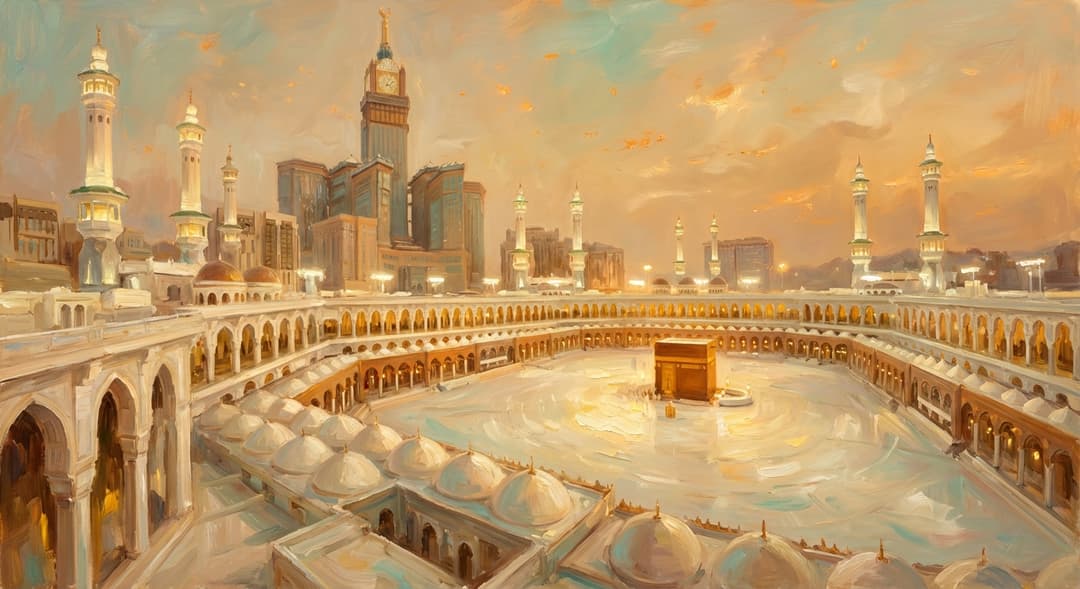
Visiting Masjid al-Haram is a deeply spiritual experience for Muslims. As the holiest site in Islam, it attracts millions of pilgrims and visitors each year. The mosque is open 24 hours a day, seven days a week, allowing worshippers to pray and reflect at any time. Entry to the mosque is restricted to Muslims only. Modest dress is required, with men wearing long trousers and shirts with sleeves, and women wearing loose-fitting, long dresses or abayas that cover the arms and legs. Headscarves are recommended for women. The mosque offers various services to assist visitors, including real-time translation of sermons, multilingual guides, and designated cabins for religious guidance. Wheelchairs are available for those with mobility issues, and dedicated pathways ensure accessibility for elderly and differently-abled visitors.
Highlights
- Witness the Kaaba, the focal point of Muslim prayer.
- Perform Tawaf, the circumambulation of the Kaaba.
- Pray in the most sacred mosque in Islam.
- Drink water from the Zamzam Well.
- Walk between the hills of Safa and Marwa.
Things to Know
- Entry is restricted to Muslims only.
- Modest dress is required.
- The mosque can be very crowded, especially during peak seasons.
- Be prepared for security checks.
- Respect the religious customs and traditions.
Location
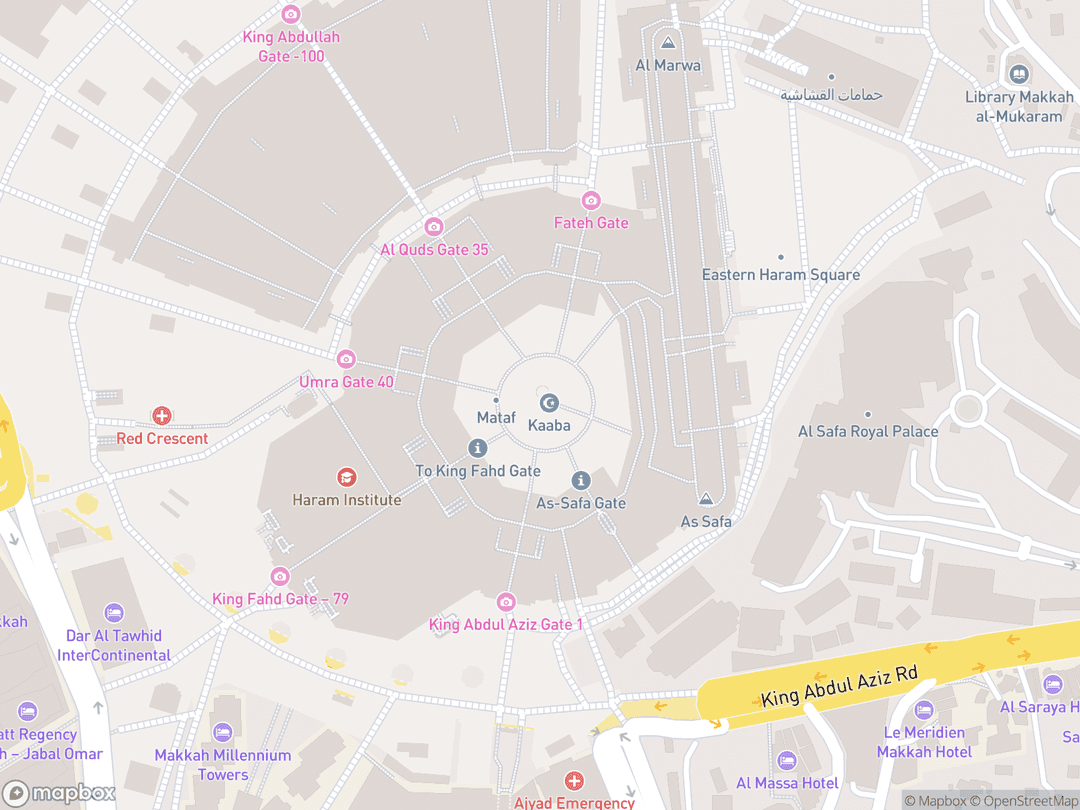
Al Masjid Al Haram Road, Makkah, MEBA 2192, Saudi Arabia
Hours: Open 24 hours a day, seven days a week.
Getting There: The mosque is located in the center of Mecca, enclosed by the First Ring Road. Buses stop between the First and Second Ring Roads.
Get DirectionsTips for Your Visit
Plan Ahead
Book accommodations and transportation in advance, especially during peak seasons.
Stay Hydrated
Drink plenty of water, especially during hot weather.
Be Respectful
Adhere to the dress code and respect the religious customs.
About
Masjid al-Haram, also known as the Great Mosque of Mecca, stands as the most sacred site in Islam. Its history is deeply intertwined with the origins of the religion itself, centered around the Kaaba, believed by Muslims to have been originally built by Prophet Abraham and his son Ishmael. Over centuries, the mosque has undergone numerous expansions and renovations, reflecting the devotion of rulers and the growing number of pilgrims.
The mosque's architecture is a testament to Islamic artistry, blending various styles from different eras. The Kaaba, a cuboid structure draped in black silk and adorned with gold embroidery, serves as the focal point for Muslim prayers worldwide. The surrounding courtyard provides space for worshippers to perform the Tawaf, the ritual circumambulation of the Kaaba.
Today, Masjid al-Haram is a modern marvel, equipped with state-of-the-art amenities to accommodate millions of visitors annually. It remains a symbol of unity, faith, and the enduring legacy of Islam. The ongoing expansions aim to enhance the experience for pilgrims and ensure the preservation of this sacred site for generations to come.
Gallery
Symbolic Elements
The temple's exterior features intricate carvings, each rich with spiritual meaning:

The Kaaba
The Kaaba represents the "House of God" and is the focal point of Muslim prayer. It symbolizes the oneness of God (Allah) and serves as the Qibla, the direction Muslims face during prayer. This practice fosters a sense of unity and shared devotion among the global Muslim community.

The Black Stone (Hajar al-Aswad)
Located in the eastern corner of the Kaaba, the Black Stone is believed to have descended from Paradise. Muslims revere it as a sacred relic and attempt to touch or kiss it during their pilgrimage, symbolizing a connection to the divine.

Maqam Ibrahim (Station of Abraham)
A stone near the Kaaba said to bear the footprint of Prophet Abraham. It symbolizes Abraham's unwavering devotion and his role in establishing the Kaaba as a place of worship, reminding Muslims of the importance of faith and sacrifice.
Safa and Marwa
Two small hills within the mosque precinct, connected by the Masa'a walkway. The ritual of walking between them (Sa'i) commemorates Hagar's desperate search for water for her son Ishmael, representing reliance on God's provision and mercy.

Zamzam Well
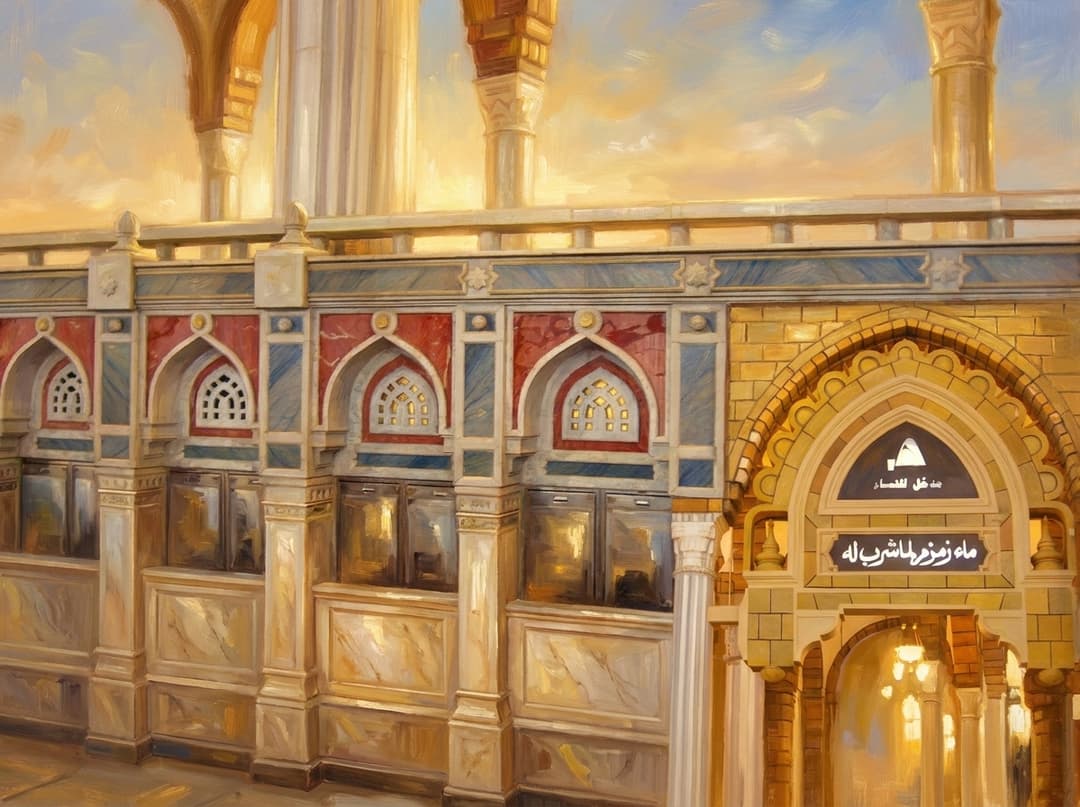
A well located within the mosque, believed to be the source of water that God provided to Hagar and Ishmael. Its water is considered blessed and is consumed by millions of pilgrims each year, symbolizing divine sustenance and blessings.
The Minarets
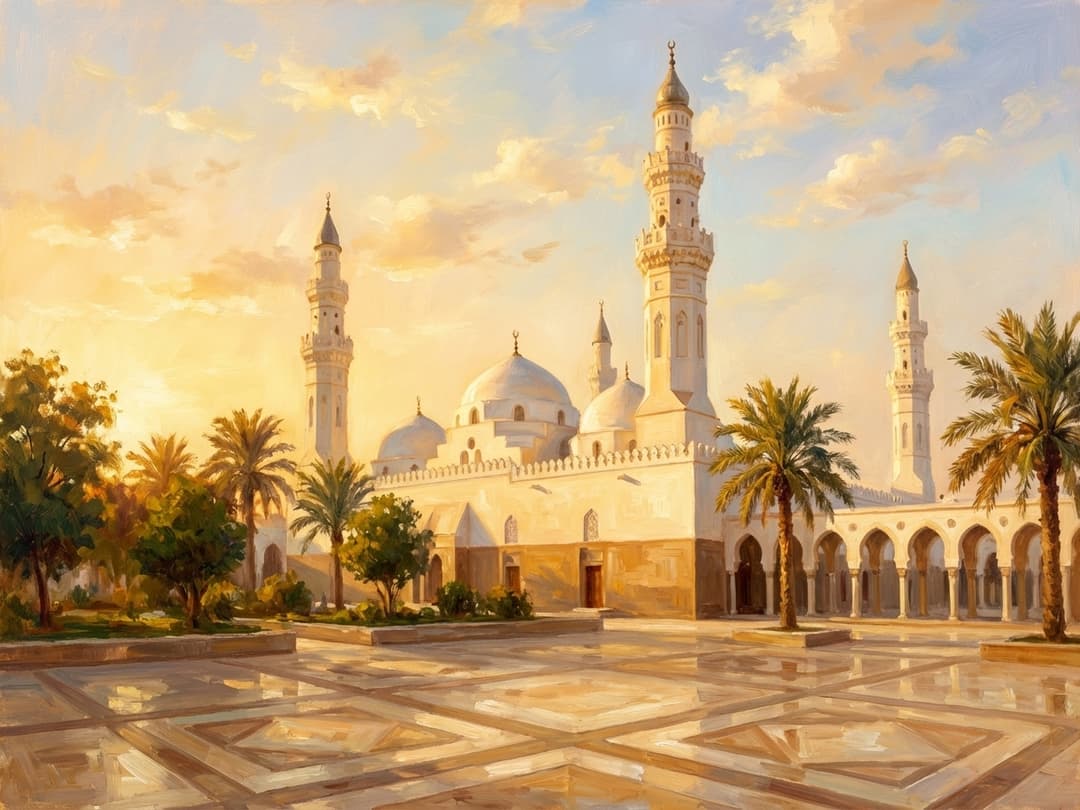
The towering minarets of Masjid al-Haram serve as visual markers of the sacred space and are used to call Muslims to prayer. They symbolize the presence of Islam and the importance of prayer in the lives of Muslims, guiding them towards spiritual reflection and connection with God.
The Gates
The numerous gates of Masjid al-Haram provide access to the sacred space and symbolize inclusivity and welcome. They represent the open invitation to all Muslims to come and worship in the holiest mosque, fostering a sense of community and shared faith.
The Domes
The Ottoman-style domes of Masjid al-Haram add to the architectural beauty of the mosque and symbolize the majesty and grandeur of Islam. They represent the spiritual heights that Muslims aspire to reach through prayer and devotion, creating a sense of awe and reverence.
Interesting Facts
Masjid al-Haram is the largest mosque in the world.
It can accommodate millions of worshippers.
The mosque is considered the holiest place on Earth by Muslims.
A single prayer in Masjid al-Haram is considered to hold the value of 100,000 prayers anywhere else.
Non-Muslims are prohibited from entering the mosque.
The mosque has over 210 gates.
The ongoing Third Saudi Expansion is expected to accommodate 2.5 million worshippers.
The Kaaba isn't worshiped; it only serves as the direction for worship of Allah.
The Black Stone is believed to have come down from Paradise.
The mosque has 13 minarets.
The area of the mosque is 356,000 square meters.
The mosque is the most expensive building in the world.
The mosque is open 24 hours a day.
The first structure was built in the 7th century under Caliph Omar ibn-Khattab.
The creation of Masjid al-Haram took place long before the creation of mankind.
The mosque is supposed to mirror the place of worship of angels in heaven.
The most recent renovation of this mosque is dated back to 2018.
The mosque has a large clock tower, known as the Abraj Al Bait, which is one of the tallest buildings in the world, standing at a height of 601 meters.
The Mataf area now has the capacity to accommodate 105,000 people per hour, while the Masa'a has been extended to four floors, allowing it to handle 120,000 people per hour.
Common Questions
Who can enter Masjid al-Haram?
Entry to Masjid al-Haram and the city of Mecca is restricted to Muslims only. This is a long-standing tradition and a requirement of Saudi Arabian law.
Is there an entry fee to visit Masjid al-Haram?
No, there is no entry fee to visit Masjid al-Haram. The mosque is open to all Muslims free of charge.
What is the dress code for visiting Masjid al-Haram?
Modest dress is required. Men should wear long trousers and shirts with sleeves, and women should wear loose-fitting, long dresses or abayas that cover the arms and legs. Headscarves are recommended for women.
Are there facilities for disabled visitors at Masjid al-Haram?
Yes, wheelchairs are available and can be booked in advance. Dedicated services and pathways ensure that elderly and differently-abled visitors can worship with ease.
What are some of the services offered to visitors at Masjid al-Haram?
The mosque offers real-time translation of sermons, multilingual guides, and religious guidance via designated cabins. These services are designed to assist visitors from all over the world in understanding and participating in the religious activities.
Timeline
Kaaba as a Pilgrimage Site
The Kaaba was a site of pilgrimage and worship for polytheistic tribes in Arabia.
EventFirst Structure by Umar ibn al-Khattab
The first defined structure of the mosque, a wall surrounding the Kaaba, was built by the second caliph, Umar ibn al-Khattab.
MilestoneRenovation under Abd al-Malik ibn Marwan
The first major renovation took place under Abd al-Malik ibn Marwan, including raising the outer walls of the mosque.
RenovationExpansion by Al-Walid I and al-Mahdi
Wooden columns were replaced with marble columns, and a minaret was added on the orders of Al-Walid I. Caliph al-Mahdi expanded the mosque, demolishing houses to enlarge the enclosure.
RenovationRenovations by Caliphs al-Mu'tadid and al-Muqtadir
Continued renovations and extensions by Caliphs al-Mu'tadid and al-Muqtadir.
RenovationRebuilding after Fire and Flooding
The mosque was rebuilt after damage from fire and flooding.
RenovationOttoman Renovations
The flat roof was replaced with small domes. In 1571, Ottoman Sultan Selim II commissioned architect Sinan to renovate the mosque, adding new stone arcades, marble flooring, and additional minarets.
RenovationRenovation by Sultan Murad IV
The mosque was renovated during the reign of Sultan Murad IV after heavy rains and flash floods in 1621 and 1629 caused extensive damage.
RenovationMosque Remains Largely Unchanged
The mosque remained largely unchanged.
EventFirst Saudi Expansion
The first Saudi expansion began in 1955 under King Abdul Aziz and was completed in 1973, integrating the Mas'a (the walkway between Safa and Marwa).
RenovationExpansion by King Fahd
King Fahd laid the foundation stone for a major expansion, adding a new section to the mosque's structure.
RenovationKing Abdullah Expansion
The King Abdullah Expansion, the largest in the mosque's history, began in 2011 to increase capacity and modernize infrastructure.
RenovationMost Recent Renovation
The most recent renovation expanded the mosque to 187 acres.
RenovationTemporary Closure During COVID-19 Pandemic
During the COVID-19 pandemic, the mosque was temporarily closed, and the Umrah pilgrimage was suspended.
EventArchitecture & Facilities
Multi-era Islamic mosque architecture spanning from the 7th century to modern Saudi expansions, covering approximately 356,000 square meters. The earliest structures by Caliph Umar ibn al-Khattab established a walled enclosure around the Kaaba, later expanded with marble columns, mosaics, and colonnaded arcades during Umayyad and Abbasid periods. Ottoman-era renovations by architect Sinan in 1571 introduced stone arcades, marble flooring, and additional minarets, while replacing the flat roof with small domes. The mosque now features 13 towering minarets, retractable umbrella-shade domes, and air- conditioned multi-story prayer halls added during successive Saudi expansions. The open-air Mataf courtyard surrounds the cubic Kaaba — draped in the embroidered black-and-gold Kiswah cloth — and the enclosed four-story Mas'a gallery connects the hills of Safa and Marwa for the Sa'i ritual. Modern infrastructure includes escalator towers, underground tunnels, and the adjacent 601-meter Abraj Al-Bait clock tower complex, making it the largest and most expensive religious structure in the world.
Religious Significance
Masjid al-Haram stands as one of the holiest sites in Islam, embodying the profound connection between the Muslim faithful and their Creator. In Islamic theology, mosques are not merely places of congregational prayer but are considered the houses of Allah (Baytullah), where the divine presence is especially felt and where the community of believers (ummah) gathers to fulfill their spiritual obligations. This mosque holds a unique and exalted position in Islamic history, tradition, and daily worship.
The mosque serves as a sacred space for the performance of salah (ritual prayer), the recitation and study of the Quran, and the cultivation of taqwa (God-consciousness). It is a center of spiritual life where Muslims gather five times daily to prostrate before Allah, seek forgiveness, express gratitude, and strengthen the bonds of brotherhood that unite the global Muslim community.
Sacred Ordinances
Salah (Ritual Prayer)
Muslims perform the five daily obligatory prayers (Fajr, Dhuhr, Asr, Maghrib, and Isha) facing the qiblah — the direction of the Kaaba in Mecca. Each prayer involves a sequence of standing, bowing, prostrating, and sitting, accompanied by Quranic recitation and supplication. Prayer performed in congregation at the mosque is considered to carry twenty-seven times the reward of individual prayer.
Jumu'ah (Friday Congregational Prayer)
The Friday prayer is the most important weekly gathering of the Muslim community. It includes a sermon (khutbah) delivered by the imam, followed by a shortened congregational prayer. Attendance is obligatory for adult Muslim men and is considered a cornerstone of Islamic communal worship.
Dhikr and Quran Recitation
Worshippers engage in dhikr (remembrance of Allah) through the repetition of His names and attributes, and in the recitation of the Quran, believed to be the literal word of God revealed to Prophet Muhammad. These practices are considered powerful means of spiritual purification and drawing closer to the divine.
Du'a (Supplication)
Believers offer personal prayers and supplications to Allah, seeking guidance, mercy, and blessings. The mosque is considered an especially auspicious place for du'a, as the act of prostration in prayer brings the worshipper closest to Allah.
The Five Pillars Connection
The mosque serves as the physical and spiritual center for fulfilling several of Islam's Five Pillars — the foundational acts of worship that define Muslim life. Salah (prayer) is performed here five times daily; Zakat (charitable giving) is often collected and distributed through the mosque; and during Ramadan, the mosque becomes a hub for communal iftar (breaking of the fast) and lengthy taraweeh night prayers. The mosque thus functions as the beating heart of Islamic spiritual practice, connecting individual devotion to communal obligation.
Architecture as Worship
Islamic architecture is itself an expression of worship — every dome, minaret, and geometric pattern reflects the Islamic principles of unity (tawhid), beauty (ihsan), and order. The absence of figurative imagery directs the worshipper's attention toward the transcendent, while the intricate geometric patterns and calligraphy that adorn the walls represent the infinite nature of Allah. The mosque's design creates an atmosphere of serenity and awe that facilitates the deepest forms of spiritual contemplation and surrender to the divine will.
Similar Temples
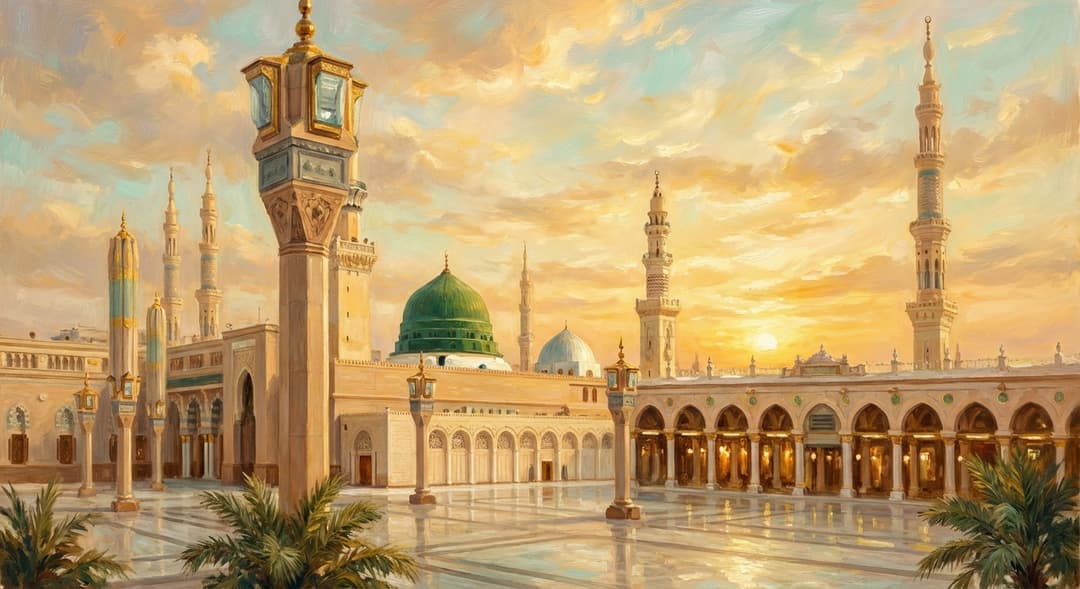
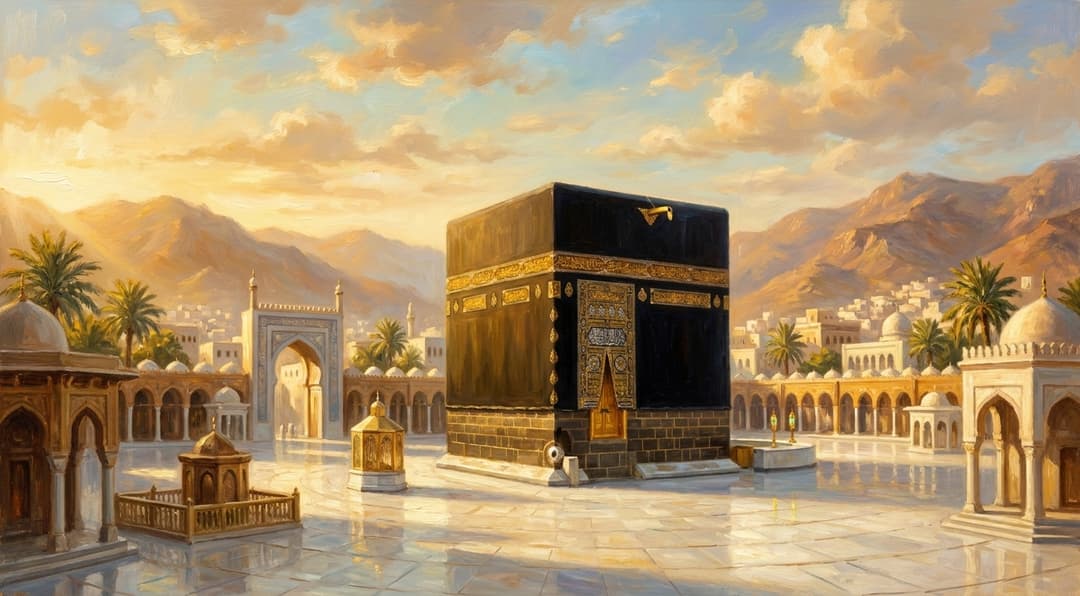
Sources & Research
Every fact on Temples.org is backed by verified Sources & Research. Each piece of information is rated by source tier and confidence level.
View All Sources (9)
| Field | Source | Tier | Retrieved |
|---|---|---|---|
| Masjid al-Haram (The Sacred Mosque) | Ihram.org.uk (opens in a new tab) | C | 2026-02-13 |
| The Great Mosque of Mecca | Britannica (opens in a new tab) | B | 2026-02-13 |
| Masjid al-Haram - ArchNet | ArchNet (opens in a new tab) | B | 2026-02-13 |
| Masjid al-Haram - Welcome Saudi | Welcome Saudi (opens in a new tab) | D | 2026-02-13 |
| Masjid al-Haram - Madain Project | Madain Project (opens in a new tab) | B | 2026-02-13 |
| Zamzam Well - Zamzam.com | Zamzam.com (opens in a new tab) | A | 2026-02-13 |
| Nusuk - Performing Umrah | Nusuk.sa (opens in a new tab) | A | 2026-02-13 |
| Makkah - Online Information | Mekka-Online.com (opens in a new tab) | C | 2026-02-13 |
| Hajj and Umrah Planner | HajjUmrahPlanner.com (opens in a new tab) | C | 2026-02-13 |