Visitor Insights
Visiting Masjid Quba (Quba Mosque)
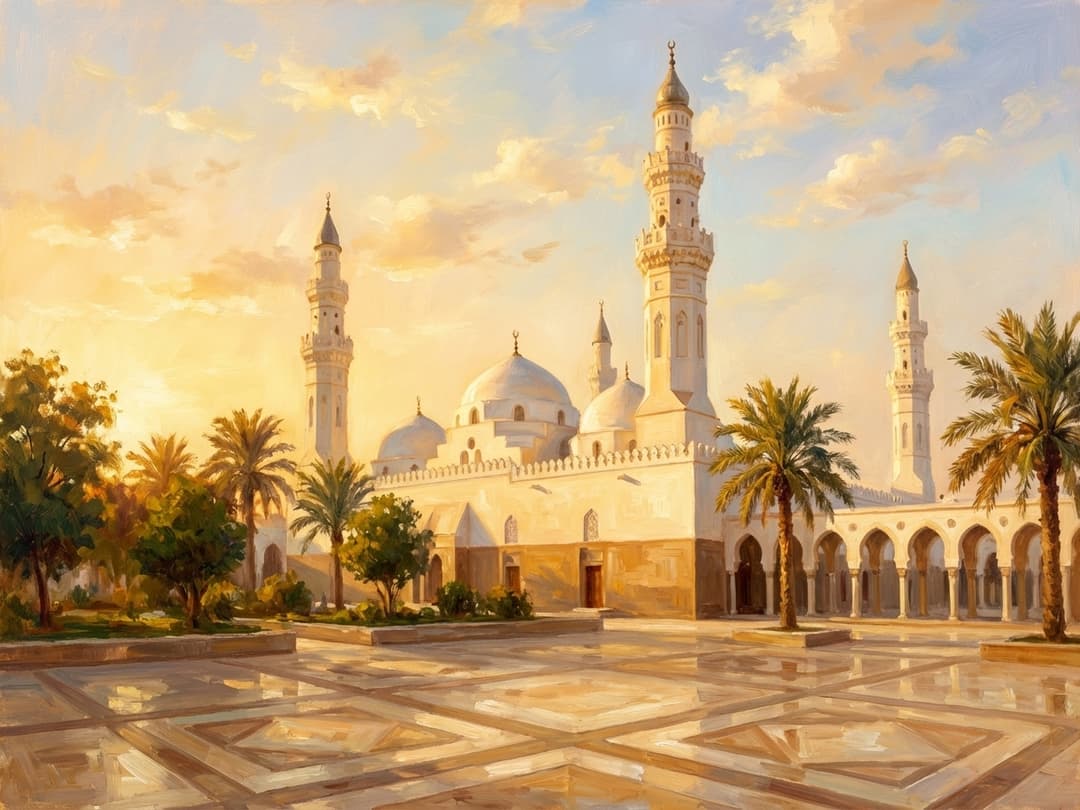
Visiting Masjid Quba offers a profound spiritual experience, allowing visitors to connect with the early history of Islam. The mosque exudes a serene and reverent atmosphere, inviting contemplation and prayer. Expect to encounter fellow pilgrims and worshippers from around the world, all drawn to this sacred site. Practical considerations include dressing modestly, being mindful of prayer times, and allowing ample time to explore the mosque and its surroundings.
Highlights
- Praying in the first mosque established by the Prophet Muhammad.
- Experiencing the tranquility and spiritual atmosphere of the mosque.
- Exploring the architectural beauty of the current structure.
Things to Know
- Dress modestly and respectfully.
- Be mindful of prayer times and avoid disrupting worshippers.
- Photography inside the mosque may be restricted.
Location
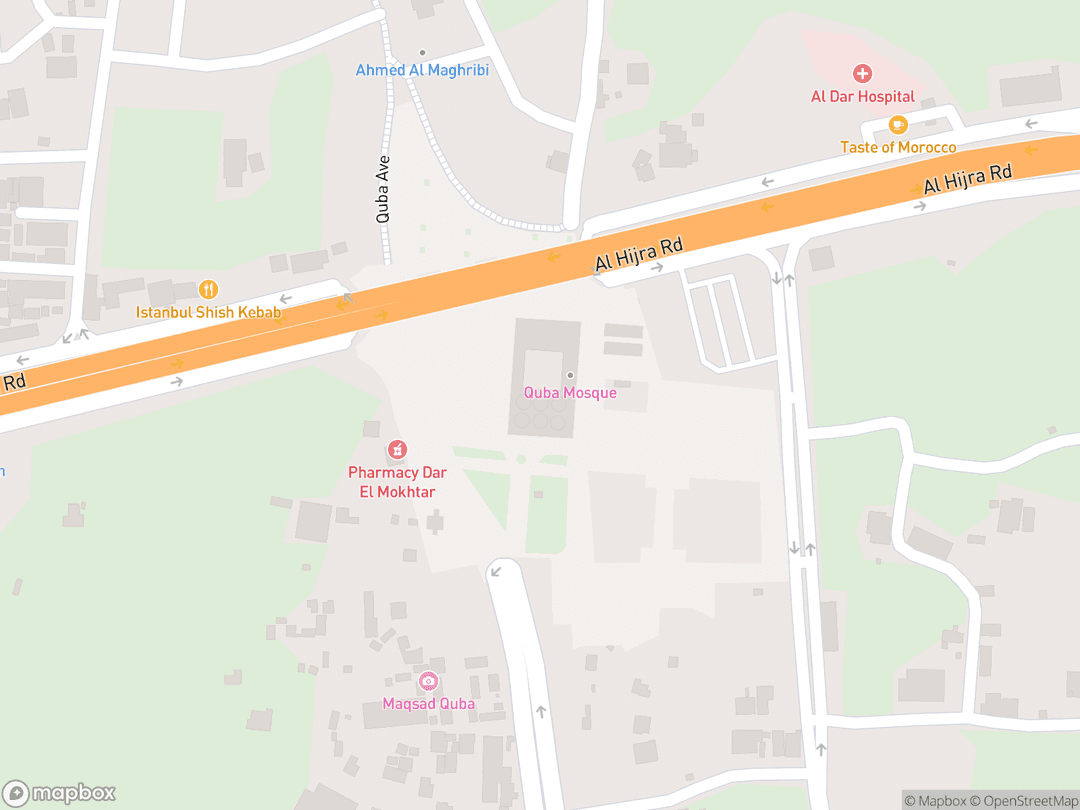
3493 Al Hijrah Rd, Al Khatim, Medina 42318, Saudi Arabia
Hours: Open to visitors throughout the day.
Getting There: Masjid Quba is located approximately 3.5 km southwest of the Prophet's Mosque in Medina. It can be reached by walking, taxi, ride-hailing apps, or local buses.
Get DirectionsTips for Your Visit
Best Time to Visit
Visit early morning or after the midday heat to avoid crowds and enjoy cooler temperatures.
Dress Code
Dress modestly and respectfully. Women should wear an abaya or loose-fitting attire and cover their hair.
About
Masjid Quba, also known as Quba Mosque, holds immense significance in Islamic history as the first mosque established by the Prophet Muhammad. Located in Medina, Saudi Arabia, it marks the site where the Prophet Muhammad, upon his arrival in Quba during the Hijrah (migration) from Mecca, laid the foundation for the first mosque in Islam. This event is a cornerstone of Islamic tradition, symbolizing the establishment of a place of worship and community for the early Muslims.
The mosque has undergone numerous expansions and renovations throughout its history, reflecting the enduring devotion and reverence it holds in the hearts of Muslims. From its humble beginnings with raw bricks and palm leaves, Masjid Quba has evolved into a magnificent structure, incorporating elements of Islamic architecture and design. The current structure, completed in 1986, stands as a testament to the architectural heritage of Medina and the broader Islamic world.
Masjid Quba serves not only as a place of prayer but also as a symbol of unity and spiritual connection for Muslims worldwide. Its historical significance, architectural beauty, and spiritual atmosphere make it a cherished destination for pilgrims and visitors seeking to experience the rich heritage of Islam and the legacy of the Prophet Muhammad. As part of the Abrahamic tradition, it stands as a testament to the shared roots of monotheistic faiths and the importance of places of worship in fostering community and devotion.
Gallery
Symbolic Elements
The temple's exterior features intricate carvings, each rich with spiritual meaning:
Mihrab
The Mihrab is a niche in the wall of the mosque that indicates the qibla, the direction of the Kaaba in Mecca, towards which Muslims pray. It serves as a focal point for prayer and symbolizes the unity of the Muslim community in their devotion to Allah. The Mihrab in Masjid Quba is made of white marble, adding to its elegance and spiritual significance.
Minbar
The Minbar is a pulpit from which the Imam (prayer leader) delivers sermons during Friday prayers and other religious occasions. It is a symbol of religious authority and guidance, providing a platform for the dissemination of Islamic teachings and values. The Minbar in Masjid Quba is also made of white marble, complementing the Mihrab and enhancing the mosque's aesthetic appeal.

Domes
Domes are a common feature in mosque architecture, symbolizing the vault of heaven and the oneness of God. They represent the divine realm and the connection between the earthly and the celestial. Masjid Quba features 56 mini domes surrounding the perimeter of the mosque, creating a visually stunning and spiritually uplifting atmosphere.
Minarets
Minarets are towers from which the call to prayer (adhan) is announced, inviting Muslims to perform their daily prayers. They serve as a visual landmark and a reminder of the importance of prayer in Islamic life. Masjid Quba has four parallel minarets resting on square bases, with octagonal shafts that transition to a circular shape, showcasing the mosque's architectural grandeur.
White Marble
White marble is a prominent material used in the construction of Masjid Quba, symbolizing purity, elegance, and spiritual enlightenment. Its smooth texture and reflective surface create a sense of serenity and reverence within the mosque. The use of white marble in the Mihrab, Minbar, and other architectural elements enhances the mosque's overall aesthetic appeal and spiritual atmosphere.
Geometric Patterns
Geometric patterns are a characteristic feature of Islamic art and architecture, representing the infinite nature of God and the harmony of the universe. These intricate designs adorn the walls, ceilings, and other surfaces of Masjid Quba, creating a visually captivating and spiritually enriching environment. The geometric patterns reflect the intellectual and artistic achievements of Islamic civilization.

Calligraphy
Islamic calligraphy is the art of beautiful writing, used to transcribe verses from the Quran and other religious texts. It is a highly revered art form that combines aesthetic beauty with spiritual meaning. Calligraphic inscriptions adorn the walls and ceilings of Masjid Quba, conveying messages of faith, devotion, and divine guidance. The calligraphy serves as a reminder of the importance of the Quran in Islamic life.
Interesting Facts
Masjid Quba is considered the first mosque ever built in Islam. Its foundation was laid by the Prophet Muhammad himself, marking a pivotal moment in Islamic history.
Praying in Masjid Quba is said to carry the same reward as performing Umrah (lesser pilgrimage). This highlights the mosque's spiritual significance and the blessings associated with worshipping there.
The mosque is mentioned in the Quran in Surah At-Tawbah (9:108), emphasizing its importance and divine recognition. This verse underscores the mosque's sanctity and its role in the Muslim community.
The expansion ordered by King Fahd bin Abdulaziz in 1985 increased the mosque's area from 1,600 m² to 13,500 m². This significant expansion allowed the mosque to accommodate a larger number of worshippers and enhance its facilities.
The King Salman Project aims to expand the mosque's total area to 50,000 m² and increase its capacity to 66,000 worshipers. This ambitious project reflects the ongoing commitment to preserving and enhancing Masjid Quba for future generations.
The construction of Masjid Quba was a collective effort, with the Prophet Muhammad and his companions participating. This collaborative effort symbolizes the unity and shared dedication of the early Muslim community.
It was the first mosque where Salat al-Jumuah (Friday Prayer) was established openly. This marked a significant step in the development of Islamic worship and community gatherings.
The Prophet Muhammad used to visit the mosque every Saturday and conduct religious service there. This practice underscores the mosque's importance in the Prophet's life and the early Muslim community.
The mosque has accommodations for Imams and Muezzins, a library, and a shopping area. These facilities enhance the mosque's role as a community center and a place for learning and spiritual growth.
The courtyard is covered by fabric screens during the day to protect visitors from the heat. This thoughtful design ensures the comfort of worshippers and visitors, especially during the hot months.
Common Questions
What is the significance of Masjid Quba?
Masjid Quba holds immense significance in Islamic history as the first mosque established by the Prophet Muhammad. It marks the site where the Prophet, upon his arrival in Quba during the Hijrah, laid the foundation for the first mosque in Islam, symbolizing the establishment of a place of worship and community for the early Muslims.
Where is Masjid Quba located?
Masjid Quba is located in Medina, Saudi Arabia, approximately 3.5 km southwest of the Prophet's Mosque. Its location is easily accessible by walking, taxi, ride-hailing apps, or local buses.
What are the architectural features of Masjid Quba?
The current structure of Masjid Quba, completed in 1986, showcases Islamic architecture with Medinan elements. It features four parallel minarets, 56 mini domes, a rectangular layout with a central courtyard, dedicated women's prayer area, and two main prayer areas connected by roofed colonnades. The minbar and mihrab are composed of white marble, and the mosque has seven main entrances and 12 subsidiary entrances.
What is the reward for praying in Masjid Quba?
Praying in Masjid Quba is said to carry the same reward as performing Umrah (lesser pilgrimage). This belief stems from the Prophet Muhammad's practice of visiting the mosque every Saturday and conducting religious service there, highlighting its spiritual importance.
What is the King Salman Project for Masjid Quba?
The King Salman Project, announced in 2022, aims to expand the Quba Mosque and develop its surrounding area, increasing the mosque's total area to 50,000 m² and its capacity to 66,000 worshipers. This expansion reflects the enduring devotion and reverence for Masjid Quba in the hearts of Muslims worldwide.
Related Stories
Explore the rich history, traditions, and people connected to this sacred site.
Featured Stories
The Prophet's Arrival in Quba
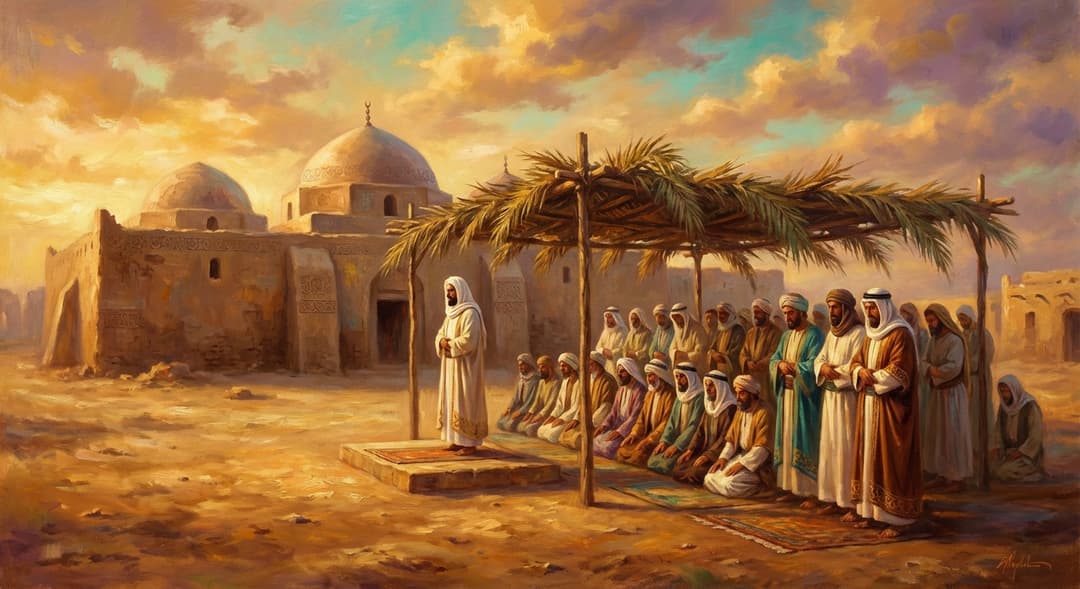
In the year 622 CE, the Prophet Muhammad, accompanied by his loyal companion Abu Bakr, embarked on the Hijrah, a momentous journey from Mecca to Medina. Upon reaching the outskirts of Medina, in a small village called Quba, the Prophet paused, marking a significant moment in Islamic history. It was here, in Quba, that the Prophet Muhammad laid the foundation for the first mosque in Islam, Masjid Quba.
The arrival of the Prophet in Quba was met with immense joy and anticipation by the local community. They eagerly welcomed him and offered their support, recognizing the significance of his mission. The Prophet spent several days in Quba, staying with Kulthoom bin Hadm and actively participating in the construction of the mosque, solidifying the bond between the Prophet and the people of Medina.
The establishment of Masjid Quba symbolized the beginning of a new era for the Muslim community, providing a place of worship, community gathering, and spiritual guidance. It marked the transition from persecution in Mecca to a place of refuge and growth in Medina, laying the foundation for the flourishing of Islam.
The Expansion under King Fahd
In the 1980s, under the reign of King Fahd bin Abdulaziz, Masjid Quba underwent a complete reconstruction and expansion, transforming it into the magnificent structure that stands today. The expansion was a testament to King Fahd's commitment to preserving and enhancing Islamic heritage, ensuring that Masjid Quba could accommodate the growing number of pilgrims and worshippers.
The Egyptian architect Abdel-Wahed El-Wakil was commissioned for this ambitious project, tasked with designing a mosque that would reflect the rich architectural traditions of Islam while incorporating modern amenities and functionality. The reconstruction involved expanding the mosque's size, increasing its capacity, and enhancing its aesthetic appeal, creating a space that would inspire reverence and devotion.
The expanded Masjid Quba featured four parallel minarets, 56 mini domes, a rectangular layout with a central courtyard, dedicated women's prayer area, and two main prayer areas connected by roofed colonnades. The use of white marble, geometric patterns, and calligraphic inscriptions added to the mosque's grandeur and spiritual atmosphere, making it a cherished destination for Muslims worldwide.
The Significance of Prayer in Masjid Quba
Ongoing
Praying in Masjid Quba holds a special significance for Muslims, as it is believed to carry the same reward as performing Umrah (lesser pilgrimage). This belief stems from the Prophet Muhammad's practice of visiting the mosque every Saturday and conducting religious service there, highlighting its spiritual importance and the blessings associated with worshipping there.
The act of praying in Masjid Quba allows Muslims to connect with the early history of Islam, immersing themselves in the atmosphere of devotion and reverence that permeated the mosque during the time of the Prophet. It is an opportunity to reflect on the teachings of Islam, strengthen one's faith, and seek blessings from Allah.
The mosque serves as a reminder of the importance of prayer in Islamic life, encouraging Muslims to establish a regular practice of prayer and to seek solace and guidance in their connection with Allah. The spiritual atmosphere of Masjid Quba inspires Muslims to deepen their faith and to strive for excellence in their worship.
Timeline
Foundation Laid by Prophet Muhammad
The Prophet Muhammad laid the foundation of Masjid Quba upon his arrival in Quba during the Hijrah, marking the establishment of the first mosque in Islam.
MilestoneExpansion during Caliph Uthman's Reign
The mosque underwent expansion during the reign of Caliph Uthman ibn Affan, accommodating the growing Muslim community.
RenovationExpansion during Umayyad Caliph Abd al-Malik's Rule
Another expansion took place during the rule of the Umayyad caliph Abd al-Malik ibn Marwan, further enhancing the mosque's capacity.
RenovationRebuilt under Caliph al-Walid I
The mosque was rebuilt under Caliph al-Walid I, showcasing the architectural advancements of the time.
RenovationFirst Minaret Added
The first minaret was added under Umar ibn Abd al-Aziz, providing a platform for the call to prayer.
RenovationMihrab Added by Sharif Abu Ya'la Ahmad ibn Hasan
A mihrab (niche symbolizing the qibla) was added by Sharif Abu Ya'la Ahmad ibn Hasan, indicating the direction of the Kaaba in Mecca.
RenovationAdditions by Zengid Vizier Jamal al-Din al-Isfahani
Further additions were made by the Zengid vizier Jamal al-Din al-Isfahani, contributing to the mosque's architectural evolution.
RenovationReconstruction by Sultan al-Nasir Muhammad ibn Qalawun
Sultan al-Nasir Muhammad ibn Qalawun reconstructed the mosque during the Mamluk era, preserving its historical significance.
RenovationCeiling Redone under al-Ashraf Barsbay
The ceiling was redone under al-Ashraf Barsbay, enhancing the mosque's interior aesthetics.
RenovationRenovations by Qaytbay
Qaytbay made renovations to the mosque, ensuring its structural integrity and visual appeal.
RenovationReconstruction of Minaret and Ceiling by Sultan Suleiman
Sultan Suleiman sponsored the reconstruction of the minaret and the mosque's ceiling during the Ottoman era, adding to its grandeur.
RenovationRenovation during Sultan Abdulmajid's Era
Renovation took place during the era of Sultan Abdulmajid of the Ottoman Empire, maintaining the mosque's historical character.
RenovationConstruction of Straight Road by King Abdulaziz Al Saud
King Abdulaziz Al Saud ordered the construction of a straight road between the Prophet's Mosque and Quba Mosque, facilitating access for pilgrims.
RenovationRefurbishment and Extension by King Faisal bin Abdulaziz
During the reign of King Faisal bin Abdulaziz, the mosque's exterior walls were refurbished, and the northern portico was extended, enhancing its overall appearance.
RenovationComplete Reconstruction under King Fahd bin Abdulaziz
Complete reconstruction under Saudi King Fahd bin Abdulaziz, expanding the mosque's size and increasing its capacity. The Egyptian architect Abdel-Wahed El-Wakil was commissioned for this project.
RenovationKing Salman Project Announced
Crown Prince Mohammed bin Salman announced the King Salman Project for the expansion of the Quba Mosque and development of its surrounding area, aiming to increase the mosque's total area tenfold. Rasem Badran was assigned to prepare the designs for this expansion.
RenovationReligious Significance
Masjid Quba holds profound religious significance in Islam as the first mosque established by the Prophet Muhammad. Its foundation marks the beginning of communal worship and the establishment of a center for the nascent Muslim community in Medina. As part of the Abrahamic tradition, it represents a continuation of the monotheistic faith and the importance of places of worship in fostering devotion and community.
The core spiritual purpose of Masjid Quba is to provide a place for Muslims to connect with Allah through prayer, reflection, and communal worship. It serves as a center for spiritual growth, learning, and the strengthening of the bonds of faith within the Muslim community.
Sacred Ordinances
Salah (Prayer)
Salah, the daily ritual prayer, is a fundamental practice in Islam and a central activity performed at Masjid Quba. Muslims gather to offer their prayers to Allah, seeking guidance, forgiveness, and blessings.
Dhikr (Remembrance of Allah)
Dhikr, the remembrance of Allah, is a spiritual practice that involves reciting the names of Allah and engaging in acts of devotion. Masjid Quba provides a serene environment for Muslims to engage in Dhikr, deepening their connection with the divine.
I'tikaf (Seclusion)
I'tikaf, the practice of seclusion in a mosque for the purpose of worship and reflection, is a spiritual retreat that allows Muslims to disconnect from worldly affairs and focus on their relationship with Allah. Masjid Quba offers a space for Muslims to perform I'tikaf, seeking spiritual renewal and closeness to Allah.
The Importance of Community
Masjid Quba serves as a symbol of unity and community for Muslims worldwide. Its establishment marked the beginning of a collective identity and a shared commitment to the teachings of Islam. The mosque fosters a sense of belonging and encourages Muslims to support and uplift one another in their faith.
The Legacy of the Prophet Muhammad
Masjid Quba stands as a testament to the legacy of the Prophet Muhammad and his profound impact on the world. Its establishment represents the beginning of a new era for Islam and the spread of its message of peace, justice, and compassion. The mosque serves as a reminder of the Prophet's teachings and his example of piety, humility, and devotion to Allah.
Similar Temples
Sources & Research
Every fact on Temples.org is backed by verified Sources & Research. Each piece of information is rated by source tier and confidence level.
View All Sources (6)
| Field | Source | Tier | Retrieved |
|---|---|---|---|
| About & Historical Background | Al Fateh Transport (opens in a new tab) | A | 2024-02-29 |
| Architectural Description | Archnet (opens in a new tab) | B | 2024-02-29 |
| Historical Timeline | Madain Project (opens in a new tab) | B | 2024-02-29 |
| Interesting Facts | Memphis Tours (opens in a new tab) | D | 2024-02-29 |
| Interesting Facts | Hajj Umrah Planner (opens in a new tab) | C | 2024-02-29 |
| Interesting Facts | Dream Ziarah (opens in a new tab) | C | 2024-02-29 |