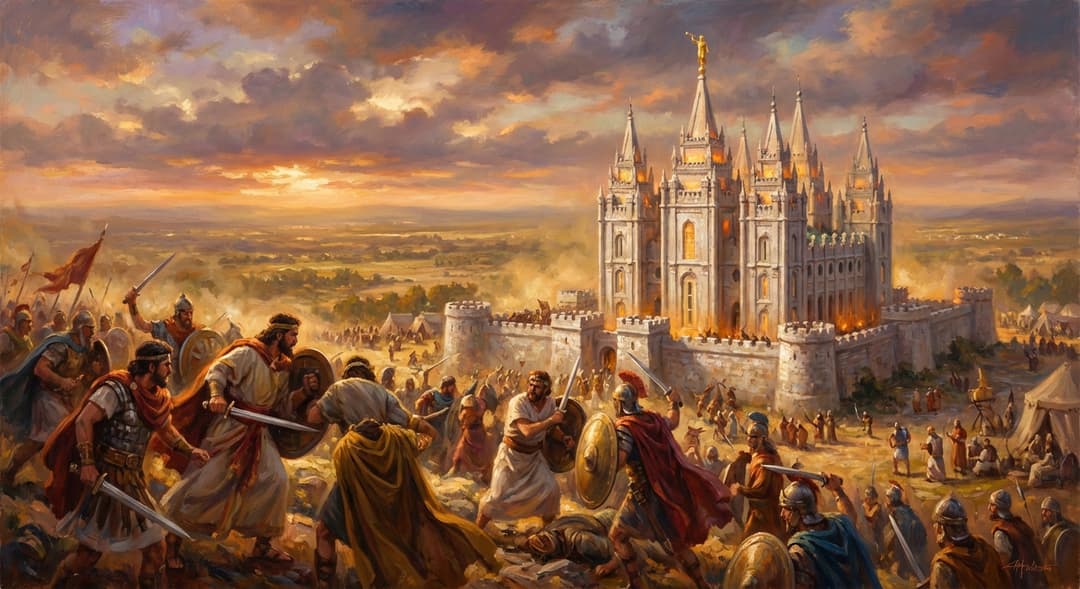
The Final Stand of the Nephites, as recounted in the Book of Mormon, represents a cataclysmic event that concluded centuries of Nephite civilization. This pivotal moment, centered around the Hill Cumorah, is a narrative of societal decline, warfare, and the preservation of sacred records. Understanding this event requires acknowledging the Book of Mormon as a religious text and a source of historical information for members of The Church of Jesus Christ of Latter-day Saints.
According to the Book of Mormon, the Nephites were descendants of a family who migrated from the Near East to the Americas around 600 BC. Over generations, they developed a complex society marked by periods of righteousness and prosperity, interspersed with wickedness and conflict, particularly with their brethren, the Lamanites. As the Nephite nation spiraled into internal strife and spiritual decay, the prophet-leader Mormon foresaw their impending destruction. In an effort to preserve their history and teachings, Mormon abridged a vast collection of records, creating the Book of Mormon, and secreted the metal plates containing this abridgment within the Hill Cumorah.
Around 385 AD, the final, devastating battle took place near the Hill Cumorah. Mormon, leading the remaining Nephite forces, gathered his people for a last stand against the Lamanites. The Book of Mormon describes a scene of immense carnage, where the Nephite nation was virtually annihilated. Mormon himself perished in the battle. His son, Moroni, survived and completed the record, adding his own insights and exhortations before burying the plates in the Hill Cumorah, ensuring their preservation for a future generation.
The Final Stand at Cumorah holds profound religious significance for Latter-day Saints. It serves as a solemn reminder of the consequences of unrighteousness and the importance of adhering to divine principles. Furthermore, the Hill Cumorah is revered as the place where Joseph Smith, the founder of the Latter-day Saint movement, received the golden plates from which he translated the Book of Mormon. This event solidified the Hill Cumorah as a sacred site, a focal point for faith, reflection, and annual pageants that depict scenes from the Book of Mormon.
Key Details
- Date of Battle Approximately 385 AD
- Location Near the Hill Cumorah
- Key Leaders (Nephites) Mormon and Moroni
- Record Preservation Mormon abridged and hid the Nephite records.
- Significance End of Nephite civilization in the Book of Mormon narrative.
- Modern Relevance Sacred site for The Church of Jesus Christ of Latter-day Saints.
Timeline
Lehi's Journey
Lehi's family departs from Jerusalem and journeys to the Americas.
component.timeline.historicalAmmaron instructs Mormon
Ammaron instructs Mormon where the records are kept.
component.timeline.historicalFinal Battle at Cumorah
The Nephites are destroyed by the Lamanites near the Hill Cumorah. Mormon is killed, and Moroni completes the record.
EventMoroni Buries the Plates
Moroni buries the gold plates in the Hill Cumorah.
component.timeline.historicalSources & Research
Every fact on Temples.org is backed by verified Sources & Research. Each piece of information is rated by source tier and confidence level.
View All Sources (4)
| Field | Source | Tier | Retrieved |
|---|---|---|---|
| Imperial Valley Press (El Centro, Calif.) | Library of Congress (opens in a new tab) | C | 2024-01-01 |
| The Minneapolis Journal (Minneapolis, Minn.) | Library of Congress (opens in a new tab) | C | 2024-01-01 |
| Evening Star (Washington, D.C.) | Library of Congress (opens in a new tab) | C | 2024-01-01 |
| Book of Mormon | The Church of Jesus Christ of Latter-day Saints (opens in a new tab) | A | 2024-01-01 |