
Visitor Insights
Visiting Hill Cumorah
Visiting the Hill Cumorah offers a unique opportunity to connect with the history of The Church of Jesus Christ of Latter-day Saints. The site provides a peaceful and reflective atmosphere, allowing visitors to contemplate the events that took place there. Expect to see beautiful landscaping, informative exhibits, and the iconic Angel Moroni Monument. The Visitors' Center provides context and insights into the significance of the Hill Cumorah.
Highlights
- Visit the Angel Moroni Monument
- Explore the Hill Cumorah Visitors' Center
- Walk the Woodland Trail
Things to Know
- Check the Visitors' Center hours before visiting
- Wear comfortable shoes for walking
- Be respectful of the sacred nature of the site
Location
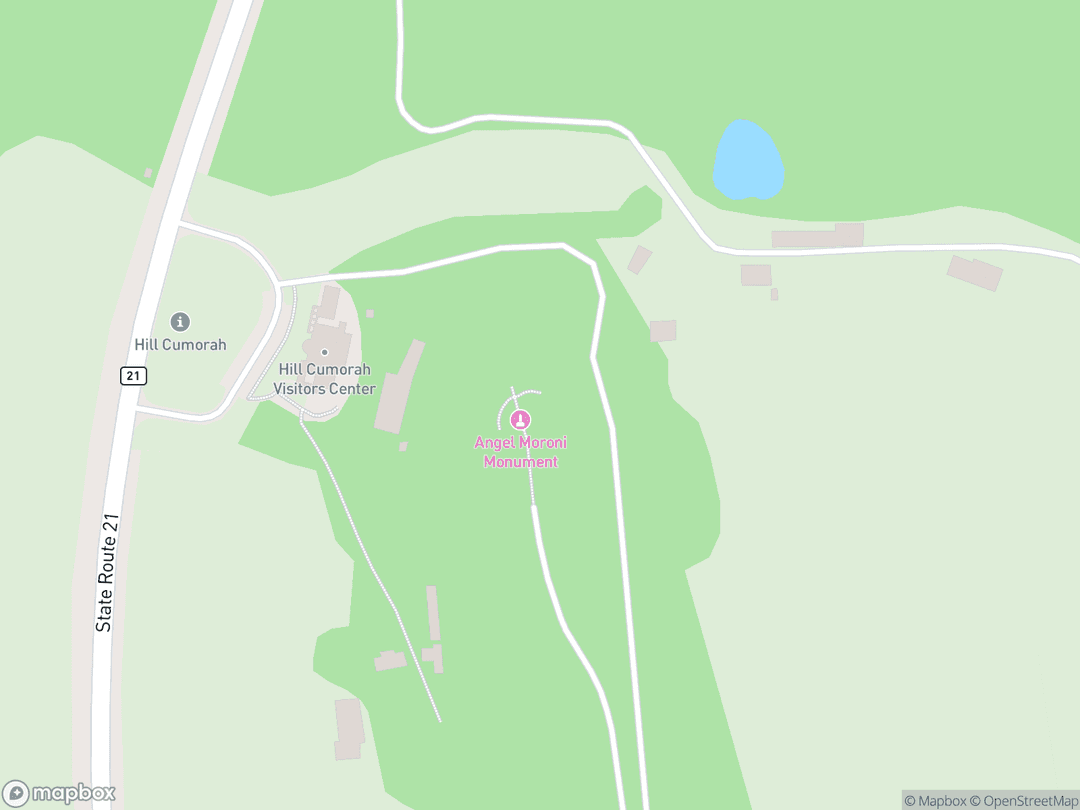
603 State Route 21, Palmyra, NY 14522, USA
Hours: The Hill Cumorah Visitors' Center is open Monday through Saturday from 10:00 AM to 5:00 PM and Sunday from 1:00 PM to 5:00 PM.
Getting There: The Hill Cumorah is located south of Palmyra, New York, on State Route 21.
Get DirectionsAbout
The Hill Cumorah is a significant historical and religious site for members of The Church of Jesus Christ of Latter-day Saints. It is located near Palmyra, New York, and is identified as the place where Joseph Smith said he obtained the golden plates from which he translated the Book of Mormon. The hill is also believed to be the site of a final battle between peoples described in the Book of Mormon.
The hill itself is a glacial drumlin, a naturally formed elongated hill created by glacial activity during the Ice Age. It rises approximately 110 feet above the surrounding valley floor. The most prominent man-made feature is the Angel Moroni Monument, a granite monument with bronze panels and a gilded statue of the angel Moroni on top. The Hill Cumorah Visitors' Center offers interactive exhibits and artwork related to the Book of Mormon and the history of the Church.
Today, the Hill Cumorah is a popular destination for Latter-day Saints and other visitors interested in learning more about the history of the Church and the Book of Mormon. Visitors can explore the Hill Cumorah Visitors' Center, walk the Woodland Trail, and visit the Angel Moroni Monument. The Church of Jesus Christ of Latter-day Saints began a long-term project in 2021 to preserve the area, including reforesting the area to resemble what Joseph Smith would have seen in the early 1800s.
Gallery
Symbolic Elements
The temple's exterior features intricate carvings, each rich with spiritual meaning:

Angel Moroni Statue
The statue of the angel Moroni atop the monument symbolizes the divine messenger who revealed the location of the golden plates to Joseph Smith. Moroni is a figure from the Book of Mormon, a prophet who lived in the ancient Americas. The statue represents the restoration of the gospel of Jesus Christ.

Golden Plates
The hill is revered as the place where Joseph Smith obtained the golden plates, which he translated into the Book of Mormon. These plates represent a record of ancient civilizations and God's dealings with them. They are a symbol of divine revelation and the truthfulness of the Book of Mormon.

Glacial Drumlin
The Hill Cumorah itself is a glacial drumlin, a naturally formed elongated hill created by glacial activity during the Ice Age. This natural formation symbolizes the enduring nature of the earth and the long history of the land. It also represents a connection to the past.

Visitors' Center
The Hill Cumorah Visitors' Center serves as a place of learning and reflection for those who visit the site. It provides interactive exhibits and artwork that help visitors understand the history of the Church and the significance of the Book of Mormon. The center symbolizes the ongoing effort to share the gospel with the world.

Woodland Trail
The Woodland Trail offers a scenic view of the surrounding area and provides a peaceful place for contemplation. The trail symbolizes the journey of life and the importance of seeking spiritual guidance. It also represents the connection between nature and the divine.

Monument Base
The base of the Angel Moroni Monument is constructed of granite with bronze panels. The solid foundation symbolizes the strength and stability of the Church. The bronze panels depict scenes from the Book of Mormon, further emphasizing the importance of this sacred text.

Restoration Project
The Church of Jesus Christ of Latter-day Saints began a long-term project in 2021 to preserve the area, including reforesting the area to resemble what Joseph Smith would have seen in the early 1800s. This project symbolizes the ongoing effort to preserve the history and sacredness of the Hill Cumorah for future generations.

The Christus Statue
The Hill Cumorah Visitors' Center features a Christus statue, a replica of the original statue by Bertel Thorvaldsen. This statue represents Jesus Christ, the central figure of the Latter-day Saint faith. It serves as a reminder of Christ's love and sacrifice for all mankind.
Interesting Facts
The hill is a glacial drumlin, formed during the retreat of the Ice Age glaciers.
The Church of Jesus Christ of Latter-day Saints purchased the Hill Cumorah in the 1920s.
Before being known as Cumorah, the hill was called 'Mormon Hill' or 'Gold Bible Hill' by locals.
Joseph Smith reported meeting with the angel Moroni annually at the Hill Cumorah from 1823 to 1827.
The Angel Moroni Monument was designed by Latter-day Saint sculptor Torleif Knaphus.
From 1937 to 2020 (with a pause during World War II), the Hill Cumorah was the site of an annual pageant depicting events from the Book of Mormon.
The Hill Cumorah Visitors' Center features artwork, interactive exhibits, and a Christus statue.
The Church of Jesus Christ of Latter-day Saints does not take an official position on the specific geographic locations of Book of Mormon events in the ancient Americas but acknowledges the historical significance of the Hill Cumorah in Manchester, New York.
The Hill Cumorah is near other historical sites significant to the Church of Jesus Christ of Latter-day Saints, including the Smith Family Farm, the Sacred Grove, and the Grandin Printing Shop.
In 2021, the Church began a project to restore the Hill Cumorah area to its 19th-century appearance.
Common Questions
What is the Hill Cumorah?
The Hill Cumorah is a hill located near Palmyra, New York, that is significant to members of The Church of Jesus Christ of Latter-day Saints. It is the place where Joseph Smith said he obtained the golden plates from which he translated the Book of Mormon. It is also identified in Latter-day Saint tradition as the site of a final battle between peoples described in the Book of Mormon.
What can visitors do at the Hill Cumorah?
Visitors can explore the Hill Cumorah Visitors' Center, which features interactive exhibits and artwork related to the Book of Mormon and the history of the Church. They can also walk the Woodland Trail, which offers a scenic view of the surrounding area, and visit the Angel Moroni Monument, a granite monument with bronze panels and a gilded statue of the angel Moroni on top.
When is the Hill Cumorah Visitors' Center open?
The Hill Cumorah Visitors' Center is open Monday through Saturday from 10:00 AM to 5:00 PM and Sunday from 1:00 PM to 5:00 PM.
How did the Hill Cumorah get its name?
The name 'Cumorah' became associated with the hill in 1829, after Joseph Smith began translating the golden plates. The Book of Mormon mentions a place called Cumorah, and Latter-day Saints believe that the hill in New York is the same place.
What is the significance of the Angel Moroni Monument?
The Angel Moroni Monument symbolizes the divine messenger who revealed the location of the golden plates to Joseph Smith. Moroni is a figure from the Book of Mormon, a prophet who lived in the ancient Americas. The statue of Moroni atop the monument represents the restoration of the gospel of Jesus Christ.
Related Stories
Explore the rich history, traditions, and people connected to this sacred site.
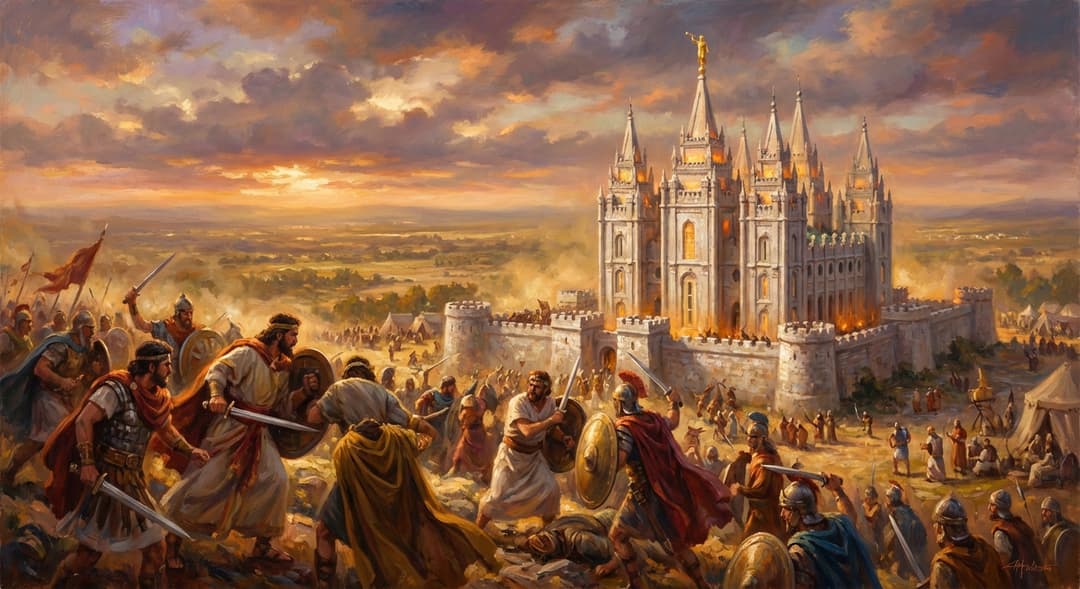
Featured Stories
Joseph Smith's First Vision of Moroni
September 21–22, 1823
In the fall of 1823, a young Joseph Smith knelt in prayer, seeking guidance from God. That night, he was visited by the angel Moroni, a messenger from God who revealed the existence of ancient golden plates buried in a nearby hill. Moroni told Joseph about the plates, which contained a record of ancient civilizations and the fullness of the everlasting gospel. This divine encounter marked the beginning of Joseph Smith's prophetic mission and set the stage for the translation of the Book of Mormon.
Moroni instructed Joseph to meet him at the Hill Cumorah on the same day each year for the next four years. During these annual meetings, Moroni provided Joseph with further instruction and prepared him for the task of obtaining and translating the golden plates. These experiences deepened Joseph's understanding of God's plan and strengthened his faith in the divine mission that lay ahead.
Source: The Church of Jesus Christ of Latter-day Saints
Obtaining the Golden Plates
September 22, 1827
After four years of preparation and instruction, Joseph Smith finally received permission to obtain the golden plates from the Hill Cumorah. On September 22, 1827, he journeyed to the hill and, following Moroni's instructions, unearthed the ancient record. The plates were heavy and bound together with rings, and they were covered with strange engravings. Joseph knew that he had been entrusted with a sacred responsibility to translate this record and share its message with the world.
With the help of divine power, Joseph Smith began the arduous task of translating the golden plates. He used special instruments, known as the Urim and Thummim, to decipher the ancient language and record the words of the Book of Mormon. This translation process was a testament to Joseph's faith and dedication, as he worked tirelessly to bring forth this new volume of scripture.
Source: The Church of Jesus Christ of Latter-day Saints
The Hill Cumorah Pageant
1937–2020
For over eight decades, the Hill Cumorah was the site of an annual pageant that depicted events from the Book of Mormon. This grand production involved hundreds of volunteers and drew thousands of visitors each year. The pageant brought the stories of the Book of Mormon to life through elaborate costumes, dramatic performances, and inspiring music. It became a beloved tradition for many Latter-day Saints and a powerful way to share the message of the Book of Mormon with the world.
The Hill Cumorah Pageant was a testament to the faith and dedication of the members of The Church of Jesus Christ of Latter-day Saints. Volunteers from all walks of life came together to create this spectacular event, sharing their talents and testimonies with audiences from around the globe. The pageant left a lasting impression on those who participated in it, fostering a deeper appreciation for the Book of Mormon and its message of hope and redemption.
Source: Church History Department, The Church of Jesus Christ of Latter-day Saints
Timeline
Hill known as 'Mormon Hill' or 'Gold Bible Hill'
The hill, a glacial drumlin, was known locally as 'Mormon Hill' or 'Gold Bible Hill'. Local legends told of buried treasure on the hill.
MilestoneJoseph Smith's First Vision of Moroni
Joseph Smith reported being visited by the angel Moroni, who told him of a record on golden plates buried in the hill.
MilestoneAnnual Meetings with Moroni
Joseph Smith met with Moroni annually at the Hill Cumorah on September 22.
EventJoseph Smith Obtains the Golden Plates
Joseph Smith obtained the golden plates from the Hill Cumorah.
MilestoneName 'Cumorah' Associated with the Hill
The name 'Cumorah' became associated with the hill.
MilestoneChurch Purchase of the Hill
The Church of Jesus Christ of Latter-day Saints purchased the hill and surrounding land.
MilestoneCentennial Conference
The Northeastern States Mission held a conference at the Hill Cumorah to celebrate the 100th anniversary of Joseph Smith's first visit to the hill.
EventAngel Moroni Monument Erected
A monument of the angel Moroni, designed by Torleif Knaphus, was erected on the hill's northern summit. A Bureau of Information was also built.
MilestoneAnnual Hill Cumorah Pageant
The Hill Cumorah Pageant was performed annually (except for a brief pause during World War II).
EventPageant Rewritten
The Hill Cumorah Pageant was rewritten to focus on the Book of Mormon.
EventPreservation Project Begins
The Church of Jesus Christ of Latter-day Saints began a long-term project to preserve the area, including reforesting the area to resemble what Joseph Smith would have seen in the early 1800s. The pageant was discontinued.
Renovation'Arise and Come Forth Unto Me' Debuts
A sculptural suite, 'Arise and Come Forth Unto Me,' debuted at the Hill Cumorah Visitors' Center.
EventGolden Plates Retrieved
Joseph Smith retrieved the golden plates from their burial place on the Hill Cumorah, marking a pivotal moment in Latter-day Saint history.
MilestoneFirst Hill Cumorah Pageant
The first Hill Cumorah Pageant was performed, becoming an annual tradition for many years.
EventPageant Discontinued
The Church of Jesus Christ of Latter-day Saints announced the discontinuation of the Hill Cumorah Pageant as part of the preservation project.
EventHistory by Decade
Pre-1820s
Prior to the 1820s, the Hill Cumorah was a natural landmark known locally as "Mormon Hill" or "Gold Bible Hill." It was a glacial drumlin, formed during the Ice Age, and stood approximately 110 feet above the surrounding valley floor. Local legends circulated about buried treasure on the hill, adding to its mystique. The area was sparsely populated, and the hill served primarily as a natural feature in the landscape.
1820s
The 1820s marked a turning point in the history of the Hill Cumorah. In 1823, Joseph Smith reported being visited by the angel Moroni, who revealed the existence of golden plates buried in the hill. From 1823 to 1827, Joseph met with Moroni annually at the Hill Cumorah, receiving instruction and preparing to obtain the plates. In 1827, Joseph Smith obtained the golden plates from the Hill Cumorah, marking a pivotal moment in Latter-day Saint history.
1830s–1910s
Following the translation and publication of the Book of Mormon, the Hill Cumorah became a significant site for early members of The Church of Jesus Christ of Latter-day Saints. While the Church faced persecution and moved westward, the Hill Cumorah remained a symbolic location associated with the origins of the Book of Mormon. The area was primarily used for agricultural purposes, and the hill itself was largely undeveloped.
1920s
The 1920s saw the beginning of the Church's acquisition and development of the Hill Cumorah. The Church of Jesus Christ of Latter-day Saints purchased the hill and surrounding land, recognizing its historical and religious significance. This marked the beginning of efforts to preserve and develop the site as a place of pilgrimage and education.
1930s
The 1930s brought significant development to the Hill Cumorah. In 1935, a monument of the angel Moroni, designed by Torleif Knaphus, was erected on the hill's northern summit. A Bureau of Information was also built to provide information to visitors. These developments transformed the Hill Cumorah into a more prominent and accessible landmark.
1940s–2020s
From 1937 to 2020 (with a pause during World War II), the Hill Cumorah was the site of an annual pageant depicting events from the Book of Mormon. The pageant became a beloved tradition, drawing thousands of visitors each year. In 2021, the Church began a long-term project to preserve the area, including reforesting the area to resemble what Joseph Smith would have seen in the early 1800s. The pageant was discontinued as part of this project. In 2025, a sculptural suite, "Arise and Come Forth Unto Me," debuted at the Hill Cumorah Visitors' Center.
Religious Significance
The Hill Cumorah holds profound religious significance for members of The Church of Jesus Christ of Latter-day Saints, serving as a tangible link to the origins of their faith and the divine events that shaped their beliefs.
The primary spiritual purpose of the Hill Cumorah is to serve as a reminder of the divine revelation and the restoration of the gospel of Jesus Christ through the Book of Mormon.
Sacred Ordinances
Personal Reflection
Visitors are encouraged to engage in personal reflection and prayer, contemplating the events that took place at the Hill Cumorah and seeking spiritual guidance.
Scripture Study
Studying the Book of Mormon and other scriptures related to the Hill Cumorah helps visitors deepen their understanding of the gospel and strengthen their testimonies.
Sharing Testimonies
Sharing testimonies and experiences with others at the Hill Cumorah fosters a sense of community and strengthens the bonds of faith.
The Book of Mormon
The Book of Mormon is considered a companion scripture to the Bible and contains a record of God's dealings with ancient civilizations in the Americas. The Hill Cumorah is inextricably linked to the Book of Mormon, as it is the place where Joseph Smith obtained the golden plates from which he translated this sacred text.
Divine Revelation
The events that took place at the Hill Cumorah are seen as evidence of divine revelation and the restoration of the gospel of Jesus Christ. The angel Moroni's visit to Joseph Smith and the subsequent translation of the Book of Mormon are considered miracles that demonstrate God's love for his children and his desire to guide them back to him.
Similar Temples
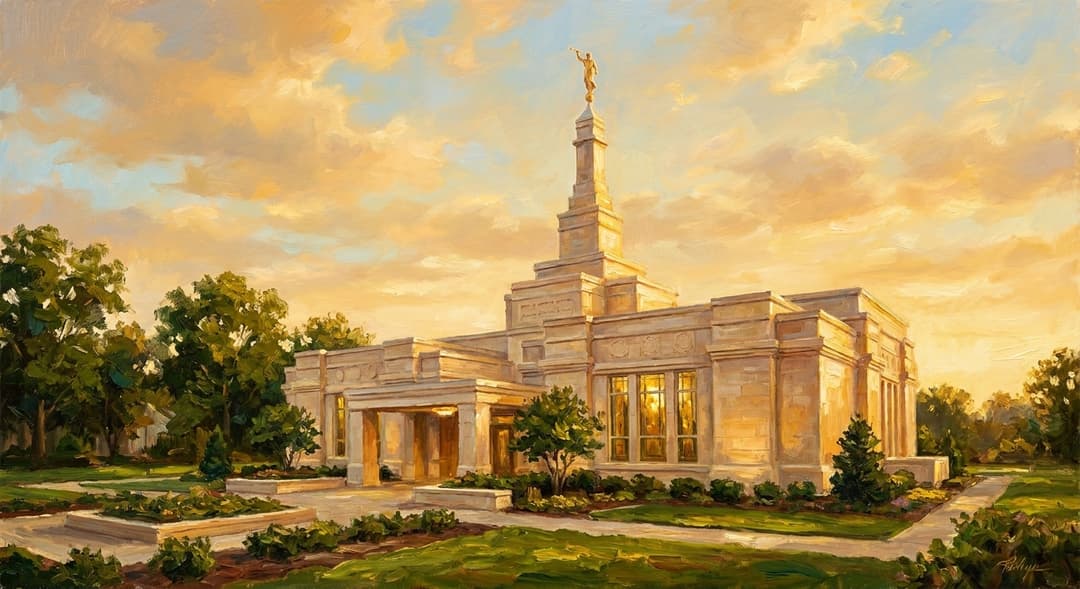


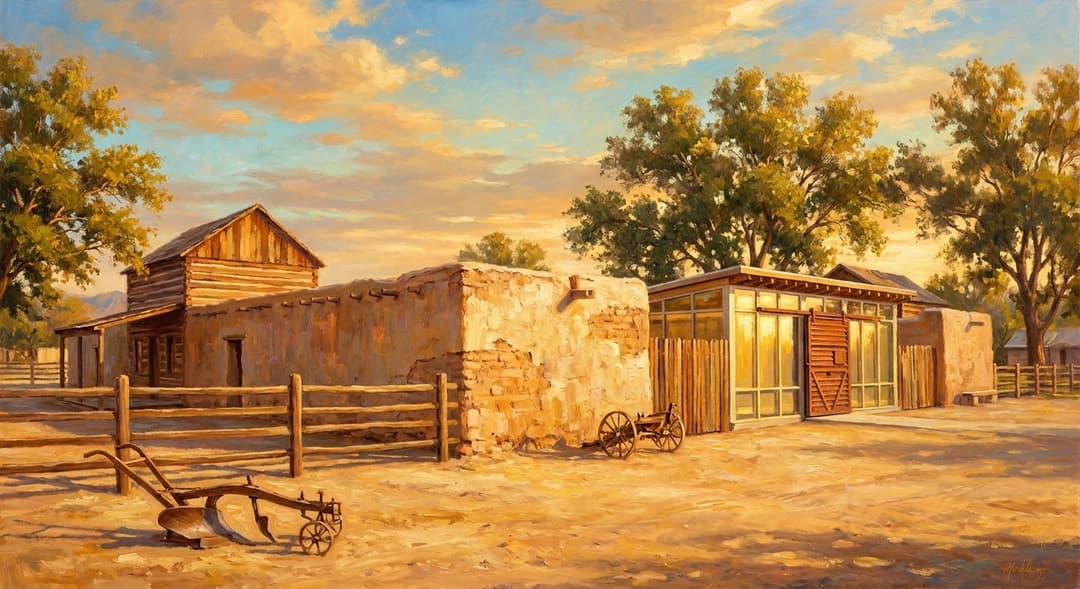
Sources & Research
Every fact on Temples.org is backed by verified Sources & Research. Each piece of information is rated by source tier and confidence level.
View All Sources (2)
| Field | Source | Tier | Retrieved |
|---|---|---|---|
| About & Historical Background | The Church of Jesus Christ of Latter-day Saints (opens in a new tab) | A | 2024-02-29 |
| Architectural Description | Atlas Obscura (opens in a new tab) | B | 2024-02-29 |