Visitor Insights
Visiting Kirtland Temple
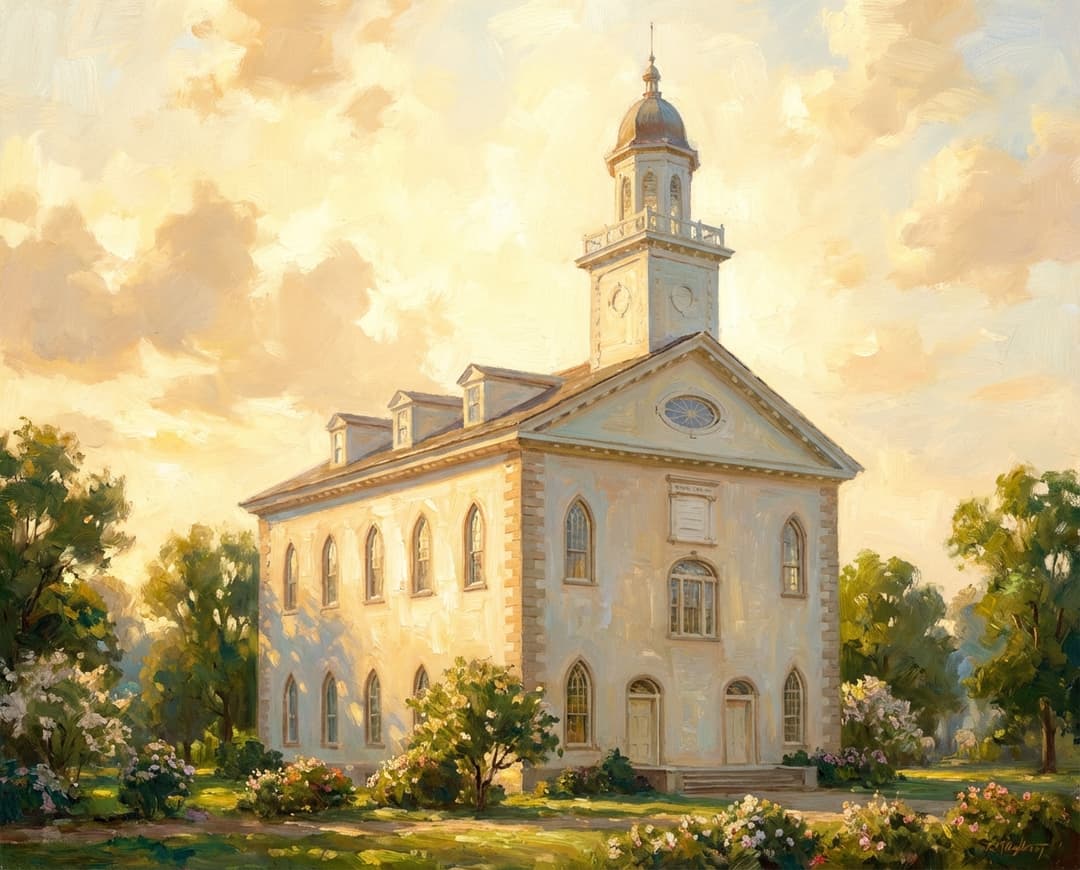
Visitors to the Kirtland Temple can expect a reverent and educational experience, stepping back in time to explore the early history of The Church of Jesus Christ of Latter-day Saints. The temple exudes a sense of peace and historical significance, allowing guests to reflect on the sacrifices and faith of the early Saints. Guided tours are available, providing insights into the temple's construction, purpose, and the spiritual events that occurred within its walls.
Highlights
- Explore the meticulously restored interior of the first temple of the Church.
- Learn about the spiritual manifestations and key revelations received in the temple.
- Reflect on the dedication and sacrifices of the early Latter-day Saints.
Things to Know
- Photography is not permitted inside the temple.
- Please dress respectfully when visiting the temple.
- Guided tours are recommended for a comprehensive experience.
Location
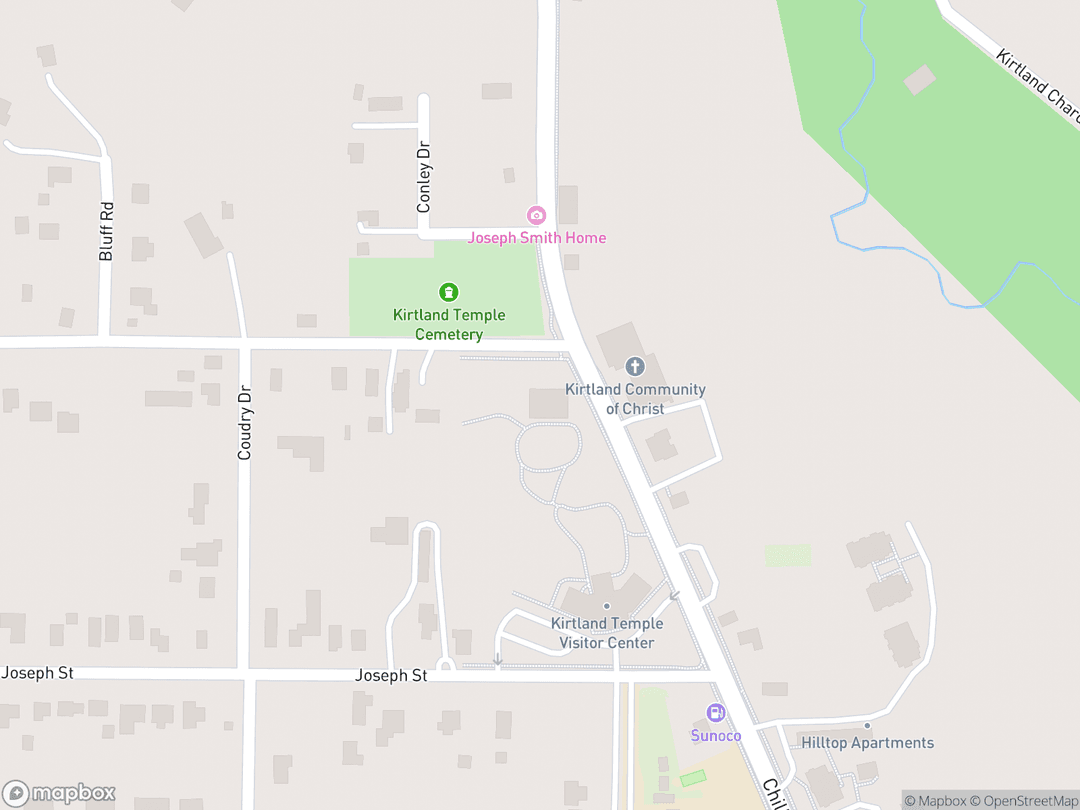
9020 Chillicothe Road, Kirtland, Ohio 44094, USA
Hours: Monday to Saturday: 10:00 AM – 5:00 PM, Sunday: 1:00 PM – 5:00 PM
Getting There: The Kirtland Temple is located at 9020 Chillicothe Road, Kirtland, Ohio. Accessible parking is available on the south side of the building.
Get DirectionsTips for Your Visit
Plan Ahead
Check the official website for updated hours and tour schedules.
Dress Respectfully
Modest attire is recommended to show reverence for the sacred space.
About
The Kirtland Temple, located in Kirtland, Ohio, holds immense historical and spiritual significance for members of The Church of Jesus Christ of Latter-day Saints. It was the first temple built by the Church and served as a central gathering place for early members during a period of intense growth and revelation. The temple stands as a testament to the faith, sacrifice, and dedication of the early Saints who labored to construct it.
Construction of the Kirtland Temple began in 1833 and was completed in 1836. The Saints faced numerous challenges, including poverty, persecution, and lack of resources. Despite these obstacles, they worked tirelessly, donating their time, labor, and meager means to build the house of the Lord. The temple was dedicated on March 27, 1836, in a service attended by hundreds of members and marked by spiritual manifestations and blessings.
The Kirtland Temple served as a place of worship, learning, and spiritual experiences. It was in the Kirtland Temple that key doctrines and priesthood keys were restored, including the appearance of Jesus Christ, Moses, Elias, and Elijah on April 3, 1836. These events hold profound significance in Latter-day Saint theology, marking the restoration of essential gospel principles and authority. Today, the Kirtland Temple is a historic site owned and operated by The Church of Jesus Christ of Latter-day Saints, welcoming visitors to learn about its rich history and spiritual legacy.
Gallery
Symbolic Elements
The temple's exterior features intricate carvings, each rich with spiritual meaning:

Adjustable Pews
The adjustable pews in the Kirtland Temple reflect its multifunctional use for worship and education. These pews could be moved to create different configurations for various meetings and activities, highlighting the temple's role as a community center.

Dual Pulpits
The dual pulpits, located on opposite ends of the main hall, symbolize the importance of both the Melchizedek and Aaronic priesthoods. These pulpits were used by leaders of the Church to deliver sermons and instruction, emphasizing the dual nature of priesthood authority.

Exterior Sandstone
The exterior of the Kirtland Temple is constructed of sandstone, a durable and locally sourced material. The sandstone gives the temple a sense of strength and permanence, reflecting the enduring nature of the faith and the commitment of the early Saints.

Stucco Finish
The stucco finish on the exterior walls provides a smooth and uniform appearance, enhancing the temple's aesthetic appeal. The stucco also serves as a protective layer, helping to preserve the sandstone beneath and ensuring the temple's longevity.

Upper and Lower Courts
The Kirtland Temple features two main spaces, referred to as the lower court and the upper court. The lower court was primarily used for worship services, while the upper court served as a space for education and meetings, reflecting the dual emphasis on spiritual and intellectual growth.

Veil
A veil separated the two pulpits, symbolizing the separation between the earthly and the divine. This veil was a physical representation of the sacred nature of the temple and the importance of reverence and respect in the presence of God.

Windows
The windows of the Kirtland Temple were designed to let in natural light, creating a bright and welcoming atmosphere. These windows also symbolize the light of truth and knowledge, reflecting the temple's role as a place of learning and spiritual enlightenment.
Interesting Facts
The Kirtland Temple was the first temple erected in this dispensation.
Early Saints referred to the Kirtland Temple as simply the 'Lord's House.'
The design for the Kirtland Temple was received by detailed revelation to the Prophet Joseph Smith and others.
During construction, the Kirtland Temple was guarded at night to protect the building from threatening mobs and vandals.
At the dedication of the Kirtland Temple, the Saints experienced an outpouring of heavenly manifestations.
On April 3, 1836, one week after the dedication, nearly one thousand Latter-day Saints gathered to worship in the Kirtland Temple.
The third floor was used for academic and religious instruction, emphasizing the importance of Hebrew studies.
The Kirtland Temple stands on a bluff overlooking the Chagrin Valley.
The Kirtland Temple is different in purpose from later temples, as none of the ordinances now associated with temple worship had been instituted at the time of its construction.
The Kirtland Temple has undergone various ownership changes and legal disputes, ultimately maintaining its status as a place of worship and historical significance.
Common Questions
What is the historical significance of the Kirtland Temple?
The Kirtland Temple was the first temple built by The Church of Jesus Christ of Latter-day Saints and served as a central gathering place for early members. It was the site of key revelations and spiritual manifestations, including the appearance of Jesus Christ.
Who owns the Kirtland Temple?
As of March 5, 2024, ownership of the Kirtland Temple is held by The Church of Jesus Christ of Latter-day Saints.
Can I visit the Kirtland Temple?
Yes, the Kirtland Temple is open for public tours. Guided tours begin at the Kirtland Temple Visitors' Center.
What are the visiting hours for the Kirtland Temple?
The Kirtland Temple is open Monday to Saturday from 10:00 AM to 5:00 PM and on Sunday from 1:00 PM to 5:00 PM.
Is the Kirtland Temple accessible to visitors with disabilities?
Yes, accessible parking is available on the south side of the building, and the tour takes place on the first floor only.
Related Stories
Explore the rich history, traditions, and people connected to this sacred site.
Featured Stories
The Dedication of the Kirtland Temple
March 27, 1836
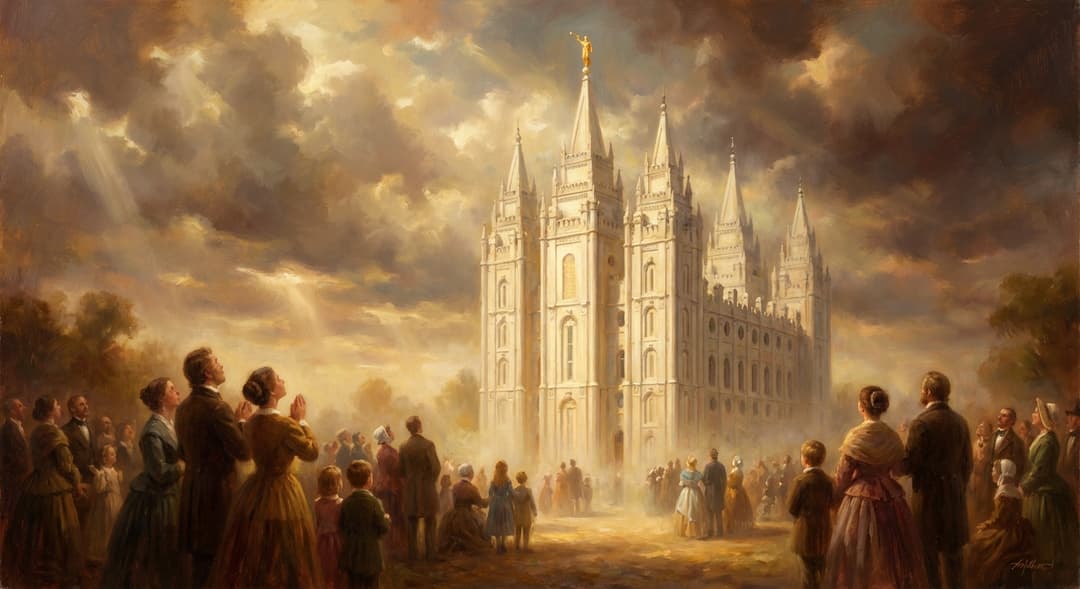
The dedication of the Kirtland Temple on March 27, 1836, was a momentous occasion for the early Latter-day Saints. Hundreds of members gathered to participate in the services, which included a dedicatory prayer offered by Joseph Smith, sermons, hymns, and speaking in tongues. The atmosphere was charged with spiritual energy, as the Saints felt the presence of the Lord and experienced an outpouring of heavenly manifestations.
During the dedication, many Saints reported seeing visions, hearing prophecies, and feeling the influence of the Holy Ghost. Some even testified of seeing angels and other heavenly beings. The dedication marked a high point in the early history of the Church, as members felt a renewed sense of purpose and commitment to building the kingdom of God on earth.
Source: The Church of Jesus Christ of Latter-day Saints
The Appearance of Jesus Christ
April 3, 1836
One week after the dedication, on April 3, 1836, Joseph Smith and Oliver Cowdery experienced a remarkable event in the Kirtland Temple. As they were praying, Jesus Christ appeared to them in glory, accompanied by Moses, Elias, and Elijah. Each of these prophets bestowed upon Joseph and Oliver key priesthood keys, restoring essential gospel principles and authority.
The appearance of Jesus Christ and the restoration of these priesthood keys hold profound significance in Latter-day Saint theology. They marked the fulfillment of ancient prophecies and the restoration of the fullness of the gospel on earth. This event solidified the Kirtland Temple's place as a sacred and pivotal site in the history of the Church.
Source: The Church of Jesus Christ of Latter-day Saints
Sacrifice and Dedication
1833–1836
The construction of the Kirtland Temple was a labor of love and sacrifice for the early Latter-day Saints. Despite facing poverty, persecution, and a lack of resources, they worked tirelessly to build the house of the Lord. Men, women, and children all contributed their time, labor, and meager means to the project, demonstrating their unwavering faith and commitment.
Many Saints donated their land, homes, and possessions to support the construction effort. They worked long hours, often without pay, and endured hardship and privation. Their dedication and sacrifice stand as a testament to the power of faith and the importance of building temples as sacred spaces for worship and learning.
Source: The Church of Jesus Christ of Latter-day Saints
Timeline
Kirtland Becomes Headquarters
Kirtland becomes the headquarters for the Latter Day Saint movement, marking a significant period of growth and development.
MilestoneRevelation to Build a House of God
The Lord commands the Saints in Kirtland to build 'a house of God,' leading to the decision to construct the Kirtland Temple.
MilestoneConstruction Begins
Construction begins on the Kirtland Temple, with the First Presidency overseeing the laying of the temple cornerstone on July 23.
component.timeline.groundbreakingConstruction Slowed by Zion's Camp
Construction slowed as many men joined Joseph Smith in Zion's Camp, a journey to aid struggling Saints in Missouri.
EventTemple Completed
The Kirtland Temple is completed, representing a significant achievement for the early Latter-day Saints.
MilestoneTemple Dedication
The Kirtland Temple is dedicated, including a prayer offered by Joseph Smith, sermons, hymns, and speaking in tongues.
DedicationAppearance of Jesus Christ
Jesus Christ appears to Joseph Smith and Oliver Cowdery in the Kirtland Temple, along with Moses, Elias, and Elijah, restoring key priesthood keys.
EventFinancial Crisis and Dissension
A financial crisis and internal dissension lead to many Saints leaving Kirtland, impacting the community and the temple.
EventJoseph and Emma Smith Leave Kirtland
Joseph and Emma Smith leave Kirtland, marking the end of an era for the Church in Ohio.
EventRLDS Church Reestablishes Ownership
The Reorganized Church of Jesus Christ of Latter Day Saints (RLDS), now Community of Christ, reestablishes ownership of the Kirtland Temple.
EventCommunity of Christ Preserves the Temple
Community of Christ buys the temple and works to preserve it, ensuring its historical and architectural integrity.
RenovationNational Register of Historic Places
The Kirtland Temple is added to the National Register of Historic Places, recognizing its historical significance.
MilestoneNational Historic Landmark
The Kirtland Temple is named a National Historic Landmark, further solidifying its importance in American history.
MilestoneOwnership Transferred
Ownership of the Kirtland Temple is transferred to The Church of Jesus Christ of Latter-day Saints.
EventTemple Reopens for Tours
The Church of Jesus Christ of Latter-day Saints reopens the Kirtland Temple for public tours, welcoming visitors to experience its history and spirit.
EventHistory by Decade
1831–1840 — Early Gathering and Construction
The 1830s marked a period of intense activity and growth for the Latter Day Saint movement in Kirtland, Ohio. In 1831, Kirtland became the headquarters of the Church, attracting converts from across the United States and beyond. The Saints gathered in Kirtland, seeking to build a community based on their religious beliefs and principles. This influx of people created both opportunities and challenges, as the Saints struggled to establish themselves in a new environment. One of the most significant events of this decade was the decision to build the Kirtland Temple. In December 1832, Joseph Smith received a revelation commanding the Saints to construct "a house of God" in Kirtland. This revelation set in motion a massive undertaking that would require the faith, sacrifice, and dedication of the entire community. Construction began in 1833 and continued for three years, with the Saints working tirelessly to complete the temple.
1836 — Temple Dedication and Spiritual Manifestations
The year 1836 was a pivotal one for the Saints in Kirtland, as they celebrated the completion and dedication of the Kirtland Temple. The dedication, held on March 27, was a momentous occasion, attended by hundreds of members and marked by spiritual manifestations and blessings. Joseph Smith offered a dedicatory prayer, and the Saints experienced visions, prophecies, and the gift of tongues. One week later, on April 3, Joseph Smith and Oliver Cowdery received a remarkable visitation in the temple. Jesus Christ appeared to them in glory, accompanied by Moses, Elias, and Elijah. These prophets bestowed upon Joseph and Oliver key priesthood keys, restoring essential gospel principles and authority. This event solidified the Kirtland Temple's place as a sacred and pivotal site in the history of the Church.
1837–1838 — Dissension and Departure
The euphoria surrounding the dedication of the Kirtland Temple was short-lived, as the Church soon faced a period of internal dissension and financial crisis. In 1837, a banking failure led to widespread economic hardship, and many Saints lost their savings and possessions. This crisis exacerbated existing tensions within the community, and some members began to question Joseph Smith's leadership. As a result of these challenges, many Saints left Kirtland, seeking new opportunities and a more stable environment. In 1838, Joseph Smith and his family were forced to flee Kirtland, marking the end of an era for the Church in Ohio. The departure of Joseph Smith and the Saints left the Kirtland Temple in the hands of creditors, and its future was uncertain.
Architecture & Facilities
A blend of Federal, Greek Revival, and Gothic Revival styles, the Kirtland Temple is a hand-built stone structure featuring a distinctive tower, arched windows with Gothic tracery, and dual-pulpit interior assembly halls that set the pattern for early Latter-day Saint worship spaces.
Building Materials
Glass
Glass windows were used to let in natural light, creating a bright and welcoming atmosphere and symbolizing the light of truth and knowledge.
Sandstone
The exterior walls of the Kirtland Temple are constructed of sandstone, a durable and locally sourced material that gives the temple a sense of strength and permanence.
Stucco
The sandstone walls are finished with a layer of stucco, providing a smooth and uniform appearance and enhancing the temple's aesthetic appeal.
Wood
Wood was used extensively in the interior of the temple, including the floors, ceilings, and pews, creating a warm and inviting atmosphere.
Interior Features
Lower Court
The lower court of the Kirtland Temple was primarily used for worship services, with adjustable pews that could be configured for different meetings and activities.
Pulpits
The dual pulpits, located on opposite ends of the main hall, symbolized the importance of both the Melchizedek and Aaronic priesthoods.
Upper Court
The upper court served as a space for education and meetings, with classrooms and offices for Church leaders and teachers.
Veil
A veil separated the two pulpits, symbolizing the separation between the earthly and the divine and emphasizing the sacred nature of the temple.
Temple Grounds
The Kirtland Temple is situated on a bluff overlooking the Chagrin Valley, with landscaped grounds that provide a peaceful and serene setting for visitors.
Religious Significance
The Kirtland Temple holds immense religious significance for members of The Church of Jesus Christ of Latter-day Saints, as it was the first temple built by the Church and the site of key revelations and spiritual manifestations.
The primary purpose of the Kirtland Temple was to serve as a house of worship, learning, and spiritual experiences for the early Latter-day Saints.
Sacred Ordinances
Worship Services
The Kirtland Temple was a place where the Saints gathered to worship God, sing hymns, and listen to sermons and teachings.
Priesthood Meetings
The temple served as a meeting place for priesthood leaders, where they could receive instruction and guidance from the Lord.
Spiritual Manifestations
The Kirtland Temple was the site of numerous spiritual manifestations, including visions, prophecies, and the appearance of Jesus Christ and other heavenly beings.
The Restoration of Priesthood Keys
One of the most significant events that occurred in the Kirtland Temple was the restoration of key priesthood keys by Jesus Christ, Moses, Elias, and Elijah. These keys were essential for the latter-day work of salvation and exaltation.
Similar Temples


Sources & Research
Every fact on Temples.org is backed by verified Sources & Research. Each piece of information is rated by source tier and confidence level.
View All Sources (3)
| Field | Source | Tier | Retrieved |
|---|---|---|---|
| About & Historical Background | The Church of Jesus Christ of Latter-day Saints (opens in a new tab) | A | 2024-07-01 |
| About & Historical Background | churchofjesuschristtemples.org (opens in a new tab) | C | 2024-07-01 |
| Historical Timeline | BYU.edu (opens in a new tab) | B | 2024-07-01 |