Visitor Insights
Visiting Mesa Arizona Temple
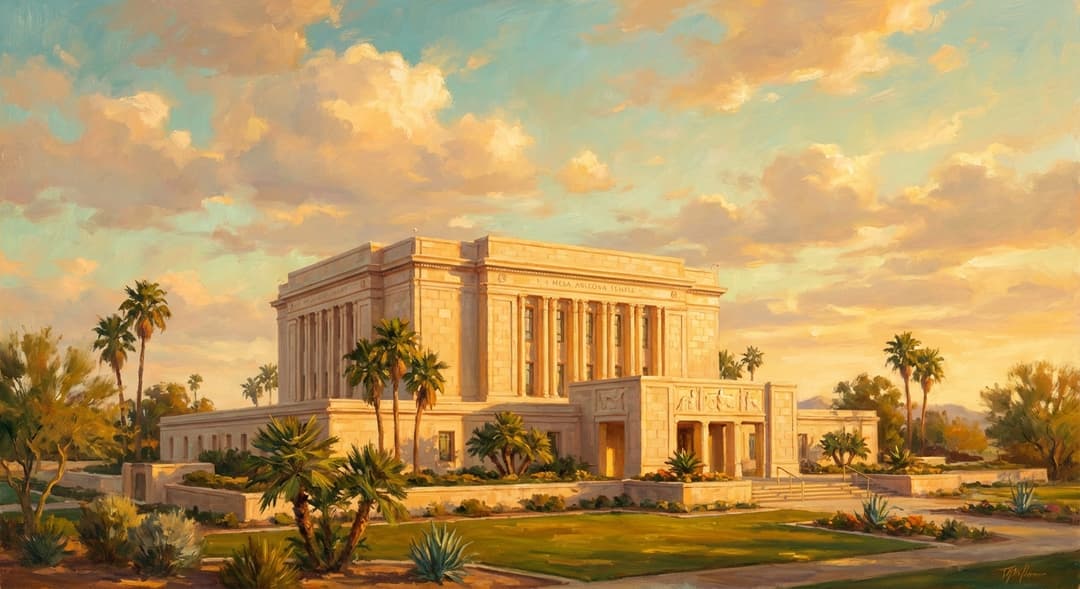
The Mesa Arizona Temple is a central landmark in downtown Mesa, offering a serene escape from the bustling city. The 20-acre grounds are open to the public and feature reflection pools, extensive gardens, and shaded walkways that are particularly beautiful at sunset. A newly constructed Visitors' Center provides interactive exhibits and family history resources.
Highlights
- The Mesa Easter Pageant (Spring)
- Christmas Lights Display (Winter)
- Exterior Friezes by A.B. Wright
- Reflection Pools and Cactus Gardens
Things to Know
- Summers are extremely hot; visit early morning or evening.
- The Visitors' Center is free and open to the public.
- Parking is available on the streets surrounding the temple.
Location
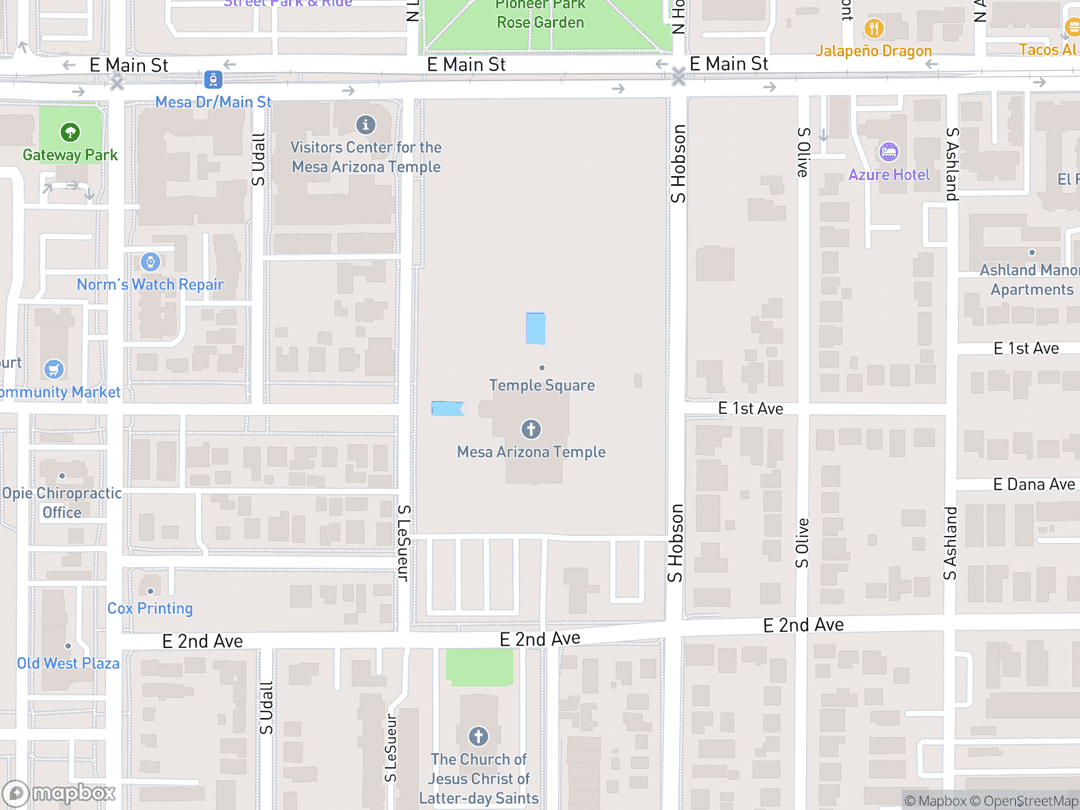
101 S. Lesueur, Mesa, Arizona 85204, United States
Hours: Open Tuesday through Saturday. Grounds open daily until 9:00 PM. Check churchofjesuschrist.org for interior operating hours.
Getting There: Located at 101 S. Lesueur, accessible via Main Street in downtown Mesa. The Valley Metro Rail has a stop nearby.
Get DirectionsTips for Your Visit
Easter Pageant
If visiting in the spring, plan ahead. The Mesa Easter Pageant draws massive crowds to the temple grounds, affecting parking and accessibility.
Sunset Viewing
The reflection pools offer stunning photo opportunities as the sun sets and the temple lights turn on.
About
The Mesa Arizona Temple stands as a unique architectural landmark among Latter-day Saint temples, distinguished by its Neoclassical design inspired by the Temple of Solomon. Dedicated in 1927 by President Heber J. Grant, it was the first temple built in Arizona and has served as a spiritual anchor for the American Southwest for nearly a century. Unlike the soaring Gothic spires of its Salt Lake contemporary, the Mesa Temple features a flat-roofed, rectangular structure clad in glazed terra cotta, designed to harmonize with the arid desert landscape and evoke a sense of ancient permanence.
Historically significant as a center for the "gathering of Israel," the temple features exterior friezes depicting the gathering of God's children from the four corners of the earth. It holds a pivotal place in Church history as the site where temple ordinances were first administered in a language other than English (Spanish) in 1945, marking the beginning of the Church's global expansion. The temple grounds, often described as an "oasis in the desert," are famous for their extensive citrus trees, reflection pools, and cactus gardens, as well as the annual Easter Pageant which draws immense crowds.
The temple has undergone significant transformations to preserve its legacy while updating its facilities. A major renovation in the mid-1970s modernized the ordinance rooms, while a comprehensive three-year restoration completed in 2021 returned the building to its 1920s grandeur. This recent project included the conservation of historic murals, the restoration of the exterior friezes, and the construction of a new visitors' center, ensuring the temple continues to serve as a beacon of faith and history.
Gallery
Symbolic Elements
The temple's exterior features intricate carvings, each rich with spiritual meaning:
The Exterior Friezes
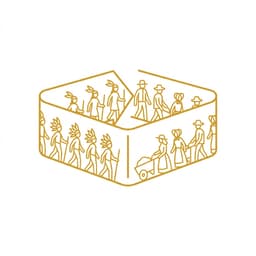
Sculpted by A.B. Wright, these bas-relief panels wrap around the upper corners of the temple. They depict the gathering of Israel from the four corners of the earth, featuring figures of Native Americans and European pioneers.

Glazed Terra Cotta
The exterior is faced with reinforced concrete and glazed terra cotta tiles in an 'eggshell' finish. This material choice was designed to reflect the harsh desert sun while symbolizing the durability of the covenants made within.

Absence of Spire
Unlike most temples, Mesa lacks a central tower. This flat-roofed design emphasizes the 'Holy of Holies' concept—the center of the temple as the meeting place between heaven and earth—rather than reaching upward.

Reflection Pools
Large reflection pools on the grounds serve as a literal and spiritual 'oasis in the desert.' They symbolize living water and provide a mirror image of the temple, doubling its visual impact.

The Grand Staircase
A prominent interior feature, the grand staircase originally led patrons through a physical progression of rooms. It symbolizes the journey of life and the ascent toward higher spiritual knowledge.

Citrus Trees
The grounds are planted with citrus trees, representing fruitfulness and the desert blossoming as a rose. This connects the physical environment of the temple to the biblical prophecies of Isaiah.
Interesting Facts
The Mesa Temple was the first in Church history to perform ordinances in Spanish (1945), paving the way for expansion into Latin America.
The 1927 dedication was the first temple dedication ever broadcast via radio, a major technological milestone.
President Spencer W. Kimball sang in the choir at the 1927 dedication and returned 48 years later to rededicate the temple as President of the Church.
The temple's design was selected through a competition among three leading architectural firms in Salt Lake City.
Historically, it was often called the 'Lamanite Temple' due to its location near the Mexican border and focus on Indigenous missionary work.
The glazed terra cotta tiles on the exterior are incredibly durable; many are original to the 1927 construction.
The exterior friezes are known as a 'sermon in stone,' preaching the gathering of Israel without words.
In 1975, it became the first temple to hold a public open house prior to a rededication.
The temple grounds host the largest annual outdoor Easter pageant in the world.
The Christmas light display on the grounds attracts hundreds of thousands of visitors every holiday season.
Common Questions
Why doesn't the Mesa Temple have a spire?
The architects, Don Carlos Young Jr. and Ramm Hansen, designed the temple in a Neoclassical style inspired by the Temple of Solomon in Jerusalem. The flat-roofed, rectangular design was chosen to harmonize with the horizontal lines of the desert landscape and to emphasize the 'Holy of Holies' as the center of the structure, rather than reaching upward via a spire.
Can I enter the temple?
Entrance to the temple interior is reserved for members of the Church with a current temple recommend. However, the 20-acre grounds, the Visitors' Center, and the gardens are open to the general public and are a popular destination for the community.
What are the sculptures on the outside of the temple?
The upper exterior corners feature sculpted friezes designed by artist A.B. Wright. These bas-relief panels depict the 'gathering of Israel' from the four corners of the earth, featuring figures representing Native Americans, Pacific Islanders, and European pioneers moving toward the temple.
When is the Mesa Easter Pageant?
The Mesa Temple Easter Pageant, titled 'Jesus the Christ,' is typically held during the two weeks leading up to Easter Sunday. It is the largest annual outdoor Easter pageant in the world and is performed on the north lawn of the temple grounds.
What happened during the 2018-2021 renovation?
The three-year renovation focused on upgrading mechanical systems, improving accessibility, and restoring historical elements. Key achievements included the conservation of original 1920s murals, the restoration of the exterior friezes, and the revitalization of the grounds with new reflection pools and landscaping.
Featured Stories
The Spanish Breakthrough
1945
In a quiet but revolutionary moment for the global Church, the Mesa Arizona Temple became the first temple in history to present ordinances in a language other than English. In 1945, Spanish-speaking sessions were introduced to accommodate the growing number of Saints from Mexico and the American Southwest. This required the translation of sacred texts and the training of temple workers in a new language.
This event marked a pivotal shift from a predominantly English-speaking Intermountain church to a global faith. It paved the way for the explosive growth of the Church in Latin America in the decades that followed. Today, the Mesa Temple remains a spiritual home for a diverse, multicultural congregation, fulfilling its original designation as a gathering place for the Lamanites.
Source: Global Histories: Mesa Temple
A Prophet's Return
1927 & 1975
The history of the Mesa Temple is deeply intertwined with the life of President Spencer W. Kimball. As a young man in 1927, Kimball stood in the choir loft, singing praises during the original dedication services conducted by President Heber J. Grant. The experience left an indelible mark on his spiritual development.
Forty-eight years later, in 1975, Kimball returned to the same building—not as a choir member, but as the President of the Church. He presided over the rededication of the temple following its first major renovation. His unique perspective, bridging the temple's pioneer-era origins with its modern future, added a profound layer of emotion and continuity to the rededication services.
Source: Newsroom: History of the Mesa Arizona Temple
The Sermon in Stone
1920s Construction
While most temples rely on spires to draw the eye upward, the Mesa Temple uses art to draw the mind inward. The architects commissioned sculptor A.B. Wright to create a series of friezes for the exterior corners of the building. These bas-relief sculptures were designed to be a 'sermon in stone,' preaching the doctrine of the gathering of Israel without a single word.
The panels depict men and women from various nations and cultures—including distinct representations of Native Americans and Pacific Islanders—moving toward the temple. This artistic choice explicitly connected the physical structure of the temple to the theological concept of gathering God's children in the last days. During the 2018 renovation, these friezes were meticulously cleaned and restored, preserving their silent sermon for future generations.
Source: Church History Department
Timeline
Temple Announced
President Heber J. Grant announces plans for a temple to serve the Saints in the Southwest and Mexico.
MilestoneGroundbreaking
Ceremony held to commence construction on the 20-acre site.
component.timeline.groundbreakingDedication
Dedicated by President Heber J. Grant; the first temple dedication to be broadcast via radio.
DedicationSpanish Ordinances Begin
The temple becomes the first to present ordinances in Spanish, a pivotal moment for the global Church.
MilestoneClosed for Renovation
The temple closes for extensive remodeling, including the installation of film projection equipment.
RenovationFirst Rededication
Rededicated by President Spencer W. Kimball, who had sung in the choir at the original 1927 dedication.
DedicationPublic Open House Precedent
The Mesa Temple becomes the first to hold a public open house prior to a rededication.
MilestoneMurals Restored
Sections of original murals, removed during the 1974 renovation, are restored and returned.
RenovationMajor Renovation Begins
The temple closes for a three-year project to upgrade systems and restore historical details.
RenovationPublic Open House
Following the renovation, the temple opens for public tours through November.
EventSecond Rededication
President Dallin H. Oaks rededicates the temple and the new visitors' center.
DedicationHistory by Decade
1920s — The Desert Sanctuary
We dedicate this house unto Thee... as a sanctuary in the desert.
The 1920s saw the realization of a long-held dream for the Saints in Arizona. Following the announcement in 1919, architects Don Carlos Young Jr. and Ramm Hansen won a design competition with their vision of a "Solomon's Temple" in the desert. Construction began in 1922, utilizing reinforced concrete and terra cotta to withstand the harsh climate. The decade culminated in the 1927 dedication, a major event that utilized the radio to broadcast the proceedings to the faithful who could not fit inside.
1940s — Breaking Language Barriers
The post-war era brought significant changes to the temple's operations. Recognizing the growing Spanish-speaking population in the region, Church leaders authorized the first non-English temple sessions in 1945. This decision transformed the Mesa Temple into a regional hub for Saints from Mexico and Central America, foreshadowing the Church's international expansion.
1970s — Modernization
By the 1970s, the temple required updates to handle increased attendance and modern technology. It closed in 1974 for a renovation that installed film projection equipment for ordinances and added a new entrance. The 1975 rededication by President Spencer W. Kimball was preceded by a public open house, establishing a new precedent for how the Church handled temple renovations.
2010s–2020s — Restoration and Renewal
Approaching its centennial, the temple closed in May 2018 for its most comprehensive renovation yet. Over three years, crews replaced mechanical systems, restored the original 1920s color scheme, and conserved the historic murals. The grounds were revitalized, and a new visitors' center was built. The project concluded with a rededication in December 2021 by President Dallin H. Oaks, securing the temple's structural and spiritual future.
Architecture & Facilities
A neoclassical masterpiece inspired by Solomon's Temple, designed by Don Carlos Young Jr. and Ramm Hansen. Lacking spires, the temple features a broad, horizontal design clad in eggshell-colored glazed terracotta tile. The exterior is adorned with eight relief friezes depicting the gathering of Israel, while the grounds reflect a deliberate formal garden layout reminiscent of ancient sacred spaces.
Building Materials
Exterior
Reinforced concrete faced with glazed terra cotta tiles in an eggshell finish.
Friezes
Cast stone bas-relief panels depicting the gathering of Israel.
Interior Features
Murals
Original 1920s murals by J. Leo Fairbanks and LeConte Stewart, depicting landscapes and scriptural themes.
Grand Staircase
A central architectural feature symbolizing spiritual ascent.
Temple Grounds
20 acres of landscaped gardens featuring reflection pools, citrus groves, and cactus gardens.
Additional Facilities
The Mesa Arizona Temple Visitors' Center features exhibits on the life of Jesus Christ and is open to the public. The grounds also host the annual Mesa Easter Pageant, one of the largest outdoor Easter productions in the world, which draws tens of thousands of visitors each spring.
Religious Significance
The Mesa Arizona Temple stands as a physical testament to the gathering of Israel, a core doctrine of the Restoration.
It serves as a house of the Lord where faithful members participate in sacred ordinances that unite families for eternity.
Sacred Ordinances
Baptism for the Dead
Vicarious baptisms performed for ancestors.
Endowment
A course of instruction and covenants regarding the purpose of life.
Sealing
Marriages that bind families together for eternity.
Initiatory
A ceremonial washing and anointing that symbolizes spiritual cleanliness.
The Gathering Place
For decades, this temple was the primary destination for Latter-day Saints in the American Southwest and Mexico, fulfilling the prophecy of gathering nations to the mountain of the Lord's house.
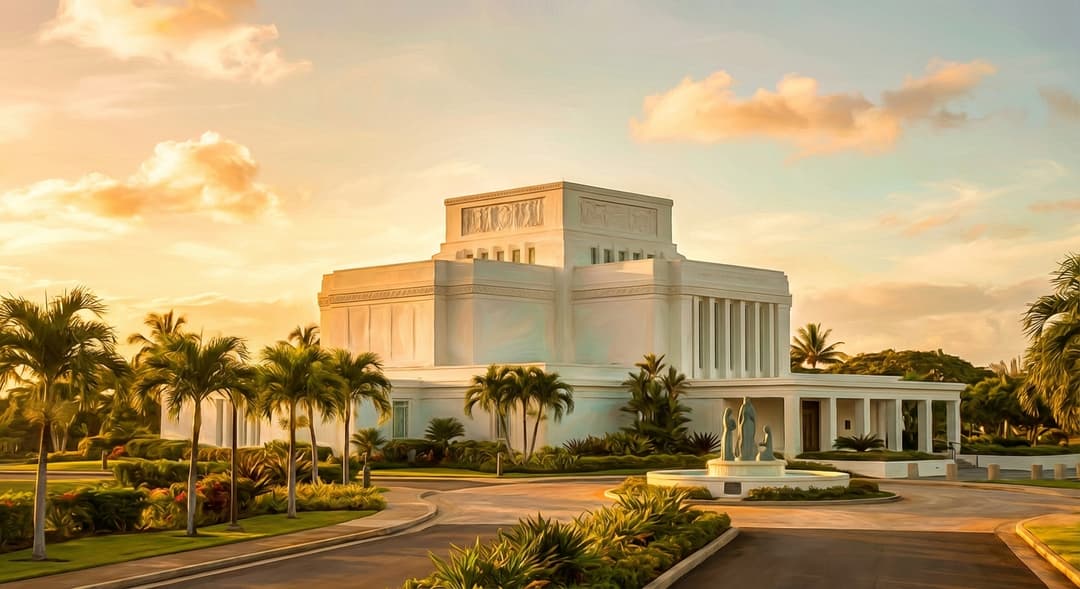
Similar Temples
Sources & Research
Every fact on Temples.org is backed by verified Sources & Research. Each piece of information is rated by source tier and confidence level.
View All Sources (3)
| Field | Source | Tier | Retrieved |
|---|---|---|---|
| Rededication Announcement | The Church of Jesus Christ of Latter-day Saints (opens in a new tab) | A | 2026-02-13 |
| Temple Fact Sheet | The Church of Jesus Christ of Latter-day Saints (opens in a new tab) | C | 2026-02-06 |
| History Article | The Church of Jesus Christ of Latter-day Saints (opens in a new tab) | A | 2026-02-06 |