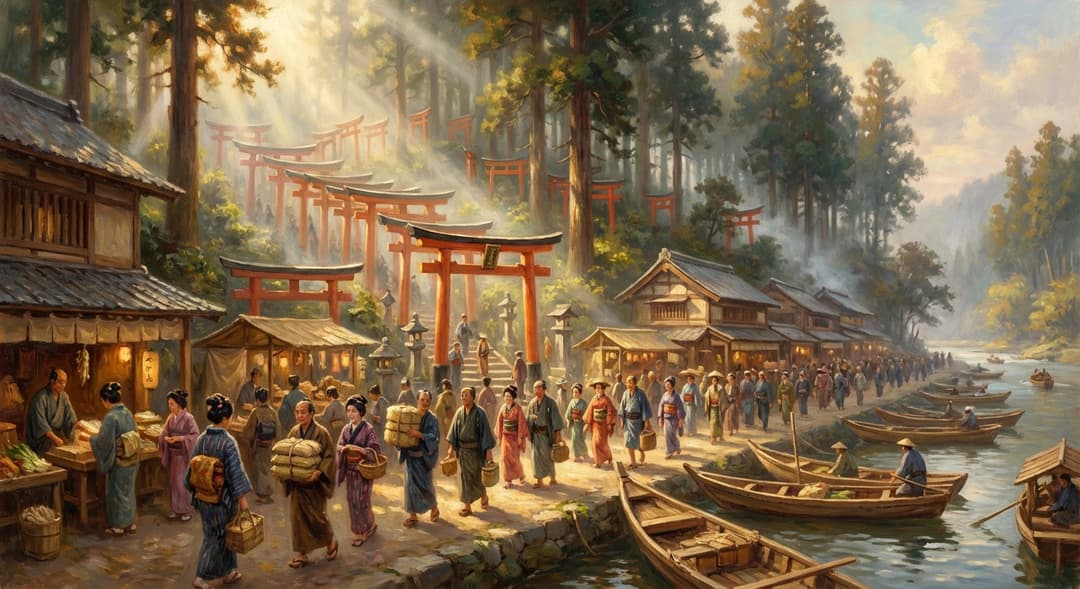
The Edo period (1603-1868) in Japan was a transformative era marked by economic growth and societal change, profoundly influencing various aspects of Japanese life, including its religious institutions. This period witnessed the rise of a vibrant market economy, fueled by increased agricultural productivity, urbanization, and the development of infrastructure. As the merchant class (chonin) gained economic power, they sought divine favor to ensure their business success, turning to deities associated with prosperity and abundance.
Fushimi Inari Taisha, a prominent Shinto shrine dedicated to Inari, the kami of rice, agriculture, and commerce, became a focal point for merchants seeking blessings. While Inari's origins were rooted in agriculture, the Edo period saw a significant expansion of Inari's association with commerce. The burgeoning merchant class recognized the importance of divine favor in their business endeavors and began to patronize Fushimi Inari Taisha, offering prayers and donations in hopes of securing Inari's blessings for their businesses.
The symbolism of the fox (kitsune), considered Inari's messenger, further solidified Inari's connection to commerce. Foxes are often depicted with keys in their mouths, symbolizing access to the rice granary and, by extension, wealth and prosperity. As the popularity of Inari grew, smaller Inari shrines were established throughout Japan, often within merchant districts and even within individual businesses, making it easier for merchants to access and worship the deity.
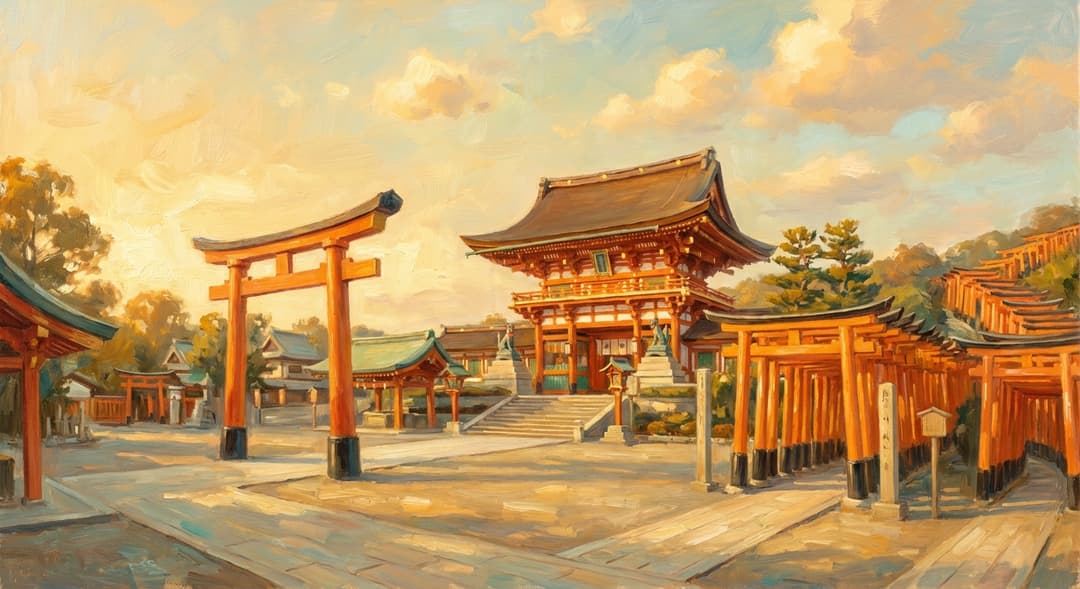
The economic prosperity of the Edo period directly benefited Fushimi Inari Taisha. Increased donations from merchants allowed the shrine to expand its facilities, enhance its rituals, and further promote its reputation as a powerful source of commercial blessings. Many of the shrine's iconic structures, including the thousands of vermilion torii gates lining the paths up Mount Inari, were constructed or expanded during this era, funded by the generosity of wealthy merchants, leaving an indelible mark on the shrine's landscape and legacy.
Key Details
- Period of Growth The Edo Period saw significant economic expansion in Japan.
- Deity of Commerce Inari became strongly associated with commerce during the Edo Period.
- Merchant Patronage Merchants heavily patronized Fushimi Inari Taisha.
- Torii Gate Construction Many torii gates were added during the Edo Period due to merchant donations.
- Fox Symbolism The fox (kitsune) became a prominent symbol of wealth and prosperity.
- Shrine Expansion Fushimi Inari Taisha expanded its facilities due to increased donations.
Timeline
Start of the Edo Period
The Tokugawa shogunate is established, ushering in an era of peace and stability.
component.timeline.periodEconomic Growth
Agricultural productivity, urbanization, and infrastructure development fuel economic expansion.
component.timeline.periodRise of Merchant Class
The merchant class gains economic power and seeks divine favor for business success.
MilestoneExpansion of Fushimi Inari Taisha
Increased donations from merchants lead to architectural expansion, including the construction of many torii gates.
RenovationEnd of the Edo Period
The Meiji Restoration marks the end of the Edo period and the beginning of a new era in Japan.
component.timeline.historicalSources & Research
Every fact on Temples.org is backed by verified Sources & Research. Each piece of information is rated by source tier and confidence level.
View All Sources (4)
| Field | Source | Tier | Retrieved |
|---|---|---|---|
| The Washington Herald (1920) | Library of Congress (opens in a new tab) | A | 2024-01-01 |
| Fushimi Inari Taisha Official Website | Fushimi Inari Taisha (opens in a new tab) | A | 2024-01-01 |
| Inari, From Rice Goddess to Patron of Business | World History Encyclopedia (opens in a new tab) | B | 2024-01-01 |
| Edo Period | Encyclopedia Britannica (opens in a new tab) | B | 2024-01-01 |