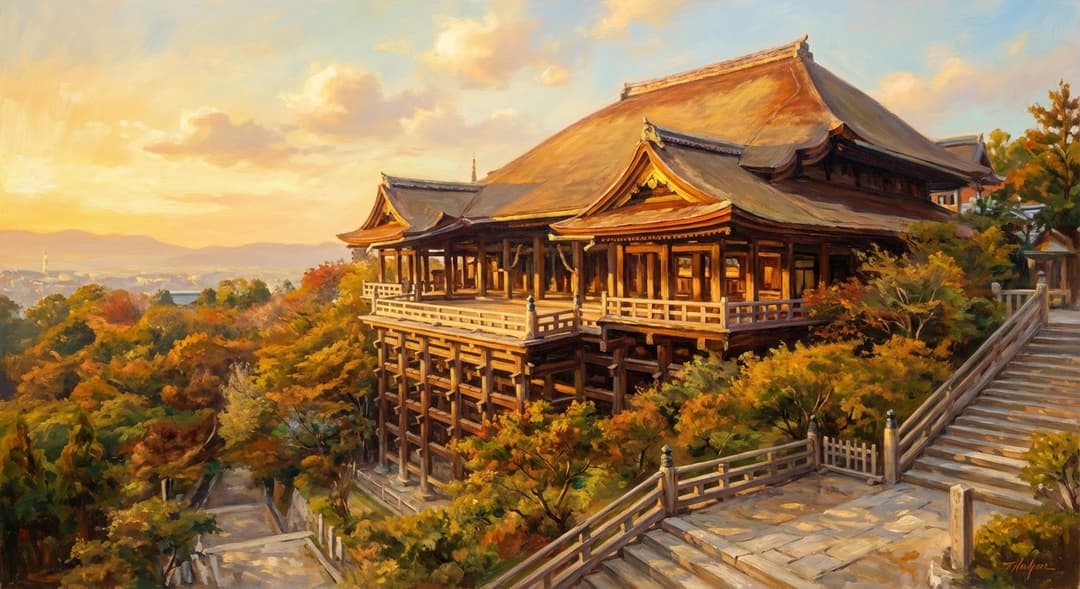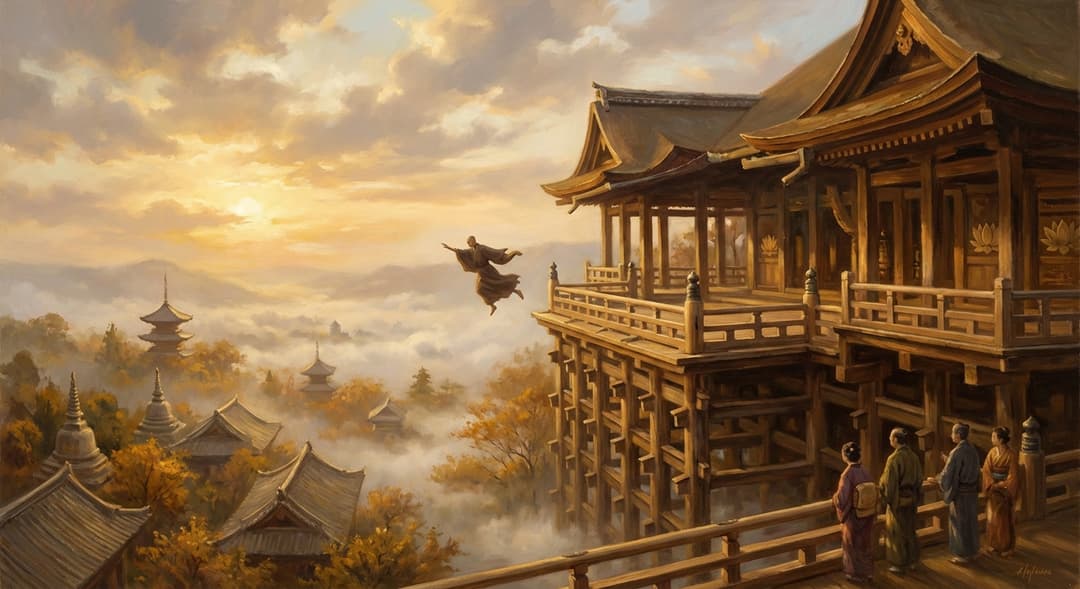
Kiyomizu-dera, nestled in the eastern hills of Kyoto, is a temple celebrated for its stunning architecture and spiritual significance. Among its many captivating features, the temple's wooden stage, jutting dramatically from the hillside, holds a unique and intriguing history. From the Edo period until the Meiji era, this stage was the site of a remarkable practice: daring leaps undertaken by individuals seeking divine intervention.
The act of leaping from the 13-meter-high stage was far more than a reckless act; it was a profound demonstration of faith in Kannon, the bodhisattva of compassion enshrined at Kiyomizu-dera. Leapers believed that if they survived the fall, Kannon would grant their deepest wish, provided their intentions were pure. This practice blended Buddhist beliefs with folk traditions, creating a powerful ritual where individuals risked their lives in pursuit of a better future.
Motivations for these leaps were deeply personal, ranging from overcoming illness and financial hardship to achieving success in business or the arts. The survival rate, estimated at around 85%, was surprisingly high, owing in part to the dense vegetation below. However, the unwavering belief in Kannon's protection played a crucial role in the leapers' mindset, transforming the act into a testament to the power of faith.
Although officially banned during the Meiji era, the legacy of the leaps endures. The Japanese idiom "to jump off the stage at Kiyomizu" signifies taking a bold and decisive action, often with considerable risk. The story of these daring acts continues to captivate, ensuring that the legend of Kiyomizu-dera's stage remains an integral part of the temple's cultural identity and a reminder of the extraordinary lengths to which people will go in the name of faith.
Key Details
- Stage Height 13 meters
- Survival Rate ~85%
- Period of Practice Edo to Meiji Era
- Deity Invoked Kannon
- Current Status Banned
- Idiom Jump off the stage at Kiyomizu
Timeline
Edo Period
The practice of leaping from the Kiyomizu-dera stage becomes widespread.
component.timeline.periodMeiji Era
The practice of leaping is officially banned by temple authorities due to safety concerns.
component.timeline.periodSources & Research
Every fact on Temples.org is backed by verified Sources & Research. Each piece of information is rated by source tier and confidence level.
View All Sources (3)
| Field | Source | Tier | Retrieved |
|---|---|---|---|
| The Virginia Enterprise (1910) | Library of Congress (opens in a new tab) | B | 2024-01-01 |
| The Gordon Journal (1910) | Library of Congress (opens in a new tab) | B | 2024-01-01 |
| The Nevada County Picayune (1910) | Library of Congress (opens in a new tab) | B | 2024-01-01 |