Visitor Insights
Visiting Kiyomizu-dera Temple
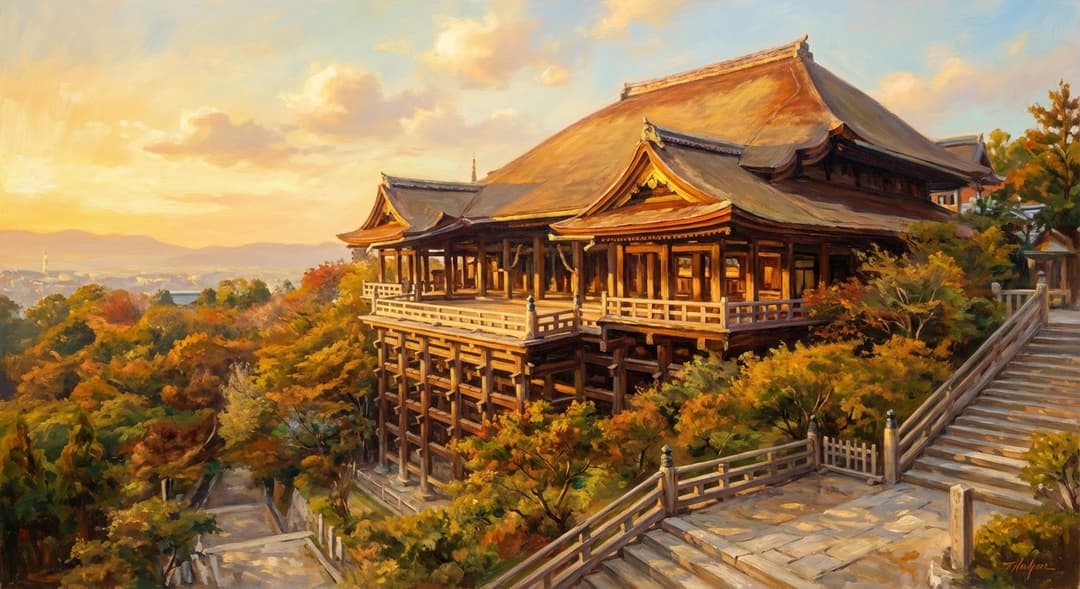
Visiting Kiyomizu-dera offers a serene and culturally enriching experience. The temple's stunning architecture, panoramic views, and sacred Otowa Waterfall create a unique atmosphere. Expect crowds, especially during peak seasons, and be prepared for an uphill walk. Comfortable shoes are recommended to fully enjoy the temple grounds.
Highlights
- Witness the breathtaking views from the Kiyomizu Stage.
- Drink from the sacred Otowa Waterfall and receive its blessings.
- Explore the Jishu Shrine and pray for good fortune in love.
Things to Know
- The temple can be crowded, especially during cherry blossom and autumn foliage seasons.
- The approach to the temple involves an uphill walk.
- Closing times vary depending on the season and special events.
Location
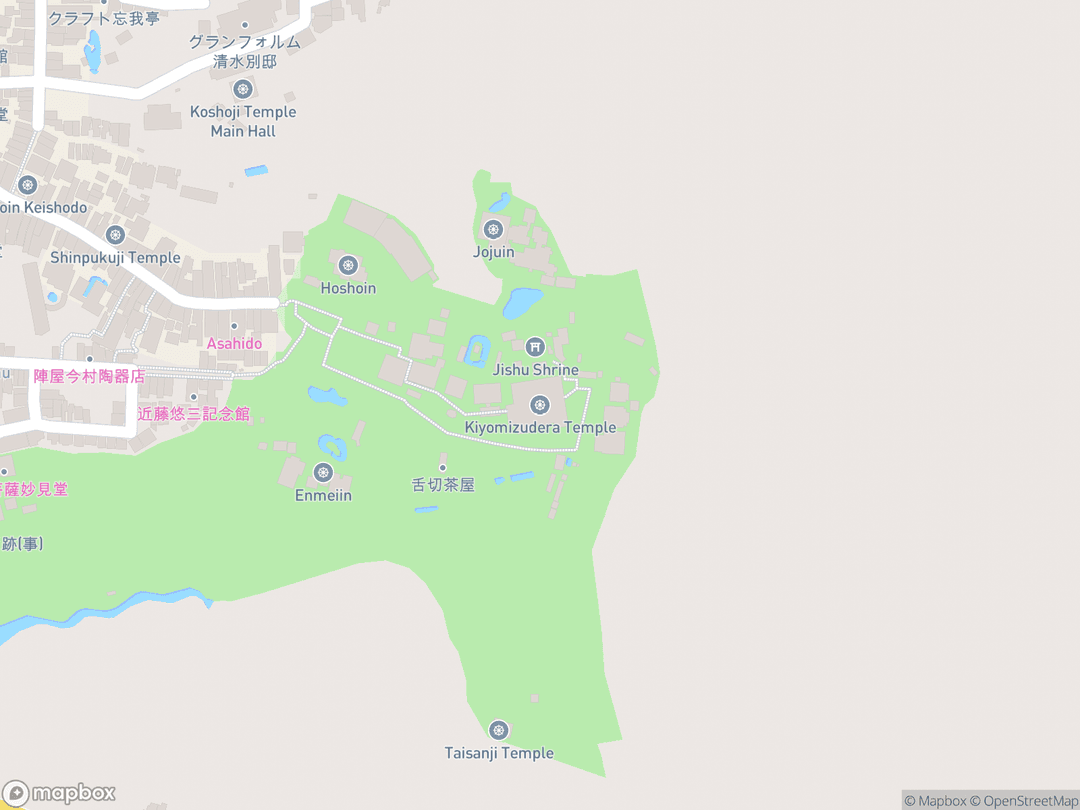
1-294 Kiyomizu, Higashiyama-ku, Kyoto, Japan
Hours: 6:00 AM to 6:00 PM (regular hours). Closing time may vary depending on the season and special events. Special evening illuminations are held during spring and autumn.
Getting There: From Kyoto Station, take City Bus No. 100 or 206 and get off at the Gojo-zaka or Kiyomizu-michi bus stop. It's about a 10-minute uphill walk to the temple from there. The nearest train station is Kiyomizu-gojo Station on the Keihan Line, approximately a 20-25 minute walk to the temple.
Get DirectionsTips for Your Visit
Wear Comfortable Shoes
The approach to Kiyomizu-dera involves an uphill walk, so comfortable footwear is essential.
Visit Early
To avoid crowds, especially during peak seasons, consider visiting early in the morning.
About
Kiyomizu-dera, officially Otowa-san Kiyomizu-dera, is a renowned Buddhist temple in Kyoto, Japan. Founded in 778, it is a significant historical and cultural landmark, drawing millions of visitors annually. The temple is best known for its iconic wooden stage that juts out from the main hall, offering panoramic views of Kyoto.
The temple's name, "Pure Water Temple," is derived from the Otowa Waterfall, located at the base of the main hall. The waterfall's waters are divided into three separate streams, each believed to bestow different benefits: longevity, success at school, and a fortunate love life. Visitors collect the water using cups attached to long poles, partaking in a tradition that dates back centuries.
Kiyomizu-dera's architecture exemplifies the kakezukuri style, a traditional Japanese construction method used for buildings on steep slopes. The temple complex includes numerous structures, such as the main hall, the three-storied pagoda, and the Jishu Shrine, dedicated to the god of love. In 1994, Kiyomizu-dera was designated a UNESCO World Heritage Site as part of the Historic Monuments of Ancient Kyoto.
Gallery
Symbolic Elements
The temple's exterior features intricate carvings, each rich with spiritual meaning:

Kannon (Avalokiteśvara)
The primary deity of Kiyomizu-dera is the eleven-faced, thousand-armed Kannon Bodhisattva, a representation of compassion. The forty-two arms and eleven faces symbolize Kannon's ability to save humans from difficulties. Kannon is believed to appear in thirty-three different forms to answer prayers.

Otowa Waterfall
The name 'Kiyomizu-dera' (Pure Water Temple) is derived from the Otowa Waterfall. The pure water is considered sacred and is believed to have healing properties and bring good fortune. The three streams of the waterfall represent longevity, success at school, and a fortunate love life.

Dragons
Dragons are revered as powerful water deities in Japanese mythology and are closely linked with rivers, seas, and rainfall, embodying the life-giving force of water. Dragon carvings and imagery can be found throughout the temple complex, symbolizing protection and blessings.

Jishu Shrine
Dedicated to Ōkuninushi, a god of love and 'good matches,' the shrine features two stones, placed 18 meters apart, that are said to bring luck in finding love if one can walk between them with their eyes closed. This shrine is a popular spot for those seeking romantic blessings.

Tainai Meguri
A pitch-black subterranean grotto beneath the Zuigu-do Hall, symbolizing a journey to the womb of the Bodhisattva Daizuigu and spiritual rebirth. Visitors navigate the tunnel by touching a string of wooden beads, eventually reaching a stone representing Daizuigu's womb, which is said to grant wishes and blessings.
Kiyomizu Stage (Butai)
The most famous feature of Kiyomizu-dera, the wooden stage juts out 13 meters above the hillside. It is supported by 139 Keyaki (Japanese Zelkova) pillars and was built without the use of nails, relying on intricate wooden joinery. The stage offers panoramic views of Kyoto and represents a connection between the earthly and spiritual realms.

Three-Storied Pagoda (Sanju-no-to)
One of Japan's tallest three-storied pagodas, standing approximately 31 meters high. The current structure was reconstructed in 1632 during the Edo period and is known for its vibrant vermilion color. The pagoda symbolizes the purification of the mind, body, and speech.

Hinoki Cypress
The temple makes extensive use of wood, particularly Japanese Cypress (Hinoki). The main hall has a hipped roof with a hinoki bark thatch. The stage floor consists of over 400 Hinoki boards. Hinoki is valued for its durability, fragrance, and spiritual significance in Japanese culture.
Interesting Facts
Kiyomizu-dera means 'Pure Water Temple,' named after the Otowa Waterfall.
The temple was built without using any nails, relying on intricate wooden joinery.
The expression 'to jump off the stage at Kiyomizu' is the Japanese equivalent of 'to take the plunge'.
The temple has a secret Buddha chamber, which is not usually open to the public.
There are over 1,000 small, stone ancient Buddha statues that have been brought here from around Japan.
There are approximately 1,500 cherry trees and 1,000 maple trees on the grounds, making it a popular spot for viewing cherry blossoms and autumn foliage.
The water from Otowa Waterfall is divided into three streams, each said to grant a different benefit: longevity, success at school, and a fortunate love life.
The temple is part of the Historic Monuments of Ancient Kyoto UNESCO World Heritage Site.
The Kiyomizu Stage offers a stunning panoramic view of Kyoto.
Kiyomizu-dera is the 16th stop on the Saigoku Kannon Pilgrimage route.
Common Questions
What is Kiyomizu-dera famous for?
Kiyomizu-dera is famous for its iconic wooden stage that juts out from the main hall, offering panoramic views of Kyoto. It is also known for the Otowa Waterfall, whose waters are believed to have healing properties and bring good fortune. The temple's rich history and cultural significance make it a must-visit destination in Kyoto.
How do I get to Kiyomizu-dera?
To get to Kiyomizu-dera from Kyoto Station, you can take City Bus No. 100 or 206 and get off at the Gojo-zaka or Kiyomizu-michi bus stop. It's about a 10-minute uphill walk to the temple from there. Alternatively, you can take the Keihan Line to Kiyomizu-gojo Station, which is approximately a 20-25 minute walk to the temple.
What are the opening hours of Kiyomizu-dera?
The opening hours of Kiyomizu-dera are generally from 6:00 AM to 6:00 PM. However, the closing time may vary depending on the season and special events. Special evening illuminations are held during spring and autumn.
How much does it cost to enter Kiyomizu-dera?
The admission fee to enter Kiyomizu-dera is 500 yen for adults.
What is the significance of the Otowa Waterfall?
The Otowa Waterfall at Kiyomizu-dera is the source of the temple's name, meaning 'Pure Water Temple.' The waterfall's waters are divided into three separate streams, each believed to bestow different benefits: longevity, success at school, and a fortunate love life. Visitors collect the water using cups attached to long poles, partaking in a tradition that dates back centuries.
Related Stories
Explore the rich history, traditions, and people connected to this sacred site.
Featured Stories
The Founding of Kiyomizu-dera
778
The story of Kiyomizu-dera begins with the monk Enchin, later known as Kenshin, who had a dream that led him to Mount Otowa in 778 AD. In his vision, he was instructed to seek out a pure spring and build a temple dedicated to Kannon, the Bodhisattva of compassion. Guided by this divine message, Enchin journeyed to the mountain, where he discovered the sacred Otowa Waterfall.
Near the waterfall, Enchin encountered Gyōei Koji, a hermit who had been worshipping Kannon for many years. Gyōei Koji entrusted Enchin with a sacred tree, which Enchin used to carve a statue of the eleven-faced, thousand-armed Kannon. This statue became the principal deity of the newly founded Kiyomizu-dera, marking the beginning of its long and storied history.
Source: Kiyomizu-dera Temple Official Website
The Legend of the Kiyomizu Stage
Edo Period
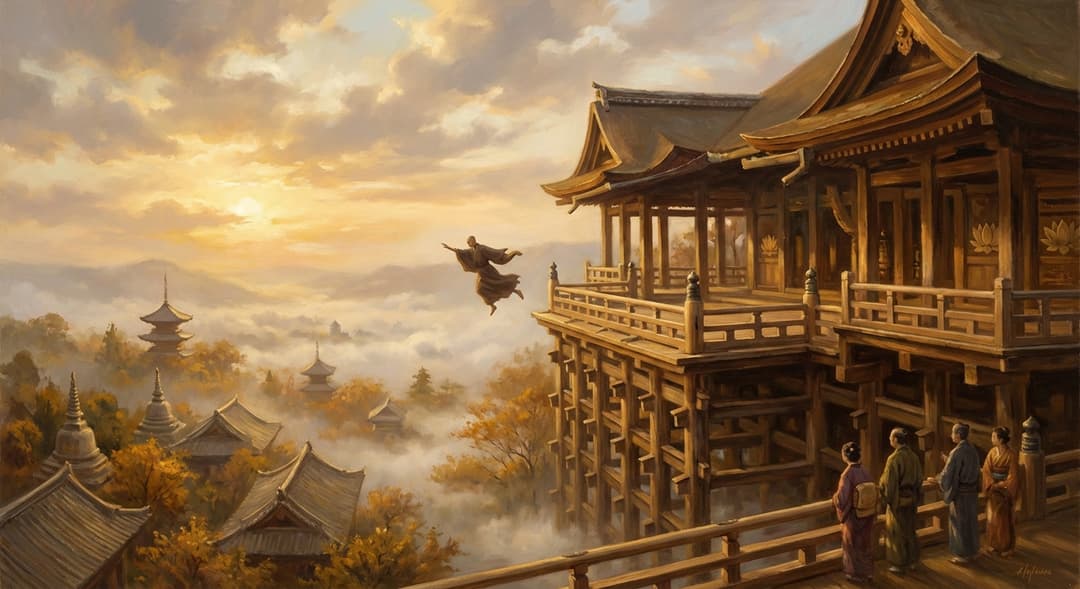
The Kiyomizu Stage, the temple's most iconic feature, has been a focal point of both reverence and daring throughout its history. During the Edo period, a unique tradition emerged: individuals would jump from the 13-meter-high stage with the belief that if they survived, their wishes would be granted. This practice, while dangerous, became a testament to the power of faith and the pursuit of dreams.
Records indicate that over 200 jumps were made during this period, with a survival rate of approximately 85%. The practice was eventually prohibited in 1872, but the legend of the Kiyomizu Stage as a place of both spiritual significance and audacious acts continues to captivate visitors to this day. The expression 'to jump off the stage at Kiyomizu' has become a Japanese idiom, equivalent to 'taking the plunge'.
Source: Discover Kyoto
The Sacred Waters of Otowa Waterfall
Ancient Times
The Otowa Waterfall, from which Kiyomizu-dera derives its name, has been a source of spiritual significance since ancient times. The pure waters of the waterfall are believed to possess healing properties and bestow good fortune upon those who drink from them. Divided into three separate streams, each stream is said to grant a different blessing: longevity, success at school, and a fortunate love life.
Visitors to Kiyomizu-dera continue the tradition of collecting the waterfall's waters using cups attached to long poles. This act of reverence connects them to the temple's origins and the enduring belief in the power of pure water to cleanse and bless. The sound of the cascading water creates a serene atmosphere, inviting contemplation and spiritual renewal.
Source: Japan Guide
Timeline
Temple Founded
Kiyomizu-dera was founded by the monk Enchin after a dream led him to Mount Otowa and its pure waterfall.
MilestoneHall Built by Sakanoue no Tamuramaro
Sakanoue no Tamuramaro built a hall at the site and enshrined the eleven-faced Avalokitesvara Bodhisattva as the principal deity.
MilestoneFirst Recorded Fire
The first recorded fire at Kiyomizu-dera occurred. The temple complex has burned down nine times throughout its history.
EventBurned Down by Warrior Monks
The temple was burned down by warrior monks from Enryaku-ji.
EventDestroyed by Fire during Ōnin War
Kiyomizu-dera was destroyed by fire during the Ōnin War.
EventDestroyed by Fire
The temple was destroyed by fire.
EventMajor Reconstruction
Major reconstruction efforts were carried out during the Edo period, supported by Tokugawa Iemitsu.
RenovationJumping Off Stage Prohibited
The practice of jumping off the Kiyomizu Stage was prohibited.
EventReverted to Hosso Sect
The temple reverted to the Hosso sect.
EventŌnishi Ryōkei Becomes Chief Priest
Ōnishi Ryōkei, head priest of Kofuku-ji, became chief priest of Kiyomizu-dera.
EventSeparation from Hossō Sect
Kiyomizu-dera separated from the mainstream Hossō sect, and Ōnishi Ryōkei founded the independent Kita-Hossō sect.
EventUNESCO World Heritage Site
Kiyomizu-dera was officially declared a UNESCO World Heritage Site as part of the Historic Monuments of Ancient Kyoto.
MilestoneKiyomizu Stage Restoration
The spacious floor of the Kiyomizu Stage was replaced with over 166 hinoki boards during the restoration project.
RenovationRenovations Completed
Renovations on the main hall and stage area were expected to be completed.
RenovationHistory by Decade
770s–780s — Founding Era
The story of Kiyomizu-dera begins in 778 AD when the monk Enchin, guided by a dream, sought out Mount Otowa's pure spring. He met Gyōei Koji, who provided a sacred tree for carving a Kannon statue, marking the temple's humble beginnings. In 780, Sakanoue no Tamuramaro built a hall at the site, enshrining the eleven-faced Avalokitesvara Bodhisattva.
1060s–1160s — Early Development
During the early Heian period, Kiyomizu-dera was affiliated with the Hossō sect of Buddhism, serving as a branch temple of Kōfuku-ji in Nara. The temple experienced its first recorded fire in 1063, highlighting the vulnerability of wooden structures to the elements. In 1165, warrior monks from Enryaku-ji burned down the temple, underscoring the turbulent times.
1460s–1470s — Ōnin War
The Ōnin War, a devastating conflict that ravaged Kyoto, took its toll on Kiyomizu-dera. In 1469, the temple was once again destroyed by fire, leaving it in ruins. This period marked a significant setback for the temple, requiring extensive rebuilding efforts in the years to come.
1620s–1630s — Edo Period Reconstruction
The Edo period brought a renewed focus on rebuilding and restoration. From 1631 to 1633, major reconstruction efforts were undertaken, supported by Tokugawa Iemitsu, the third shogun of the Tokugawa shogunate. Most of the present buildings, including the iconic main hall and Kiyomizu Stage, were reconstructed during this time, shaping the temple's current appearance.
1870s–1880s — Modernization and Change
The Meiji Restoration brought significant changes to Japan, including the suppression of Buddhism. In 1872, the practice of jumping off the Kiyomizu Stage was prohibited, reflecting a shift in societal values. In 1885, the temple reverted to the Hosso sect, marking a return to its traditional roots.
1960s–Present — Independent Kita-Hossō Sect
In 1965, Kiyomizu-dera separated from the mainstream Hossō sect, with Ōnishi Ryōkei founding the independent Kita-Hossō sect, with Kiyomizu-dera as its head temple. In 1994, Kiyomizu-dera was officially declared a UNESCO World Heritage Site, recognizing its cultural and historical significance. From 2008 to 2020, the Kiyomizu Stage underwent a major restoration project, ensuring its preservation for future generations.
Architecture & Facilities
Kiyomizu-dera's architecture exemplifies the kakezukuri style, a traditional Japanese construction method used for buildings on steep slopes. The style involves building a framework of wooden pillars and beams that extend out from the hillside, creating a platform or veranda. This allows the temple to blend seamlessly with the natural landscape, creating a harmonious balance between architecture and nature. The temple's design reflects a blend of Buddhist and Japanese aesthetic principles, emphasizing simplicity, natural materials, and a connection to the surrounding environment.
Building Materials
Japanese Zelkova (Keyaki)
The 139 pillars supporting the Kiyomizu Stage are crafted from Keyaki trees, known for their strength and durability. Keyaki wood is highly valued in Japanese architecture for its resistance to decay and its beautiful grain patterns.
Japanese Cypress (Hinoki)
The main hall has a hipped roof with a hinoki bark thatch, and the stage floor consists of over 400 Hinoki boards. Hinoki is prized for its fragrance, durability, and spiritual significance in Japanese culture.
Wood
The temple makes extensive use of wood, reflecting the traditional Japanese emphasis on natural materials. Wood is used for the pillars, beams, walls, and roofs of the various structures within the temple complex, creating a sense of warmth and harmony.
Clay Tiles
The roofs of some of the temple's structures are covered with clay tiles, providing protection from the elements. The tiles are carefully crafted and arranged, contributing to the overall aesthetic appeal of the temple.
Interior Features
Main Hall (Hondo)
A National Treasure, the Main Hall houses the temple's primary object of worship, a small statue of the eleven-faced, thousand-armed Kannon. The hall is integrated with the Kiyomizu Stage, creating a seamless transition between the interior and exterior spaces.
Zuigu-do Hall
Beneath the Zuigu-do Hall lies the Tainai Meguri, a pitch-black subterranean grotto symbolizing a journey to the womb of the Bodhisattva Daizuigu and spiritual rebirth. Visitors navigate the tunnel by touching a string of wooden beads, eventually reaching a stone representing Daizuigu's womb.
Jishu Shrine
Dedicated to Ōkuninushi, a god of love and 'good matches,' the shrine features two stones, placed 18 meters apart, that are said to bring luck in finding love if one can walk between them with their eyes closed.
Bell Tower
The bell tower houses a large bell that is rung to mark important occasions and ceremonies. The sound of the bell resonates throughout the temple complex, creating a sense of peace and tranquility.
Temple Grounds
The grounds of Kiyomizu-dera are meticulously landscaped, featuring serene pathways, lush gardens, and vibrant foliage. The temple complex is home to approximately 1,500 cherry trees and 1,000 maple trees, making it a popular spot for viewing cherry blossoms in spring and autumn foliage in fall. The Otowa Waterfall cascades down the hillside, adding to the natural beauty of the surroundings.
Additional Facilities
The temple complex includes several shops selling souvenirs, religious items, and local crafts. There are also several tea houses where visitors can relax and enjoy traditional Japanese tea and sweets. Wheelchair-accessible restrooms are located throughout the grounds, ensuring accessibility for all visitors.
Religious Significance
Kiyomizu-dera is a significant Buddhist temple rooted in the worship of Kannon, the Bodhisattva of compassion. The temple's sacred spaces and rituals offer visitors opportunities for spiritual reflection, purification, and connection to the divine.
The core spiritual purpose of Kiyomizu-dera is to provide a place for individuals to cultivate compassion, seek blessings, and connect with the teachings of Buddhism. The temple's various practices and rituals are designed to promote spiritual growth and well-being.
Sacred Ordinances
Meditation
Visitors can engage in meditation practices within the temple grounds, finding inner peace and cultivating mindfulness. The serene atmosphere and natural beauty of the surroundings create an ideal setting for meditation.
Prayer
Visitors can offer prayers to Kannon and other deities, seeking blessings and guidance. The temple's various shrines and halls provide spaces for prayer and contemplation.
Purification
The Otowa Waterfall offers visitors the opportunity to purify themselves by drinking from its sacred waters. This act of purification is believed to cleanse the body and mind, preparing individuals for spiritual growth.
The Significance of Kannon
Kannon, the Bodhisattva of compassion, is the central figure in Kiyomizu-dera's religious significance. Kannon embodies the qualities of mercy, kindness, and understanding, offering solace and guidance to all who seek it. The eleven-faced, thousand-armed Kannon statue represents Kannon's ability to perceive and alleviate the suffering of all beings.
The Role of Water in Buddhist Practice
Water plays a crucial role in Buddhist practice, symbolizing purity, clarity, and transformation. The Otowa Waterfall, as the source of Kiyomizu-dera's name, represents the purifying power of water to cleanse the body and mind. Drinking from the waterfall's waters is a symbolic act of spiritual renewal.
Similar Temples
Sources & Research
Every fact on Temples.org is backed by verified Sources & Research. Each piece of information is rated by source tier and confidence level.
View All Sources (9)
| Field | Source | Tier | Retrieved |
|---|---|---|---|
| About & Historical Background | Kiyomizu-dera Temple (opens in a new tab) | A | 2024-01-02 |
| About & Historical Background | japan-guide.com (opens in a new tab) | B | 2024-01-02 |
| Architectural Description | Japan National Tourism Organization (opens in a new tab) | A | 2024-01-02 |
| Visitor Information | insidekyoto.com (opens in a new tab) | C | 2024-01-02 |
| About & Historical Background | Sacred Destinations (opens in a new tab) | B | 2026-03-26 |
| Historical Timeline | UNESCO World Heritage Centre (opens in a new tab) | B | 2026-03-26 |
| About & Historical Background | World History Encyclopedia (opens in a new tab) | B | 2026-03-26 |
| Architectural Description | Smithsonian Magazine (opens in a new tab) | B | 2026-03-26 |
| About & Historical Background | Discover Kyoto (opens in a new tab) | D | 2026-03-26 |