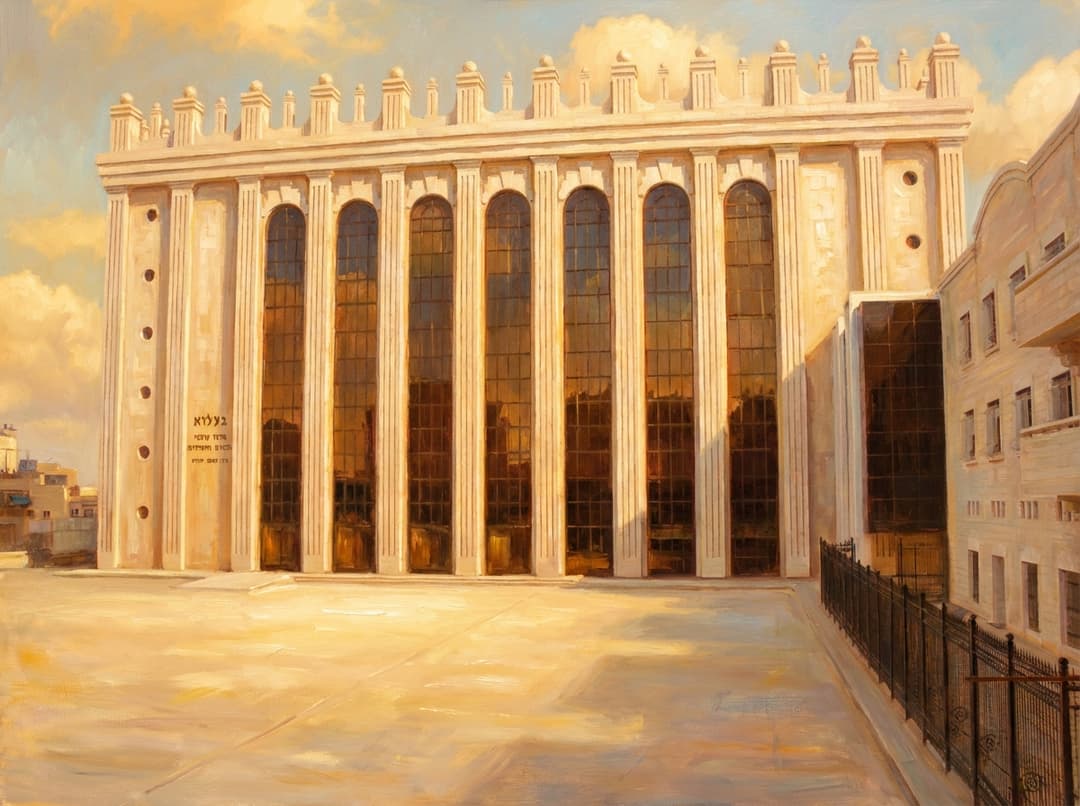
The story of the Belz Great Synagogue is one of profound loss and remarkable resilience. Standing as a beacon of faith for the Belz Hasidic community in Belz, Poland (now Ukraine), the synagogue was deliberately targeted during Kristallnacht, the "Night of Broken Glass," on November 9-10, 1938. This state-sponsored pogrom saw Nazi forces and local collaborators ransack, desecrate, and ultimately set ablaze the sacred space, inflicting not only physical damage but also a deep wound to the Jewish religious and cultural identity. The burning of the synagogue was a calculated assault on the heart of the Belz Hasidic community, a symbol of continuity, tradition, and unwavering faith.
Founded in the early 19th century, the Belz Hasidic dynasty centered its spiritual life around the town of Belz and its magnificent synagogue. Renowned for its architectural grandeur and its central role in prayer, study, and communal gatherings, the Belz Great Synagogue was more than just a building; it was the embodiment of the community's soul. Its destruction during Kristallnacht was a devastating blow, representing a profound loss for the Belz community and the wider Jewish world. The Belzer Rebbe, Rabbi Aharon Rokeach, guided the community through the horrors of the Holocaust, playing a crucial role in the survival of the Belz Hasidic dynasty.
In the aftermath of the Holocaust, the Belz Hasidic dynasty was re-established in Israel, carrying with them the poignant memory of their destroyed synagogue. Over the decades, the community embarked on a mission to commemorate the lost synagogue and to rebuild a new center that would embody their enduring faith. Memorials were erected in Belz and elsewhere, serving as solemn reminders of the atrocities committed and as testaments to the resilience of the Jewish people.
The culmination of these efforts is the new Belz Great Synagogue in Jerusalem, Israel. This monumental structure stands as the central synagogue for the Belz Hasidic community worldwide, a testament to their unwavering determination to rebuild their community and preserve their traditions. The new synagogue serves as a beacon of hope, symbolizing the continuity of Jewish tradition and the triumph of the human spirit over adversity. The story of the Belz Great Synagogue is a powerful reminder of the devastating impact of the Holocaust and the enduring strength of the Jewish faith.
Key Details
- Date of Destruction November 9-10, 1938
- Location of Original Synagogue Belz, Poland (now Ukraine)
- Significance Central Synagogue for Belz Hasidim
- Rebbe During Kristallnacht Rabbi Aharon Rokeach
- Location of Rebuilt Synagogue Jerusalem, Israel
- Event Kristallnacht ("Night of Broken Glass")
Timeline
Founding of Belz Hasidism
The Belz Hasidic dynasty is founded, centering its spiritual life around the town of Belz.
component.timeline.historicalDestruction on Kristallnacht
The Belz Great Synagogue is ransacked, desecrated, and burned during Kristallnacht.
EventRe-establishment in Israel
The Belz Hasidic dynasty is re-established in Israel.
component.timeline.historicalReconstruction in Jerusalem
A new Belz Great Synagogue is constructed in Jerusalem, serving as the central synagogue for the Belz Hasidic community worldwide.
component.timeline.groundbreakingSources & Research
Every fact on Temples.org is backed by verified Sources & Research. Each piece of information is rated by source tier and confidence level.
View All Sources (3)
| Field | Source | Tier | Retrieved |
|---|---|---|---|
| The Southern Jewish Weekly (1950) | Library of Congress (opens in a new tab) | B | 2024-01-01 |
| The Arizona Post (1962) | Library of Congress (opens in a new tab) | B | 2024-01-01 |
| The Southern Jewish Weekly (1947) | Library of Congress (opens in a new tab) | B | 2024-01-01 |