Visitor Insights
Visiting Belz Great Synagogue
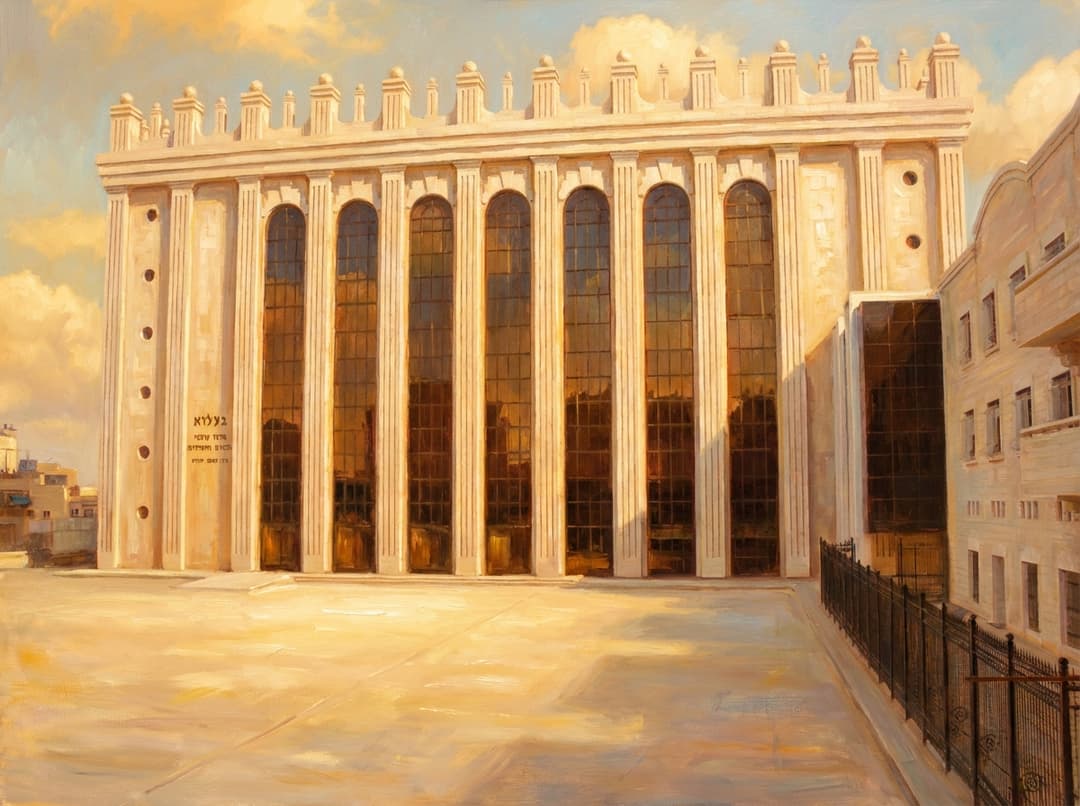
The Belz Great Synagogue is one of the largest synagogues in Israel, located in the Kiryat Belz neighborhood of Jerusalem. While it is an active place of worship for the Belz Hasidic community, visitors are welcome to view the stunning architecture and interior during appropriate hours. The synagogue's ornate interior, massive chandeliers, and towering ark make it a must-see for those interested in Jewish heritage and architecture.
Highlights
- Marvel at the 12-meter-high ornate wooden ark, one of the largest in the world
- View the nine massive Czech crystal chandeliers, each containing over 200,000 crystal pieces
- Experience the grandeur of a prayer hall that seats over 6,000 worshippers
- See the architectural tribute to the original Belz synagogue destroyed during the Holocaust
Things to Know
- Modest dress is required; men should cover their heads (kippot available at entrance)
- Women should wear long skirts and long sleeves
- Photography may be restricted during prayer times and on Shabbat
- The main prayer hall is used only on Shabbat and Jewish holidays; weekday services take place in smaller rooms
- Visitors should be respectful of ongoing prayers and religious activities
Location
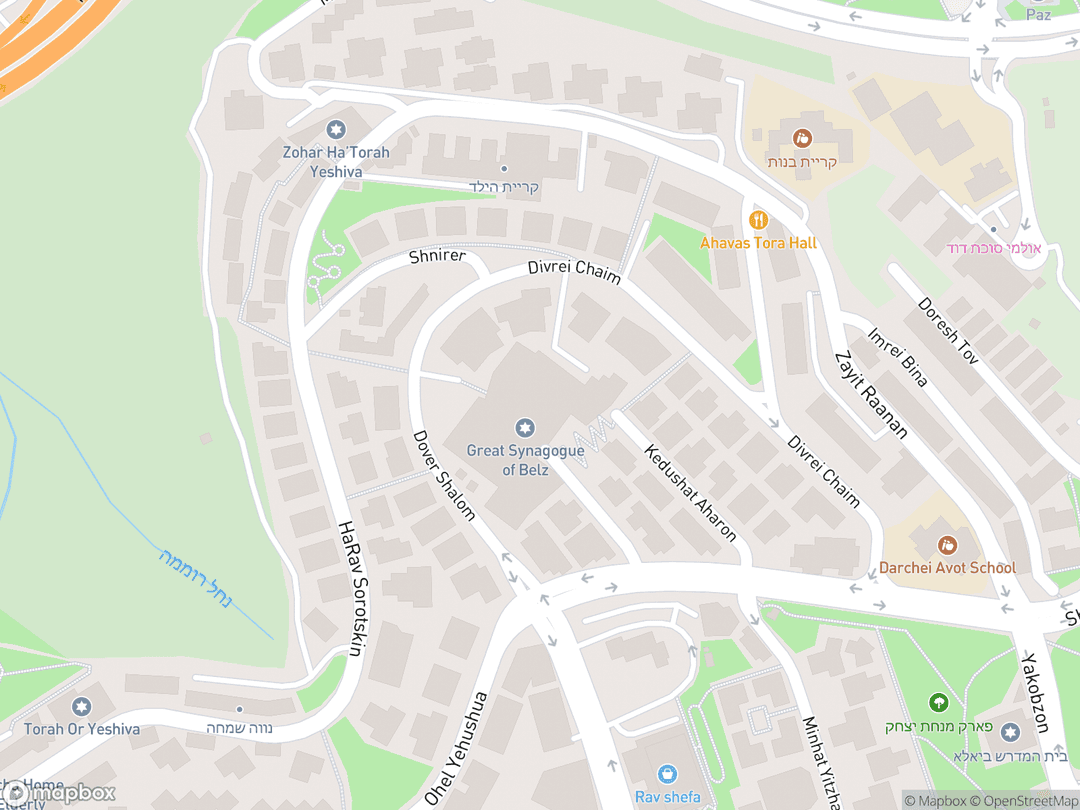
7 Binat Yisas'har Street, Kiryat Belz, Jerusalem, Israel
Hours: Open for visiting outside of prayer times. Contact the synagogue for specific visiting hours. Closed on Shabbat (Friday evening to Saturday evening) for non-worshippers.
Getting There: Located in the Kiryat Belz neighborhood of Jerusalem. Accessible via Egged bus lines to the Kiryat Belz area. From the Old City, travel northwest toward the Romema/Kiryat Belz neighborhoods. Street parking is available in the surrounding area.
Get DirectionsTips for Your Visit
Dress Modestly
Men should wear a kippah (head covering), and women should dress modestly with long skirts and sleeves covering the elbows.
Visit on a Weekday
For a quieter experience and easier access, visit during a weekday. The main hall is only used on Shabbat and holidays.
Respect Prayer Times
If you visit during prayer, maintain silence and observe from a respectful distance. Do not use cameras during services.
Explore the Neighborhood
The surrounding Kiryat Belz neighborhood offers an authentic glimpse into Hasidic Jewish daily life and culture.
About
The Belz Great Synagogue, located in the Kiryat Belz neighborhood of Jerusalem, Israel, stands as a testament to the resilience, faith, and indomitable spirit of the Jewish people. It is a prominent symbol of the Belz Hasidic community's revival after the devastation of the Holocaust, embodying a vision to rebuild what was lost and to rekindle the light of Jewish faith and tradition.
The synagogue serves not only as a place of worship but also as a center for Torah study and spiritual inquiry, attracting visitors from around the world who come to marvel at its grandeur and beauty. Its architecture is an enlarged replica of the original Belz synagogue, destroyed during World War II, symbolizing the community's determination to preserve their heritage.
The construction of the synagogue was a monumental undertaking, spanning several years and involving contributions from Belz Hasidim worldwide. The result is a magnificent structure that reflects the community's deep commitment to their faith and traditions, serving as a beacon of hope and renewal for generations to come.
Gallery
Symbolic Elements
The temple's exterior features intricate carvings, each rich with spiritual meaning:
The Ark
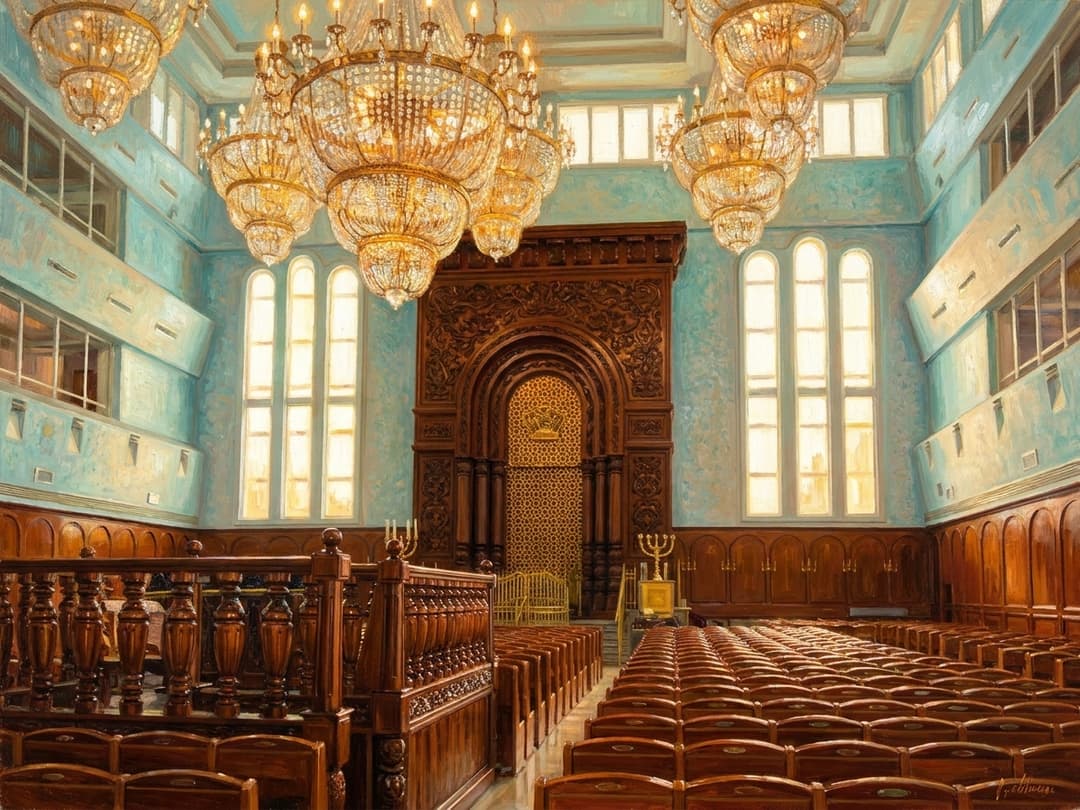
The ark, housing the Torah scrolls, is a central feature of the Belz Great Synagogue. Standing 12 meters high and weighing 16 tons, it is intricately carved and holds 70 Torah scrolls, symbolizing the importance of the Torah in Jewish life and the continuity of Jewish tradition.
The Bimah
The bimah, or pulpit, is located in the center of the synagogue and is surrounded by a wooden fence. This elevated platform is where the Torah is read during services, emphasizing the central role of scripture in Jewish worship.
Chandeliers
Nine massive chandeliers hang in the main prayer hall, each containing over 200,000 pieces of Czech crystal. These chandeliers illuminate the space and symbolize the light of Torah and the beauty of Jewish tradition.
The Four Entrances
The synagogue has four entrances, each accessible from one of the four streets of the neighborhood. This design symbolizes openness and accessibility, welcoming worshippers from all directions to come and pray.
The Replica Design
The Belz Great Synagogue was designed as an enlarged replica of the original Belz synagogue destroyed during WWII. This replication symbolizes the community's commitment to preserving their heritage and rebuilding what was lost.
The Dormitory
The building includes dormitory-style sleeping quarters for Belzer Hasidim visiting from outside Israel. This feature symbolizes the importance of community and hospitality, providing a place for visitors to stay and connect with the Belz community.
The Study Halls
The Belz Great Synagogue is a center for Torah study and spiritual inquiry, with study halls and libraries. These spaces symbolize the importance of lifelong learning and the pursuit of knowledge in Jewish tradition.
Interesting Facts
The Belz Great Synagogue is one of the largest synagogues in Israel and possibly the world.
The main prayer hall can accommodate over 6,000 worshippers.
The synagogue was built as a replica of the original Belz synagogue destroyed during WWII.
The ark is so large that it has been included in the Guinness Book of World Records.
The synagogue took 15 years to construct, mirroring the construction time of the original Belz synagogue.
The ornate wooden ark is 12 meters (39 ft) high and weighs 16 tons; it can hold 70 Torah scrolls.
Nine chandeliers, each 5.5 meters (18 ft) high and 3.4 meters (11 ft) wide, contain over 200,000 pieces of Czech crystal apiece.
The synagogue has four entrances, each accessible from one of the four streets of the neighborhood.
The building includes dormitory-style sleeping quarters for Belzer Hasidim visiting from outside Israel.
The Belz Great Synagogue is a center for Torah study and spiritual inquiry, with study halls and libraries.
Common Questions
What is the Belz Great Synagogue?
The Belz Great Synagogue is a prominent synagogue located in the Kiryat Belz neighborhood of Jerusalem, Israel. It serves as a central place of worship and study for the Belz Hasidic community and is one of the largest synagogues in the world.
Where is the Belz Great Synagogue located?
The synagogue is located at 7 Binat Yisas'har Street, Kiryat Belz, Jerusalem, Israel.
When was the Belz Great Synagogue dedicated?
The Belz Great Synagogue was dedicated in 2000, after 15 years of construction.
Why was the Belz Great Synagogue built?
The synagogue was built as an enlarged replica of the original Belz synagogue in Galicia, which was destroyed during World War II. It symbolizes the Belz community's resilience and determination to rebuild their heritage after the Holocaust.
How many worshippers can the main prayer hall accommodate?
The main prayer hall can accommodate over 6,000 worshippers, making it one of the largest synagogues in Israel and the world.
Can non-Jewish visitors enter the Belz Great Synagogue?
Yes, visitors of all backgrounds are welcome outside of prayer times. Modest dress is required, and men should cover their heads. It is best to visit on weekdays when the main hall is less active.
Related Stories
Explore the rich history, traditions, and people connected to this sacred site.

Featured Stories
The Vision of Rebuilding
Post-Holocaust Era
After the devastation of the Holocaust, the Belz Hasidic community faced immense challenges in rebuilding their lives and traditions. The vision of constructing a new synagogue in Jerusalem emerged as a symbol of hope and resilience, representing their determination to preserve their heritage and faith.
Rabbi Yissachar Dov Rokeach spearheaded the effort, inspiring Belz Hasidim worldwide to contribute to the project. The construction of the Belz Great Synagogue became a collective endeavor, uniting the community in a shared mission of renewal.
The synagogue's design as a replica of the original Belz synagogue, destroyed during the war, served as a powerful reminder of their history and a testament to their unwavering commitment to their traditions. The completion of the synagogue marked a significant milestone in the community's revival, providing a sacred space for worship, study, and communal gatherings.
Source: https://everythingjerusalem.com/things-to-do/sites-attractions/belz-great-synagogue/
The Dedication Ceremony
2000
The dedication ceremony of the Belz Great Synagogue in 2000 was a momentous occasion, attended by thousands of Belz Hasidim from around the world. The event marked the culmination of years of planning, fundraising, and construction, representing a triumph of faith and perseverance.
The ceremony included prayers, speeches, and musical performances, celebrating the synagogue's completion and its significance to the Belz community. The atmosphere was filled with joy and gratitude as community members gathered to dedicate the new sacred space.
The dedication of the Belz Great Synagogue symbolized the community's renewed commitment to their traditions and their determination to create a vibrant center for Jewish life in Jerusalem. The event served as a powerful reminder of the importance of faith, community, and resilience in the face of adversity.
Source: https://everythingjerusalem.com/things-to-do/sites-attractions/belz-great-synagogue/
The Craftsmanship of the Ark
1990s
The construction of the ark in the Belz Great Synagogue was a remarkable feat of craftsmanship, requiring meticulous attention to detail and a deep understanding of Jewish tradition. Skilled artisans worked for years to create the ornate wooden structure, which stands 12 meters (39 ft) high and weighs 16 tons.
The ark's design incorporates intricate carvings and symbolic elements, reflecting the importance of the Torah in Jewish life. The ark is capable of holding 70 Torah scrolls, symbolizing the abundance of wisdom and knowledge contained within the sacred texts.
The completion of the ark was a significant achievement, representing the dedication and skill of the artisans involved. The ark serves as a focal point of the synagogue, inspiring awe and reverence among worshippers and symbolizing the enduring power of Jewish tradition.
Source: https://itraveljerusalem.com/article/belz-synagogue-jerusalem
Timeline
Original Belz Synagogue Built
The original Belz synagogue was built in the town of Belz, Galicia (now Ukraine), under the direction of Rabbi Shalom Rokeach, the first Belzer Rebbe. It became a central point for Hasidic Judaism in Eastern Europe.
MilestoneDestruction During World War II
During World War II, the Nazis destroyed the original Belz Synagogue along with the town of Belz. The vast majority of the Belz Hasidic community perished in the Holocaust.
EventBelzer Rebbe Arrives in Palestine
Rabbi Aharon Rokeach, the fourth Belzer Rebbe, escaped the Nazis and arrived in Palestine with his half-brother, marking the beginning of the community's re-establishment in the Holy Land.
MilestoneCommunity Established in Jerusalem
The surviving Belz Hasidim established a growing presence in Jerusalem, laying the groundwork for a new communal center and synagogue.
EventConstruction Begins
Rabbi Yissachar Dov Rokeach, the fifth Belzer Rebbe, spearheaded plans for the construction of a new grand synagogue in the Kiryat Belz neighborhood of Jerusalem. Global fundraising efforts united Belz Hasidim worldwide.
component.timeline.groundbreakingArk and Interior Crafted
Skilled artisans spent years crafting the ornate wooden ark, standing 12 meters high and weighing 16 tons. Nine massive Czech crystal chandeliers, each containing over 200,000 pieces, were installed in the main prayer hall.
RenovationDedication of the Synagogue
The Belz Great Synagogue was dedicated in a ceremony attended by thousands of Belz Hasidim from around the world, marking the culmination of 15 years of construction and a triumph of faith and perseverance.
DedicationFinal Construction Completed
The remaining interior finishing and ancillary facilities were completed, including study halls, dormitories, and event spaces, making the complex fully operational.
MilestoneArchitecture & Facilities
Modern synagogue architecture combining traditional and contemporary elements, designed by Aaron Ostreicher as an enlarged replica of the original 1843 Belz synagogue destroyed during World War II. The exterior features a mix of stone and glass dominated by a large central dome, with four entrances accessible from each of the surrounding streets. The main sanctuary accommodates over 6,000 worshippers and is crowned by nine massive Czech crystal chandeliers. The ornate wooden ark stands 12 meters high, weighs 16 tons, and holds 70 Torah scrolls — it has been recognized in the Guinness Book of World Records.
Building Materials
Jerusalem Stone
The exterior is clad in Jerusalem stone (meleke limestone), the traditional building stone of the city, giving the synagogue a warm golden-yellow appearance that harmonizes with the surrounding neighborhood and echoes centuries of Jerusalem architecture.
Reinforced Concrete
The structural framework uses modern reinforced concrete engineering to support the massive dome and the weight of the 16-ton wooden ark, ensuring the building's stability and longevity in a seismically active region.
Czech Crystal
Nine chandeliers, each 5.5 meters high and 3.4 meters wide, contain over 200,000 pieces of hand-cut Bohemian Czech crystal per chandelier — totaling nearly 2 million crystal pieces that refract light throughout the prayer hall.
Carved European Hardwood
The towering ark and bimah are constructed from premium European hardwoods, hand-carved by master artisans over several years with intricate reliefs depicting Jewish motifs and symbols of the Torah.
Interior Features
Main Prayer Hall (Beit Midrash HaGadol)
The central prayer hall is a vast space capable of seating over 6,000 worshippers on Shabbat and holidays. Dominated by the nine crystal chandeliers and the towering ark, the hall features the traditional Hasidic layout with the bimah at the center surrounded by a wooden fence.
The Holy Ark (Aron HaKodesh)
The synagogue's most striking interior feature, the ark stands 12 meters (39 ft) high and weighs 16 tons. It houses 70 Torah scrolls within intricately carved wooden panels, and has been included in the Guinness Book of World Records for its size and craftsmanship.
Shtieblach (Weekday Prayer Rooms)
Smaller prayer rooms used for daily services and weekday worship. These intimate spaces reflect the traditional Hasidic practice of praying in smaller groups during the week, reserving the main hall for Shabbat and holiday services.
Wedding and Event Halls
The complex includes dedicated halls for weddings, bar mitzvahs, and other lifecycle celebrations, allowing the Belz community to conduct these important ceremonies within their spiritual center.
Study Halls and Libraries
Multiple study halls (batei midrash) and libraries provide spaces for Torah study, spiritual inquiry, and scholarly research. These rooms serve the community's deep commitment to lifelong learning and Jewish scholarship.
Temple Grounds
The Belz Great Synagogue dominates the Kiryat Belz neighborhood in northwest Jerusalem, a purpose-built neighborhood for the Belz Hasidic community. The building's four entrances face each of the four surrounding streets, creating an accessible and welcoming presence in all directions. The grounds include surrounding walkways and gathering areas used during festivals and community events.
Additional Facilities
The synagogue complex includes dormitory-style sleeping quarters for Belzer Hasidim visiting from outside Israel, providing hospitality for pilgrims and community members who travel to Jerusalem for holidays and special occasions. Additional communal facilities include administrative offices, meeting rooms, and gathering spaces that support the community's organizational and social activities.
Religious Significance
The Belz Great Synagogue holds profound religious significance as the spiritual heart of the Belz Hasidic movement, one of the most influential Hasidic dynasties in Judaism. Its construction represents not only a physical rebuilding but a spiritual resurrection of a community nearly destroyed in the Holocaust.
The synagogue serves as the central place of worship, Torah study, and communal life for the global Belz Hasidic community. It functions as the seat of the Belzer Rebbe, the spiritual leader of the movement, making it one of the most important synagogues in the Hasidic world. For the Belz community, the synagogue is a living connection to their heritage and a symbol of their faith's endurance.
Sacred Ordinances
Torah Study
Torah study is a central activity at the Belz Great Synagogue. The study halls and libraries provide dedicated spaces for daily learning, Talmudic analysis, and spiritual inquiry — reflecting the Hasidic emphasis on understanding God's will through scripture.
Shabbat and Holiday Services
The main prayer hall comes alive on Shabbat and Jewish holidays, when thousands of worshippers gather for communal prayer led by the Belzer Rebbe. These services follow the Belz liturgical tradition, with distinctive melodies and customs passed down through generations.
Lifecycle Ceremonies
The synagogue complex hosts weddings, bar mitzvahs, and other lifecycle celebrations, allowing community members to mark life's milestones within their spiritual center and under the guidance of their rebbe.
The Belz Hasidic Tradition
The Belz Hasidic dynasty was founded by Rabbi Shalom Rokeach (1781–1855) in the town of Belz, Galicia. The movement emphasizes joyful worship, devotion to the rebbe as a spiritual guide, and deep engagement with Torah and Jewish law. The Belz Great Synagogue carries forward this tradition, serving as the focal point for a community that spans Israel, North America, Europe, and beyond.
Post-Holocaust Revival
The construction of the Belz Great Synagogue is inseparable from the story of Holocaust survival and renewal. After nearly the entire Belz community was destroyed during World War II, the surviving Belzer Rebbe and a handful of followers rebuilt their community in the Land of Israel. The synagogue, designed as a replica of the original destroyed in Belz, stands as a powerful symbol that the community's spirit could not be extinguished.
Significance of the Replica Design
The decision to build the new synagogue as an enlarged replica of the original Belz synagogue carries deep spiritual meaning. It represents a bridge between the destroyed world of European Jewry and the reborn community in Israel. For Belz Hasidim, walking into the Jerusalem synagogue is a way of reconnecting with the sacred space their ancestors knew, honoring the memory of the community that was lost while affirming the continuation of their traditions.
Similar Temples
Sources & Research
Every fact on Temples.org is backed by verified Sources & Research. Each piece of information is rated by source tier and confidence level.
View All Sources (3)
| Field | Source | Tier | Retrieved |
|---|---|---|---|
| About & Historical Background | World of Belz (opens in a new tab) | A | 2026-02-13 |
| Facts & Monument Status | Kiddle (opens in a new tab) | C | 2026-02-13 |
| Coordinates & Address | Alchetron (opens in a new tab) | C | 2026-02-13 |