Visitor Insights
Visiting Western Wall
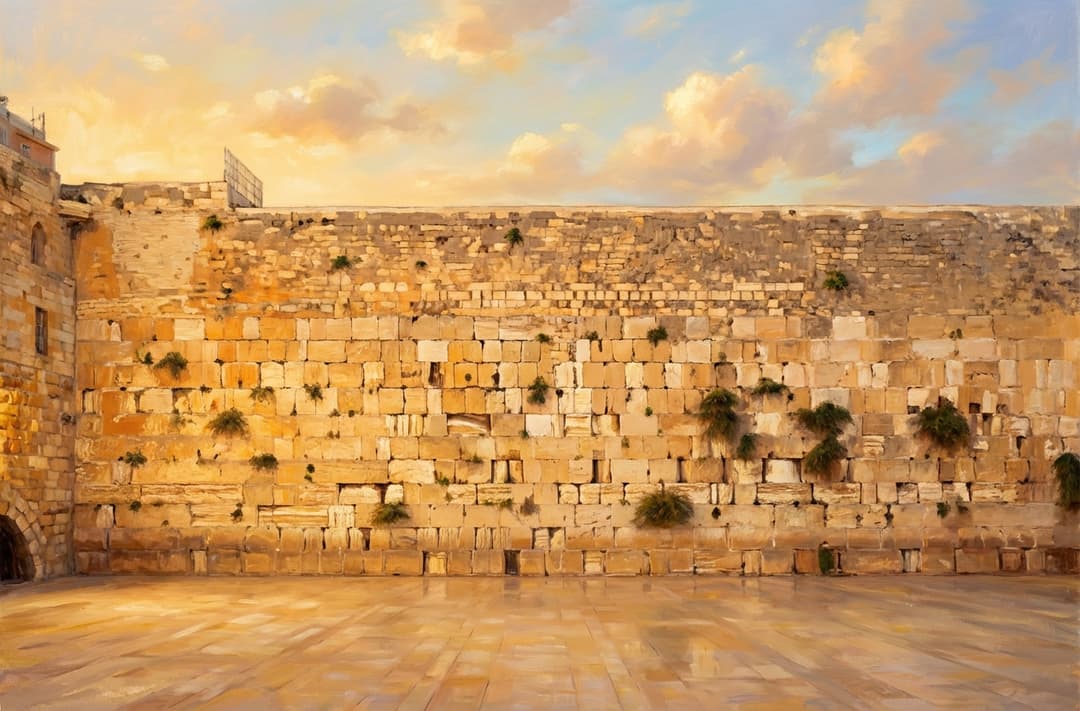
The Western Wall is open to visitors of all faiths. It is a place of prayer, reflection, and historical significance. Modest dress is recommended, and photography is not permitted during Shabbat. Security checks are required before entering the plaza.
Highlights
- Visit the Western Wall Tunnels to explore the hidden parts of the Wall.
- Write a prayer and insert it into the crevices of the Wall.
- Attend a religious ceremony or gathering at the Wall.
Things to Know
- The Western Wall is a holy site, so please be respectful.
- Modest dress is recommended.
- Photography is not permitted during Shabbat.
Location
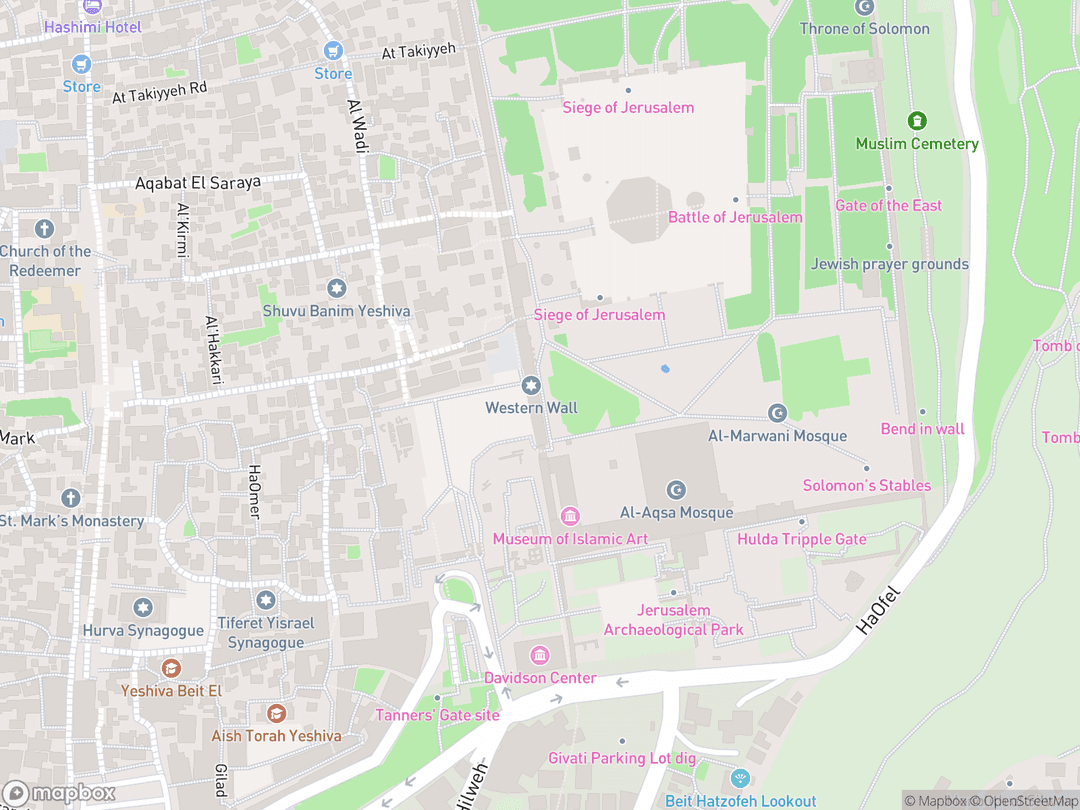
Old City of Jerusalem, Israel
Hours: Open 24/7
Getting There: The closest entrance to the Western Wall is the Dung Gate. Public transportation is available via bus lines to the Western Wall bus stop.
Get DirectionsTips for Your Visit
Dress Modestly
Modest dress is recommended when visiting the Western Wall.
Visit Early
For a peaceful experience, visit the Western Wall early in the morning.
About
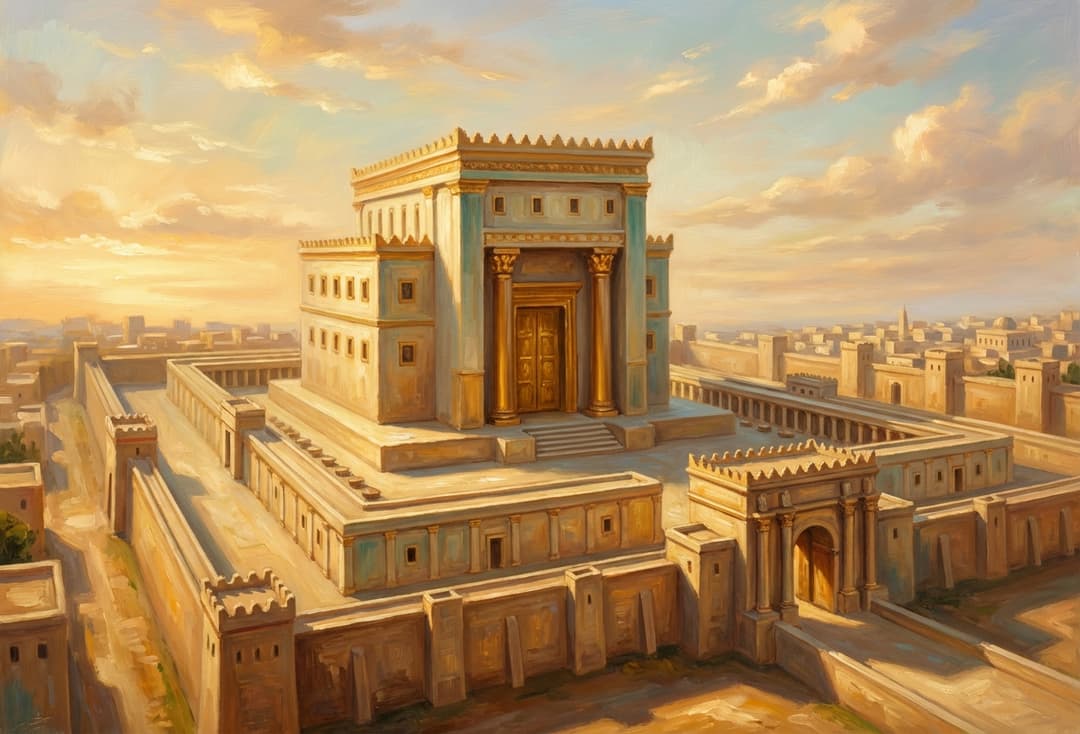
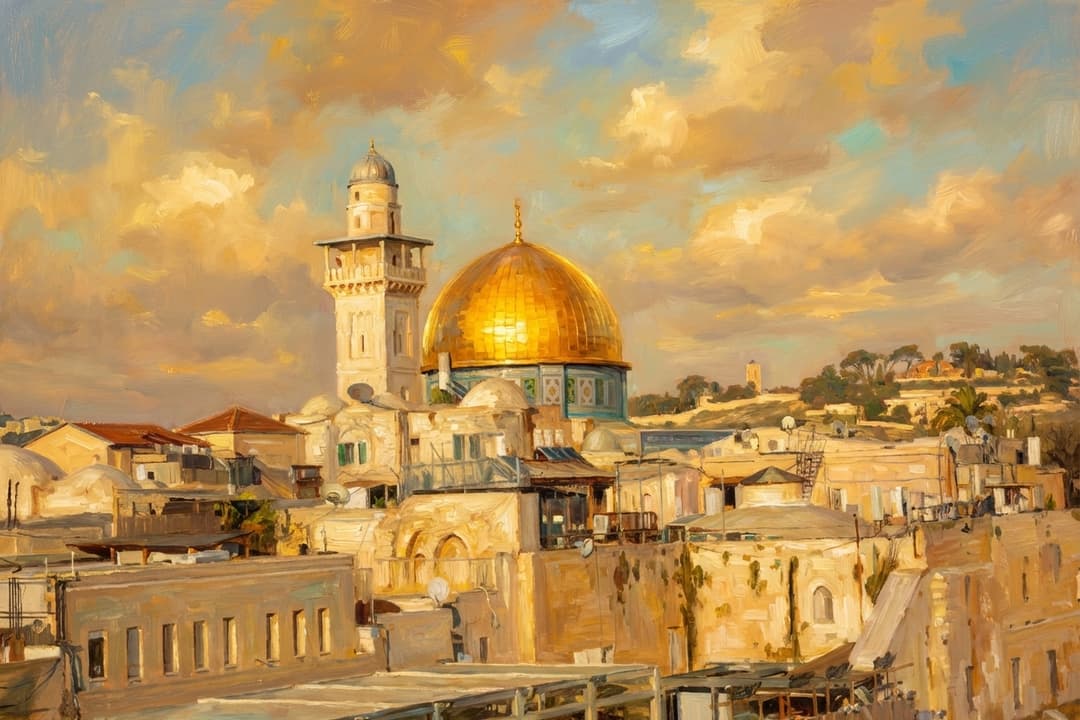
The Western Wall, also known as the Kotel, is the holiest site in Judaism. It is the western retaining wall of the Temple Mount, the site of the First and Second Temples. The Second Temple was destroyed by the Romans in 70 CE, leaving the Western Wall as one of its few remaining structures. For centuries, Jews have gathered at the Wall to pray and mourn the Temple's destruction, leading to its alternate name, the Wailing Wall.
The Wall is made of massive Jerusalem stone blocks, some weighing hundreds of tons. It stands as a testament to the enduring connection between the Jewish people and their ancestral homeland. The Temple Mount, which the Wall supports, is believed to be the site of the Holy of Holies, the most sacred part of the Temple where God's presence was believed to dwell.
Today, the Western Wall is a central place for Jewish prayer, pilgrimage, and national identity. Visitors from around the world come to the Wall to offer prayers, reflect on history, and connect with their faith. The area in front of the Wall has been transformed into a large plaza, providing space for large gatherings and ceremonies. The Western Wall Tunnels, which run beneath the Old City, allow visitors to explore the hidden parts of the Wall and discover archaeological findings that illustrate Jerusalem's rich history.
Gallery
Symbolic Elements
The temple's exterior features intricate carvings, each rich with spiritual meaning:
Jerusalem Stone
The Western Wall is constructed of Jerusalem stone, a type of limestone indigenous to the area. This stone has been used in construction in Jerusalem for thousands of years and is known for its durability and beauty. The use of Jerusalem stone in the Western Wall symbolizes the enduring connection between the Jewish people and their ancestral homeland.
Massive Stone Blocks
The Western Wall is made of massive stone blocks, some weighing hundreds of tons. These stones were carefully placed by King Herod's builders to create a strong and stable retaining wall for the Temple Mount. The size and weight of the stones symbolize the strength and permanence of the Jewish faith.

Crevices for Prayers
The Western Wall is filled with crevices where visitors insert handwritten prayers. This practice has been going on for centuries, and it is believed that prayers offered at the Western Wall are especially powerful. The act of writing and inserting a prayer symbolizes a personal connection with God and a hope for divine intervention.
Retaining Wall
The Western Wall is a retaining wall that supported the expansion of the Second Temple complex. It was built by King Herod to create a larger and more impressive Temple Mount. The retaining wall symbolizes the effort and resources that were invested in building and maintaining the Temple, the center of Jewish worship.

Temple Mount
The Western Wall is located adjacent to the Temple Mount, the holiest site in Judaism. The Temple Mount is believed to be the site of the First and Second Temples, the focal points of ancient Jewish worship. The proximity of the Western Wall to the Temple Mount reinforces its significance as a place of prayer and pilgrimage.
Kotel Plaza
The Kotel Plaza is the large open area in front of the Western Wall. This plaza was created after the Six-Day War in 1967 to provide space for large gatherings and ceremonies. The plaza symbolizes the accessibility of the Western Wall to all Jews and the importance of the Wall as a place of national identity.

Western Wall Tunnels
The Western Wall Tunnels are a series of underground tunnels that run beneath the Old City of Jerusalem, allowing visitors to explore the hidden parts of the Western Wall and discover archaeological findings that illustrate Jerusalem's rich history. The tunnels symbolize the hidden depths of Jewish history and the ongoing effort to uncover and preserve the past.
Separation of Sections
The plaza is often divided into separate sections for men and women, reflecting traditional Jewish practice. This separation symbolizes the importance of maintaining religious customs and traditions at the Western Wall, while still allowing all to approach and pray.
Interesting Facts
The Western Wall is not part of either the First or Second Temple. It was a retaining wall built by King Herod to support the Temple Mount.
The term 'Wailing Wall' is considered offensive by some Jewish people. The preferred term is the Western Wall or Kotel (meaning 'wall' in Hebrew).
People from all over the world come to the Western Wall to insert handwritten prayers into the crevices. These notes are collected and buried on the Mount of Olives.
Much of the Western Wall is hidden underground.
The Western Wall has been under Israeli control since the Six-Day War in 1967.
The largest stone in the Western Wall weighs approximately 570 tons.
The Western Wall is considered the closest point to the Holy of Holies, the most sacred location in the Temple.
The Western Wall Tunnels offer tours to see hidden parts of the Wall and archaeological findings.
The Western Wall is a site of religious observance and a focal point for cultural and national gatherings in Israel.
The Western Wall is made of Jerusalem stone, a type of limestone indigenous to the area.
Common Questions
What is the Western Wall?
The Western Wall, also known as the Kotel, is the western retaining wall of the Temple Mount in Jerusalem. It is the holiest site in Judaism and a place of prayer and pilgrimage for Jews from around the world.
Why is the Western Wall so important?
The Western Wall is important because it is the closest accessible point to the Temple Mount, the site of the First and Second Temples. The Temple Mount is believed to be the site of the Holy of Holies, the most sacred part of the Temple where God's presence was believed to dwell. Although the Temple no longer stands, the Western Wall symbolizes hope for the restoration of the Temple and the Jewish people's connection to their heritage.
What is the significance of the name 'Wailing Wall'?
The name 'Wailing Wall' comes from the centuries-long practice of Jews gathering at the Wall to pray and mourn the destruction of the Temple. However, the term is considered offensive by some Jewish people, and the preferred term is the Western Wall or Kotel (meaning 'wall' in Hebrew).
What are the Western Wall Tunnels?
The Western Wall Tunnels are a series of underground tunnels that run beneath the Old City of Jerusalem, allowing visitors to explore the hidden parts of the Western Wall and discover archaeological findings that illustrate Jerusalem's rich history. Tours of the tunnels are available.
What should I wear when visiting the Western Wall?
Modest dress is recommended when visiting the Western Wall. This typically means covering your shoulders and knees. Women may also choose to cover their heads.
Related Stories
Explore the rich history, traditions, and people connected to this sacred site.
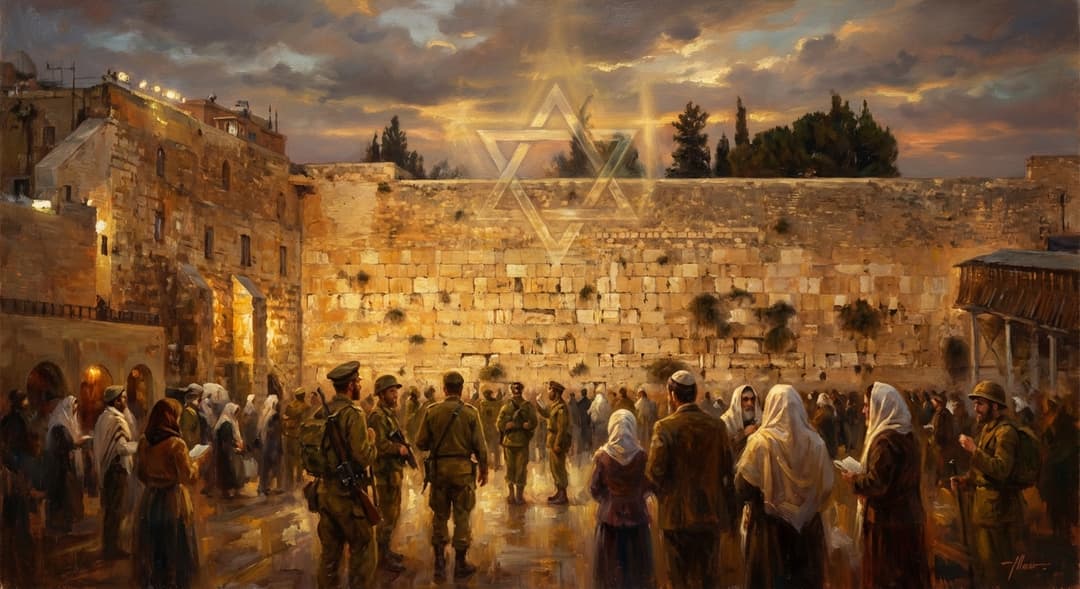
Featured Stories
The Destruction of the Second Temple
70 CE
In 70 CE, the Roman Empire, under the leadership of Titus, besieged and destroyed Jerusalem, including the Second Temple. This event marked a turning point in Jewish history, as the Temple had been the center of Jewish worship and national identity for centuries. The destruction of the Temple was a devastating blow to the Jewish people, and the Western Wall became a symbol of their loss and longing for restoration.
The Roman soldiers systematically dismantled the Temple, setting it ablaze and looting its treasures. The destruction was so complete that only a portion of the Western retaining wall remained standing. This wall, now known as the Western Wall, became a place of mourning and prayer for the Jewish people, who gathered there to lament the loss of their Temple and their city.
Source: gemsofjerusalem.com
The Six-Day War and the Reunification of Jerusalem
1967
During the Six-Day War in 1967, Israel captured the Old City of Jerusalem, including the Western Wall, from Jordanian control. This event was seen as a miraculous victory by many Jews, as it allowed them to access the holiest site in their religion for the first time in nearly two decades. The reunification of Jerusalem was a moment of great joy and celebration for the Jewish people, who saw it as a fulfillment of biblical prophecy.
Immediately after capturing the Western Wall, Israeli soldiers and civilians rushed to the site to pray and celebrate. The area in front of the Wall was cleared to create a large plaza, providing space for large gatherings and ceremonies. The Western Wall quickly became a symbol of Israeli sovereignty over Jerusalem and a central place for Jewish prayer and pilgrimage.
Source: ifcj.org
The Practice of Inserting Prayers
Ongoing
For centuries, people from all over the world have come to the Western Wall to insert handwritten prayers into the crevices between the stones. This practice is based on the belief that prayers offered at the Western Wall are especially powerful, as the Wall is the closest accessible point to the Temple Mount, the site of the Holy of Holies. The act of writing and inserting a prayer symbolizes a personal connection with God and a hope for divine intervention.
The prayers inserted into the Western Wall are collected periodically and buried on the Mount of Olives. This practice ensures that the prayers are treated with respect and reverence. The Western Wall continues to be a place of hope and inspiration for people of all faiths, who come to the Wall to offer their prayers and connect with the divine.
Source: israelwalkingtours.com
Timeline
King Herod begins expansion of the Second Temple
King Herod initiated a renovation and expansion of the Second Temple, including the construction of the Western Wall as a retaining wall to support the Temple Mount.
MilestoneDestruction of the Second Temple
The Roman Empire, led by Titus, destroyed the Second Temple, leaving the Western Wall as one of the few remaining structures.
EventWestern Wall as a place of prayer
Evidence suggests that the Western Wall was already a place of Jewish prayer.
EventAdditional layers added to the Wall
Additional layers were added to the wall during the Umayyad Caliphate.
MilestoneOttoman Sultan designates prayer site
An earthquake damaged the Temple Mount and surrounding areas. Suleiman the Magnificent, the Ottoman Sultan, ordered the clearing of rubble and designated the area as a prayer site for Jews.
MilestoneFinal layers completed
The final three layers of the Western Wall were completed under the Mufti of Jerusalem.
MilestoneEstablishment of the State of Israel
Following the establishment of the State of Israel, the Western Wall came under Israeli control. However, Jerusalem was divided, and Jews were unable to access the Wall until 1967.
EventSix-Day War
During the Six-Day War, Israel captured the Old City of Jerusalem, including the Western Wall, making it accessible to Jews once again. The area in front of the Wall was cleared to create a large plaza.
EventExcavations begin
Excavations began to uncover more of the Wall, leading to the discovery of structures illustrating Jerusalem's history.
EventPilgrimage Road opens
The Pilgrimage Road, a 2,000-year-old stepped street leading to the Temple Mount, opened to the public.
MilestoneHistory by Decade
19 BCE — King Herod's Expansion
In 19 BCE, King Herod initiated a massive renovation and expansion of the Second Temple in Jerusalem. As part of this project, he constructed the Western Wall as a retaining wall to support the Temple Mount. This wall was an engineering marvel, built with massive stones that have stood the test of time. Herod's goal was to create a grand and impressive Temple complex that would rival any in the ancient world.
70 CE — The Roman Destruction
In 70 CE, the Roman Empire, led by Titus, besieged and destroyed Jerusalem, including the Second Temple. This event was a devastating blow to the Jewish people, marking the end of an era. The Western Wall was one of the few remaining structures of the Temple complex, becoming a symbol of loss and longing for the past.
4th Century AD — Early Prayers
Evidence suggests that by the 4th century AD, the Western Wall was already a place of Jewish prayer. Despite the destruction of the Temple, Jews continued to gather at the Wall to mourn and offer their supplications. This marked the beginning of the Wall's transformation into a central place of Jewish pilgrimage.
1546 — Ottoman Restoration
In 1546, an earthquake damaged the Temple Mount and surrounding areas. Suleiman the Magnificent, the Ottoman Sultan, ordered the clearing of rubble and designated the area as a prayer site for Jews. This act helped to solidify the Western Wall's status as a sacred place for Jewish worship.
1967 — The Six-Day War
During the Six-Day War in 1967, Israel captured the Old City of Jerusalem, including the Western Wall, from Jordanian control. This event was seen as a miraculous victory by many Jews, as it allowed them to access the holiest site in their religion for the first time in nearly two decades. The reunification of Jerusalem was a moment of great joy and celebration for the Jewish people.
Late 1960s — Excavations and Discoveries
In the late 1960s, excavations began to uncover more of the Wall, leading to the discovery of structures illustrating Jerusalem's history. These archaeological findings have provided valuable insights into the history of the Temple Mount and the Western Wall, further enhancing their significance.
Architecture & Facilities
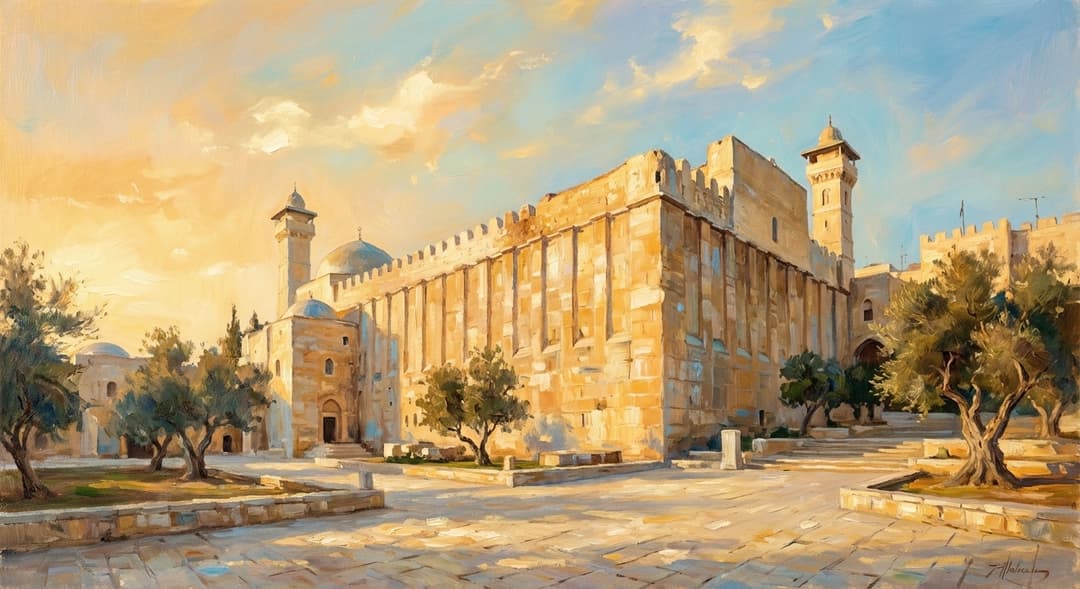
Herodian-era monumental retaining wall, constructed circa 19 BCE as part of King Herod's expansion of the Second Temple platform. The wall is built from massive, precisely dressed Jerusalem limestone ashlar blocks — some weighing up to 570 tons — laid without mortar in courses with characteristic drafted margins. The visible section rises approximately 19 meters (62 feet) above the plaza, with 28 courses above ground and 17 below, totaling 45 courses of stone. Later additions from the Umayyad, Mamluk, and Ottoman periods are visible in the upper courses, reflecting 2,000 years of continuous veneration and restoration.
Building Materials
Jerusalem Stone
The Western Wall is constructed of Jerusalem stone, a type of limestone indigenous to the area. This stone has been used in construction in Jerusalem for thousands of years and is known for its durability and beauty.
Temple Grounds
The area in front of the Western Wall has been transformed into a large plaza, providing space for large gatherings and ceremonies.
Religious Significance
The Western Wall (HaKotel HaMa'aravi) stands as the most sacred site accessible to Jewish worshippers today. As the last surviving remnant of the Second Temple complex, it embodies more than two millennia of Jewish faith, mourning, hope, and national identity. Jewish tradition holds that the Divine Presence (Shekhinah) has never departed from this place, making every prayer offered here uniquely powerful. For Jews around the world, the Western Wall represents an unbroken spiritual connection to the covenant between God and the people of Israel.
The Western Wall serves as the primary place of Jewish prayer, pilgrimage, and communal gathering. It is where Jews come to fulfill the ancient longing to be close to the site of the Holy Temple, the place where heaven and earth were believed to meet. The Wall functions as an open-air synagogue where daily prayer services (Shacharit, Mincha, and Ma'ariv) are held, Torah scrolls are read on Mondays, Thursdays, and Shabbat, and life-cycle ceremonies such as bar and bat mitzvahs take place. During the three pilgrimage festivals (Passover, Shavuot, and Sukkot), tens of thousands of worshippers gather at the Wall, recreating the ancient tradition of ascending to the Temple.
Sacred Ordinances
Daily Prayer Services
Three daily prayer services, Shacharit (morning), Mincha (afternoon), and Ma'ariv (evening), are held continuously at the Western Wall, making it one of the busiest prayer sites in the world. Minyanim (prayer quorums of ten adults) form throughout the day and night.
Bar & Bat Mitzvah Ceremonies
The Western Wall plaza is one of the most popular locations in the world for bar and bat mitzvah celebrations. Families gather at the Wall on Mondays and Thursdays, when the Torah is read, to mark their children's coming-of-age in Jewish tradition.
Birkat Kohanim (Priestly Blessing)
During the intermediate days of Passover and Sukkot, thousands of Kohanim (descendants of the priestly class) gather at the Western Wall to perform the ancient Priestly Blessing. This mass blessing, with hands raised in the traditional formation, is one of the most moving ceremonies in modern Judaism, drawing hundreds of thousands of participants.
Torah Reading
Torah scrolls are read at the Western Wall on Mondays, Thursdays, Shabbat, Rosh Chodesh (new moon), and holidays, following the same cycle of readings observed in synagogues worldwide. The setting adds profound emotional weight to the ancient liturgy.
Insertion of Prayer Notes (Kvitlach)
One of the most iconic practices at the Western Wall is the insertion of small handwritten prayers (kvitlach) into the crevices between the ancient stones. This tradition, practiced by Jews and non-Jews alike, reflects the belief that prayers offered at this sacred place carry special power. The notes are collected twice a year and ceremonially buried on the Mount of Olives.
The Holy of Holies and the Foundation Stone
Jewish tradition teaches that the Temple Mount, which the Western Wall supports, is the site of the Even HaShtiyah, the Foundation Stone from which God created the world. The Holy of Holies (Kodesh HaKodashim), the innermost sanctum of the Temple where the Ark of the Covenant rested, was located directly above this stone. The Western Wall is the closest point where Jews can pray to this sacred location, making it the holiest place of prayer in Judaism. The Talmud states that the Divine Presence never departed from the Western Wall (Midrash Rabbah, Shemot 2:2), and this belief gives every prayer uttered here a sense of cosmic significance.
Mourning and Tisha B'Av
The Western Wall has been a site of mourning since the destruction of the Second Temple in 70 CE. Tisha B'Av (the 9th of Av), the annual day of mourning that commemorates the destruction of both the First and Second Temples, is observed at the Wall with particular intensity. Thousands gather to sit on the ground, recite the Book of Lamentations (Eicha), and chant kinot (elegies). The visible tear-tracks of moisture on the Wall's stones have been poetically interpreted as the Wall itself weeping for the destroyed Temple, giving rise to its older name, the Wailing Wall.
The Shekhinah, God's Indwelling Presence
Central to the Western Wall's religious significance is the concept of the Shekhinah, God's immanent, indwelling presence in the physical world. According to the Midrash, when the Temple was destroyed, the Shekhinah did not ascend to heaven but remained at the Western Wall. This belief transforms the Wall from a mere archaeological remnant into a living spiritual portal. Worshippers at the Wall often describe a palpable sense of holiness and emotional intensity, reinforced by centuries of collective prayer and devotion.
National and Spiritual Identity
The Western Wall is inseparable from Jewish national identity. For nearly two thousand years of exile, Jews prayed facing Jerusalem and concluded the Passover Seder with the words Next year in Jerusalem. When Israeli paratroopers reached the Wall during the Six-Day War in 1967, their commander's radio report, The Temple Mount is in our hands, became one of the defining moments of modern Jewish history. Today, IDF soldiers take their oath of allegiance at the Wall, new immigrants pray there upon arriving in Israel, and the site serves as a focal point for national ceremonies on Yom HaZikaron (Memorial Day) and Yom Ha'Atzmaut (Independence Day).