Visitor Insights
Visiting La Paz Bolivia Temple
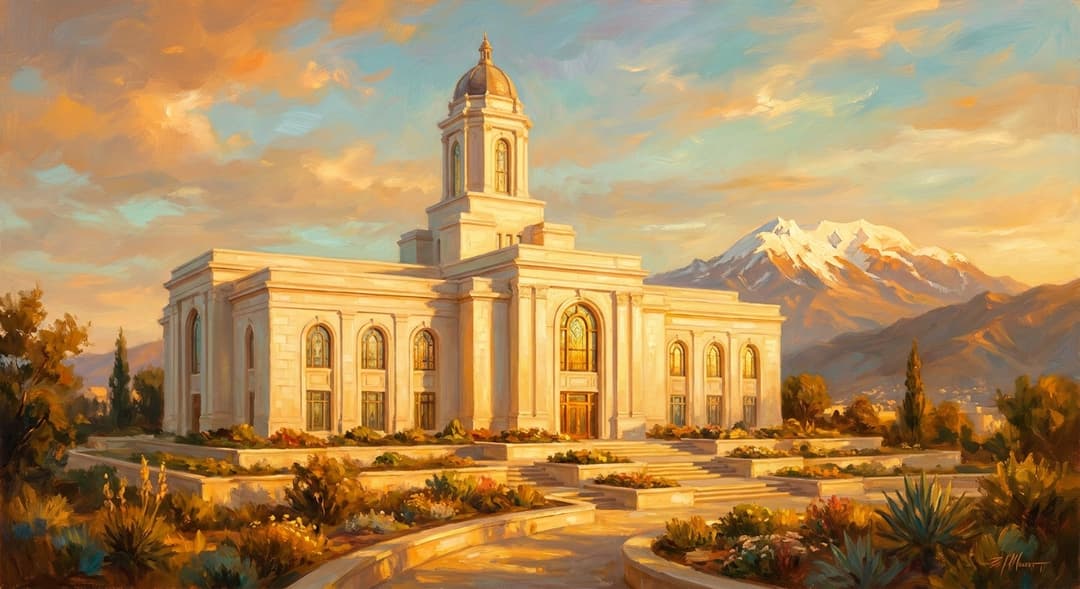
The La Paz Bolivia Temple is currently in its planning and approval phase, meaning the interior is not yet open to the public. However, once completed, the temple grounds will offer a serene, beautifully landscaped oasis in the bustling Calacoto neighborhood. Visitors will be able to enjoy peaceful walkways, vibrant high-altitude gardens, and stunning views of the snow-capped Mount Illimani. The site is designed to be a place of quiet contemplation and spiritual refuge for people of all faiths.
Highlights
- Breathtaking views of Mount Illimani, the iconic peak of La Paz
- Meticulously landscaped gardens featuring native Andean flora
- Peaceful seating alcoves and water features designed for quiet reflection
Things to Know
- The temple is currently in the planning phase; interior access is not yet available
- Located at an elevation of over 10,600 feet, visitors should be mindful of altitude sickness
- Once completed, the interior will require a temple recommend for entry, but the grounds will remain open to all
Location
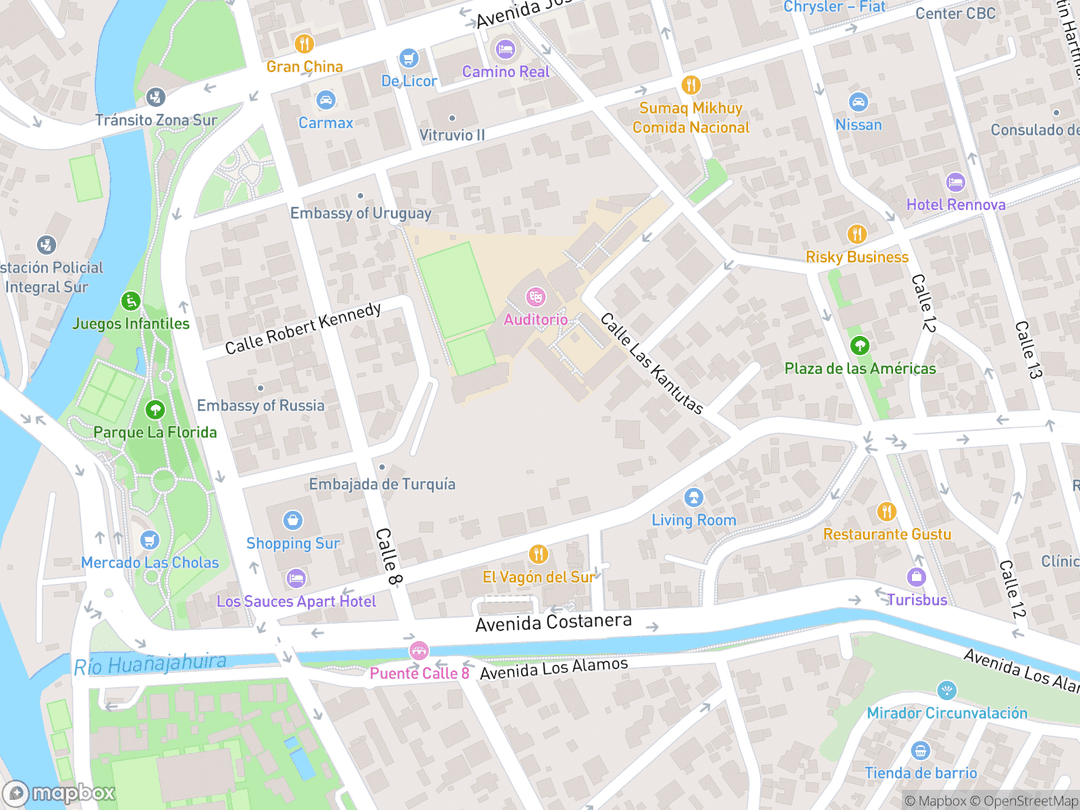
Avenida Los Sauces and Calle 8 de Calacoto, Calacoto, La Paz, Bolivia
Hours: The temple grounds will be open daily to the public from sunrise to sunset once construction is complete.
Getting There: Located in the Calacoto neighborhood (Zona Sur) of La Paz. Easily accessible via local bus routes, taxis, or the Mi Teleférico cable car system (Green Line / Línea Verde to Irpavi station, followed by a short taxi ride).
Get DirectionsTips for Your Visit
Acclimatize to the Altitude
At 10,680 feet above sea level, take your time walking the grounds and stay hydrated to prevent altitude sickness.
Visit During the Day
Plan your visit during daylight hours to fully appreciate the stunning backdrop of Mount Illimani and the detailed exterior stonework.
Use the Teleférico
The Green Line of the city's famous cable car system is a scenic and efficient way to travel to the Zona Sur area near the temple.
About
The La Paz Bolivia Temple stands as a historic milestone for members of The Church of Jesus Christ of Latter-day Saints in the high-altitude Altiplano region, representing the third House of the Lord announced or built in Bolivia. First announced by President Russell M. Nelson during the October 2021 General Conference, the temple will serve a vibrant and rapidly growing community of saints who have long demonstrated profound faith and devotion. Its construction marks a new era of spiritual accessibility for members in the metropolitan area of La Paz and El Alto.
In harmony with the broader Christian and Abrahamic traditions, the temple serves as a modern manifestation of the ancient biblical practice of constructing sacred spaces to commune with the Divine. For Latter-day Saints, the temple is not a traditional house of congregational worship, but rather a sacred sanctuary dedicated to higher spiritual learning, personal reflection, and the performance of eternal covenants. It stands as a physical testament to the divinity of Jesus Christ and the eternal nature of the human soul.
The history of the Church in Bolivia is a story of pioneering sacrifice, beginning with early missionary visits in the 1920s and consolidating with the formal arrival of the Andes Mission in 1964. For over two decades, members in the La Paz region made grueling seven-hour journeys through rugged mountain passes to worship at the Cochabamba Bolivia Temple. The establishment of a temple in La Paz directly addresses this sacrifice, bringing sacred ordinances to the doorsteps of thousands of faithful families.
Architecturally, the temple is designed to be a beacon of peace that beautifully integrates with the dramatic topography of the Andes. Situated in the lower-elevation, milder climate of the Calacoto neighborhood, the temple site offers a breathtaking, direct view of the snow-capped Mount Illimani. The design harmonizes classical Latter-day Saint architectural motifs with local materials and landscaping, creating a serene, contemplative environment for all who visit.
Interesting Facts
At 10,680 feet (3,255 meters) above sea level, the La Paz Bolivia Temple will be one of the highest temples in the world. (Tier: A)
It is the third temple announced or built in Bolivia, following Cochabamba (2000) and Santa Cruz (under construction). (Tier: A)
The temple is located in Calacoto, a lower-elevation neighborhood in the Zona Sur, which enjoys a milder climate than the Altiplano. (Tier: B)
The official rendering features a domed cupola instead of the traditional Angel Moroni statue, reflecting modern design directions. (Tier: A)
The temple site offers a direct, breathtaking view of Mount Illimani, a snow-capped peak of deep local cultural significance. (Tier: B)
The temple will serve a highly diverse, multilingual membership, with many saints speaking Aymara or Quechua alongside Spanish. (Tier: B)
The project required specialized high-altitude civil engineering managed by Civil Solutions Group to handle the unique Andean terrain. (Tier: B)
The announcement in October 2021 came nearly 60 years after official missionary work first began in Bolivia in November 1964. (Tier: A)
The temple's 3.8-acre site will feature custom-designed gardens with native Bolivian flora adapted to high-altitude climates. (Tier: B)
The temple will significantly reduce travel times for local members, who previously faced a grueling seven-hour journey to Cochabamba. (Tier: C)
The architectural style blends traditional Latter-day Saint temple forms with classical elements that harmonize with the mountainous backdrop. (Tier: B)
Common Questions
When will the La Paz Bolivia Temple be completed?
An official groundbreaking and completion date have not yet been announced. The temple is currently in the planning and design approval phase. Once construction begins, temples typically take two to three years to complete.
Where exactly is the temple located?
The temple will be built on a 3.8-acre site located at Avenida Los Sauces and Calle 8 de Calacoto, in the Calacoto neighborhood of La Paz, Bolivia.
Why was La Paz chosen for a temple?
La Paz is home to a large and dedicated population of Latter-day Saints. Previously, members had to travel seven hours to the Cochabamba Temple. The new temple will make sacred ordinances much more accessible to the saints of La Paz and El Alto.
Will the public be allowed to visit the temple?
Yes. Prior to its dedication, the temple will host a public open house where anyone can tour the interior. After dedication, the beautiful landscaped grounds will remain open to the public, while the interior will be reserved for faithful members.
What is the elevation of the La Paz Bolivia Temple?
The temple sits at an elevation of approximately 10,680 feet (3,255 meters) above sea level, making it one of the highest Latter-day Saint temples in the world.
Does the design include an Angel Moroni statue?
No, the official artistic rendering released in January 2024 shows a beautiful domed cupola atop the central tower without the traditional Angel Moroni statue, consistent with many modern temple designs.
Featured Stories
A Sixty-Year Journey of Faith
October 2021
The announcement of the La Paz Bolivia Temple by President Russell M. Nelson in October 2021 was the culmination of nearly sixty years of devotion. Official missionary work in Bolivia began in November 1964 with just a handful of elders arriving in the high-altitude capital. From those humble beginnings, local members faced immense challenges, including political instability and geographic isolation, to build up the Church. The announcement of a temple in their own historic city brought tears of joy to generations of pioneering saints who had long prayed for this day. It stands as a monument to their enduring faith and the rapid growth of the gospel in the Andes.
Source: Church Newsroom Announcement and Historical Records
The Long Road to Cochabamba
2000–2021
For over two decades, faithful members living in the La Paz and El Alto metropolitan areas had to make a grueling seven-hour journey through winding mountain passes to reach the nearest temple in Cochabamba. These trips were often expensive, physically exhausting, and logistically difficult for families with young children or elderly relatives. Despite these obstacles, stakes in La Paz regularly organized temple excursions, with members saving resources for months to attend. The new temple in Calacoto will eliminate these barriers, allowing local saints to worship regularly without the burden of long-distance travel. This transition marks a new era of spiritual accessibility and convenience for the Bolivian saints.
Source: Local Member Oral Histories and Temple Excursion Records
Engineering the Altiplano
2023–2024
Designing a sacred structure at an elevation of over 10,600 feet presented unique challenges for the Church's Temple Design Department and local engineers. The mountainous topography of La Paz, combined with complex soil conditions and seismic activity, required state-of-the-art civil engineering solutions. The Church partnered with Civil Solutions Group to conduct extensive site assessments and design a foundation capable of securing the temple for generations. Every element, from the reinforced concrete frame to the solar-resistant exterior stone, was carefully selected to withstand the intense high-altitude climate. This engineering feat ensures that the House of the Lord will stand as a safe, permanent beacon of hope overlooking the city.
Source: Civil Solutions Group Project Reports
Timeline
Earliest Missionary Contact
Elder J. Vernon Sharp visits La Paz to distribute religious tracts, marking the earliest contact of the Church with Bolivia.
MilestoneArrival of the Andes Mission
Official missionaries from the Andes Mission arrive in La Paz to establish a permanent proselytizing presence.
MilestoneFirst Convert Baptism
The first convert baptism in Bolivia is performed, leading to the organization of the first local branch.
EventBranch Division
The La Paz Branch is divided for the first time due to rapid convert growth in the metropolitan area.
EventFirst Bolivian Missionary
The first full-time missionary called from Bolivia begins their service, marking a major milestone for local leadership.
EventAndes Mission Headquarters
The Andes Mission is formally established with its headquarters in La Paz, expanding missionary teaching.
MilestoneAymara Translation
The Book of Mormon is translated and published in the Aymara language, greatly accelerating local missionary work.
MilestoneFirst Stake Created
The La Paz Bolivia Stake is created, becoming the first stake in the high-altitude metropolitan region.
MilestoneNational Consolidation
The first stakes in Bolivia are organized in Santa Cruz, La Paz, and Cochabamba, solidifying the ecclesiastical structure.
MilestoneRegional Humanitarian Service
Local members from La Paz participate in a massive volunteer effort to assist with regional humanitarian needs.
EventCochabamba Temple Dedicated
President Gordon B. Hinckley dedicates the Cochabamba Bolivia Temple, the first temple in the nation.
DedicationTemple Announcement
President Russell M. Nelson announces the construction of the La Paz Bolivia Temple during General Conference.
MilestoneSite Location Announced
The First Presidency officially announces the site location for the temple in the Calacoto neighborhood.
MilestoneTopographical Engineering
Civil Solutions Group begins preliminary site civil engineering and topographical assessments for the temple plot.
MilestoneExterior Rendering Released
The First Presidency releases the official exterior artistic rendering of the La Paz Bolivia Temple.
MilestoneMunicipal Review
Local architectural and engineering reviews are initiated with La Paz municipal authorities for site approval.
MilestoneHistory by Decade
1920s–1960s — Pioneer Beginnings
The roots of The Church of Jesus Christ of Latter-day Saints in Bolivia trace back to April 1927, when Elder J. Vernon Sharp briefly visited La Paz to distribute tracts, though permanent congregations were not yet established. Decades later, on November 20, 1964, official missionaries from the Andes Mission arrived in La Paz, establishing a permanent proselytizing presence. By December of that year, the first convert baptism was performed, and the first local branch was organized. The late 1960s saw rapid growth, with the first full-time missionary called from Bolivia in 1967 and the formal establishment of the Andes Mission headquarters in La Paz in 1968, expanding outreach into Spanish, Aymara, and Quechua.
1970s–2000s — Ecclesiastical Consolidation
The 1970s marked a period of structural consolidation for the Church in Bolivia. In 1979, the first stakes were organized in Santa Cruz, La Paz, and Cochabamba, establishing a permanent local leadership framework. For many years, members dreamed of having a temple in their own country. That dream was realized on April 20, 2000, when President Gordon B. Hinckley dedicated the Cochabamba Bolivia Temple. While this was a monumental milestone for the nation, members in La Paz still faced a challenging seven-hour journey to attend, keeping the desire for a local temple alive.
2020s — A Temple in the Capital
The modern era brought the long-awaited announcement that would transform the spiritual landscape of the Altiplano. On October 3, 2021, President Russell M. Nelson announced the construction of the La Paz Bolivia Temple. This was followed by the official site selection in the beautiful Calacoto neighborhood in August 2023 and the release of the official exterior rendering in January 2024. Today, the temple project is in its planning and approval phases, representing a historic milestone that honors sixty years of devotion by the Bolivian saints.
Architecture & Facilities
The architectural style of the La Paz Bolivia Temple is a traditional Latter-day Saint design adapted to the local Andean landscape. It features a clean, classical form with symmetrical arched windows, a strong vertical emphasis, and an attached central two-story tower topped with a domed cupola. The design is intended to harmonize with the surrounding mountainous terrain of La Paz while maintaining the sacred, dignified appearance of a House of the Lord.
Building Materials
Exterior Stone Cladding
High-quality off-white stone cladding engineered to withstand the intense high-altitude solar radiation of the Andes.
Art Glass
Custom-designed arched art glass windows that filter natural light into the sacred interior spaces, creating a serene atmosphere.
Structural Frame
Reinforced concrete engineered to meet strict seismic safety standards for the mountainous Altiplano region.
Interior Finishes
Premium hardwoods, imported marble, and local Bolivian decorative motifs integrated into the stonework and textiles.
Interior Features
Celestial Room
A quiet, reverent space symbolizing the peace and glory of the celestial kingdom, designed with elegant chandeliers and soft, light-colored furnishings.
Ordinance Rooms
Rooms where patrons participate in sacred instruction and make covenants with God, representing the progressive journey of faith.
Baptistry
A sacred font resting on the backs of twelve sculpted oxen, symbolizing the twelve tribes of Israel and the strength of the covenant.
Sealing Rooms
Rooms featuring altars where marriages are performed, uniting families for eternity under the authority of the priesthood.
Temple Grounds
The 3.8-acre (1.5-hectare) site will feature meticulously landscaped gardens with native Bolivian flora capable of thriving at high altitudes. Paved walkways, quiet seating alcoves, and water features will provide a peaceful, contemplative environment for visitors, framed by the dramatic, rugged backdrop of the Andes mountains.
Additional Facilities
The temple site plans include a patron housing facility to accommodate members traveling from distant regions, utility and maintenance buildings, and secure parking areas to serve the metropolitan La Paz and El Alto communities.
Religious Significance
In harmony with the broader Christian and Abrahamic traditions, the La Paz Bolivia Temple stands as a sacred bridge between the earthly and the divine. Historically, believers have constructed grand sanctuaries and high towers to symbolize the soul's upward reach toward God, the light of divine truth, and the eternity of the covenant. For Latter-day Saints, the temple is literally a House of the Lord, a place where heaven and earth meet.
The core spiritual purpose of the temple is to provide a sacred space where members can make eternal covenants with God and participate in saving ordinances that bind families together for eternity.
Sacred Ordinances
The Endowment
A sacred ceremony of instruction and covenant-making that outlines God's plan of salvation and the role of Jesus Christ.
Eternal Marriage (Sealing)
An ordinance performed at the temple altar that unites husbands, wives, and children in eternal family relationships.
Baptism for the Deceased
A vicarious ordinance where living members are baptized on behalf of their ancestors, extending Christ's grace to all generations.
A Beacon of Peace in the Andes
The temple serves as a physical testament to the divinity of Jesus Christ. Its presence in La Paz offers a constant visual reminder of spiritual priorities, inviting all who see it to look upward and find peace amidst the challenges of mortal life.
The Gathering of Israel
Through the work performed within its walls, the temple plays a central role in the gathering of Israel. It unites generations of Bolivian families, bridging the past, present, and future under the umbrella of God's eternal love.
Similar Temples
Sources & Research
Every fact on Temples.org is backed by verified Sources & Research. Each piece of information is rated by source tier and confidence level.
View All Sources (2)
| Field | Source | Tier | Retrieved |
|---|---|---|---|
| Timeline & Historical Milestones | The Church of Jesus Christ of Latter-day Saints (opens in a new tab) | A | 2026-02-18 |
| Timeline & Historical Milestones | Temples of The Church of Jesus Christ of Latter-day Saints (opens in a new tab) | C | 2026-02-18 |