Visitor Insights
Visiting Sacred Mountains of China
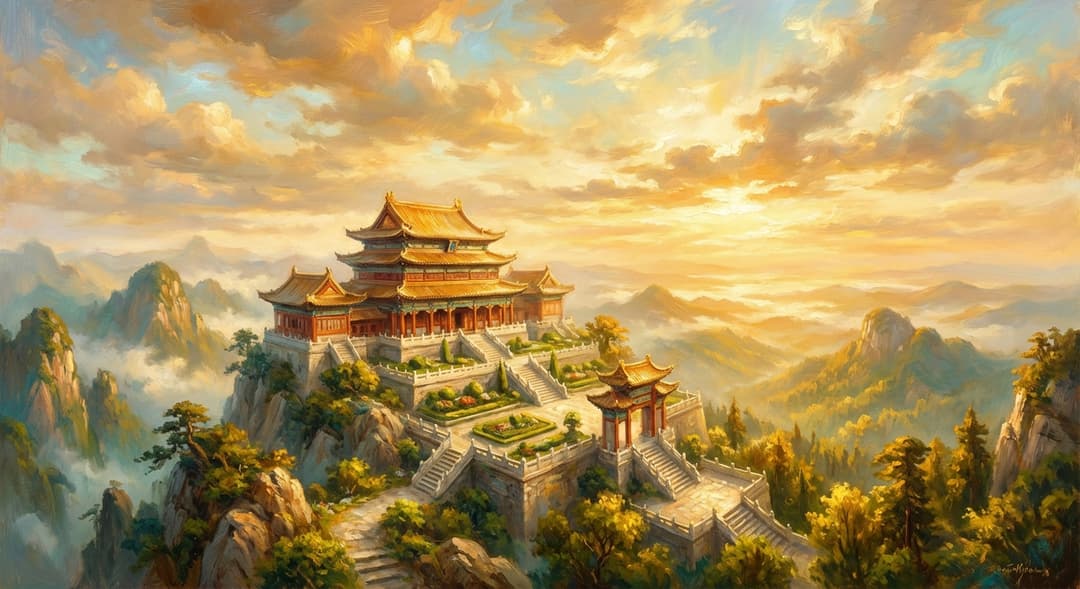
Visiting the Sacred Mountains of China offers a unique opportunity to experience the spiritual heart of Taoism and witness the harmonious blend of nature and architecture. Whether you are a seasoned pilgrim or a curious traveler, these mountains provide a profound sense of peace and connection to the divine. Visitors can explore ancient temples, meditate in serene caves, and hike through breathtaking landscapes. The mountains are also home to a variety of flora and fauna, adding to the natural beauty and ecological significance of these sacred sites. However, it is important to be mindful of the environmental impact of tourism and to respect the local customs and traditions. By practicing responsible travel, visitors can help preserve the Sacred Mountains of China for future generations.
Highlights
- Explore ancient Taoist temples and monasteries.
- Witness breathtaking natural landscapes.
- Experience the spiritual heart of Taoism.
Things to Know
- Be mindful of the environmental impact of tourism.
- Respect local customs and traditions.
- Practice responsible travel.
Location
Various locations throughout China
Hours: Varies by location; check individual temple websites for details.
Getting There: Access varies; some mountains can be reached by cable car or bus, while others require hiking.
Get DirectionsAbout
The Sacred Mountains of China hold a significant place in Chinese culture and religion, particularly in Taoism. These mountains are not merely geographical features but are considered dwelling places of deities and immortals, serving as conduits between the earthly and divine realms. They embody spiritual significance and have been important destinations for pilgrimage throughout history.
These mountains are divided into several groups, including the Five Great Mountains (Wuyue) and the Four Sacred Mountains of Taoism. Each mountain possesses unique characteristics and is associated with specific deities and elements, contributing to the rich tapestry of Taoist beliefs and practices.
Throughout history, emperors, scholars, and common people have visited these mountains to pay homage to the gods, seek blessings, and gain spiritual insight. The mountains have also served as centers of Taoist learning and practice, with numerous temples and monasteries built on their slopes.
Today, the Sacred Mountains of China continue to attract pilgrims and tourists alike, offering a glimpse into the enduring legacy of Taoism and the profound connection between humanity and nature. However, they also face challenges such as uncontrolled tourism and habitat destruction, highlighting the need for sustainable management and preservation efforts.
Gallery
Symbolic Elements
The temple's exterior features intricate carvings, each rich with spiritual meaning:

Temple Architecture
Taoist temples are designed to blend with the natural environment, reflecting the Taoist principle of harmony between humanity and nature. Wood and stone are commonly used to integrate the buildings into their surroundings.

Incense Burners
Incense burners are used in Taoist temples to offer prayers and communicate with the deities. The smoke from the incense is believed to carry the prayers to the heavens.

Calligraphy
Calligraphy is an important art form in Taoism, used to express philosophical concepts and spiritual insights. Calligraphic inscriptions can be found throughout the temples and monasteries.

Taoist Deities
The Sacred Mountains are considered dwelling places of various Taoist deities, each representing different aspects of the Tao. These deities are often depicted in statues and paintings within the temples.

Natural Landscape
The natural landscape of the Sacred Mountains, including the mountains themselves, forests, waterfalls, and caves, is considered sacred in Taoism. These natural features are seen as manifestations of the Tao and are revered for their beauty and power.

Stone Steps
Stone steps are a common feature of the Sacred Mountains, leading pilgrims and visitors up the steep slopes to the temples and monasteries. The ascent up the steps is seen as a physical and spiritual journey.

Pagodas
Pagodas are multi-tiered towers that are often found on the Sacred Mountains. They are believed to have originated in India as stupas and were later adopted by Taoism and other Chinese religions.

Clouds
Clouds are often depicted in paintings and sculptures of the Sacred Mountains, symbolizing the ethereal and transcendent nature of the Tao. They also represent the connection between heaven and earth.
Interesting Facts
The Five Great Mountains are associated with the body of Pangu, with each mountain representing a different part of his body.
Taoists consider mountains as a means of communication between heaven and earth and as places where immortality can be found.
Mount Tai is considered the most sacred of the mountains and is associated with the rising sun, signifying birth and renewal.
Mount Qingcheng is regarded as the birthplace of Taoism.
Mount Wudang is known as a center for Taoist worship, meditation, and martial arts training. It is associated with the god Zhenwu (or Xuanwu).
The term for pilgrimage in Chinese, *ch' ao-shan chin-hsiang*, translates to "journeying to a mountain and offering incense".
Many Taoist temples were built in mountainous landscapes to integrate seamlessly with the environment, reflecting a key principle of Chinese ancient architecture.
The mountains are home to a variety of flora and fauna, including medicinal plants and rare species.
The Sacred Mountains are believed to possess powerful geomantic energy, making them ideal for spiritual practice.
Some of the mountains are home to rare and endangered species of plants and animals.
Common Questions
What are the Sacred Mountains of China?
The Sacred Mountains of China are a group of mountains that hold significant religious and cultural importance in Chinese Taoism. They are considered dwelling places of deities and immortals and have been important destinations for pilgrimage throughout history.
What are the Five Great Mountains?
The Five Great Mountains (Wuyue) are a group of five mountains that are considered particularly sacred in Chinese Taoism. They are associated with the five cardinal directions and the five main cosmic deities.
What are the Four Sacred Mountains of Taoism?
The Four Sacred Mountains of Taoism are another group of mountains that are considered particularly sacred in Chinese Taoism. They are associated with various deities and elements and are important centers of Taoist learning and practice.
Why are the Sacred Mountains important in Taoism?
The Sacred Mountains are important in Taoism because they are considered dwelling places of deities and immortals, serving as conduits between the earthly and divine realms. They are also seen as powerful sources of qi (life force) and are ideal for spiritual cultivation and meditation.
Can I visit the Sacred Mountains of China?
Yes, the Sacred Mountains of China are popular destinations for both pilgrims and tourists. Visitors can explore ancient temples, meditate in serene caves, and hike through breathtaking landscapes. However, it is important to be mindful of the environmental impact of tourism and to respect the local customs and traditions.
Related Stories
Explore the rich history, traditions, and people connected to this sacred site.

Featured Stories
The Legend of Mount Tai
Ancient Times
Mount Tai, the eastern peak of the Five Great Mountains, holds a special place in Chinese history and mythology. Legend has it that the mountain was formed from the head of Pangu, the first living being and the creator of the world. Emperors throughout history have ascended Mount Tai to perform sacred rituals and communicate with the heavens.
The mountain is also associated with the rising sun, symbolizing birth and renewal. Pilgrims often climb Mount Tai at dawn to witness the sunrise and receive blessings. The arduous journey to the summit is seen as a test of faith and a path to spiritual enlightenment.
The mountain's rich history and spiritual significance have made it a UNESCO World Heritage Site, attracting visitors from all over the world.
Source: Historical Archives
The Birthplace of Taoism: Mount Qingcheng
Jin Dynasty
Mount Qingcheng, located in Sichuan province, is revered as the birthplace of Taoism. According to tradition, the Yellow Emperor, a legendary figure in Chinese history, received instruction from the goddess Hsi Wang Mu on Mount Qingcheng.
The mountain is home to numerous Taoist temples and monasteries, including the Jianfu Palace, which was built in the Tang Dynasty. The temples are nestled amidst dense forests and are accessible via winding paths and stone steps.
Mount Qingcheng's serene atmosphere and natural beauty have made it a popular destination for Taoist practitioners and those seeking spiritual retreat.
Source: WorldAtlas
Wudang: A Center for Taoist Martial Arts
Ming Dynasty
Mount Wudang, located in Hubei province, is renowned as a center for Taoist worship, meditation, and martial arts training. The mountain is associated with the god Zhenwu (or Xuanwu), a powerful deity who is believed to have attained immortality on Mount Wudang.
The mountain is home to over 30 ancient Taoist buildings, including halls, palaces, and meditation caves. The Golden Hall, built in 1416, is covered in gold-leafed copper and is a testament to the mountain's rich history and spiritual significance.
Wudang martial arts, which emphasize internal energy and harmony with nature, are practiced by Taoist monks and lay practitioners on the mountain.
Source: Shen Yun Performing Arts
Timeline
Reverence for Mountains
Mountains were revered as places of authority and were associated with dark forces and worship. They were valued as sources of welfare, fertility, rivers, medicinal plants, and building materials.
MilestoneAssociation with Hermits
Mountains became associated with hermits and ascetics seeking spiritual edification. They were considered places where alchemistic practices could be developed in pursuit of eternal life.
EventArrangement of Five Great Mountains
The Five Great Mountains were arranged according to the five cardinal directions of Chinese geomancy, solidifying their importance in the cosmic order.
EventEstablishment of Temples
Numerous temples were established on mountains like Mount Qingcheng, serving as centers of Taoist education and practice.
MilestoneWudang Declared Royal Mountain
Emperor Yongle declared Wudang a royal mountain and ordered the construction of temples there, promoting Taoism and solidifying its status as a center of worship.
EventDestruction of Sacred Sites
Political upheaval led to the destruction of sacred sites, but the devotion of monks and local residents helped prevent total destruction.
RenovationContinued Pilgrimage
The sacred mountains continue to attract traditional pilgrims and secular visitors, facing challenges such as uncontrolled tourism and habitat destruction.
EventMountains as Places of Authority
Mountains were seen as places of power and were often associated with deities and spirits.
MilestoneMountains as Retreats
Taoists sought out mountains as places for meditation, contemplation, and spiritual practice.
EventFormalization of the Five Great Mountains
The Five Great Mountains were formally recognized and associated with specific directions and elements.
MilestoneConstruction of Temples and Monasteries
Many temples and monasteries were built on the sacred mountains, establishing them as centers of Taoist learning and practice.
DedicationPatronage of Taoism
The Ming emperors supported Taoism and promoted the construction of temples and monasteries on the sacred mountains.
EventChallenges and Preservation
The sacred mountains faced challenges from political upheaval and modernization, but efforts were made to preserve their cultural and natural heritage.
RenovationTourism and Conservation
The sacred mountains are popular tourist destinations, but there are concerns about the impact of tourism on the environment and cultural heritage.
EventPreservation Efforts
Ongoing efforts to preserve the sacred mountains, balancing tourism with conservation.
RenovationHistory by Decade
Ancient Times
Mountains have always held a special place in Chinese culture, long before the formalization of Taoism. They were seen as powerful places, often associated with deities and spirits. People would travel to mountains to seek blessings, offer sacrifices, and connect with the natural world. This reverence for mountains laid the foundation for their later significance in Taoism.
5th–3rd centuries BC
As Taoism began to develop, mountains became even more important. They were seen as ideal places for hermits and ascetics to retreat from the world and pursue spiritual enlightenment. The mountains offered solitude, natural beauty, and a connection to the Tao, the underlying principle of the universe.
Han Dynasty
During the Han Dynasty, the Five Great Mountains were formally recognized and associated with specific directions and elements. This further solidified their importance in Chinese cosmology and religion. Emperors would often travel to these mountains to perform sacred rituals and assert their authority.
Jin and Tang Dynasties
The Jin and Tang Dynasties saw a flourishing of Taoist temples and monasteries on the sacred mountains. These temples became centers of learning and practice, attracting monks, scholars, and pilgrims from all over China. The mountains became synonymous with Taoist spirituality.
Ming Dynasty
The Ming Dynasty was a period of great patronage for Taoism. Emperors supported the construction of temples and monasteries on the sacred mountains, further enhancing their grandeur and importance. Mount Wudang, in particular, became a major center of Taoist worship during this time.
20th Century
The 20th century brought challenges to the sacred mountains. Political upheaval and modernization led to the destruction of some temples and the neglect of others. However, the devotion of monks and local residents helped to preserve the mountains' cultural and spiritual heritage.
Architecture & Facilities
Traditional Chinese Taoist mountain-temple architecture, designed to harmonize with the natural landscape in accord with Taoist principles of unity between humanity and nature. Temples, palaces, nunneries, and meditation caves are built along ridgelines, into cliff faces, or atop steep slopes using wood and stone, following a strict constructional system reflecting the Taoist inter-relationship of Essence, Energy, and Spirit. Multi-level platforms, wooden bridges, and cliffside pavilions minimize disruption to the terrain. Notable examples include Mount Wudang's Golden Hall (1416), covered in gold-leafed copper and perched at the summit, and the Nanyan Temple built directly into a cliff face. Mount Qingcheng's temples are hidden among dense forests, accessible via winding paths and stone steps, embodying the Taoist ideal of secluded spiritual retreat.
Religious Significance
Sacred Mountains of China occupy a central place in Taoist cosmology and spiritual practice, serving as earthly dwelling places of celestial deities and immortals. In Taoism, mountains are not merely geographic features but sacred axes connecting earth to heaven — conduits through which the vital energy (qi) of the universe flows most powerfully. These mountains have been destinations for Taoist pilgrimage, cultivation, and monastic life for over two millennia, embodying the tradition's deepest aspirations toward harmony with the Tao, the ultimate principle underlying all of existence.
The sacred mountains serve as centers of Taoist cultivation (xiulian), where monks, nuns, and lay practitioners pursue the Way (Tao) through meditation, qigong, internal alchemy, and ritual practice. They preserve living traditions of Taoist philosophy, martial arts, traditional medicine, and liturgy that have been transmitted from master to disciple for centuries. As pilgrimage sites, they offer devotees opportunities to seek blessings from the deities, purify their spirits, and deepen their connection to the sacred landscape.
Sacred Ordinances
Zhai Jiao (Offerings and Liturgy)
Taoist priests perform elaborate liturgical ceremonies involving chanting of sacred scriptures, presentation of offerings, and invocation of celestial deities. These rituals, often accompanied by traditional music and ritual movements, are designed to restore harmony between heaven, earth, and humanity, and to generate spiritual merit for participants and the broader community.
Meditation and Internal Cultivation
Practitioners engage in sitting meditation (zuowang), visualization practices, and internal alchemy (neidan) aimed at refining the body's vital energies and achieving spiritual immortality. The mountain environment — with its pure air, flowing water, and powerful qi — is considered the ideal setting for these transformative practices.
Pilgrimage and Mountain Ascent
Devout Taoists undertake pilgrimages to the sacred peaks, climbing thousands of stone steps as an act of devotion and spiritual discipline. The physical journey up the mountain mirrors the inner journey of self-cultivation, with each temple and shrine along the way marking a stage of spiritual progress toward the summit — the closest point to heaven.
Qigong and Tai Chi
Many sacred mountain temples are centers for the practice of qigong and tai chi, physical-spiritual disciplines that cultivate the body's internal energy (qi) through slow, flowing movements, breath control, and mental focus. These practices, rooted in Taoist philosophy, are pursued both for health benefits and as pathways to spiritual realization.
The Mountains as Cosmic Axis
In Taoist cosmology, the sacred mountains function as pillars connecting heaven and earth, channels through which celestial energy descends into the world. Each of the five great mountains is associated with a cardinal direction, an element, a color, and specific deities, forming a sacred geography that mirrors the structure of the cosmos itself. Taoist adepts who cultivate on these mountains believe they are drawing upon the most concentrated spiritual energies available on earth, accelerating their progress toward unity with the Tao.
Immortality and the Taoist Quest
The pursuit of immortality — both physical longevity and spiritual transcendence — is one of the great themes of Taoist practice, and the sacred mountains have long been associated with this quest. Legends tell of immortals (xian) who dwell on the peaks, having transcended the limitations of mortal existence through decades of meditation, alchemy, and virtuous living. For practitioners today, the mountains represent the enduring possibility of transformation — the conviction that through disciplined cultivation, human beings can refine their spiritual nature and achieve a state of harmony with the eternal Tao.
Similar Temples
Sources & Research
Every fact on Temples.org is backed by verified Sources & Research. Each piece of information is rated by source tier and confidence level.