Visitor Insights
Visiting Cali Colombia Temple
The Cali Colombia Temple is currently under construction and is not yet open to the general public. Once completed, the temple grounds will offer a serene, beautifully landscaped environment featuring native tropical flora and peaceful walkways open to all visitors. Following the completion of construction, a public open house will be announced, allowing visitors of all faiths to tour the sacred interior before the temple is formally dedicated. After dedication, access to the interior will be reserved for members of the Church holding a current temple recommend, while the outer grounds will remain a public sanctuary of peace.
Highlights
- Beautifully landscaped 3.14-acre grounds featuring native Colombian palms and vibrant tropical flowers.
- A peaceful public atmosphere in the northern La Flora neighborhood, ideal for quiet contemplation.
- An upcoming public open house that will offer a rare opportunity to tour the sacred interior spaces.
Things to Know
- The site is currently an active construction zone and is closed to the public for safety.
- Appropriate, respectful attire is encouraged when visiting the temple grounds once they open.
- Photography is permitted on the outdoor grounds but is strictly prohibited inside the temple.
Location
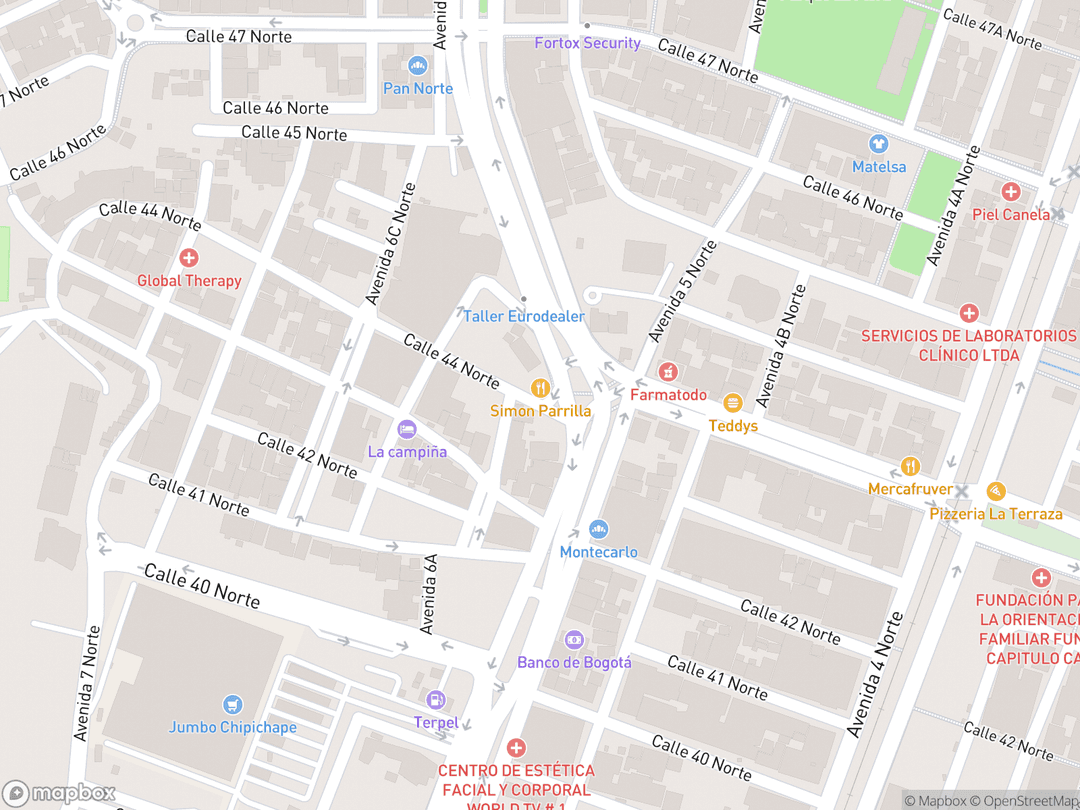
Calle 50 Norte and Avenida 4a Norte, Barrio La Flora, Cali, Valle del Cauca, Colombia
Hours: Grounds will be open daily from sunrise to sunset upon completion; temple services hours TBA.
Getting There: Located at Calle 50 Norte and Avenida 4a Norte in Barrio La Flora, Cali. The site is easily accessible via major northern avenues, near the Chipichape area, with ample local transit and taxi options.
Get DirectionsTips for Your Visit
Monitor Open House Announcements
Keep an eye on official Church news channels for the announcement of the public open house dates, which will offer the only opportunity for the general public to see the interior.
Enjoy the Outer Gardens
Once the temple is dedicated, the outer gardens will remain open to the public. They are designed as a quiet sanctuary, perfect for reading, meditation, or finding a moment of peace.
Respect the Sacred Environment
As a place of worship, visitors are asked to help maintain a quiet, reverent atmosphere on the grounds by keeping voices low and avoiding loud activities.
About
The Cali Colombia Temple stands as a sacred monument of faith, devotion, and covenant-making for Latter-day Saints in southwest Colombia. Rooted in the broader Christian and Abrahamic tradition of building sanctuaries to honor the Almighty, this temple serves as a physical bridge between heaven and earth. It represents a sacred space where individuals can withdraw from the noise of the world to seek divine guidance, find spiritual peace, and make sacred promises to God.
Announced in April 2021 by President Russell M. Nelson, the temple is the third such house of the Lord in Colombia, joining established temples in Bogotá and Barranquilla. For decades, faithful members in the Valle del Cauca region made arduous ten-hour journeys through the Andes Mountains to access temple blessings. The construction of this temple in Cali represents a significant milestone in the localization of sacred ordinances, bringing these essential Christian covenants directly to the local community.
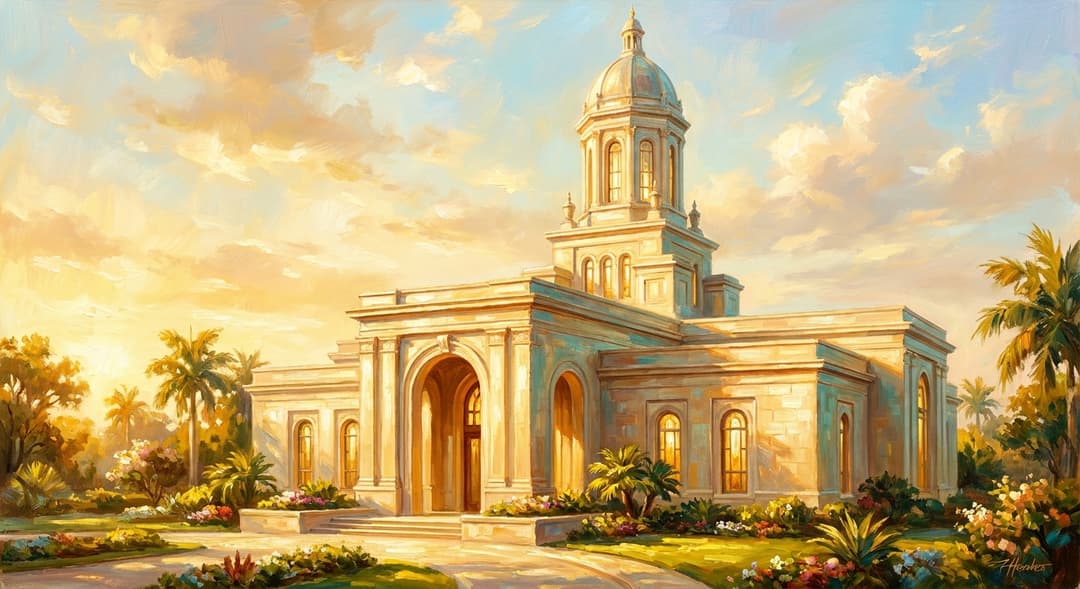
The temple's design beautifully integrates modern modular construction techniques with classical architectural symmetry. Situated on a 3.14-acre site in the northern La Flora neighborhood, the temple grounds are designed to be an oasis of natural beauty and spiritual tranquility. Once completed, the temple will not only serve as a place of worship for thousands of Latter-day Saints but also as a landmark of religious freedom and community harmony in the historic city of Cali.
Interesting Facts
The Cali Colombia Temple will be the third temple built in Colombia, following the Bogotá (1999) and Barranquilla (2018) temples, with a fourth announced for Medellín.
The temple is constructed on the former site of the French High School (*Lycée Français*), which was cleared in early 2025.
It utilizes a highly efficient, standardized modular central-spire design, similar to temples built in Helena, Montana, and Casper, Wyoming.
At the groundbreaking ceremony on March 1, 2025, Cali Mayor Alejandro Eder attended and spoke on the importance of religious freedom.
During the groundbreaking event, Area President Elder Jorge T. Becerra presented Mayor Alejandro Eder with a personalized copy of the Book of Mormon.
The temple is designed to serve more than 15,000 Latter-day Saints residing in southwest Colombia.
Before this temple, local members had to travel up to 10 hours by bus through the Andes Mountains to perform ordinances in Bogotá.
While most of the old school buildings were demolished, one former preschool building was preserved and adapted as an ancillary facility.
The temple features a single-story layout capped by an elegant, multilevel central tower with a domed cupola.
The exterior is clad in light-colored manufactured stone panels secured over a high-durability waterproofing membrane.
Once dedicated, it will stand as the southernmost and westernmost Latter-day Saint temple in Colombia.
Common Questions
When will the Cali Colombia Temple be completed and dedicated?
An official dedication date has not yet been announced. The temple is currently under construction, with major milestones like exterior stone cladding underway as of early 2026. Once construction nears completion, the First Presidency will announce the dates for the public open house and dedication.
Can people of other faiths visit the Cali Colombia Temple?
Yes! During the public open house period prior to the dedication, visitors of all faiths and backgrounds are warmly invited to tour the entire interior of the temple. After the temple is dedicated, the interior is reserved for faithful members of the Church, but the beautiful exterior gardens and walkways will remain open to the public.
What was previously located on the temple site?
The 3.14-acre site was previously occupied by the French High School (Lycée Français). Demolition of the old school buildings took place in early 2025 to clear the land for the temple, though one former preschool building on the property was preserved and adapted to serve as an ancillary facility for temple operations.
Why is this temple significant for Latter-day Saints in southwest Colombia?
Prior to this temple's construction, members living in Cali and surrounding southwestern regions had to travel up to ten hours by bus through the Andes Mountains to reach the Bogotá Colombia Temple. Having a temple in Cali brings these sacred ordinances directly to over 15,000 local members, significantly reducing travel barriers.
What is the difference between a temple and a regular meetinghouse?
Latter-day Saint meetinghouses (chapels) are used for weekly Sunday worship services, community activities, and social gatherings, and everyone is welcome to attend. Temples, however, are considered sacred 'houses of the Lord' dedicated to higher Christian ordinances, such as eternal marriages and baptisms for the ancestors, and are reserved for sacred worship during the week.
Featured Stories
The Long Journey to Bogotá
1999–2021
For over two decades, Latter-day Saints living in Cali and the surrounding Valle del Cauca region faced a significant spiritual and physical challenge. To participate in sacred temple ordinances, they had to undertake a grueling ten-hour bus journey through the steep, winding roads of the Andes Mountains to reach the Bogotá Colombia Temple. These trips required immense sacrifice, with families saving money for months and taking time off work to make the pilgrimage. The announcement of a temple in Cali was received with tears of joy, as it meant these sacred Christian covenants would finally be accessible right in their home city, transforming their worship from a rare, exhausting journey into a regular part of their lives.
Source: ChurchofJesusChristTemples.org
A Mayor's Welcome for Religious Freedom
March 1, 2025
At the groundbreaking ceremony on March 1, 2025, the local community's excitement was highlighted by the attendance of Cali Mayor Alejandro Eder. In a moving address to the audience, Mayor Eder emphasized the vital role of religious freedom and the positive moral and social impact the temple would have on the city of Cali. He spoke of the temple as a symbol of hope and peace, welcoming the Church's investment in the northern La Flora neighborhood. To cement this bond of community friendship, Area President Elder Jorge T. Becerra presented the Mayor with a personalized copy of the Book of Mormon, symbolizing mutual respect and a shared commitment to the spiritual well-being of Cali's citizens.
Source: The Church of Jesus Christ of Latter-day Saints Newsroom
Transforming a French High School
January 2025
The site selected for the Cali Colombia Temple holds a rich history of education and community service, having previously housed the French High School (Lycée Français). In early 2025, demolition crews began the delicate process of clearing the 3.14-acre campus to make way for the sacred structure. Rather than erasing the site's history entirely, architects designed a plan to preserve and structurally retrofit one of the former preschool buildings on the property. This adapted building now serves as a vital ancillary facility supporting temple operations and visitor services, beautifully bridging the site's educational past with its sacred, spiritual future.
Source: The Cultural Hall
Timeline
Colombia Dedicated for Missionary Work
Elder Spencer W. Kimball of the Quorum of the Twelve Apostles formally dedicates the nation of Colombia for the preaching of the restored gospel.
EventFirst Missionaries Arrive
The first Latter-day Saint missionaries arrive in Colombia, establishing initial branches of the Church in both Bogotá and Cali.
EventColombia Bogotá Mission Established
The Colombia Bogotá Mission is organized, centralizing and accelerating missionary efforts throughout the nation.
EventColombia Cali Mission Organized
To support the rapid growth of congregations in southwest Colombia, the Colombia Cali Mission is formally organized.
EventFirst Stake Organized in Colombia
The first stake (a diocese-like group of congregations) is organized in Colombia as nationwide membership grows to nearly 12,000.
EventBogotá Colombia Temple Dedicated
President Gordon B. Hinckley dedicates the Bogotá Colombia Temple, the first temple in the country, requiring Cali members to travel ten hours by bus to attend.
DedicationBarranquilla Colombia Temple Dedicated
President Dallin H. Oaks dedicates the Barranquilla Colombia Temple, providing a second sacred sanctuary for members living in northern Colombia.
DedicationCali Colombia Temple Announced
President Russell M. Nelson announces the construction of the Cali Colombia Temple during the Sunday afternoon session of the 191st Annual General Conference.
MilestoneSite Location and Rendering Released
The official site location in the northern La Flora neighborhood of Cali and the official exterior rendering of the temple are released to the public.
MilestoneGroundbreaking Date Announced
The First Presidency of the Church announces the official groundbreaking date for the Cali Colombia Temple.
MilestoneDemolition Work Begins
Demolition work begins on the former French High School (Lycée Français) that previously occupied the 3.14-acre site, clearing the way for excavation.
MilestoneGroundbreaking Ceremony
Elder Jorge T. Becerra, South America Northwest Area President, presides over the groundbreaking ceremony. Cali Mayor Alejandro Eder attends and addresses the audience.
component.timeline.groundbreakingExcavation and Foundation Completed
Excavation and foundation reinforcement works are completed, allowing structural steel and concrete works to commence.
MilestoneSpire Framing Erected
Structural steel framing for the central spire is successfully erected, defining the temple's vertical silhouette against the Cali skyline.
MilestoneExterior Cladding Installation Begins
Stonemasons begin securing light-colored stone cladding panels to the exterior façade and sheathing the central tower framework.
MilestoneHistory by Decade
1960s–1970s — Foundations of Faith in Colombia
The roots of the Cali Colombia Temple trace back to May 1966, when Elder Spencer W. Kimball of the Quorum of the Twelve Apostles formally dedicated the nation of Colombia for the preaching of the restored gospel. Shortly after this historic dedication, the first Latter-day Saint missionaries arrived in the country, establishing small branches of the Church in both the capital city of Bogotá and the southwestern city of Cali. The 1970s marked a period of rapid organizational growth. In 1971, the Colombia Bogotá Mission was established to centralize missionary efforts, followed closely by the organization of the Colombia Cali Mission in 1975 to support the burgeoning congregations in southwest Colombia. By 1977, the first stake was organized in the country, anchoring a nationwide membership that had quickly grown to nearly 12,000 faithful Saints.
1980s–1990s — The Era of the Bogotá Temple
Throughout the 1980s and 1990s, the Church in Colombia matured from a pioneering mission field into a well-established community of stakes and wards. The crowning achievement of this era occurred on April 24, 1999, when President Gordon B. Hinckley dedicated the Bogotá Colombia Temple, the first temple in the country. While the Bogotá temple was a source of immense joy, it also highlighted the geographic challenges faced by members in southwest Colombia. For Latter-day Saints in Cali, attending the temple required a grueling ten-hour bus journey through the Andes Mountains. Despite the physical and financial toll, Cali Saints organized regular bus excursions, demonstrating a profound commitment to their sacred covenants.
2000s–2010s — Expansion and a Second Temple
The turn of the century saw continued growth across Colombia, leading to the dedication of the country's second temple in Barranquilla on December 9, 2018, by President Dallin H. Oaks. This temple provided a sacred sanctuary for members in northern Colombia, but the Saints of Cali still looked forward to the day they would have a temple of their own. As the Cali stake boundaries multiplied and local leadership strengthened, the spiritual readiness of the region became undeniable. The long-awaited announcement finally came on April 4, 2021, when President Russell M. Nelson announced the Cali Colombia Temple during the Sunday afternoon session of the General Conference, sparking widespread celebration across the Valle del Cauca region.
2020s — Construction and Community Integration
Following the 2021 announcement, rapid progress was made to secure a prime 3.14-acre site in Cali's northern La Flora neighborhood, formerly occupied by the French High School (Lycée Français). Demolition and site clearing began in January 2025, paving the way for the historic groundbreaking ceremony on March 1, 2025, presided over by Elder Jorge T. Becerra and attended by Cali Mayor Alejandro Eder. By early 2026, construction had progressed at an impressive pace. Stonemasons began securing the light-colored manufactured stone cladding to the exterior walls and sheathing the central spire framework. The preservation and retrofitting of a former preschool building on the site as an operational annex further demonstrated the project's thoughtful integration into the existing urban fabric.
Architecture & Facilities
The Cali Colombia Temple features a standardized Modular Central-Spire Design, which beautifully blends classical architectural symmetry with modern modular construction techniques. The single-story structure is characterized by clean, vertical lines, classical moldings, and a prominent, multilevel central tower rising above the roofline. This architectural style is designed for high structural efficiency and aesthetic elegance, presenting a dignified, sacred presence that harmonizes with the surrounding urban landscape of northern Cali.
Building Materials
Exterior Cladding
Clad in light-colored manufactured stone panels secured over a high-durability waterproofing membrane to withstand Cali's tropical climate.
Structural Frame
Built on a reinforced concrete foundation with structural steel framing supporting the interior walls and the central tower framework.
Windows
Rectangular windows framed under elegant arches, featuring high-quality insulated glass to optimize natural light and energy efficiency.
Interior Finishes
Utilizes premium local and imported hardwoods, polished stone flooring, and custom-woven carpets designed for beauty and durability.
Interior Features
Instruction Room
A beautifully appointed room designed for the presentation of the endowment, decorated with soft, light-colored finishes and refined woodwork.
Sealing Room
A sacred room where marriages are performed for eternity, featuring a central altar and parallel mirrors on opposing walls.
Baptistry
Features a baptismal font resting on the backs of twelve sculpted oxen representing the twelve tribes of Israel, following biblical tradition.
Celestial Room
A magnificent, brightly lit room representing the presence of God, adorned with elegant light fixtures, fine art, and soft furnishings.
Temple Grounds
The 3.14-acre site features beautifully landscaped grounds designed to blend with Cali's tropical climate. It includes native palm trees, manicured green lawns, and vibrant flower gardens filled with yellow, pink, and blue blossoms, alongside paved walkways and quiet seating areas.
Additional Facilities
The temple grounds feature two ancillary buildings: a newly constructed multi-story building with a basement for administrative offices and mechanical systems, and an adapted former preschool building from the previous campus that has been structurally retrofitted to support temple operations.
Religious Significance
The Cali Colombia Temple stands as a sacred sanctuary rooted in the ancient Abrahamic and Christian tradition of dedicating holy spaces to the worship of God. For Latter-day Saints, the temple is literally the 'House of the Lord,' a place where heaven and earth meet, and where believers can enter into sacred covenants with the Almighty.
The core spiritual purpose of the temple is to provide a sacred, quiet space where members can receive saving ordinances, make eternal covenants with God, and seek personal revelation through prayer and meditation.
Sacred Ordinances
The Endowment
A sacred Christian covenant where members receive instruction regarding the creation of the world, the mission of Jesus Christ, and make promises of obedience, sacrifice, and chastity.
Eternal Marriage (Sealing)
A holy ordinance where couples are united not just 'until death do us part,' but for all eternity, binding families together across generations through priesthood authority.
Baptism for the Dead
A vicarious ordinance reflecting the biblical practice mentioned by the Apostle Paul, allowing living proxies to be baptized on behalf of deceased ancestors who did not have the opportunity in life.
The Covenant Path and Abrahamic Heritage
Latter-day Saints view the temple ordinances as the continuation of the covenants God made with Abraham, Isaac, and Jacob. These covenants promise spiritual blessings, eternal family progression, and a divine inheritance to all who remain faithful to their promises, anchoring modern worship in ancient biblical theology.
Christ-Centered Worship and Symbolism
Every aspect of the temple, from its architecture to its ordinances, is designed to point the mind and heart toward Jesus Christ. The covenants made within these walls are centered on His Atonement, encouraging members to follow His teachings, show love to their neighbors, and live lives of service and devotion.
Similar Temples
Sources & Research
Every fact on Temples.org is backed by verified Sources & Research. Each piece of information is rated by source tier and confidence level.
View All Sources (8)
| Field | Source | Tier | Retrieved |
|---|---|---|---|
| Groundbreaking Ceremony & Mayor's Address | The Church of Jesus Christ of Latter-day Saints Newsroom (opens in a new tab) | A | 2026-02-18 |
| Official Temple Announcement & Site Selection | The Church of Jesus Christ of Latter-day Saints (opens in a new tab) | A | 2026-02-18 |
| Historical Church Growth in Colombia | La Iglesia de Jesucristo de los Santos de los Últimos Días (opens in a new tab) | A | 2026-02-18 |
| Temple Construction Progress and Specifications | ChurchofJesusChristTemples.org (opens in a new tab) | C | 2026-02-18 |
| Groundbreaking Announcement and Local Impact | Deseret News Church News (opens in a new tab) | B | 2026-02-18 |
| Colombia Mission History and Stake Organization | Brigham Young University-Idaho (opens in a new tab) | B | 2026-02-18 |
| Demolition and Site Preparation Reports | The Cultural Hall (opens in a new tab) | C | 2026-02-18 |
| LDS Temple Photography and Architectural Milestones | Photogent Temple Photography (opens in a new tab) | C | 2026-02-18 |