Visitor Insights
Visiting Barranquilla Colombia Temple
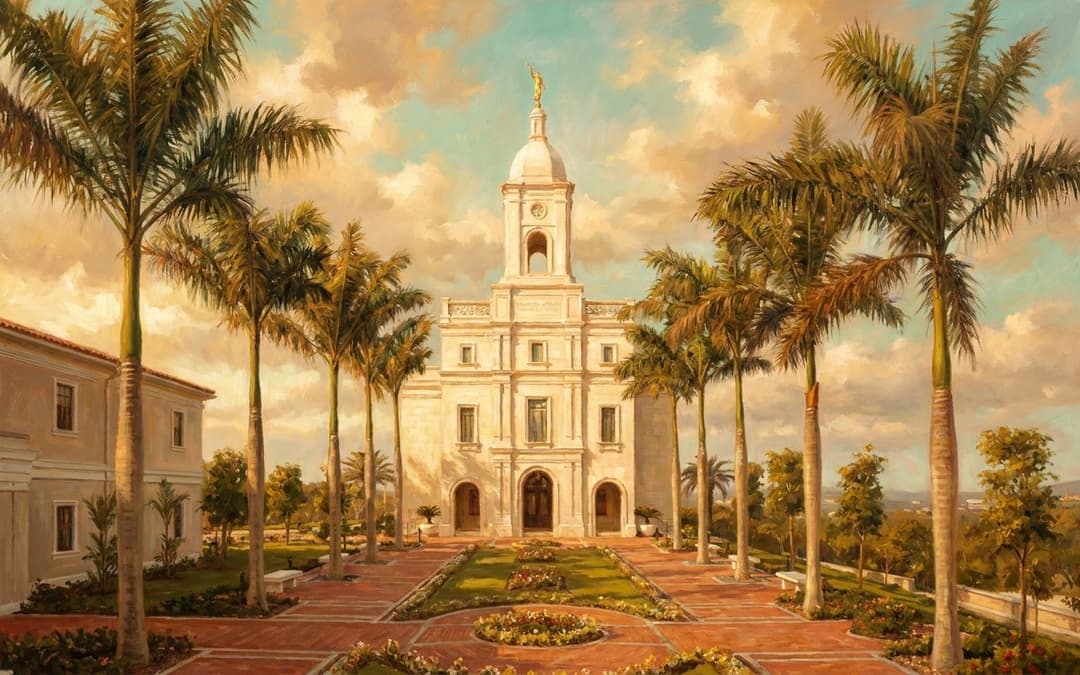
Visiting the Barranquilla Colombia Temple offers a deeply peaceful and spiritually uplifting experience. Situated on a prominent hill in Puerto Colombia, the temple grounds provide stunning panoramic views of the Magdalena River and the Caribbean Sea, especially during the late afternoon golden hour. While the interior is reserved for Latter-day Saints with active temple recommends, the public is warmly invited to walk the beautifully manicured gardens, admire the neoclassical architecture, and visit the on-site visitors' center. The atmosphere is quiet, reverent, and welcoming to people of all faiths seeking a moment of reflection.
Highlights
- Stunning panoramic views of the Magdalena River and the Caribbean Sea from the elevated hillside plaza.
- Beautifully manicured gardens featuring double rows of stately palm trees and vibrant tropical flora.
- Luminous exterior clad in Portuguese 'Branco Classico' limestone that glows under the coastal sun.
- An on-site visitors' center offering interactive exhibits and literature about the temple's purpose.
Things to Know
- The interior of the temple is closed to the general public; only the grounds and visitors' center are open.
- Visitors are kindly requested to dress modestly and maintain a quiet, respectful demeanor on the property.
- Late afternoon is the best time to visit to witness the sunset illuminating the limestone facade.
Location
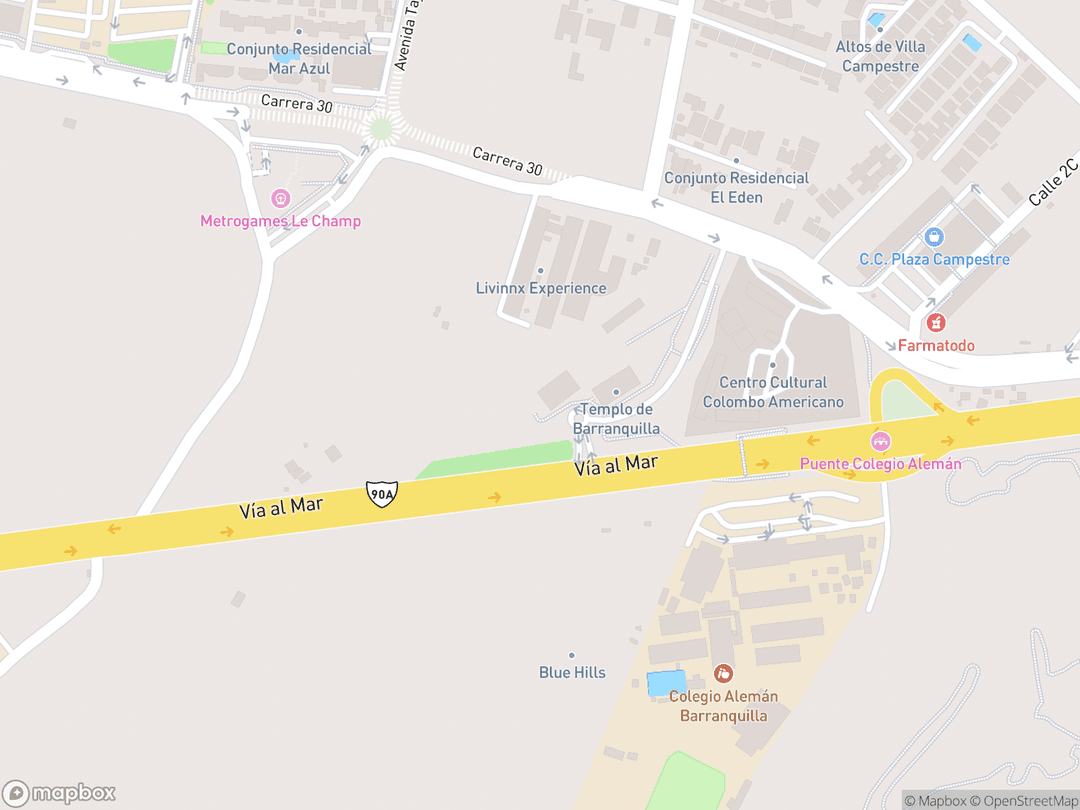
Carrera 46 via Al Mar PR 107, Sentido Barranquilla, Atlántico, Colombia
Hours: The temple grounds and visitors' center are open daily, typically from 9:00 AM to 9:00 PM.
Getting There: Located off the Vía al Mar (Carrera 46) in Puerto Colombia, about 2 km west of Barranquilla proper. Easily accessible by taxi (15-20 minutes from downtown) or by public buses running toward Puerto Colombia, stopping near the Colegio Alemán.
Get DirectionsTips for Your Visit
Visit at Golden Hour
Arrive about an hour before sunset. The warm coastal light reflecting off the Portuguese limestone is breathtaking, and the views of the sea are spectacular.
Stop by the Visitors' Center
The on-site visitors' center is free and offers excellent interactive displays that explain the theological significance of the temple and eternal families.
Dress Comfortably but Modestly
The coastal climate is warm and humid. Wear light, breathable clothing, but ensure it is respectful and modest for a sacred site.
About
The Barranquilla Colombia Temple stands as a sacred landmark on the northern coast of South America, representing a significant milestone for the growth of The Church of Jesus Christ of Latter-day Saints in Colombia. Perched on a prominent hillside overlooking the majestic Magdalena River and the Caribbean Sea, this temple is the second built in the nation, serving as a spiritual beacon for tens of thousands of Latter-day Saints in the country's northern coastal regions. Its presence dramatically reduces the travel burden for local members, who previously had to undertake an arduous 18-hour journey to the temple in Bogotá.
In the broader context of Christian and Abrahamic traditions, the temple represents a physical sanctuary set apart from the secular world—a place where humanity can commune directly with the Divine. While traditional Christian chapels are designed for weekly congregational worship, Latter-day Saint temples are dedicated entirely to sacred, individual covenants that bind families together for eternity. This holy house serves as a bridge between ancient biblical traditions of temple worship and modern restorationist theology, emphasizing the infinite reach of the Atonement of Jesus Christ.
The temple's design is a masterful tribute to Colombia's Republic period architecture, blending classical symmetry with localized artistic motifs. Clad in luminous Portuguese limestone that reflects the brilliant tropical sun, the building features a single elegant tower capped by a gilded statue of the angel Moroni. The surrounding terraced grounds are meticulously landscaped with native flora, creating a serene oasis of peace and contemplation that welcomes visitors of all faiths to experience its quiet, sacred atmosphere.
Gallery
Symbolic Elements
The temple's exterior features intricate carvings, each rich with spiritual meaning:
The Angel Moroni
The gilded statue atop the temple spire represents the restoration of the gospel of Jesus Christ. Moroni, an ancient prophet from the Book of Mormon, is depicted holding a trumpet to his lips, symbolizing the spreading of Christ's teachings to every nation, kindred, tongue, and people.

The Cayena Hibiscus Motif
The rose hibiscus, or *cayena*, is the official flower of Barranquilla. Stylized carvings of this flower are integrated into the interior woodwork, the art glass windows, and the exterior stone detailing, representing the sanctification of local beauty and the principle that the gospel of Christ embraces and refines the unique cultures of the earth.

The Temple Cornerstone
In Latter-day Saint theology, the cornerstone represents Jesus Christ as the 'chief cornerstone' of the Church. During the dedication, President Dallin H. Oaks invited a young local boy and girl to assist in placing the mortar, symbolizing the 'rising generation' carrying the work of Christ into the future.

The Baptistry Font Oxen
Located on the lower level, the baptismal font rests on the backs of twelve sculpted oxen. This design directly mirrors the 'molten sea' of Solomon's Temple described in the Old Testament, with the twelve oxen representing the twelve tribes of ancient Israel, symbolizing the gathering of God's covenant people.
Progression of Light
The interior layout is designed so that as a patron progresses from the entry foyer to the Instruction Rooms and ultimately to the Celestial Room, the lighting, ceiling heights, and decorative refinement increase. This physical progression symbolizes a spiritual journey, moving from the darkness of the world toward the light and peace of God's presence.

Portuguese Limestone Cladding
The exterior walls are clad in high-quality Portuguese limestone, specifically the 'Branco Classico' variety. This pale, fine-grained stone reflects the intense Caribbean sun, giving the building a brilliant, luminous quality that symbolically represents purity, holiness, and divine light.

Neoclassical Dome and Cupola
The temple features a single attached end tower topped with a neoclassical dome and cupola. This architectural element serves as a visual bridge pointing toward the heavens, symbolizing the connection between the earthly sanctuary and the celestial realm.

Palm-Lined Plaza
Double rows of stately palm trees frame the main entrance plaza. In ancient Judeo-Christian tradition, palm branches represent peace, victory, and welcoming the Savior, while also celebrating the tropical coastal heritage of Barranquilla.
Interesting Facts
The Barranquilla Colombia Temple holds the geographic distinction of being the northernmost temple of the Church of Jesus Christ of Latter-day Saints on the South American continent. (Tier A)
The groundbreaking ceremony on February 20, 2016, took place exactly during the 50th anniversary year of the establishment of the Church in Colombia, which began in May 1966. (Tier A)
The temple's exterior represents a truly global effort: the 'Branco Classico' limestone was quarried in Portugal, shipped to China for precision cutting, and then transported to Colombia. (Tier B)
Perched on a prominent hill, the temple grounds offer panoramic views of the Magdalena River—Colombia's principal and most historically significant river—as well as the Caribbean Sea. (Tier B)
While Colombia's first temple in Bogotá sits high in the Andes Mountains at over 8,600 feet, the Barranquilla temple sits near sea level at an elevation of just 174 feet. (Tier A)
The temple's architectural style is a deliberate nod to Colombia's post-independence Republic period, making it visually distinct from the modern, minimalist designs of other 21st-century temples. (Tier B)
The cayena (hibiscus) flower motif is so thoroughly integrated into the temple's identity that it can be found in the glass windows, hand-carved doors, carpet patterns, and landscaping. (Tier B)
Breaking from traditional practice, President Dallin H. Oaks invited a young local boy and girl to assist him in placing mortar on the cornerstone, symbolizing the rising generation. (Tier A)
The temple was specifically built to serve approximately 35,000 Latter-day Saints living in Colombia's northern coastal departments, saving them from an arduous 18-hour bus ride to Bogotá. (Tier A)
The building's symmetrical proportions, clean lines, and stately pilasters are designed to reflect the neoclassical architecture of Colombia's historic coastal mansions. (Tier B)
Common Questions
Can non-members of the Church go inside the Barranquilla Colombia Temple?
While the interior of the temple is reserved for members of the Church holding active temple recommends, the public is warmly welcome to visit the beautiful temple grounds, walk the palm-lined paths, and explore the on-site visitors' center free of charge.
What makes a temple different from a regular Latter-day Saint meetinghouse?
Meetinghouses (chapels) are used for regular Sunday worship services, youth activities, and community gatherings, and are open to everyone. Temples, however, are considered sacred 'Houses of the Lord' dedicated to quiet reflection and individual, eternal covenants such as marriage and baptisms.
What is the significance of the angel Moroni statue on top of the temple?
The gilded statue of the angel Moroni represents the restoration of the gospel of Jesus Christ. Moroni, an ancient prophet from the Book of Mormon, is depicted holding a trumpet to his lips, symbolizing the spreading of Christ's teachings to all nations, fulfilling biblical prophecy.
What is the local flower motif used in the temple's design?
The temple's interior and exterior design heavily features the cayena (hibiscus) flower, which is the official flower of Barranquilla. Stylized carvings of this flower are integrated into the interior woodwork, the custom art glass windows, and the exterior stone detailing, celebrating local culture.
How does the temple benefit the local community in northern Colombia?
The temple serves as a peaceful spiritual sanctuary and architectural landmark for the entire community. For local Latter-day Saints, it provides a place of worship close to home, saving them from the arduous and expensive 18-hour bus ride to the country's only other temple in Bogotá.
Featured Stories
The Long Journey to the Andes
1999–2018
For nearly two decades, Latter-day Saints living in Colombia's northern coastal departments faced a daunting spiritual journey. To worship in a temple, they had to travel to the Bogotá Colombia Temple, nestled high in the Andes Mountains. This trip required an arduous 18-hour bus ride each way, winding through steep mountain passes and costing a significant portion of a family's monthly income. Many families saved for years just to make the trip once, sacrificing basic comforts to receive sacred ordinances. The announcement and eventual completion of the Barranquilla Temple brought tears of joy to these coastal Saints, bringing the blessings of the temple directly to their doorstep and transforming their spiritual lives.
Source: Church News Historical Records
A Golden Anniversary Groundbreaking
February 20, 2016
The groundbreaking ceremony for the Barranquilla Colombia Temple was a historic event filled with deep emotional resonance. It took place in February 2016, exactly during the golden anniversary year of the establishment of the Church in Colombia, which began when the first missionaries arrived in May 1966. Elder Juan A. Uceda, president of the South America Northwest Area, presided over the service and spoke of the early pioneers who sowed the seeds of faith in Colombian soil. Local members gathered on the windy hillside, singing hymns of thanksgiving as they looked out over the Magdalena River. The event symbolized fifty years of growth, sacrifice, and devotion, culminating in the construction of a permanent house of the Lord on the coast.
Source: The Church of Jesus Christ of Latter-day Saints Official Report
The Rising Generation at the Cornerstone
December 9, 2018
During the sacred dedication of the temple, President Dallin H. Oaks led the traditional cornerstone ceremony with a touching and memorable departure from standard protocol. Instead of inviting only high-ranking Church leaders to apply the symbolic mortar to seal the temple's cornerstone, President Oaks paused and looked out into the crowd of local members. He invited a young Colombian boy and girl from the local congregation to step forward and assist him with the trowel. This simple yet profound act deeply moved the onlookers, serving as a powerful visual symbol of the 'rising generation' carrying the gospel of Christ into the future. It emphasized that the temple is built not just for the present, but as an eternal legacy for the children of Colombia.
Source: Dedication Proceedings of the First Presidency
Timeline
First Missionaries Arrive
The first Latter-day Saint missionaries arrive in Colombia, establishing the first formal congregations in Bogotá and Cali.
EventRapid Congregational Growth
Just five years after missionary work commenced, the Church expands to 27 congregations meeting across 10 different Colombian cities.
EventFirst Dedicated Chapel
The Church constructs its first dedicated meetinghouse (chapel) in Colombia, establishing a permanent physical presence for local worshipers.
EventBogotá Temple Dedicated
President Gordon B. Hinckley dedicates the Bogotá Colombia Temple, providing the first temple in the country and ending decades of long travel for members.
MilestoneBarranquilla Temple Announced
During General Conference, President Thomas S. Monson announces plans to construct a second temple in Colombia, to be located in the coastal city of Barranquilla.
MilestoneGroundbreaking Ceremony
Elder Juan A. Uceda presides over the groundbreaking ceremony during the golden anniversary year of the Church's presence in Colombia.
component.timeline.groundbreakingExcavation Begins
Heavy machinery begins grading and excavating the prominent hillside site in Puerto Colombia to prepare for the temple's foundation.
EventAngel Moroni Statue Placed
The gilded angel Moroni statue is hoisted and secured atop the temple's single attached end tower, marking a major construction milestone.
MilestoneExterior Cladding Completed
Workers complete the installation of the Portuguese 'Branco Classico' limestone panels, giving the temple its brilliant white appearance.
EventArt Glass Installation
Intricate custom art glass windows featuring the stylized local cayena hibiscus motif are installed throughout the temple structure.
EventPublic Open House Commences
The temple opens its doors to the general public, allowing visitors from all walks of life to tour the sacred interior rooms.
EventOpen House Concludes
The public open house wraps up after three weeks, during which nearly 35,000 visitors toured the temple, including civic and religious leaders.
EventYouth Cultural Celebration
Local Latter-day Saint youth perform in a vibrant cultural celebration, showcasing traditional Colombian coastal music and dances.
EventTemple Dedication
President Dallin H. Oaks formally dedicates the Barranquilla Colombia Temple in three sessions, designating it as the 161st operating temple worldwide.
DedicationFirst Ordinances Performed
The temple officially opens for regular patron ordinance work, serving Latter-day Saints from Colombia's northern coastal departments.
MilestoneHistory by Decade
1960s–1970s — The Seeds of Faith
The history of the Church in Colombia began in May 1966 when the first Latter-day Saint missionaries arrived in the country, establishing initial congregations in major urban centers like Bogotá and Cali. Despite being a predominantly Catholic nation, the message of the restored gospel found fertile ground, and the Church experienced rapid growth. By 1971, just five years after missionary work commenced, the Church had expanded to 27 congregations meeting across 10 different Colombian cities. In 1975, the Church constructed its first dedicated meetinghouse (chapel) in Colombia, establishing a permanent physical presence for local worshipers and laying the foundation for future stakes and districts.
1990s — The First Temple in the Andes
As the Church continued to grow throughout the 1980s and 1990s, the need for a local temple became paramount. On April 24, 1999, President Gordon B. Hinckley dedicated the Bogotá Colombia Temple, the first in the nation. While this was a monumental blessing, Colombia's vast and rugged geography meant that members living in the northern coastal regions, such as Barranquilla, Cartagena, and Santa Marta, still faced immense travel barriers. An 18-hour bus ride to the capital city was both financially and physically exhausting, highlighting the need for a second temple dedicated specifically to the coastal Saints.
2010s — A Temple for the Coast
The prayers of the coastal Saints were answered on October 1, 2011, when President Thomas S. Monson announced plans to construct the Barranquilla Colombia Temple. Ground was broken on February 20, 2016, and construction progressed steadily over the next two years. The temple's exterior was completed with the placement of the angel Moroni statue in November 2017. Following a highly successful public open house in November 2018 that drew nearly 35,000 visitors, President Dallin H. Oaks dedicated the temple on December 9, 2018, establishing it as a permanent sanctuary of peace on the Caribbean coast.
Architecture & Facilities
The Barranquilla Colombia Temple represents a beautiful adaptation of the neoclassical architectural style typical of Colombia's Republic period, which followed the nation's independence from Spain in the early 19th century. This style is characterized by symmetrical proportions, clean lines, and stately pilasters, reflecting a sense of order, strength, and timelessness. The design seamlessly integrates these classical European motifs with localized coastal elements, creating a sacred structure that feels both globally significant and deeply rooted in the regional heritage of Colombia's northern coast.
Building Materials
Portuguese Limestone Cladding
The exterior walls are clad in high-quality 'Branco Classico' limestone quarried in Portugal and fabricated in China, chosen for its ability to reflect the intense Caribbean sun with a brilliant, luminous quality.
Custom Art Glass
Original art glass windows are installed throughout the upper and lower levels, filtering natural coastal sunlight into patterns of blue, gold, and green that mirror the Caribbean landscape.
Wrought Iron and Bronze Metalwork
The grand staircase and interior railings feature custom-crafted wrought iron and bronze detailed with neoclassical geometric patterns, adding a touch of historic elegance.
Hand-Tufted Custom Rugs
The celestial and waiting rooms feature hand-tufted custom rugs with stylized Colombian motifs in deep blue and gold, representing the meeting of the Magdalena River and the sea.
Interior Features
The Celestial Room
The most sacred room in the temple, designed to represent the peace and beauty of the celestial kingdom, featuring high ceilings, exquisite chandeliers, and soft cream and gold finishes.
The Baptistry
Located on the lower level, featuring a beautiful baptismal font resting on the backs of twelve sculpted oxen, symbolizing the twelve tribes of Israel and mirroring Solomon's Temple.
Instruction Rooms
Rooms where patrons participate in the endowment ceremony, beautifully decorated with custom woodwork and murals that facilitate a quiet, reverent progression of spiritual learning.
Sealing Rooms
Sacred rooms where marriages are performed for eternity, featuring elegant altars, custom art glass, and mirrors facing each other to symbolize the infinite nature of family relationships.
Temple Grounds
The temple sits on a beautifully terraced 5.93-acre lot. The grounds are meticulously landscaped with native Colombian flora, including double rows of stately palm trees that frame the main entrance plaza, vibrant tropical flowers, and local ground covers, creating a peaceful oasis.
Additional Facilities
The temple complex includes an on-site visitors' center open to the public, patron housing facilities to accommodate traveling members, and extensive parking areas for visitors.
Religious Significance
In the broader context of Christian and Abrahamic theology, the temple represents a physical sanctuary set apart from the secular world—a place where humanity can commune directly with the Divine. This concept traces back to the biblical Tabernacle of Moses and the subsequent Temple of Solomon in Jerusalem. While traditional Christian chapels are built as houses of congregational worship and Sabbath services, Latter-day Saint temples serve a distinct theological purpose. They are considered literal 'Houses of the Lord' where sacred, individual covenants (promises) are made between the believer and God, reflecting the doctrine that relationships forged in this life can endure eternally through the power of Jesus Christ.
To provide a sacred space where Latter-day Saints can make eternal covenants with God, participate in saving ordinances for themselves and their ancestors, and find peace and refuge from the world.
Sacred Ordinances
The Endowment
A sacred ceremony where patrons receive instruction regarding the plan of salvation, make covenants to keep God's commandments, and are promised spiritual power and blessings.
Eternal Marriage (Sealing)
An ordinance that unites husbands, wives, and children in family relationships that can endure beyond death, reflecting the doctrine of the eternal nature of the family unit.
Baptism for the Dead
A vicarious ordinance performed by the living on behalf of deceased ancestors who did not have the opportunity to accept baptism during their lifetime, mirroring ancient Christian practices.
The Chief Cornerstone
In Latter-day Saint theology, the temple's cornerstone represents Jesus Christ as the 'chief cornerstone' of the Church (Ephesians 2:20). The ceremonial sealing of the cornerstone during the dedication serves as a physical reminder that all temple ordinances and covenants are anchored in the Atonement and teachings of Jesus Christ.
The Gathering of Israel
The twelve sculpted oxen supporting the baptismal font represent the twelve tribes of ancient Israel. This design, mirroring Solomon's Temple, symbolizes the gathering of God's covenant people from all corners of the earth, a central theme in Latter-day Saint theology.
Similar Temples
Sources & Research
Every fact on Temples.org is backed by verified Sources & Research. Each piece of information is rated by source tier and confidence level.
View All Sources (9)
| Field | Source | Tier | Retrieved |
|---|---|---|---|
| About & Historical Background | The Church of Jesus Christ of Latter-day Saints (opens in a new tab) | A | 2026-02-18 |
| Timeline & Dedication | Church News (opens in a new tab) | B | 2026-02-18 |
| Architecture & Design | NWL Architects (opens in a new tab) | B | 2026-02-18 |
| Quick Facts & Construction | Temples of The Church of Jesus Christ of Latter-day Saints (opens in a new tab) | C | 2026-02-18 |
| Visitor Insights & Open House | LDS Daily (opens in a new tab) | C | 2026-02-18 |
| Historical Timeline | Photogent Temple Photography (opens in a new tab) | C | 2026-02-18 |
| Architecture & Materials | Ally Stone (opens in a new tab) | D | 2026-02-18 |
| Religious Significance & Symbols | Meridian Magazine (opens in a new tab) | C | 2026-02-18 |
| Visitor Information | Evendo Tourism Directory (opens in a new tab) | D | 2026-02-18 |