Visitor Insights
Visiting Copenhagen Denmark Temple
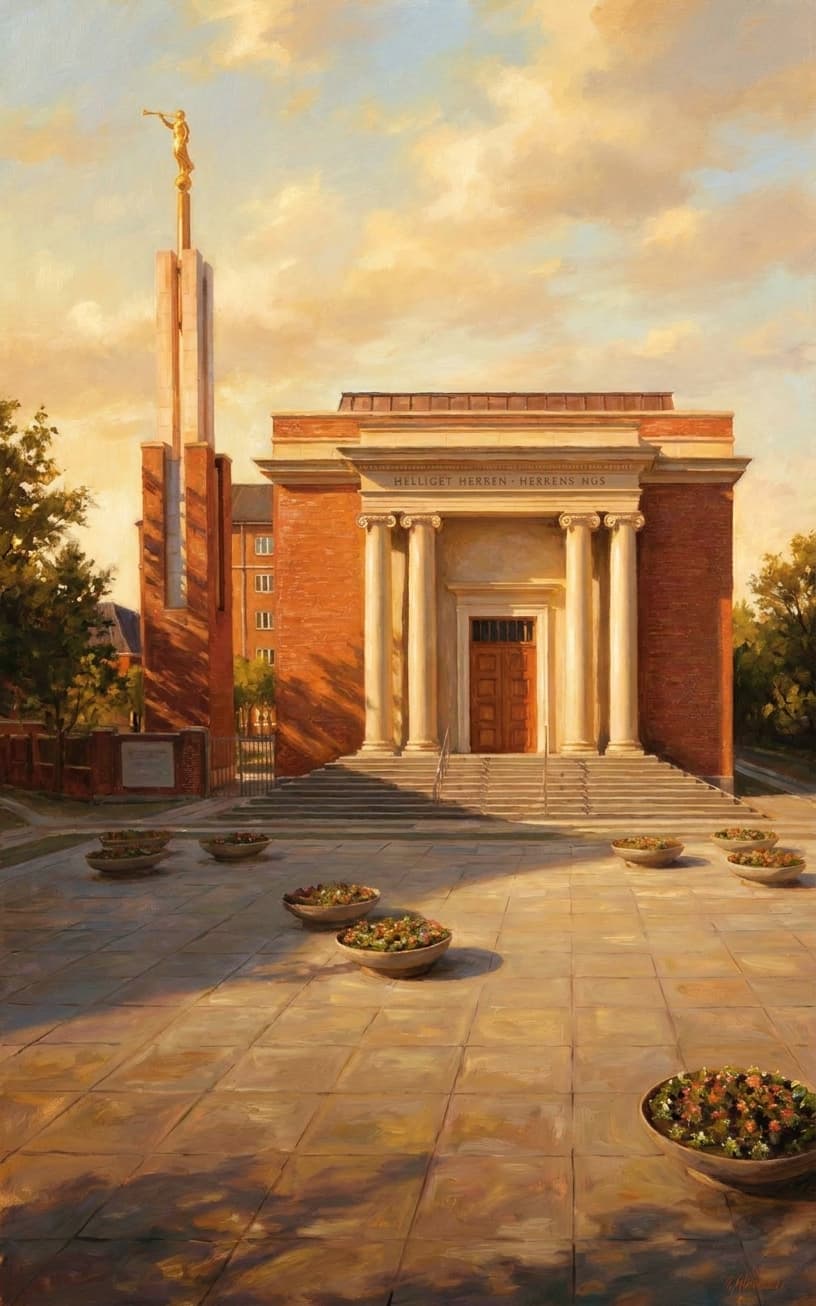
The Copenhagen Denmark Temple offers a serene and contemplative escape within the bustling urban environment of Frederiksberg. Visitors are welcomed by beautifully manicured gardens, a quiet granite courtyard, and a peaceful reflecting pool that mirrors the historic red brick facade. While the interior is reserved for patron ordinances, the exterior grounds provide a sacred space for quiet reflection, prayer, and appreciation of neoclassical craftsmanship. It stands as a unique testament to historic preservation, inviting all to pause and feel the spirit of peace that permeates the site.
Highlights
- The historic red brick facade and restored neoclassical columns of the original 1931 chapel.
- The unique freestanding, copper-clad spire standing gracefully in the rear courtyard.
- The peaceful reflecting pool and granite-paved pathways surrounding the temple.
- The beautiful circular glass dome skylight that illuminates the underground baptistry.
Things to Know
- The interior of the temple is accessible only to members of the Church holding a valid temple recommend.
- The site is highly compact and situated in a quiet residential neighborhood; visitors should remain respectful of local residents.
- There is no formal public visitors' center on-site, but local meetinghouses can provide information.
- Street parking is highly limited in the surrounding Frederiksberg area.
Location
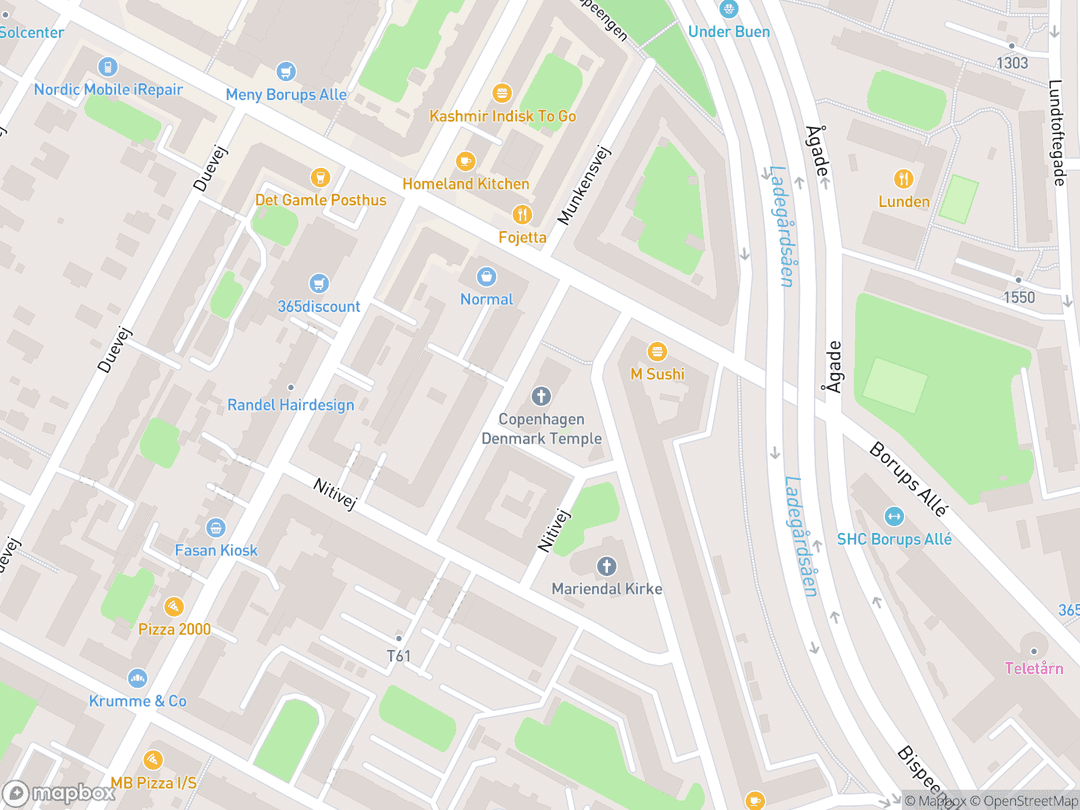
Priorvej 12, 2000 Frederiksberg, Denmark
Hours: The temple grounds are open daily to the public from sunrise to sunset. Temple ordinance hours vary; check official schedules for details.
Getting There: Conveniently located in Frederiksberg, the temple is a 10-to-15-minute walk from either the Fasanvej or Frederiksberg Metro stations. Several local bus lines also stop nearby along Borups Allé.
Get DirectionsTips for Your Visit
Golden Hour Photography
Visit just before sunset to capture the warm, low-angle light illuminating the historic red brick and the gold-leafed Angel Moroni statue.
Public Transit Access
Utilize the Copenhagen Metro to avoid local parking challenges, as the temple is located in a dense residential zone with limited street parking.
Springtime Blooms
Plan your visit during late spring or early summer when the private gardens are in full bloom and the reflecting pool is fully active.
About
The Copenhagen Denmark Temple stands as a magnificent monument of faith and a premier example of neoclassical adaptive reuse within the global catalog of Latter-day Saint temples. Located in the elegant municipality of Frederiksberg, this sacred structure serves as the 118th operating temple of The Church of Jesus Christ of Latter-day Saints. Unlike most modern temples built from the ground up, the Copenhagen Temple is uniquely housed within the fully restored shell of the historic Priorvej Chapel, which was originally dedicated in 1931. This integration of historic preservation and sacred architecture creates a deeply reverent atmosphere that honors both Danish heritage and restored gospel theology.
The history of the building is deeply intertwined with the local community. For decades, the Priorvej Chapel served as a vibrant meetinghouse for local congregations and even played a vital role as a public air-raid shelter during the dark years of World War II. Its designation as the headquarters for the first Latter-day Saint stake in Scandinavia in 1974 further cemented its status as a historic anchor for the faith in Northern Europe. When President Gordon B. Hinckley announced its conversion into a temple in 1999, it marked a historic shift, challenging architects and engineers to completely reimagine the interior spaces while preserving the beloved red brick exterior and neoclassical columns.
The conversion process was a triumph of modern engineering over severe structural obstacles. Faced with a high water table and the physical limitations of the historic chapel shell, the architectural team at Arcito i/s redesigned the layout to include a heavily waterproofed underground annex for the baptistry and a striking, freestanding copper spire in the rear courtyard. Today, the temple stands as a sanctuary of light and covenants, bridging the rich Christian heritage of Europe with the eternal promises of the restored gospel. It remains a quiet urban oasis where patrons from Denmark and southern Sweden gather to participate in sacred ordinances.
Gallery
Symbolic Elements
The temple's exterior features intricate carvings, each rich with spiritual meaning:

Neoclassical Portico and Columns
The front entrance features four prominent neoclassical columns supporting a stately pediment. This design was intentionally patterned after classical descriptions of Solomon's Temple, symbolizing spiritual stability, the pillars of truth, and the ancient roots of covenant theology.

Detached Copper Spire
Standing independently in the courtyard, the freestanding copper spire represents the upward reach of faith. Because the historic roof could not support a heavy tower, this creative solution symbolizes adaptation, resilience, and the elevation of the soul toward God.

Angel Moroni Statue
The gold-leafed statue of the Angel Moroni stands atop the detached spire, blowing a trumpet toward the east. This symbolizes the restoration of the fulness of the gospel of Jesus Christ to the earth, echoing biblical prophecies of the gathering of Israel.

Baptismal Font on Twelve Oxen
Located in the underground annex, the baptismal font rests upon the backs of twelve sculpted oxen. This design directly mirrors the 'brazen sea' of Solomon's Temple, with the twelve oxen representing the twelve tribes of Israel and the global reach of the covenant family.
Glass and Copper Domes
The circular glass dome over the baptistry and the copper dome over the Celestial Room act as architectural skylights. Symbolically, these domes represent the vault of heaven, allowing natural light to descend into the most sacred spaces, signifying revelation and spiritual rebirth.

Contrast of Red Brick and Light Stone
The juxtaposition of the warm, earthy red brick with the pure, light-colored columns and granite steps carries deep symbolic resonance. Red is historically associated with the mortal sacrifice and atoning blood of Jesus Christ, while the light-colored stone represents the purity and triumph of His resurrection.

The Granite Reflecting Pool
The quiet reflecting pool in the courtyard serves as a visual metaphor for self-examination and spiritual clarity. The still waters encourage visitors to reflect on their relationship with the divine, symbolizing the peace and purity found within the temple covenants.
Interesting Facts
The temple is only the second in Church history to be fully adapted and converted from an existing, operating meetinghouse.
During World War II, the original 1931 Priorvej Chapel was designated as a public air-raid shelter, protecting local citizens.
Construction was temporarily halted when workers discovered a high water table that made the original blueprints impossible to execute.
To accommodate the water table challenges, a historic mission home known as the 'villa' had to be demolished.
The baptismal font is located in a specially waterproofed underground annex adjacent to the main building rather than inside it.
The temple features a completely freestanding, detached copper spire positioned in the courtyard behind the structure.
The modern Nitivej Chapel was built nearby to replace the congregational worship space lost during the temple conversion.
In 1974, the Priorvej Chapel became the headquarters for the Copenhagen Stake, the very first stake organized in Scandinavia.
President Gordon B. Hinckley remarked that the Church would likely never attempt such a complex conversion project again.
The baptistry is illuminated by a striking circular glass dome skylight located at ground level in the courtyard.
Common Questions
Can the public go inside the Copenhagen Denmark Temple?
While the interior of the temple is reserved for sacred ordinances for members of the Church with a valid recommend, the public is warmly invited to walk the exterior grounds, enjoy the gardens, and sit in the peaceful courtyard.
Why is the spire of the temple detached from the main building?
Because the historic 1931 roof of the Priorvej Chapel could not structurally support the weight of a heavy tower and spire, architects designed a freestanding, copper-clad spire that stands independently in the courtyard directly behind the main building.
How did the temple handle the high water table during construction?
Engineers encountered a high water table shortly after gutting the interior. To resolve this, they demolished an adjacent mission home and constructed a heavily waterproofed underground annex to house the baptismal font, keeping it separate from the main historic structure.
What is the history of the building before it became a temple?
The building was originally constructed in 1931 as the Priorvej Chapel, designed by Ejnar Christian Thuren. It served as a local meetinghouse, a public bomb shelter during World War II, and the headquarters for the first Latter-day Saint stake in Scandinavia before its conversion.
Is there a visitors' center at the Copenhagen Denmark Temple?
There is no dedicated visitors' center on the temple grounds. However, the nearby Nitivej Chapel, which replaced the meetinghouse space lost during the temple conversion, occasionally hosts community events and can provide information about the temple.
Featured Stories
A Sanctuary in the Storm
1943
During the dark years of World War II, Denmark was occupied by German forces, and American missionaries were evacuated, leaving local Danish members to manage the Church. The Priorvej Chapel became a vital sanctuary of safety, not just spiritually, but physically, as it was designated as a public air-raid and bomb shelter for the Frederiksberg community. Local citizens would huddle within its sturdy brick walls during aerial bombardments, finding comfort and protection. Despite the heavy conflict and bombings in the surrounding Copenhagen area, the chapel survived the war completely undamaged. This miraculous preservation cemented the building's status as a symbol of divine protection and community resilience.
Source: Church History Department
The Battle of the Water Table
1999
When the conversion of the Priorvej Chapel was announced, architects and engineers anticipated a straightforward renovation, but they were quickly met with severe structural challenges. Shortly after gutting the interior, workers discovered that Frederiksberg's high water table and the building's exact physical dimensions made the original blueprints impossible to execute. Construction was temporarily halted, forcing the architectural firm Arcito to completely redraw the plans. To solve the engineering crisis, the Church had to demolish an adjacent mission home, affectionately known as the 'villa,' to make room for a heavily waterproofed underground annex. This creative engineering allowed the baptismal font to be safely housed in a dry, secure space, turning a major setback into an architectural triumph.
Source: Arcito i/s (Cora Valloire)
A Historic Dedication
May 23, 2004
The dedication of the Copenhagen Denmark Temple was a deeply emotional milestone for the Saints of Scandinavia, who had spent decades traveling by ferry and train to the Stockholm Sweden Temple. President Gordon B. Hinckley, who had championed the concept of smaller, accessible temples, traveled to Copenhagen to personally dedicate the building. Over 25,000 visitors, including local dignitaries and neighbors, had toured the temple during its public open house, fostering immense goodwill. During the dedicatory services, President Hinckley expressed profound gratitude for the pioneers who brought the restoration to Denmark in 1850. The dedication marked the fulfillment of a long-held dream, transforming a beloved local chapel into a permanent house of the Lord.
Source: The Church of Jesus Christ of Latter-day Saints
Timeline
Arrival of Peter Olsen Hansen
Peter Olsen Hansen, a Copenhagen native who joined the Church in the United States, arrives in Denmark to initiate the Latter-day Saint faith.
MilestoneApostle Erastus Snow Arrives
Apostle Erastus Snow joins Hansen in Copenhagen, establishing the first Scandinavian branch of the Church.
MilestoneFirst Danish Book of Mormon
Hansen completes and publishes the first translation of the Book of Mormon into a language other than English (Danish) in Copenhagen.
EventDedication of the Priorvej Chapel
Elder John A. Widtsoe dedicates the newly constructed Priorvej Chapel, designed by noted Danish architect Ejnar Christian Thuren.
DedicationWorld War II Occupation Begins
German forces occupy Denmark, forcing American missionaries to evacuate and leaving local members to manage the chapel.
EventDesignated as a Public Bomb Shelter
The Priorvej Chapel is designated as a public air-raid and bomb shelter, protecting local Frederiksberg citizens during aerial bombardments.
EventChapel Survives World War II
World War II ends in Europe; the Priorvej Chapel survives the heavy conflict and bombings with virtually no physical damage.
MilestoneDedication of the Bern Switzerland Temple
The Bern Switzerland Temple is dedicated, providing Danish Saints with their first local temple ordinances in their own language.
EventFirst Scandinavian Stake Organized
The Priorvej Chapel is designated as the headquarters for the newly organized Copenhagen Stake, the first stake in Scandinavia.
MilestoneDedication of the Stockholm Sweden Temple
The Stockholm Sweden Temple is dedicated, becoming the first temple in the Nordic countries and reducing travel times for Danish Saints.
EventTemple Conversion Announced
President Gordon B. Hinckley announces that the historic Priorvej Chapel will be completely renovated and converted into Denmark's first temple.
MilestoneGroundbreaking Ceremony
Ground is broken for the temple conversion, with Elder Spencer J. Condie presiding over the site dedication.
component.timeline.groundbreakingAngel Moroni Installation
The gold-leafed Angel Moroni statue is installed atop the newly erected freestanding copper spire in the rear courtyard.
MilestonePublic Open House Commences
The temple opens its doors to the public for a highly successful open house, welcoming over 25,000 visitors over two weeks.
EventDedication of the Copenhagen Denmark Temple
President Gordon B. Hinckley formally dedicates the Copenhagen Denmark Temple as the 118th operating temple of the Church.
DedicationHistory by Decade
1850s — The Dawn of Scandinavian Faith
The origins of the Latter-day Saint faith in Denmark began in May 1850 with the arrival of Peter Olsen Hansen, a Copenhagen native who had joined the Church in the United States. He was joined shortly after by Apostle Erastus Snow, and together they established the first Scandinavian branch of the Church in Copenhagen. Hansen completed the first translation of the Book of Mormon into a language other than English (Danish), which was published in Copenhagen in 1851. Throughout this decade, thousands of Danish converts emigrated to Utah to escape religious persecution and build up the main body of the Church, laying a strong foundation of faith.
1930s — A Permanent House of Worship
By the early 20th century, Church leaders began encouraging international members to remain in their home countries to strengthen local congregations. In Copenhagen, the growing membership required a permanent, dignified house of worship. Under the direction of Elder John A. Widtsoe of the Quorum of the Twelve Apostles, local members pooled resources to construct the Priorvej Chapel. Designed by noted Danish architect Ejnar Christian Thuren, the neoclassical brick chapel was dedicated on June 14, 1931. It immediately became a symbol of permanence and community for the Danish Saints, serving as a beacon of faith in the city.
1940s — Protection During World War II
During World War II, Denmark was occupied by German forces. Missionaries from the United States were evacuated, leaving local Danish members to manage the Church. The Priorvej Chapel played a vital role in the surrounding Frederiksberg community during this dark period, serving as a public air-raid and bomb shelter. Despite the heavy aerial bombardments and conflict in the region, the chapel survived the war with virtually no physical damage, which members viewed as a testament of divine protection.
1950s–1970s — Growth and the First Scandinavian Stake
Following the war, Church membership in Denmark experienced a steady stabilization. In 1955, the dedication of the Bern Switzerland Temple provided European members with their first local temple, administering ordinances in multiple languages, including Danish. On the local front, the Priorvej Chapel achieved a historic milestone in 1974 when it was designated as the headquarters for the newly organized Copenhagen Stake—the very first stake of the Church in Scandinavia, marking a new era of maturity for the local congregations.
1980s–1990s — The Announcement of a Temple
In 1985, the Stockholm Sweden Temple was dedicated, becoming the first temple in the Nordic countries. For nearly two decades, Danish Saints regularly traveled by ferry and train to Sweden to participate in temple worship. This changed on March 17, 1999, when President Gordon B. Hinckley announced that the historic Priorvej Chapel would be completely renovated and converted into Denmark's first temple. Ground was broken on April 24, 1999, initiating a complex transition from a local meetinghouse to a sacred temple.
2000s — Engineering Triumphs and Dedication
The conversion process faced immediate, severe engineering challenges. Shortly after gutting the interior, workers encountered a high water table and structural anomalies within the historic brick shell. Construction was halted, and the architectural firm Arcito had to completely redraw the plans, which required the demolition of an adjacent mission office and the relocation of the baptismal font to a newly engineered underground annex. A detached copper-clad spire was erected behind the main structure, and a gold-leafed Angel Moroni statue was installed on August 15, 2003. Following a highly successful open house that welcomed over 25,000 visitors, President Gordon B. Hinckley dedicated the Copenhagen Denmark Temple on May 23, 2004.
2010s–2020s — A Legacy of Urban Sanctuary
The temple has continued to serve as a sacred sanctuary for Latter-day Saints across Denmark and southern Sweden. To replace the local meetinghouse space lost during the temple conversion, the Church constructed the modern Nitivej Chapel nearby, which continues to host weekly congregational worship. The temple stands today as a testament to the integration of historic preservation and modern sacred architecture, offering a peaceful urban retreat in the heart of Frederiksberg.
Architecture & Facilities
The Copenhagen Denmark Temple is a premier example of neoclassical adaptive reuse. The building's exterior preserves the stately, symmetrical neoclassical design of the original 1931 chapel, characterized by clean lines, classical proportions, and a dignified urban presence. The interior, however, was completely gutted and rebuilt to accommodate the specialized, progressive layout required for modern Latter-day Saint temple ordinances, seamlessly blending historic Danish craftsmanship with sacred Latter-day Saint temple design.
Building Materials
Exterior Facade
Original, historic red facing brick, meticulously cleaned and restored, accented by light-colored neoclassical columns.
Freestanding Spire
A freestanding, detached spire constructed of structural steel and clad in copper, positioned directly behind the main building.
Roofing and Domes
Copper-clad roof detailing, featuring a prominent copper-clad dome over the Celestial Room and a separate glass skylight dome over the underground baptistry.
Entrance Steps
Solid, light-gray granite steps leading up to the main entrance portico, providing a durable and elegant approach.
Interior Features
Ordinance Rooms
Two instruction rooms arranged for a two-stage progressive presentation of the endowment, decorated with refined wood paneling and custom furnishings.
Sealing Rooms
Two sealing rooms featuring elegant altars, floor-to-ceiling mirrors, and crystal chandeliers, creating a quiet atmosphere of eternal commitment.
Celestial Room
Representing the peace of heaven, the Celestial Room is crowned by a beautiful copper dome that allows natural light to flood the space from above.
Baptistry
Situated in a specially waterproofed underground annex adjacent to the main building, illuminated by a striking circular glass dome skylight at ground level.
Temple Grounds
The temple sits on a highly compact, beautifully utilized urban plot of 0.6 acres in the Frederiksberg municipality. The perimeter is enclosed by a low red brick wall that matches the temple's facade, creating a peaceful, reverent barrier against the surrounding city. The grounds feature a quiet, granite-paved courtyard, a serene reflecting pool, and private gardens landscaped with seasonal flowers, manicured hedges, and mature trees.
Additional Facilities
Because of the compact nature of the site, standard auxiliary facilities are highly integrated. The temple grounds host a distribution center for Church materials and patron housing facilities to accommodate travelers from distant parts of Denmark and southern Sweden.
Religious Significance
In the Christian and Abrahamic traditions, sacred spaces have long been dedicated as sanctuaries set apart from the secular world, serving as physical bridges to the divine. The Copenhagen Denmark Temple continues this legacy, functioning not as a standard chapel for weekly congregational worship, but literally as the 'House of the Lord.' It stands as a sacred space where believers can escape the noise of the world to enter into a covenant relationship with God, drawing on ancient biblical patterns of temple worship.
To provide a sacred sanctuary where Latter-day Saints can receive saving ordinances, make eternal covenants with God, and participate in vicarious work for their ancestors, uniting families across generations.
Sacred Ordinances
The Endowment
A sacred presentation of the plan of salvation, where participants make covenants of obedience, sacrifice, and consecration to God.
Eternal Marriage and Sealings
Ordinances performed in sealing rooms that unite husbands, wives, and children in eternal family relationships that transcend death.
Baptisms for the Dead
A vicarious ordinance performed in the baptistry, allowing living proxies to be baptized on behalf of deceased ancestors who did not have the opportunity in life.
The Covenant Path in the Christian Tradition
The ordinances of the temple emphasize a progressive journey of spiritual refinement, mirroring the ancient tabernacle's movement from the outer courtyard to the Holy of Holies. Each covenant made represents a deeper commitment to follow Jesus Christ, seeking spiritual purification and ultimate reconciliation with God.
Vicarious Service and the Gathering of Israel
Reflecting the biblical promise of Elijah turning the hearts of the fathers to the children, the temple's vicarious work emphasizes the interconnectedness of the human family. Believers serve as saviors on Mount Zion, offering the blessings of the gospel to past generations in a spirit of selfless love.
Similar Temples
Sources & Research
Every fact on Temples.org is backed by verified Sources & Research. Each piece of information is rated by source tier and confidence level.