Visitor Insights
Visiting Accra Ghana Temple
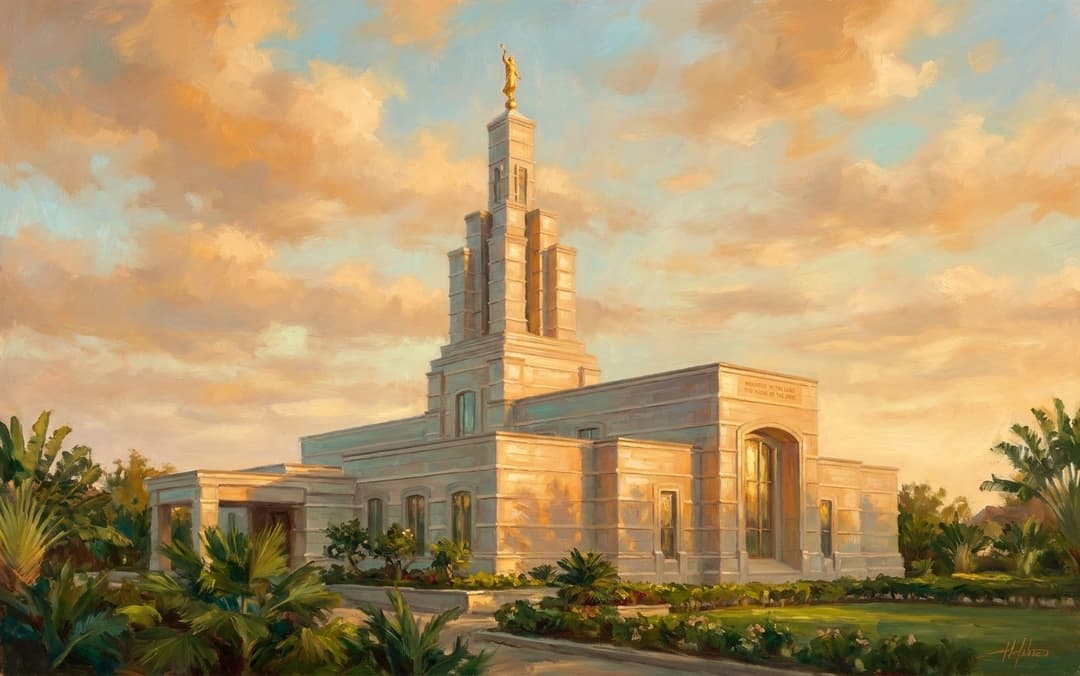
The Accra Ghana Temple welcomes visitors to experience its serene grounds and learn more about its significance. The temple grounds offer a peaceful environment for reflection and appreciation of the temple's architecture and landscaping. While the temple itself is open only to members with a temple recommend, all are welcome to enjoy the beauty and tranquility of the surrounding gardens.
Highlights
- Experience the peaceful atmosphere of the temple grounds.
- Admire the modern architecture and beautiful landscaping.
- Learn about the significance of the temple in the local community.
Things to Know
- The temple interior is only accessible to members with a temple recommend.
- There is no visitors' center on site.
Location
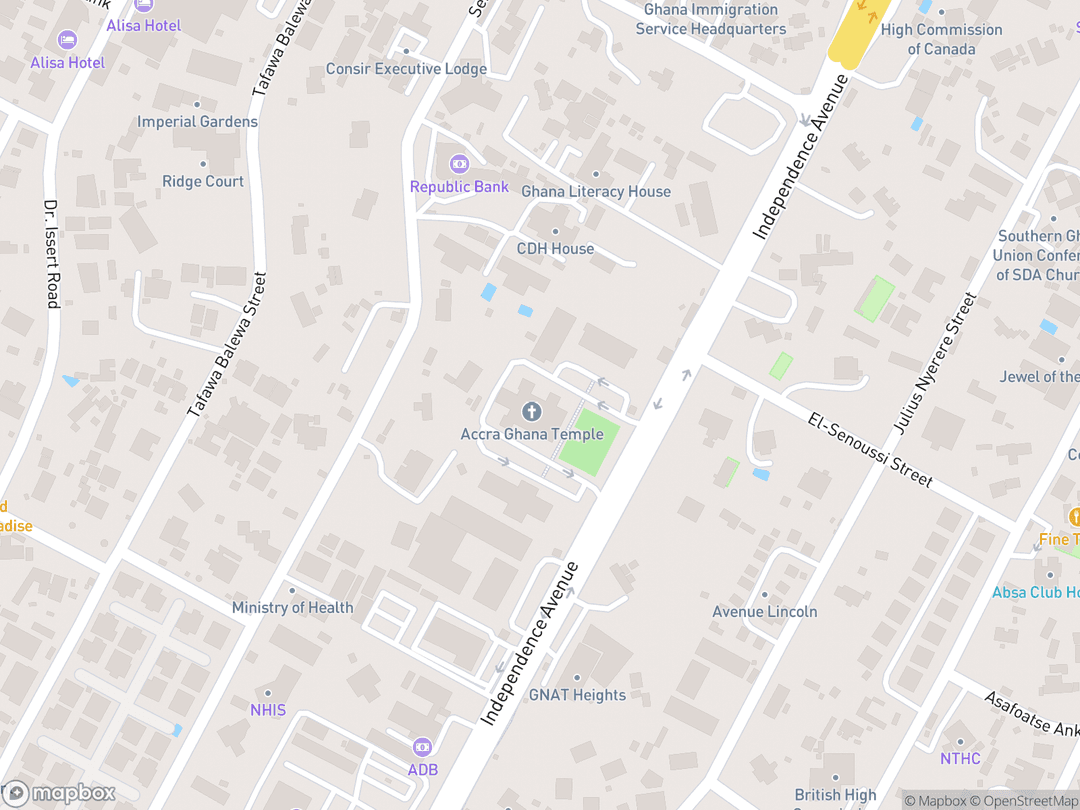
57 Independence Ave., North Ridge, Accra, Ghana
Hours: The temple grounds are open to the public during daylight hours.
Getting There: The temple is located on Independence Avenue in North Ridge, Accra. It can be reached by car, taxi, or "tro tro" (a local form of public transportation).
Get DirectionsTips for Your Visit
Respectful Attire
Please dress respectfully when visiting the temple grounds.
Quiet Contemplation
Maintain a quiet and reverent atmosphere to respect the sacred nature of the site.
About
The Accra Ghana Temple stands as a beacon of faith and a testament to the growth of The Church of Jesus Christ of Latter-day Saints in West Africa. Announced in 1998 and dedicated in 2004, it was the first temple in West Africa, providing a sacred space for members to participate in religious ordinances and strengthen their connection with God. Its construction and dedication marked a significant milestone in the Church's history in Ghana and the surrounding regions.
The temple's design reflects a blend of modern architectural styles with local cultural influences, creating a unique and inspiring structure. The exterior is clad in Namibia Pearl granite, while the interior features native makore wood and African-inspired motifs. The temple grounds are beautifully landscaped with native flowers and palm trees, providing a serene and peaceful environment for visitors and members alike.
As a house of the Lord, the Accra Ghana Temple plays a vital role in the spiritual lives of Latter-day Saints. It provides a place where members can make sacred covenants with God, receive blessings, and perform ordinances for themselves and for their ancestors. The temple serves as a symbol of hope, faith, and eternal families, reinforcing the Church's commitment to strengthening individuals and communities.
The Accra Ghana Temple is part of the Christian theological grouping, rooted in the Abrahamic traditions. It emphasizes the importance of Jesus Christ as the central figure of faith and salvation. The temple's ordinances and teachings align with the Church's core beliefs, promoting love, service, and a commitment to living a Christ-centered life.
Gallery
Symbolic Elements
The temple's exterior features intricate carvings, each rich with spiritual meaning:

Namibia Pearl Granite
The exterior of the Accra Ghana Temple is clad in Namibia Pearl granite, a durable and beautiful stone that symbolizes strength and permanence. The granite's light color reflects the warm climate of Ghana and provides a sense of elegance and reverence.

Makore Wood
The interior woodwork of the temple is crafted from native makore wood, a material known for its natural resistance to termites. This choice of wood reflects the local environment and symbolizes the enduring nature of the temple's sacred purpose.

Geometric Diamond Motif
A geometric diamond shape is repeated in the art-glass windows and woodwork throughout the temple. This motif represents the interconnectedness of all things and the eternal nature of God's love. It also symbolizes the blessings and promises offered within the temple.

Chief's Stool
The celestial room features furniture that resembles a traditional chief's stool, representing that all are considered royalty in God's eyes. This symbolizes the equality and dignity of all who enter the temple, regardless of their earthly status.

Palm Fronds
The pilasters in the temple are designed with palm fronds, signifying Christ's triumphal entry into Jerusalem. This symbolizes the welcoming of Christ into our lives and the promise of eternal life through Him.

Angel Moroni Statue
The statue of the angel Moroni stands atop the temple spire, symbolizing the restoration of the gospel of Jesus Christ. Moroni is depicted blowing a trumpet, proclaiming the message of the Book of Mormon to the world.

Stained-Glass Windows
The stained-glass windows in the Accra Ghana Temple are designed to reflect African cultural themes, incorporating local colors and patterns. These windows bring light and beauty into the temple, creating a reverent and inspiring atmosphere.

Tree of Life Chairs
The chairs in the sealing rooms use a North African design to represent the tree of life. This symbolizes the eternal nature of families and the blessings of eternal life that are available through temple ordinances.
Interesting Facts
The Accra Ghana Temple was the first temple of The Church of Jesus Christ of Latter-day Saints built in West Africa.
The temple serves Latter-day Saints in Ghana, Benin, Ivory Coast, Liberia, Nigeria, Sierra Leone, and Togo.
Prior to the dedication of the Accra Ghana Temple, members had to travel to South Africa or England to attend the temple.
The announcement of the temple followed a challenge from President Hinckley to Church members to fellowship new converts.
Ghanaian President John A. Kufuor toured the temple and believed it would enhance the nation's spirituality.
The temple's construction overcame permitting and construction challenges, which President Hinckley credited to heavenly intervention.
The tradition of holding a youth cultural celebration before the dedication of a temple began with the Accra Ghana Temple.
The exterior of the temple is constructed with Namibia Pearl granite.
The interior woodwork is made of native makore wood, which is naturally resistant to termites.
The celestial room has furniture that resembles a traditional chief's stool.
Stained-glass windows were designed to reflect African cultural themes.
The temple is situated on a 6-acre plot with landscaping that includes native flowers and palm trees.
The temple includes a baptistry, two ordinance rooms, two sealing rooms, and a celestial room.
The statue of the angel Moroni was placed atop the spire on April 17, 2003.
The temple was dedicated by President Gordon B. Hinckley on January 11, 2004.
Common Questions
What is the purpose of the Accra Ghana Temple?
The Accra Ghana Temple serves as a sacred place where members of The Church of Jesus Christ of Latter-day Saints can make covenants with God, receive blessings, and perform ordinances for themselves and their ancestors. It is a house of the Lord, dedicated to serving the spiritual needs of the Saints in West Africa.
Who can enter the Accra Ghana Temple?
The temple interior is open to members of The Church of Jesus Christ of Latter-day Saints who have a current temple recommend, signifying their worthiness to participate in temple ordinances. The temple grounds are open to the public, providing a peaceful environment for all visitors.
What is the significance of the Accra Ghana Temple in West Africa?
The Accra Ghana Temple was the first temple in West Africa, marking a significant milestone in the Church's history in the region. It provides a local sacred space for members who previously had to travel long distances to attend temples in South Africa or Europe.
What are some of the architectural features of the Accra Ghana Temple?
The Accra Ghana Temple features a modern design with a single spire, Namibia Pearl granite exterior, and native makore wood in the interior. The interior design incorporates African-inspired motifs and stained-glass windows reflecting local cultural themes.
How can I visit the Accra Ghana Temple?
The Accra Ghana Temple is located on Independence Avenue in North Ridge, Accra. The temple grounds are open to the public during daylight hours. Visitors can reach the temple by car, taxi, or "tro tro" (a local form of public transportation).
Featured Stories
The Announcement of the Accra Ghana Temple
February 16, 1998
The announcement of the Accra Ghana Temple by President Gordon B. Hinckley on February 16, 1998, was met with jubilation and profound gratitude by Latter-day Saints throughout West Africa. For decades, members had longed for a temple in their own land, a sacred space where they could more fully participate in the blessings of the restored gospel. The news spread quickly, uniting members in a shared sense of hope and anticipation.
The announcement was particularly significant because it represented the Church's growing commitment to Africa and its people. It signaled a new era of opportunity and spiritual growth for the Saints in the region. The promise of a temple in Accra inspired renewed dedication and service among the members, as they prepared themselves and their communities for this historic event.
Source: The Church News
The Youth Cultural Celebration
January 10, 2004
On the eve of the Accra Ghana Temple dedication, approximately 1,800 children and youth from across Ghana participated in a vibrant cultural celebration titled "A Day of Celebration." The event showcased the rich heritage and traditions of Ghana, blending music, dance, and storytelling to express gratitude for the blessings of the temple. The energy and enthusiasm of the youth filled the stadium, creating an atmosphere of joy and reverence.
The cultural celebration was not only a display of talent but also a testament to the faith and dedication of the young Latter-day Saints in Ghana. It was a powerful reminder of the importance of preserving cultural identity while embracing the principles of the gospel. The event marked the beginning of a tradition of holding youth cultural celebrations before temple dedications, a practice that would continue for many years.
Source: The Church News
The Dedication of the Accra Ghana Temple
January 11, 2004
The dedication of the Accra Ghana Temple on January 11, 2004, was a day of profound spiritual significance for Latter-day Saints in West Africa. President Gordon B. Hinckley presided over the dedication services, offering prayers of gratitude and blessing upon the temple and its patrons. The services were filled with sacred music, inspiring messages, and a palpable sense of divine presence.
The dedication of the Accra Ghana Temple marked a turning point in the history of the Church in West Africa. It provided a local center for temple worship, allowing members to more fully participate in the blessings of the gospel. The temple became a symbol of hope, faith, and eternal families, strengthening individuals and communities throughout the region.
Source: The Church News
Timeline
Early Church Beginnings
Ghanaians begin reading copies of the Book of Mormon and other Church literature, forming their own congregations.
MilestoneFormal Church Organization
Missionary couples arrive in Ghana, and the Church begins to formally organize congregations into official branches.
MilestoneTemple Site Search Begins
The search for a suitable temple site in Ghana commences.
MilestoneTemple Announced
Church President Gordon B. Hinckley announces the intent to build a temple in Accra, Ghana.
MilestoneGroundbreaking Ceremony
A groundbreaking ceremony is held to signify the beginning of construction, presided over by Russell M. Nelson.
component.timeline.groundbreakingMissionary Training Center Opens
The first Missionary Training Center (MTC) in Africa opens in Tema, Ghana.
MilestonePublic Open House Begins
A public open house is held, with more than 17,000 visitors attending, including Ghanaian President John Kufuor.
EventPublic Open House Ends
The public open house concludes after several weeks of welcoming visitors.
EventYouth Cultural Celebration
A youth cultural celebration, titled "A Day of Celebration," is held, featuring approximately 1,800 children and youth.
EventTemple Dedication
The Accra Ghana Temple is dedicated by President Gordon B. Hinckley.
Dedication20th Anniversary of Dedication
The Accra Ghana Temple celebrates the 20th anniversary of its dedication.
EventAngel Moroni Statue Placed
The statue of the angel Moroni is placed atop the temple spire.
MilestoneTemple Opens to Patrons
The Accra Ghana Temple opens its doors to members of the Church for regular temple worship.
MilestoneTemple Rededication Preparation
The Accra Ghana Temple closed for a short period to undergo maintenance and cleaning in preparation for its rededication.
RenovationHistory by Decade
1950s — Early Church Beginnings
The history of The Church of Jesus Christ of Latter-day Saints in Ghana began in the 1950s as Ghanaians started reading copies of the Book of Mormon and other Church literature. These individuals, inspired by the teachings they found, formed their own congregations and began to live according to the principles of the restored gospel. This marked the humble beginnings of the Church in Ghana, driven by the faith and initiative of local believers.
1970s — Formal Organization
In 1978, a significant milestone was reached when missionary couples arrived in Ghana. This allowed the Church to formally organize the existing congregations into official branches, providing structure and leadership to the growing community of Latter-day Saints. The arrival of missionaries marked a new phase of growth and development for the Church in Ghana.
1990s — Temple Announcement
The 1990s brought a period of anticipation and preparation as the Church began searching for a suitable temple site in Ghana. This culminated in the historic announcement on February 16, 1998, by President Gordon B. Hinckley of the intent to build a temple in Accra. This announcement, the first of a temple in West Africa, was met with great joy and excitement by Latter-day Saints throughout the region.
2000s — Temple Construction and Dedication
The early 2000s were marked by significant progress in the construction of the Accra Ghana Temple. On November 16, 2001, a groundbreaking ceremony was held, signifying the beginning of construction. This was followed by the opening of the first Missionary Training Center (MTC) in Africa in Tema, Ghana, in 2002. The temple was dedicated on January 11, 2004, by President Gordon B. Hinckley, marking a historic moment for the Church in West Africa.
2010s — Continued Growth and Service
The Accra Ghana Temple continued to serve Latter-day Saints in Ghana and surrounding countries throughout the 2010s. It provided a sacred space for members to participate in temple ordinances and strengthen their connection with God. The temple became a symbol of hope and faith, reinforcing the Church's commitment to serving individuals and communities in West Africa.
2020s — Anniversary and Future
In January 2024, the Accra Ghana Temple celebrated the 20th anniversary of its dedication. This milestone provided an opportunity to reflect on the temple's impact on the lives of Latter-day Saints in West Africa and to look forward to the future with renewed dedication and faith. The temple continues to be a beacon of light and a source of strength for the Church in the region.
Religious Significance
The Accra Ghana Temple holds profound religious significance for members of The Church of Jesus Christ of Latter-day Saints. As a sacred house of the Lord, it is a place where individuals can draw closer to God, make covenants, and receive blessings that extend beyond this life. The temple is a symbol of faith, hope, and eternal families, reflecting the Church's core beliefs and values.
The primary purpose of the Accra Ghana Temple is to provide a sacred space where members can participate in religious ordinances that are essential for their spiritual progression. These ordinances include baptisms for the dead, the endowment, and sealings, which unite families for eternity. The temple is a place of learning, revelation, and spiritual growth, where members can seek guidance and inspiration from God.
Sacred Ordinances
Baptisms for the Dead
Baptisms for the dead are performed in the temple as a vicarious ordinance for those who have passed away without the opportunity to be baptized. This ordinance allows individuals to accept the gospel of Jesus Christ and receive the blessings of salvation, even after death.
Endowments
The endowment is a sacred ordinance in which members receive instruction, make covenants with God, and are promised blessings conditioned upon their faithfulness. This ordinance helps individuals to prepare for eternal life and to become more like Jesus Christ.
Sealings
Sealings are performed in the temple to unite families for eternity. Husbands and wives are sealed to each other, and children are sealed to their parents, creating eternal family relationships that transcend death. This ordinance is a central part of the Church's belief in the importance of eternal families.
The Temple as a House of Prayer
The Accra Ghana Temple is a place of prayer, where members can seek guidance, comfort, and inspiration from God. The temple provides a quiet and reverent environment where individuals can commune with the divine and receive answers to their prayers. Prayer is an essential part of temple worship, allowing members to strengthen their relationship with God and to receive His blessings.
The Temple as a Symbol of Eternal Families
The Accra Ghana Temple is a symbol of the Church's belief in the importance of eternal families. The ordinances performed in the temple, particularly sealings, unite families for eternity, creating bonds that transcend death. The temple is a place where families can strengthen their relationships and prepare for eternal life together.
Similar Temples
Sources & Research
Every fact on Temples.org is backed by verified Sources & Research. Each piece of information is rated by source tier and confidence level.
View All Sources (4)
| Field | Source | Tier | Retrieved |
|---|---|---|---|
| About & Historical Background | The Church of Jesus Christ of Latter-day Saints (opens in a new tab) | A | 2024-02-29 |
| Historical Timeline | The Church of Jesus Christ of Latter-day Saints (opens in a new tab) | A | 2024-02-29 |
| Architectural Description | churchofjesuschristtemples.org (opens in a new tab) | C | 2024-02-29 |
| Symbolic Elements & Interior Design | Latter-day Saint Magazine (opens in a new tab) | C | 2024-02-29 |