Visitor Insights
Visiting Miraflores Guatemala City Guatemala Temple
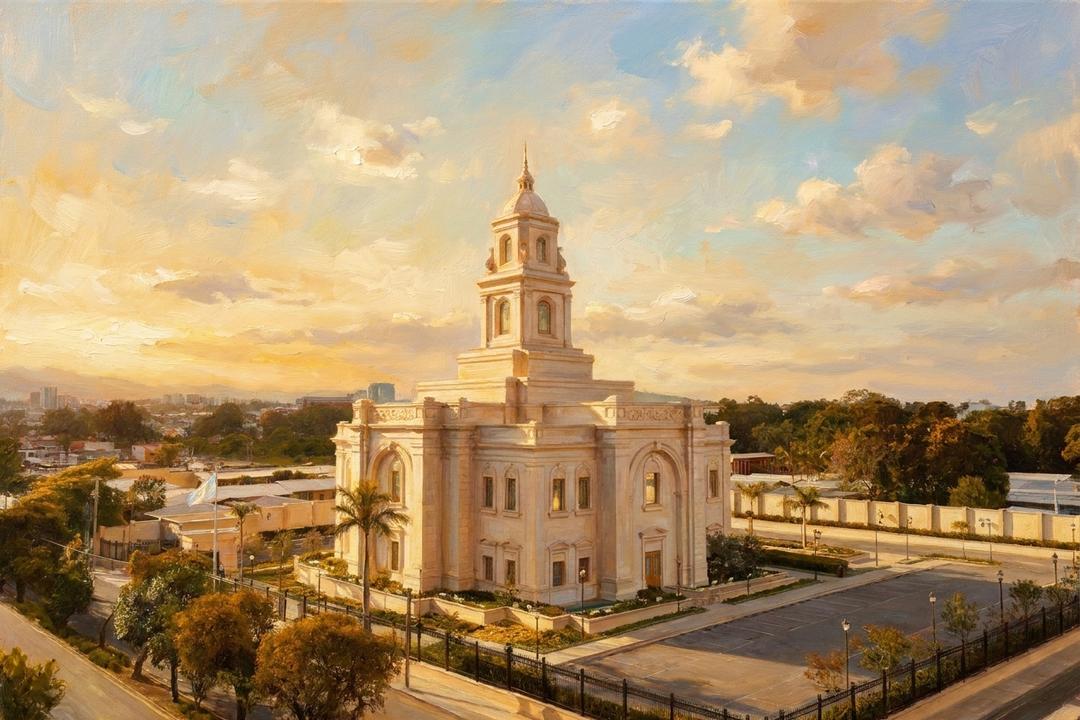
The temple grounds offer a peaceful, beautifully landscaped sanctuary in southwestern Guatemala City. Visitors of all faiths are invited to stroll the stone plazas, view the exterior architecture, and enjoy the temperate climate.
Highlights
- Lush native plantings and stylized stone carvings of Guatemala's national flower, the monja blanca.
- A soaring central tiered tower and spire that catches golden highland sunlight.
- Convenient urban access adjacent to major transit corridors in Zona 11.
Things to Know
- Interior entry is reserved for Church members holding a valid temple recommend.
- Patrons should reserve ordinance sessions in advance through the official Church portal.
- Modest attire and a quiet, respectful demeanor are requested on the sacred grounds.
Location
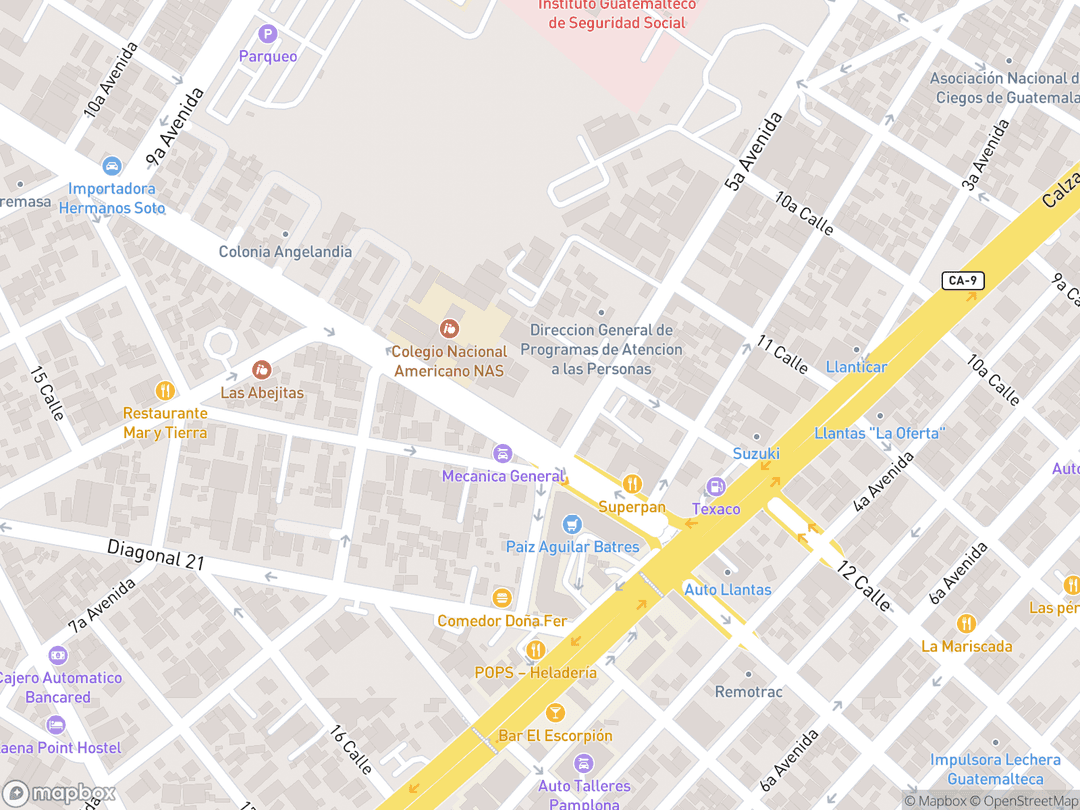
13 Calle 5-56, Zona 11, Guatemala City, Guatemala
Hours: Tuesday through Saturday: Variable session schedules; Closed Sunday and Monday.
Getting There: Located off Calzada Aguilar Batres at 13 Calle in Zona 11, easily reached by Transmetro buses, taxis, or rideshare.
Get DirectionsTips for Your Visit
Evening Illumination
Visit at twilight when exterior floodlights illuminate the central tower against the mountain skyline.
Public Gardens
The exterior perimeter paths and garden benches are open to the general public during daytime hours.
About
Following the ancient Abrahamic tradition of consecrated ground, the Miraflores Guatemala City Guatemala Temple serves as a designated House of the Lord. Rooted in the biblical heritage of holy sanctuaries such as Solomon's Temple, it stands distinct from regular congregational chapels as an edifice set apart for sacred devotion, spiritual instruction, and eternal covenants with Jesus Christ.
Constructed on consecrated ground previously occupied by a local meetinghouse in Zona 11, the two-story structure accommodates the sustained growth of Latter-day Saints across the metropolitan valley. Its classical lines harmonize with regional Guatemalan motifs, providing a quiet spiritual refuge amidst the bustling commerce and transit corridors of the capital.
The temple welcomes faithful patrons into reverent spaces designed to foster peace and personal communion with Deity. Inside, members participate in sacred ordinances that unite families across generations through the redeeming grace of Jesus Christ.
Gallery
Symbolic Elements
The temple's exterior features intricate carvings, each rich with spiritual meaning:

La Monja Blanca Orchid
Stylized depictions of the white nun orchid symbolize spiritual purity and humble prayer.

Ceiba Tree Motif
Woodwork branching patterns reflect the national ceiba tree, representing generational bonds connecting earth and heaven.

Central Stepped Spire
The ascending tiered spire represents humanity's upward reach toward God and singular devotion to Christ.

Oxen-Supported Font
Twelve cast oxen beneath the baptistry font represent the twelve tribes of Israel and priesthood strength.
Infinite Sealing Mirrors
Opposing gilded mirrors in the sealing rooms reflect unending imagery symbolizing eternal marital and family bonds.

Classical Pilasters
Vertical stone columns dividing the exterior windows evoke steadfast righteousness and order.
Diffused Art Glass
Gold and amber art glass screens out urban traffic while diffusing warm celestial illumination into sacred rooms.

Arched Portico Windows
Arched entryway windows welcome patrons from secular commotion into divine sanctuary.
Interesting Facts
The Miraflores Temple made Guatemala City only the second metropolis outside the United States to host multiple operating temples (Tier A).
The structure was erected directly upon the site of an earlier Latter-day Saint meetinghouse in Zona 11 (Tier A).
The temple was dedicated on the exact same date as the Ephraim Utah Temple in North America (Tier A).
Carvings of Guatemala's national flower, the white nun orchid, are incorporated across interior and exterior finishes (Tier B).
Interior wood details draw inspiration from the sacred ceiba tree, which historically symbolized cosmic unity in Mesoamerica (Tier B).
The temple stands near the ancient ruins of Kaminaljuyu, connecting contemporary devotion with historical Mesoamerican roots (Tier B).
It represents the fourth operating temple dedicated in Guatemala, following Vista Hermosa, Quetzaltenango, and Cobán (Tier C).
Elder Gerrit W. Gong consecrated the building invoking Guatemala's title as the 'Land of Eternal Spring' (Tier A).
Common Questions
Why does Guatemala City have two Latter-day Saint temples?
Vibrant membership growth exceeding 285,000 Saints in Guatemala required additional capacity to serve regional congregations.
Can visitors tour the interior of the temple?
Following the public open house and dedication, interior entry is reserved for faithful Church members.
What is the historical meaning of the name Miraflores?
Miraflores translates to 'Behold the Flowers,' honoring the agricultural heritage and botanical beauty of the valley.
Where is the temple located within Guatemala City?
The temple is located at 13 Calle 5-56 in Zona 11, near the Miraflores commercial sector.
Featured Stories
Consecration in the Land of Eternal Spring
October 11, 2026
Elder Gerrit W. Gong presided over the dedicatory services, offering a fervent prayer that blessed the youth and families of Guatemala. He referenced the nation's beloved identity as the 'Land of Eternal Spring,' reminding members that the ordinances of the temple bloom with eternal spiritual life. The gathering cemented decades of devotional labor by Guatemalan pioneers.
Source: Church News Dedication Report
From Meetinghouse to Temple Mount
December 3, 2022
For decades, local Latter-day Saints gathered for weekly Sunday services at the chapel located on 13 Calle in Zona 11. When Church leadership identified the parcel for a second metropolitan temple, members marveled at seeing their neighborhood meetinghouse site transformed into a permanent House of the Lord. The transition symbolized the maturation of local stakes.
Source: Groundbreaking Remarks and Records
Uniting Ancient Roots and Eternal Covenants
August 27, 2026
During the open house, local visitors expressed profound emotion upon discovering Guatemalan motifs woven throughout the sacred halls. The incorporation of the national orchid and subtle ceiba branches honored indigenous heritage while pointing to Jesus Christ. Guests noted that the edifice felt like a genuine home for the spirit of their people.
Source: Open House Media Documentation
Timeline
Missionary Work Commences
The first four Latter-day Saint missionaries arrive in Guatemala to begin formal preaching.
MilestoneGuatemala City Temple Dedicated
Gordon B. Hinckley dedicates the first temple in Central America in Vista Hermosa.
DedicationQuetzaltenango Temple Dedicated
Dieter F. Uchtdorf dedicates the second temple in Guatemala in the western highlands.
DedicationTemple Announced
President Russell M. Nelson announces a second temple for the metropolitan area.
MilestoneSite Location Selected
The Church confirms the temple will be constructed on Church property in Zona 11.
MilestoneOfficial Renaming
The First Presidency formally names the edifice the Miraflores Guatemala City Guatemala Temple.
MilestoneGroundbreaking Ceremony
Elder Patricio M. Giuffra presides over the official site groundbreaking and dedication.
component.timeline.groundbreakingCobán Temple Dedicated
Dale G. Renlund dedicates Guatemala's third temple in Alta Verapaz.
DedicationMedia Day
Civic leaders and news media tour the interior prior to public open house sessions.
EventPublic Open House Begins
Tens of thousands of visitors tour the sacred interior during the complimentary open house.
EventTemple Dedication
Elder Gerrit W. Gong dedicates the Miraflores Temple as the Church's 224th operating temple.
DedicationHistory by Decade
1940s–1950s — Planting the Restored Gospel
The seed was planted in faith, and the harvest in Guatemala has grown beyond all expectation.
Following appeals by John O'Donnal, the first full-time missionaries arrived in Guatemala in September 1947. Early branches developed rapidly in the capital, laying a firm foundation despite initial logistical hurdles. Faithful early members traveled hundreds of miles on primitive overland buses to attend temples in the United States.
1960s–1970s — Establishing the Zona 11 Chapel
During this era of congregational expansion, the Church acquired property on 13 Calle in Zona 11 to erect a multi-ward meetinghouse. This building became a spiritual and social center for generations of Latter-day Saint families in western Guatemala City. Its halls nurtured local leaders who would later oversee regional stakes.
1980s — Central America's First Temple
In December 1984, President Gordon B. Hinckley dedicated the Guatemala City Temple in eastern Vista Hermosa. The historic event ended decades of international travel for Central American members seeking temple blessings. The dedication sparked another immense wave of conversion across the republic.
2010s — Expansion to the Highlands
Guatemala's Church membership climbed past a quarter of a million believers, necessitating localized temples. In 2011, the Quetzaltenango Temple opened in the western highlands to serve indigenous Mayan and ladino Saints. Vista Hermosa operated at peak capacity, underscoring the eventual need for a second capital sanctuary.
2020–2022 — Announcement and Miraflores Identity
President Russell M. Nelson announced the second temple in October 2020, initially titled the Greater Guatemala City Temple. In 2022, the First Presidency officially renamed it the Miraflores Guatemala City Temple to honor its historic neighborhood. Elder Patricio M. Giuffra broke ground on the former Zona 11 chapel grounds in December 2022.
2023–2026 — Construction and Dedication
Crews engineered a robust, seismic-resistant concrete frame clad in refined architectural stone panels. Finishing trades installed bespoke art glass and hand-carved millwork highlighting native floral symbols. Elder Gerrit W. Gong dedicated the building on October 11, 2026, establishing it as the 224th operating temple worldwide.
Architecture & Facilities
The Miraflores Guatemala City Guatemala Temple exhibits a refined contemporary Classical style adapted specifically for high-seismic zones and Latin American urban contexts. Symmetrical elevations, balanced vertical pilasters, and clean stone cornices produce a dignified, reverent civic presence that harmonizes modern architectural engineering with timeless sacred traditions.
Building Materials
Exterior Cladding
Honed off-white architectural precast stone panels provide enduring durability and earthquake resistance.
Art Glass Windows
Insulated multi-pane art glass features soft gold, amber, and frosted white floral designs.
Interior Hardwoods
Custom finished hardwoods frame doors and ceremonial seating with classical fluting.
Flooring
Polished natural stone tile lines entries and corridors, complemented by custom carved wool broadloom.
Interior Features
Entry Foyer
A reverent greeting area where patrons present recommends beneath crystal chandeliers and warm stone accents.
Baptistry
A ceremonial immersion pool resting upon the backs of twelve sculpted oxen modeled after Solomon's brazen sea.
Instruction Rooms
Two dedicated endowment rooms equipped for theological instruction regarding the Creation and the Atonement.
Celestial Room
A tranquil white room symbolizing divine peace, featuring crystalline lighting and tall gilded mirrors.
Sealing Rooms
Two intimate ordinance rooms with central velvet-cushioned altars where marriages are sealed for eternity.
Temple Grounds
Occupying a 1.5-acre parcel in Zona 11, the landscaped grounds offer manicured lawns, ornamental palm trees, and flowering shrubs adapted to the highland climate. Paved walkways and decorative perimeter benches invite quiet contemplation.
Additional Facilities
The temple complex includes secure on-site patron surface parking, changing facilities, and mechanical utility infrastructure.
Religious Significance
Within the broader Abrahamic tradition of setting apart consecrated ground for communion with God, the Miraflores Guatemala City Guatemala Temple serves as a holy sanctuary where heaven and earth converge.
To provide a consecrated House of the Lord where members make binding covenants of discipleship to Jesus Christ and unite families for eternity.
Sacred Ordinances
Vicarious Baptism for Ancestors
Immersive proxy baptisms performed on behalf of deceased forebears who lived without the opportunity to receive the gospel.
The Endowment
Sacred instruction outlining God's plan of redemption, culminating in personal covenants of obedience, charity, and consecration.
Eternal Marriage and Sealing
Sacramental marriage rites performed at sacred altars that unite spouses and children across generations beyond physical death.
The House of the Lord in Christian Theology
While local Latter-day Saint chapels accommodate general Sunday services open to all, temples represent the ancient biblical heritage of holy sanctuaries. In these dedicated walls, believers focus purely on higher spiritual ordinances, turning their hearts to the Savior and their ancestral families.
Generational Healing Across the Americas
In Guatemala, where ancestral remembrance runs deep across diverse cultural backgrounds, proxy ordinances offer profound comfort. Patrons discover their ancestors through family history research and perform vicarious ordinances, forging an unbroken chain of love and divine grace.
Similar Temples

Sources & Research
Every fact on Temples.org is backed by verified Sources & Research. Each piece of information is rated by source tier and confidence level.
View All Sources (4)
| Field | Source | Tier | Retrieved |
|---|---|---|---|
| About & Historical Background | The Church of Jesus Christ of Latter-day Saints (opens in a new tab) | A | 2026-03-30 |
| Groundbreaking & Site Dedication | Church News (opens in a new tab) | B | 2026-03-30 |
| Regional Heritage & Membership History | LDS Living (opens in a new tab) | B | 2026-03-30 |
| Architectural & Facility Details | ChurchofJesusChristTemples.org (opens in a new tab) | C | 2026-03-30 |