Visitor Insights
Visiting Meenakshi Amman Temple
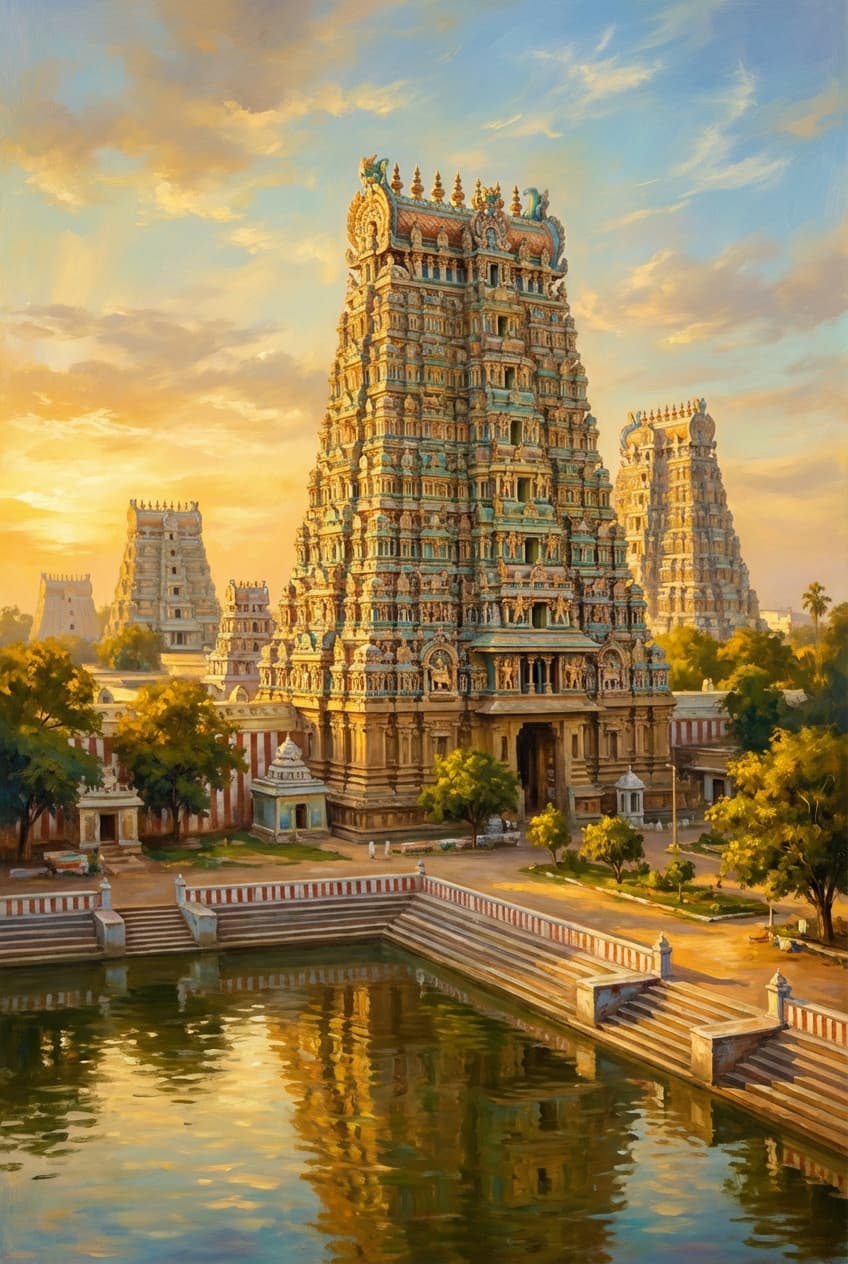
Visiting the Meenakshi Amman Temple is a deeply immersive experience, offering a glimpse into the rich religious and artistic heritage of South India. The temple complex is a bustling hub of activity, with devotees, tourists, and priests all contributing to the vibrant atmosphere. Expect to be awestruck by the towering gopurams, intricate sculptures, and the sheer scale of the temple. Remember to dress modestly and be prepared to remove your footwear before entering the main temple areas.
Highlights
- Marvel at the towering gopurams adorned with thousands of colorful sculptures.
- Explore the Hall of 1000 Pillars and admire the intricate carvings.
- Witness the sacred rituals performed at the sanctums of Meenakshi and Sundareswarar.
Things to Know
- Dress modestly, covering shoulders and legs.
- Remove footwear before entering the temple premises.
- Be prepared for crowds, especially during festivals and peak hours.
Location
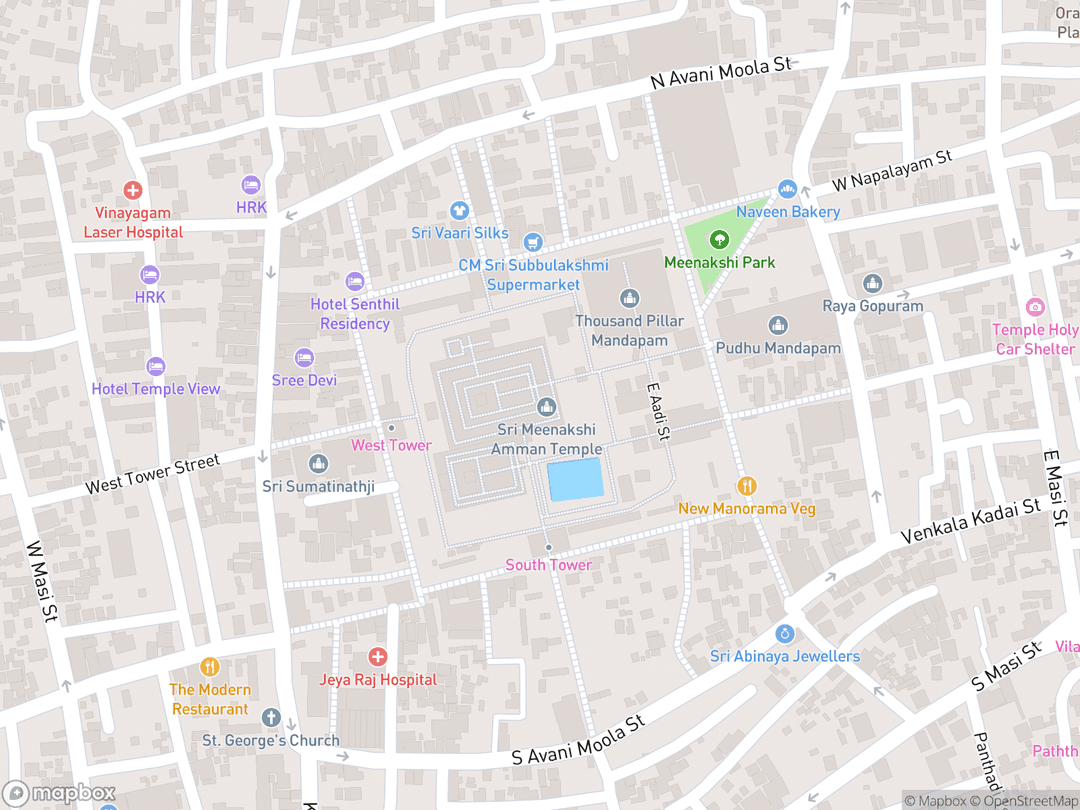
Madurai, 625001, India
Hours: 5:00 AM to 12:30 PM and 4:00 PM to 9:30 PM
Getting There: The temple is located 2 km from Madurai railway station. Cabs and auto-rickshaws are readily available.
Get DirectionsTips for Your Visit
Best Time to Visit
October to March for pleasant weather. Visit on weekdays between 7:00 AM and 10:00 AM to avoid crowds.
Allocate Sufficient Time
Minimum 2 hours for a quick visit, 3-4 hours to appreciate the architecture.
About
The Meenakshi Amman Temple, also known as Meenakshi Sundareswarar Temple, is a historic Hindu temple located in Madurai, Tamil Nadu, India. It is dedicated to Meenakshi, a form of Parvati, and Sundareswarar, a form of Shiva. The temple is a major pilgrimage site and a significant cultural landmark, attracting thousands of visitors daily.
The temple's origins can be traced back to the early centuries CE, with references in Tamil Sangam literature. However, the current structure is largely the result of expansions and renovations carried out over centuries by various dynasties, including the Pandya and Nayak rulers. The temple was rebuilt by the Vijayanagara Empire after destruction by the Delhi Sultanate armies.
The Meenakshi Amman Temple is renowned for its stunning Dravidian architecture, characterized by towering gopurams (gateway towers) adorned with thousands of colorful sculptures. The temple complex spans 14 acres and includes two main sanctums, pillared halls, and the sacred Potramarai Kulam (Golden Lotus Tank). The temple stands as a testament to the rich artistic and religious heritage of South India.
Gallery
Symbolic Elements
The temple's exterior features intricate carvings, each rich with spiritual meaning:

Meenakshi
Meenakshi, the principal deity, is a form of Parvati and consort of Shiva. Her name means 'fish-eyed,' symbolizing her ever-watchful compassion and omniscience. She represents the divine feminine energy and is revered as a powerful goddess.

Sundareswarar
Sundareswarar, a form of Shiva, is the consort of Meenakshi and represents the divine masculine energy. Together, Meenakshi and Sundareswarar symbolize the inseparable union of masculine and feminine energies, essential for cosmic balance and creation. He is revered as the protector and destroyer.

Gopurams
The towering gopurams (gateway towers) are a defining feature of the temple's Dravidian architecture. Adorned with thousands of colorful sculptures depicting gods, goddesses, and mythological figures, the gopurams represent the vastness and complexity of the divine universe and serve as gateways to the sacred realm.

Hall of 1000 Pillars
The Hall of 1000 Pillars (actually 985) is an architectural marvel showcasing the intricate carvings and craftsmanship of the Dravidian style. Each pillar is adorned with unique sculptures, and the hall serves as a testament to the artistic and engineering skills of the temple builders. It is a major attraction for visitors.

Potramarai Kulam
The Potramarai Kulam (Golden Lotus Tank) is a sacred water body within the temple complex, symbolizing purity and enlightenment. Devotees believe that bathing in the tank cleanses them of their sins and brings them closer to the divine. The tank is surrounded by pillared corridors and is a serene place for reflection.

Dravidian Architecture
The temple's Dravidian architecture is characterized by covered porches, tall entry gate towers, pillared halls, and a water tank. The concentric, grid-based design is aligned with the four cardinal directions, reflecting the cosmic order and the temple's connection to the universe. The architecture is a testament to the rich artistic and religious heritage of South India.

Sculptures
The temple is adorned with around 33,000 sculptures, depicting a wide range of deities, mythological figures, and scenes from Hindu epics. These sculptures are not merely decorative; they are integral to the temple's religious and artistic significance, conveying stories, teachings, and the essence of Hindu cosmology. Each sculpture is a masterpiece of craftsmanship.
Interesting Facts
The Meenakshi Amman Temple is believed to be 2,500 to 3500 years old.
The temple is dedicated to Meenakshi, who according to legend, was born with three breasts. The third breast disappeared when she met Shiva.
The temple has around 33,000 sculptures.
The temple attracts around 15,000 visitors each day.
The idol of Meenakshi is carved in an emerald-hued stone.
The Golden Lotus Tank is believed to have been created by Lord Shiva.
The temple was nominated as one of the New Seven Wonders of the World.
The state emblem of Tamil Nadu is based on the west gopuram of the temple.
The temple is the heart and lifeline of the 2,500-year-old city of Madurai.
The Hall of 1000 Pillars actually has 985 pillars.
Common Questions
What is the Meenakshi Amman Temple dedicated to?
The temple is dedicated to Meenakshi, a form of Parvati, and Sundareswarar, a form of Shiva. They are considered the main deities of the temple and are worshipped by thousands of devotees every day.
What is the architectural style of the temple?
The Meenakshi Amman Temple is a prime example of Dravidian architecture, characterized by covered porches, tall entry gate towers (gopurams), pillared halls, and a water tank. The gopurams are adorned with thousands of colorful sculptures depicting gods, goddesses, and mythological figures.
What are the temple timings?
The temple is open from 5:00 AM to 12:30 PM and 4:00 PM to 9:30 PM. It is advisable to check the official website for any changes in timings, especially during festivals.
What is the dress code for visiting the temple?
Modest attire is required. Shoulders and legs must be covered. Men are advised to wear traditional dhoti or pants with a shirt. Women should wear a saree, salwar kameez, or modest Western attire.
What is the significance of the Golden Lotus Tank (Potramarai Kulam)?
The Potramarai Kulam (Golden Lotus Tank) symbolizes purity and enlightenment. It is considered a sacred water body within the temple complex and is believed to have been created by Lord Shiva.
Related Stories
Explore the rich history, traditions, and people connected to this sacred site.
Timeline
Early References
Earliest references to a temple dedicated to Meenakshi and Sundareswarar are found in Tamil Sangam literature.
MilestonePandya Dynasty Patronage
The Pandya dynasty promotes Hinduism and expands the temple.
MilestoneChola and Nayak Rule
Chola dynasty takes control of Madurai. Later, the temple sees contributions from the Nayak rulers.
MilestoneEarly Structures Built
Early structures of the temple are built during the reign of the Pandyas.
MilestoneVijayanagara Empire Rebuilds Temple
The Vijayanagara Empire rebuilds the temple after destruction by the Delhi Sultanate armies. Malik Kafur loots the temple.
RenovationViswanatha Nayak's Rebuilding
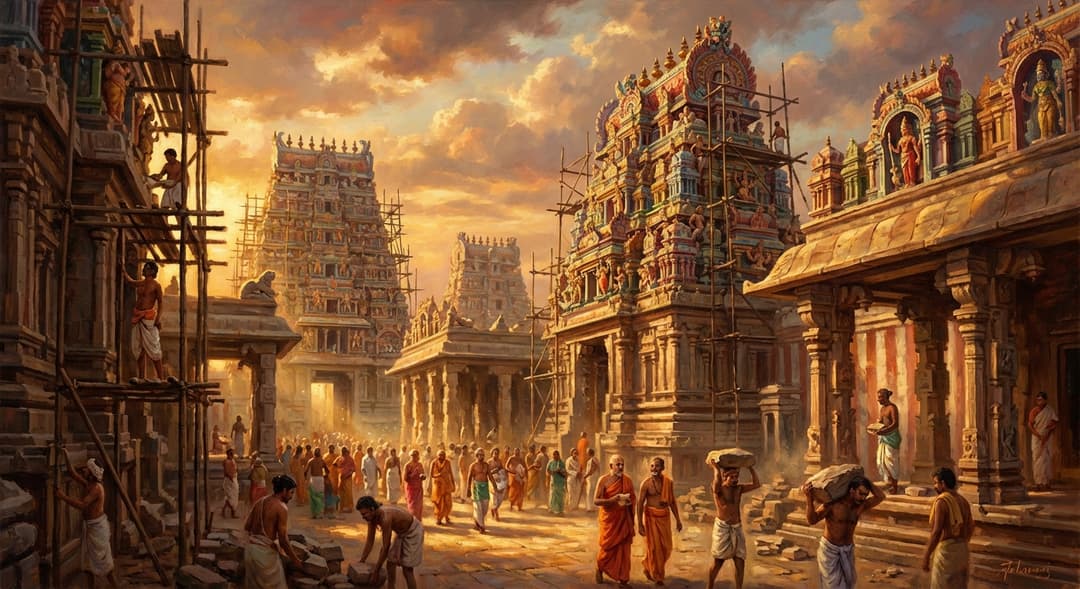
The first Nayak king of Madurai, Viswanatha Nayak, rebuilds the temple.
RenovationTemple Fortified
The temple complex is further fortified. The vimana above the Meenakshi shrine is gilded with gold.
RenovationThirumalai Nayak's Expansion
Thirumalai Nayak expands the temple with towering gopurams and intricate carvings.
RenovationOuter Gopurams Completed
Construction of the outer gopurams is completed.
MilestoneSwachh Iconic Place
The temple was adjudged the best 'Swachh Iconic Place' in India under the Swachh Bharat Abhiyan by the Government of India.
EventRenovation Progress
Renovation work is progressing at a brisk pace, with about 90% of the major renovation tasks nearing completion ahead of the upcoming 'kumbabhishekam'.
RenovationReligious Significance
The Meenakshi Amman Temple holds immense religious significance for Hindus, serving as a sacred space for worship, pilgrimage, and spiritual reflection. The temple is dedicated to Meenakshi, a form of Parvati, and Sundareswarar, a form of Shiva, representing the divine feminine and masculine energies that are essential for cosmic balance and creation.
The core spiritual purpose of the temple is to provide a space for devotees to connect with the divine, seek blessings, and attain spiritual liberation. The temple's rituals, festivals, and sacred spaces are designed to facilitate this connection and promote spiritual growth.
Sacred Ordinances
Puja
Puja is a ritualistic act of worship performed to honor the deities. It involves offering prayers, flowers, incense, and other items to the idols of Meenakshi and Sundareswarar. Puja is a way for devotees to express their devotion and seek blessings.
Darshan
Darshan refers to the act of seeing and being seen by the deity. Devotees believe that by gazing upon the idols of Meenakshi and Sundareswarar, they receive divine grace and blessings. Darshan is a central part of the temple experience.
Festival Rites
The temple celebrates numerous festivals throughout the year, each with its unique rituals and significance. These festivals provide opportunities for devotees to participate in special ceremonies, processions, and cultural events, deepening their connection to the divine and the community.
The Significance of Meenakshi
Meenakshi, whose name means 'fish-eyed,' is revered as a powerful goddess embodying compassion, wisdom, and strength. Her presence in the temple symbolizes the divine feminine energy and her role as the protector of Madurai. Devotees believe that worshipping Meenakshi brings blessings of prosperity, happiness, and spiritual growth.
The Union of Shiva and Parvati
The union of Shiva and Parvati, represented by Sundareswarar and Meenakshi, is a central theme in Hindu mythology and philosophy. Their inseparable bond symbolizes the harmony and balance between the masculine and feminine principles, essential for cosmic creation and sustenance. The temple serves as a reminder of this divine union and its significance in the universe.
Similar Temples
Sources & Research
Every fact on Temples.org is backed by verified Sources & Research. Each piece of information is rated by source tier and confidence level.
View All Sources (6)
| Field | Source | Tier | Retrieved |
|---|---|---|---|
| Basic Facts & Historical Overview | Madurai Tourism (opens in a new tab) | A | 2024-02-29 |
| Temple History and Architecture | Meenakshi Amman Temple Official Website (opens in a new tab) | A | 2024-02-29 |
| Historical Significance | Encyclopedia Britannica (opens in a new tab) | B | 2024-02-29 |
| Architectural Details and History | Archidust (opens in a new tab) | B | 2024-02-29 |
| Temple Architecture and Symbolism | Smarthistory (opens in a new tab) | B | 2024-02-29 |
| Visitor Information and Temple Timings | IndiaTimes (opens in a new tab) | D | 2024-02-29 |