Visitor Insights
Visiting Lalish
Visiting Lalish offers a unique opportunity to experience the heart of Yazidi culture and spirituality. The atmosphere is serene and reverent, reflecting the deep significance of the site for the Yazidi community. Visitors should be prepared to remove their shoes before entering the village and dress modestly, respecting the traditions and customs of this holy place.
Highlights
- Witness the unique architecture of the Lalish Temple, including its conical domes and symbolic carvings.
- Learn about the Yazidi faith and the importance of Sheikh Adi ibn Musafir.
- Experience the spiritual atmosphere of this sacred site and observe Yazidi religious practices.
Things to Know
- Dress modestly, covering legs and shoulders.
- Remove shoes before entering the village.
- Respect Yazidi customs and traditions.
Location
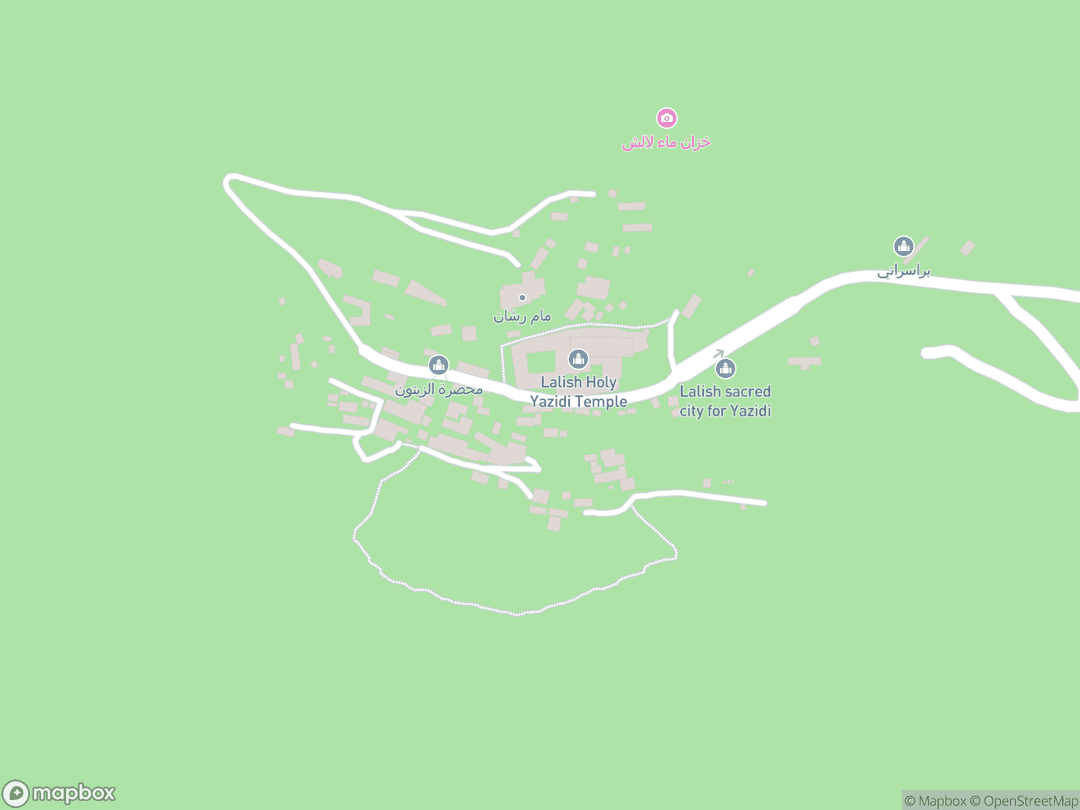
Shekhan District, Nineveh Governorate, Iraq
Hours: Open to visitors during daylight hours, but may be closed during religious ceremonies.
Getting There: Located approximately 60 km north of Mosul. Private transportation is recommended.
Get DirectionsTips for Your Visit
Dress Modestly
Remember to dress respectfully when visiting Lalish.
Remove Your Shoes
It is customary to remove your shoes before entering the village.
About
Lalish, also known as Lalişa Nûranî, is a sacred mountain valley and temple located in the Nineveh Plains of Iraq. It stands as the holiest site for the Yazidi people and is revered as the location of the tomb of Sheikh Adi ibn Musafir, a central figure in the Yazidi faith. Yazidism is a monotheistic ethnic religion with roots in ancient Iranian beliefs, influenced by Sufism.
Yazidis believe in one God who entrusted the world's guardianship to seven self-emanated angels, with Tawûsî Melek (the Peacock Angel) preeminent among them. Lalish serves as the focal point of their spiritual identity, drawing pilgrims from around the world to participate in religious ceremonies and pay homage to their revered saint. The temple complex is not only a place of worship but also a symbol of cultural resilience and the enduring spirit of the Yazidi community.
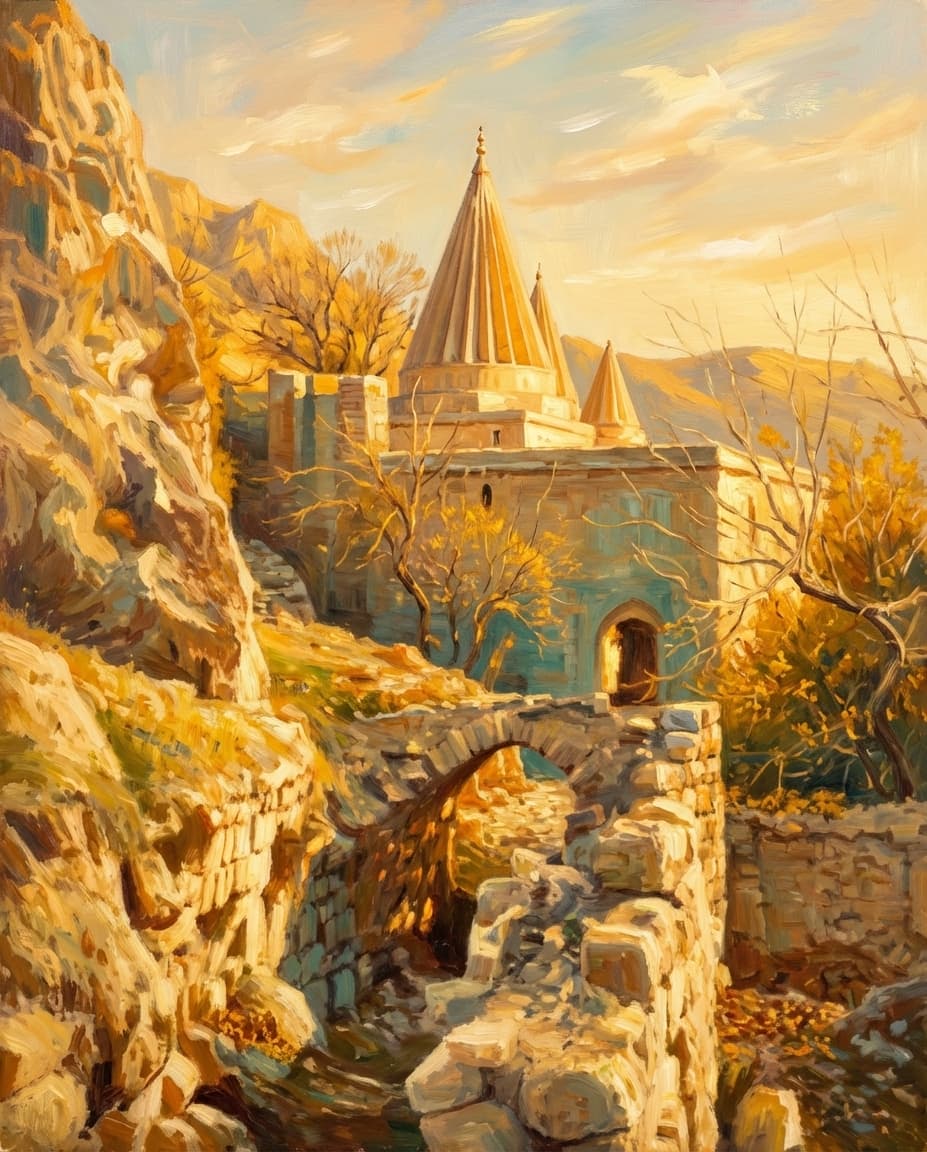
The architecture of Lalish Temple is noted for its unique style, incorporating ancient symbolism. Key features include conical domes, rectangular stone buildings, and symbolic elements like the black serpent and the Peacock Angel. These elements reflect the rich tapestry of Yazidi beliefs and their connection to the land.
Gallery
Symbolic Elements
The temple's exterior features intricate carvings, each rich with spiritual meaning:

Tawûsê Melek (Peacock Angel)
The most important of the angels is Melek Taus, the 'peacock angel,' who is venerated in the form of the beautiful-feathered bird. The symbol of a peacock is found throughout Lalish, representing divine power and beauty. Yazidis believe that Melek Taus is the intermediary between God and humanity.

Sun
Symbols of the shining Sun represent the Light of God and are prominently displayed in Lalish. Yazidis face towards the sun during prayer, acknowledging its life-giving energy and divine symbolism. The sun represents clarity, guidance, and the presence of the divine in the world.

Black Serpent
The black serpent's origin is shrouded in mystery, but it holds a significant place in Yazidi symbolism. According to Yazidi belief, Noah used a black snake’s body to plug a hole in the ark, saving humanity from the flood. The serpent represents wisdom, protection, and the ability to overcome adversity.

Conical Spires
The conical spires resemble the shape of an olive press and are connected to the Yazidi creation story. These spires symbolize the connection between the earthly and the divine, representing the flow of blessings from the heavens to the earth. They are a distinctive feature of Lalish's architecture.
Seven Pillars
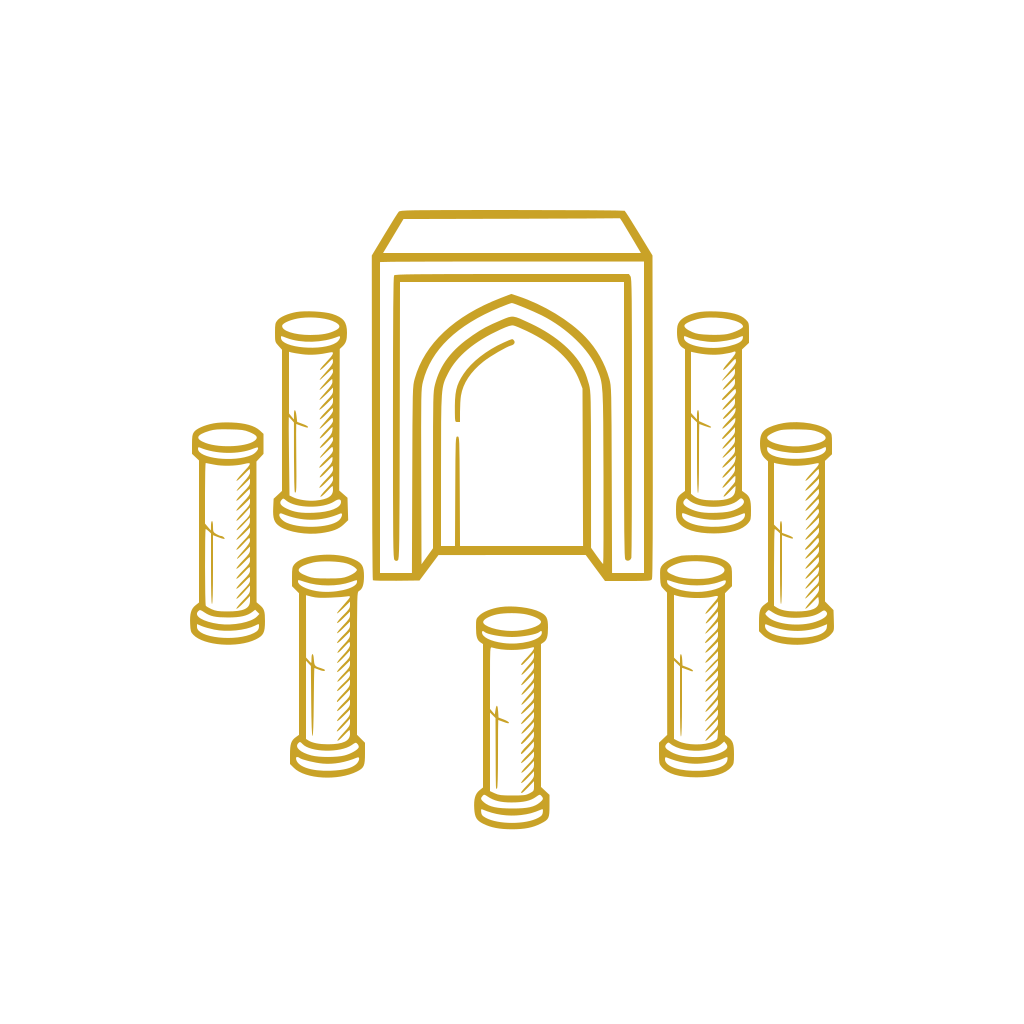
The Iwan of the temple is surrounded by seven pillars built of stone, each representing one of the seven angels in Yazidi religion holiness. These pillars symbolize the divine council that governs the world, each angel with its unique role and responsibility. They represent the interconnectedness of the spiritual and earthly realms.

Crescent
At the top rests what the Yazidis call “the crescent,” which is made up of three balls of different sizes, symbolizing the three divine persons. This symbol represents the unity and interconnectedness of the divine entities in Yazidi theology. It is a visual reminder of the complex and multifaceted nature of the divine.

Olive Oil Lamps
Ancient olive oil lamps are kept burning as symbols of divine light, illuminating the sacred spaces of Lalish. These lamps represent the enduring presence of the divine and the importance of spiritual illumination in the lives of Yazidis. They are a constant reminder of the need to seek knowledge and understanding.

Barefoot Pilgrimage
Visitors must remove their shoes before entering the village and walk barefoot, symbolizing humility and reverence for the sacred ground. This practice represents a stripping away of worldly concerns and a direct connection to the earth, allowing pilgrims to fully immerse themselves in the spiritual atmosphere of Lalish.
Interesting Facts
Lalish is considered the center of the Yazidi universe.
Yazidis are expected to make a six-day pilgrimage to Lalish at least once in their lifetimes.
The village of Lalish is not inhabited except by the Emir, the head figure of the Yazidi faith.
The Yazidi New Year is always on the first Wednesday of spring.
The Yazidi religion has a calendar that dates back to around 4700 BCE.
Yazidis are endogamous, meaning they only marry within their community.
The Lalish Temple is on the UNESCO Tentative List.
Yazidis kiss the door frames and doorsteps of temples before entering.
The ground is considered holy because it was where Malak Tawus, the Peacock Angel, first descended to the earth to bring order from chaos.
The oddly shaped cones around the temple are made so that when you see them from above, they look like stars.
Common Questions
What is Lalish?
Lalish is the holiest temple of the Yazidi people, located in the Nineveh Plains of Iraq. It is the site of the tomb of Sheikh Adi ibn Musafir, a central figure in the Yazidi faith.
Where is Lalish located?
Lalish is located in the Shekhan District in the Nineveh Governorate of northern Iraq, approximately 60 km north of Mosul.
What should I wear when visiting Lalish?
Visitors should dress modestly, covering their legs and shoulders. A head covering for women is recommended.
Why is Lalish important to the Yazidis?
Lalish is the center of the Yazidi universe and a major pilgrimage site. It is considered the most sacred place for Yazidis worldwide.
What are some of the key features of the Lalish Temple?
Key features include conical domes, rectangular stone buildings, and symbolic elements like the black serpent and the Peacock Angel.
Featured Stories
The Story of Sheikh Adi ibn Musafir
12th Century
Sheikh Adi ibn Musafir, a revered Sufi mystic, played a pivotal role in shaping the Yazidi faith and establishing Lalish as its spiritual center. Born in the Beqaa Valley of Lebanon, he sought spiritual enlightenment and eventually settled in the remote valley of Lalish in the 12th century. His teachings emphasized the importance of inner purity, devotion to God, and respect for all creation.
Sheikh Adi's presence transformed Lalish into a thriving center of learning and pilgrimage, attracting followers from far and wide. He established a monastic order and oversaw the construction of the Lalish Temple, which became the focal point of Yazidi religious life. His legacy continues to inspire Yazidis today, who revere him as a saint and visit his tomb to seek blessings and guidance.
Source: https://www.independent.co.uk/news/world/middle-east/who-are-the-yazidis-and-why-is-isis-persecuting-them-9663620.html
The Yazidi Pilgrimage to Lalish
Ongoing
The annual pilgrimage to Lalish is a central pillar of Yazidi religious life, drawing thousands of devotees from around the world to participate in sacred rituals and connect with their spiritual heritage. The six-day pilgrimage is a time of intense devotion, marked by prayer, fasting, and communal gatherings. Pilgrims cleanse themselves in the sacred waters of the Kaniya Spî (White Spring) and circumambulate the tomb of Sheikh Adi, seeking blessings and forgiveness.
The pilgrimage is not only a personal spiritual journey but also a powerful expression of communal identity and resilience. Despite facing centuries of persecution and hardship, Yazidis have steadfastly maintained their traditions and preserved their sacred sites, ensuring the continuity of their faith for future generations. The pilgrimage to Lalish is a testament to their unwavering commitment to their beliefs and their enduring connection to their ancestral homeland.
Source: https://www.backpackmoments.com/lalish-yazidi-temple-iraq/
The Symbolism of the Peacock Angel
Ancient Origins
The Peacock Angel, known as Tawûsê Melek, is the most important figure in Yazidi theology, revered as the intermediary between God and humanity. The symbol of the peacock, with its iridescent plumage, represents divine beauty, power, and wisdom. Yazidis believe that the Peacock Angel was initially tasked with testing humanity's faith and loyalty, and his actions ultimately led to the creation of the world as we know it.
The veneration of the Peacock Angel has been a source of misunderstanding and controversy throughout history, with some outsiders mistakenly associating it with devil worship. However, Yazidis firmly reject this notion, emphasizing that the Peacock Angel is a benevolent and essential figure in their faith. The symbol of the peacock is prominently displayed throughout Lalish, serving as a constant reminder of the divine presence and the importance of spiritual devotion.
Source: https://www.thecollector.com/yazidi-religion-beliefs/
Timeline
Ancient Origins
The village of Lalish dates back approximately 4,000 years and was first used by ancient Sumerians and other early Mesopotamian civilizations.
MilestoneAdi ibn Musafir's Arrival
Adi ibn Musafir, a central figure in the Yazidi faith, moved to Lalish and established it as a major religious center.
MilestoneDeath of Adi ibn Musafir
Sheikh Adi ibn Musafir died and was buried in Lalish, further solidifying the site's importance.
MilestoneDestruction of the Tomb
During a major campaign against the Yazidis, the tomb of Adi was razed, causing significant damage to the site.
RenovationAnnexation and Looting
The Lalish valley was annexed by surrounding Muslim tribes under Ottoman leadership. The mausoleum of Yazidi saints was looted and damaged, and the Lalish Temple was converted into a Quranic school.
EventLocation in Shekhan District
Lalish has been located in the Shekhan District since this year, providing a degree of administrative stability.
MilestoneRefuge for Yazidis
Yazidi refugees fled to Lalish from Sinjar after attacks by ISIS, seeking sanctuary in their holiest site.
EventPreservation Efforts
Yazidis continue to maintain and preserve Lalish as their holiest site, ensuring its survival for future generations.
RenovationYazidi New Year
The Yazidi New Year is celebrated annually on the first Wednesday of spring, marking a time of renewal and reflection.
EventYazidi Calendar
The Yazidi religion has a calendar that dates back to around 4700 BCE, highlighting the ancient roots of their faith.
MilestonePilgrimage to Lalish
Yazidis are expected to make a six-day pilgrimage to Lalish at least once in their lifetimes, reinforcing their connection to the site.
EventKissing Door Frames
Yazidis kiss the door frames and doorsteps of temples before entering, showing reverence for the sacred space.
EventHoly Ground
The ground is considered holy because it was where Malak Tawus, the Peacock Angel, first descended to the earth to bring order from chaos.
MilestoneConical Shapes
The oddly shaped cones around the temple are made so that when you see them from above, they look like stars, symbolizing divine guidance.
MilestoneUNESCO Recognition
The Lalish Temple is on the UNESCO Tentative List, acknowledging its cultural and historical significance.
MilestoneHistory by Decade
Ancient Times
The village of Lalish dates back approximately 4,000 years, with evidence suggesting its use by ancient Sumerians and other early Mesopotamian civilizations. The valley's natural beauty and strategic location likely contributed to its early settlement. While specific details about this period are scarce, it is believed that the site held religious significance for these early inhabitants, laying the foundation for its later importance in Yazidi tradition.
12th Century
The arrival of Sheikh Adi ibn Musafir in the 12th century marked a turning point in Lalish's history. A revered Sufi mystic, Sheikh Adi transformed the valley into a thriving center of learning and pilgrimage. He established a monastic order and oversaw the construction of the Lalish Temple, which became the focal point of Yazidi religious life. His teachings emphasized inner purity, devotion to God, and respect for all creation.
1415
During a major campaign against the Yazidis in 1415, the tomb of Adi was razed, causing significant damage to the site. This act of destruction was a deliberate attempt to suppress the Yazidi faith and erase its cultural heritage. However, the Yazidis remained resilient, rebuilding the tomb and continuing to practice their traditions in the face of adversity.
1892
In 1892, the Lalish valley was annexed by surrounding Muslim tribes under Ottoman leadership. The mausoleum of Yazidi saints was looted and damaged, and the Lalish Temple was converted into a Quranic school. This period marked a time of hardship and oppression for the Yazidi community, as their religious freedom was curtailed and their sacred sites were desecrated.
1991
Since 1991, Lalish has been located in the Shekhan District, providing a degree of administrative stability. This has allowed the Yazidi community to focus on preserving their cultural heritage and rebuilding their religious institutions. Despite ongoing challenges, Lalish remains a symbol of Yazidi resilience and a testament to their enduring faith.
2014
In 2014, Yazidi refugees fled to Lalish from Sinjar after attacks by ISIS, seeking sanctuary in their holiest site. The influx of refugees placed a strain on the resources of the Lalish community, but they responded with compassion and generosity, providing shelter, food, and support to those in need. This act of solidarity demonstrated the strength and unity of the Yazidi people in the face of persecution.
Religious Significance
Lalish holds immense religious significance for the Yazidi people, serving as the center of their spiritual universe and the location of the tomb of Sheikh Adi ibn Musafir.
The core spiritual purpose of Lalish is to provide a sacred space for Yazidis to connect with the divine, honor their ancestors, and reaffirm their commitment to their faith.
Sacred Ordinances
Pilgrimage
The annual pilgrimage to Lalish is a central pillar of Yazidi religious life, drawing thousands of devotees from around the world to participate in sacred rituals.
Purification
Yazidis cleanse themselves in the sacred waters of the Kaniya Spî (White Spring) as a symbol of spiritual purification.
Circumambulation
Pilgrims circumambulate the tomb of Sheikh Adi, seeking blessings and forgiveness.
The Importance of Sheikh Adi
Sheikh Adi ibn Musafir is revered as a saint and a central figure in the Yazidi faith, whose teachings emphasized inner purity, devotion to God, and respect for all creation.
The Role of the Peacock Angel
The Peacock Angel, known as Tawûsê Melek, is the most important figure in Yazidi theology, revered as the intermediary between God and humanity.
Sources & Research
Every fact on Temples.org is backed by verified Sources & Research. Each piece of information is rated by source tier and confidence level.
View All Sources (2)
| Field | Source | Tier | Retrieved |
|---|---|---|---|
| About & Historical Background | Duhok Province (opens in a new tab) | A | 2024-02-29 |
| Architectural Description | Atlas Obscura (opens in a new tab) | B | 2024-02-29 |