Visitor Insights
Visiting Belz Great Synagogue
Visiting the Belz Great Synagogue offers a unique glimpse into the world of Hasidic Judaism. The synagogue is a vibrant center of prayer and community life, especially during Jewish festivals. Visitors should dress modestly and be mindful of prayer times. Early morning or late afternoon visits are recommended for a more personal experience.
Location
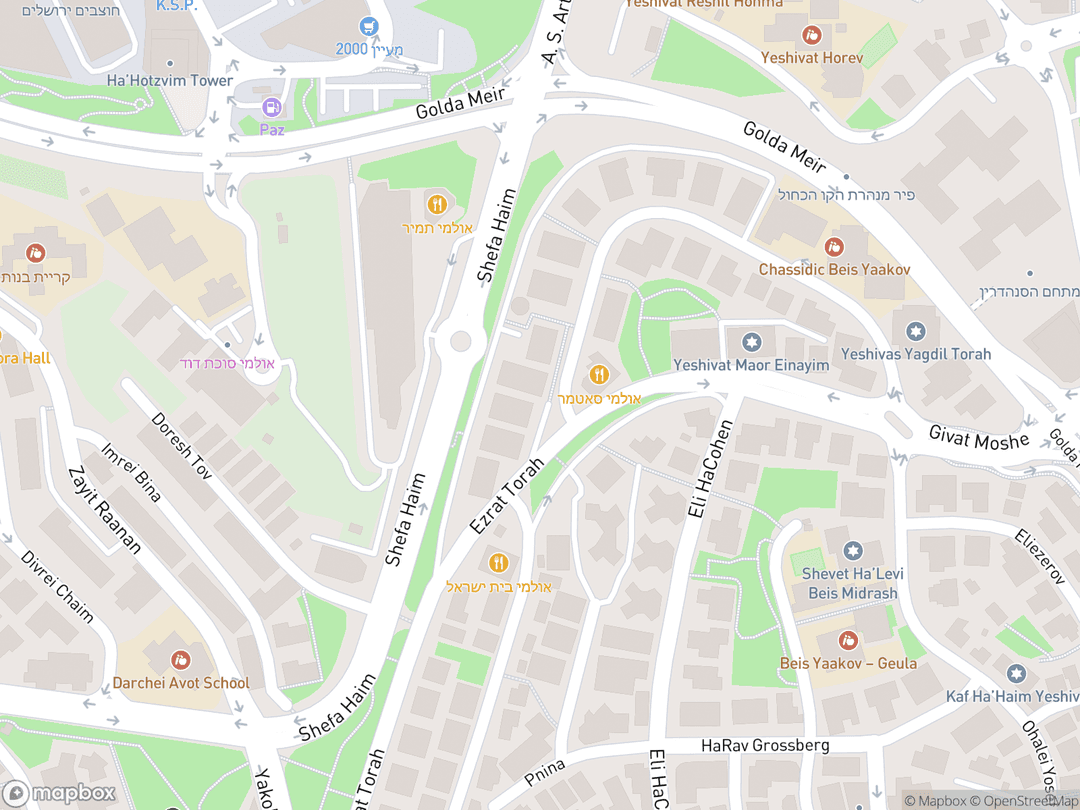
7 Binat Yisas'har Street, Jerusalem, Israel
Get DirectionsTips for Your Visit
Dress Modestly
Ensure attire is respectful: long sleeves, covered knees, and head covering for men.
About
The Belz Great Synagogue, located in the Kiryat Belz neighborhood of Jerusalem, stands as a testament to the resilience and revitalization of the Belz Hasidic community. The Belz Hasidic dynasty was founded in the early 19th century in Belz, Western Ukraine, by Rabbi Shalom Rokeach. The original Belz synagogue, dedicated in 1843, was a central point for the community until its destruction during World War II.
Following the Holocaust, the Belz community re-established itself in Israel. The construction of the Belz Great Synagogue in Jerusalem, completed in 2000, symbolizes the community's rebirth and commitment to preserving their heritage. The synagogue serves as a central place of worship, study, and communal gathering for Belz Hasidim from around the world.
Designed as an enlarged replica of the original Belz synagogue, the Jerusalem synagogue is an architectural marvel, capable of accommodating thousands of worshippers. Its grand scale and intricate details reflect the deep spiritual significance it holds for the Belz community, representing a bridge between their historical roots and their present-day devotion. As an integral part of the Judaic tradition, this synagogue stands as a beacon of faith.
Gallery
Symbolic Elements
The temple's exterior features intricate carvings, each rich with spiritual meaning:

Torah Ark (Aron Kodesh)
The Torah Ark, or Aron Kodesh, is a central feature in the Belz Great Synagogue, housing the sacred Torah scrolls. This ornate wooden ark is 12 meters (39 ft) high and has the capacity to hold 70 Torah scrolls, symbolizing the preservation and reverence for Jewish law and tradition. It represents the focal point of prayer and spiritual connection within the synagogue.

Main Prayer Hall
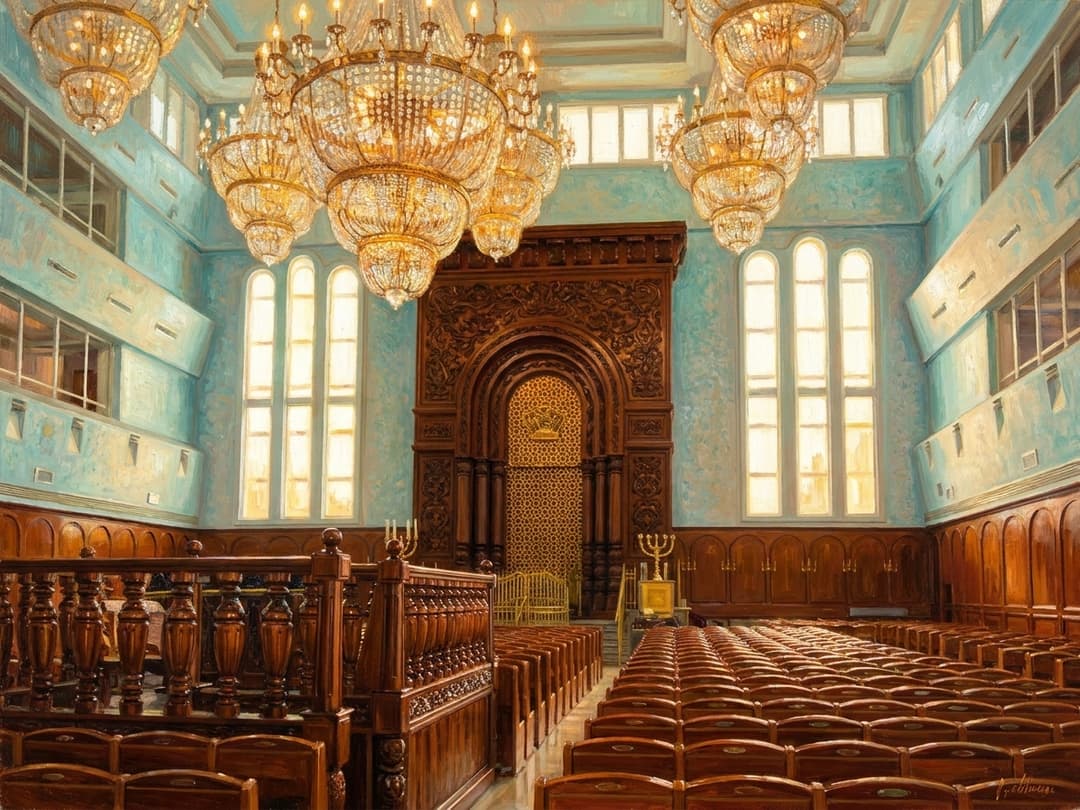
The main prayer hall is one of the largest of its kind, designed to accommodate thousands of worshippers. This expansive space serves as the primary gathering place for prayer, communal events, and religious celebrations. Its size and grandeur reflect the importance of collective worship and the strength of the Belz community.

Dome
The large dome that dominates the skyline of the Belz Great Synagogue is a significant architectural and symbolic element. Rising majestically at 75 feet, the dome represents the connection between the earthly and the divine. Its prominent presence serves as a visual reminder of the spiritual aspirations of the Belz community.

Chandeliers
Nine elaborate chandeliers, each containing over 200,000 pieces of Czech crystal, illuminate the main synagogue. These sparkling fixtures not only provide light but also add to the synagogue's grandeur and beauty. They symbolize the illumination of knowledge and the radiance of faith within the Belz community.

Wooden Replica
The Belz Great Synagogue is designed as an enlarged replica of the original Belz synagogue in Ukraine. This architectural choice symbolizes the Belz community's commitment to preserving their heritage and honoring their historical roots. It serves as a tangible link to their past and a reminder of their resilience in the face of adversity.

Four Entrances
The building has four entrances. These entrances represent the openness and accessibility of the synagogue to all members of the community and visitors. They symbolize the welcoming nature of the Belz community and their commitment to inclusivity in prayer and worship.

Galleries
The Belz Great Synagogue includes six galleries for additional worshippers. These galleries provide space for more members of the community to participate in prayer and religious services. They reflect the community's growth and their dedication to accommodating all who wish to worship together.

Modern and Traditional Elements
The exterior of the Belz Great Synagogue combines modern and traditional elements. This blend of architectural styles symbolizes the Belz community's ability to adapt to contemporary times while maintaining their deep-rooted traditions. It reflects their commitment to both preserving their heritage and embracing the future.
Interesting Facts
The Belz Great Synagogue was constructed after the original Belz synagogue was destroyed in WWII.
The main prayer hall can accommodate thousands of worshippers.
The synagogue's dedication was in the year 2000.
The dome rises majestically at 75 feet.
The synagogue is known for its intricate woodwork.
The ark has the capacity to hold 70 Torah scrolls.
Nine chandeliers in the main synagogue each contain over 200,000 pieces of Czech crystal.
The Belz Great Synagogue is one of the largest synagogues in Israel.
The current Belzer Rebbe is Rabbi Yissachar Dov Rokeach.
The Belz Great Synagogue is an extravagant, massive structure.
Common Questions
What is the Belz Great Synagogue?
The Belz Great Synagogue is a Hasidic Jewish synagogue located in Jerusalem, Israel. It serves as a central place of worship and community for the Belz Hasidim, symbolizing their resilience and revitalization after the Holocaust.
Where is the Belz Great Synagogue located?
The synagogue is located in the Kiryat Belz neighborhood of Jerusalem, Israel, at 7 Binat Yisas'har Street.
When was the Belz Great Synagogue dedicated?
The Belz Great Synagogue was completed and dedicated in the year 2000, after approximately 15 years of construction.
How many worshippers can the synagogue accommodate?
The main prayer hall can accommodate thousands of worshippers. Some sources state a capacity of approximately 6,000, while others state that it can hold up to 10,000 worshippers. The main sanctuary seats 2,589 worshippers, with six galleries for additional worshippers.
What are some of the architectural highlights of the synagogue?
The synagogue is designed as an enlarged replica of the original Belz synagogue in Ukraine. It features a large dome, an ornate wooden ark that can hold 70 Torah scrolls, and nine chandeliers, each containing over 200,000 pieces of Czech crystal.
Featured Stories
Dedication of the Belz Great Synagogue
2000
The dedication of the Belz Great Synagogue in 2000 marked a pivotal moment for the Belz Hasidic community, symbolizing their resurgence after the devastation of the Holocaust. After years of planning and fundraising, the completion of this magnificent structure represented not only a new place of worship but also a powerful statement of faith and resilience. The event drew Belz Hasidim from around the world, eager to participate in the joyous celebration.
The dedication ceremony was filled with music, prayer, and heartfelt speeches, as community leaders expressed their gratitude for the opportunity to rebuild their spiritual home. The atmosphere was charged with emotion, as the community reflected on the past and looked forward to a brighter future. The Belz Great Synagogue stood as a beacon of hope, a testament to the enduring spirit of the Belz Hasidic dynasty.
Source: Everything Jerusalem
The Vision of Rabbi Yissachar Dov Rokeach
1980s
Rabbi Yissachar Dov Rokeach, the spiritual leader of the Belz Hasidic community, played a crucial role in the creation of the Belz Great Synagogue. In the 1980s, he envisioned a new, grand synagogue in Jerusalem that would serve as a center for prayer, study, and communal gatherings. His vision was driven by a desire to honor the legacy of the original Belz synagogue and to provide a welcoming space for Belz Hasidim from around the world.
Rabbi Rokeach's leadership and determination were instrumental in securing the necessary funds and support for the project. He inspired community members to contribute generously, emphasizing the importance of rebuilding their spiritual home in Jerusalem. His vision transformed into reality, the Belz Great Synagogue stands as a testament to his unwavering commitment to the Belz community and their traditions.
Source: Hareidi.org
Rebuilding After the Holocaust
Post-World War II (1940s-1950s)
The Belz Hasidic community faced immense challenges in the aftermath of World War II, as many of its members were killed and the original Belz synagogue was destroyed. Despite these devastating losses, the survivors were determined to rebuild their community and preserve their traditions. Led by Rabbi Aharon Rokeach, they began the arduous process of re-establishing themselves in Israel.
The construction of the Belz Great Synagogue in Jerusalem was a central part of this rebuilding effort. It symbolized the community's resilience and their commitment to honoring the memory of those who were lost. The synagogue served as a tangible reminder of their past and a beacon of hope for the future, providing a space for prayer, study, and communal gatherings that strengthened their bonds and renewed their faith.
Source: Everything Jerusalem
Timeline
Belz Hasidic Dynasty Founded
Rabbi Shalom Rokeach establishes the Belz Hasidic dynasty in Belz, Western Ukraine.
MilestoneOriginal Belz Synagogue Dedicated
The original Belz synagogue in Belz is dedicated, serving as a central point for the community.
DedicationOriginal Belz Synagogue Destroyed
The original Belz synagogue is destroyed by the Nazis during World War II; many community members were killed in the Holocaust.
EventCommunity Re-establishment
Survivors of the Belz Hasidic community, led by Rabbi Aharon Rokeach, begin to rebuild their lives in Tel Aviv and Jerusalem.
MilestoneRabbi Aharon Rokeach Moves Court
Rabbi Aharon Rokeach moves his court to the Katamon neighborhood of Jerusalem and establishes a yeshiva.
MilestoneCornerstone Laid for Yeshiva
The cornerstone is laid for a large yeshiva and study hall in downtown Jerusalem.
MilestoneYeshiva and Study Hall Completed
The yeshiva and study hall are completed, providing a center for religious study.
DedicationPlans for New Synagogue
Rabbi Yissachar Dov Rokeach spearheads plans for a new, large synagogue to be built in the Kiryat Belz neighborhood of Jerusalem.
MilestoneFundraising for Synagogue
Funds are raised throughout the 1980s and 1990s to support the construction of the new synagogue.
EventBelz Great Synagogue Dedicated
The Belz Great Synagogue in Jerusalem is completed and dedicated, symbolizing the community's rebirth.
DedicationSynagogue Becomes Landmark
The Belz Great Synagogue becomes a landmark in Jerusalem, attracting worshippers and visitors from around the world.
EventExpansion Approved
Approval is granted for a major expansion of the Great Synagogue in Jerusalem, accommodating growing needs.
RenovationReligious Significance
The Belz Great Synagogue holds profound religious significance for the Belz Hasidic community and the broader Jewish world. As a house of worship, it serves as a focal point for prayer, study, and communal gatherings, fostering a deep connection to Jewish traditions and spiritual values. Its construction symbolizes the community's resilience and commitment to preserving their heritage after the Holocaust.
The core spiritual purpose of the Belz Great Synagogue is to provide a sacred space for the Belz Hasidim to connect with God through prayer, study, and communal worship. It serves as a center for religious life, fostering a sense of belonging and strengthening the community's commitment to Jewish traditions. The synagogue also serves as a reminder of the importance of preserving Jewish heritage and passing it on to future generations.
Sacred Ordinances
Prayer (Tefillah)
Prayer is a central practice in Judaism, and the Belz Great Synagogue provides a dedicated space for communal prayer services. These services, led by a rabbi or cantor, involve reciting traditional prayers, singing hymns, and reading from the Torah. Prayer is seen as a way to connect with God, express gratitude, and seek guidance.
Torah Study (Limud Torah)
Torah study is another essential practice in Judaism, and the Belz Great Synagogue provides a space for individuals and groups to engage in the study of Jewish texts. This includes reading and interpreting the Torah, Talmud, and other religious writings. Torah study is seen as a way to deepen one's understanding of Jewish law, ethics, and theology.
Communal Gatherings (Kibbutz)
The Belz Great Synagogue serves as a center for communal gatherings, bringing together members of the Belz Hasidic community for religious celebrations, holidays, and other special events. These gatherings foster a sense of belonging and strengthen the bonds between community members. They also provide opportunities for sharing meals, singing songs, and celebrating Jewish traditions.
The Synagogue as a Symbol of Rebirth
The construction of the Belz Great Synagogue in Jerusalem symbolizes the rebirth of the Belz Hasidic community after the devastation of the Holocaust. It represents their resilience, their determination to rebuild their lives, and their commitment to preserving their traditions. The synagogue serves as a tangible reminder of their past and a beacon of hope for the future.
The Synagogue as a Center for Jewish Life
The Belz Great Synagogue is more than just a place of worship; it is a center for Jewish life. It provides a space for prayer, study, communal gatherings, and other religious activities. The synagogue fosters a sense of belonging and strengthens the community's commitment to Jewish traditions. It also serves as a reminder of the importance of preserving Jewish heritage and passing it on to future generations.
Similar Temples
Sources & Research
Every fact on Temples.org is backed by verified Sources & Research. Each piece of information is rated by source tier and confidence level.
View All Sources (5)
| Field | Source | Tier | Retrieved |
|---|---|---|---|
| Basic Facts | Wikiwand (opens in a new tab) | A | 2024-01-12 |
| Location | Mapcarta (opens in a new tab) | C | 2024-01-12 |
| Synagogue Capacity | Kiddle (opens in a new tab) | C | 2024-01-12 |
| Synagogue Expansion | Israel National News (opens in a new tab) | C | 2024-01-12 |
| Original Synagogue | Temples.org (opens in a new tab) | A | 2024-01-12 |